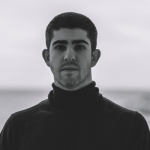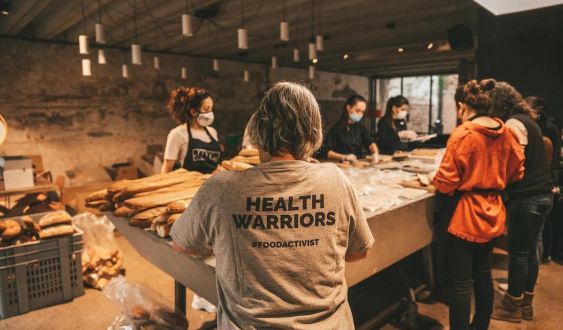
A year ago, on March 17, 2020, Francesc Terns, a 28-year-old from Barcelona who owns a delivery restaurant, created a platform to distribute food to healthcare workers who were in the midst of the fight against covid. It was a critical, chaotic moment of great uncertainty, but the response and support this initiative received were so great that it has become a leading NGO in Barcelona. Health Warriors has managed to distribute more than 150 tons of food and has received donations from over a hundred restaurants and food brands. Throughout this year, the entity has grown thanks to the help of dozens of people, including Barcelona influencers such as athlete Valentí Sanjuan and Barça first-team player Sergi Roberto.
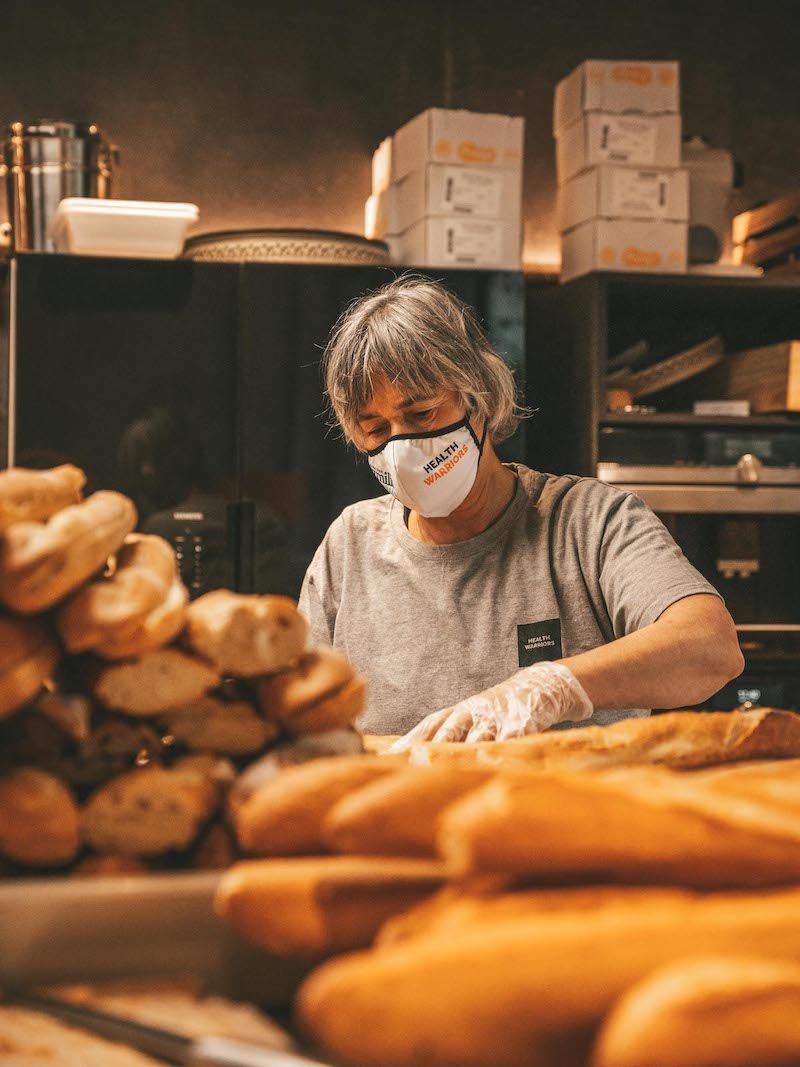
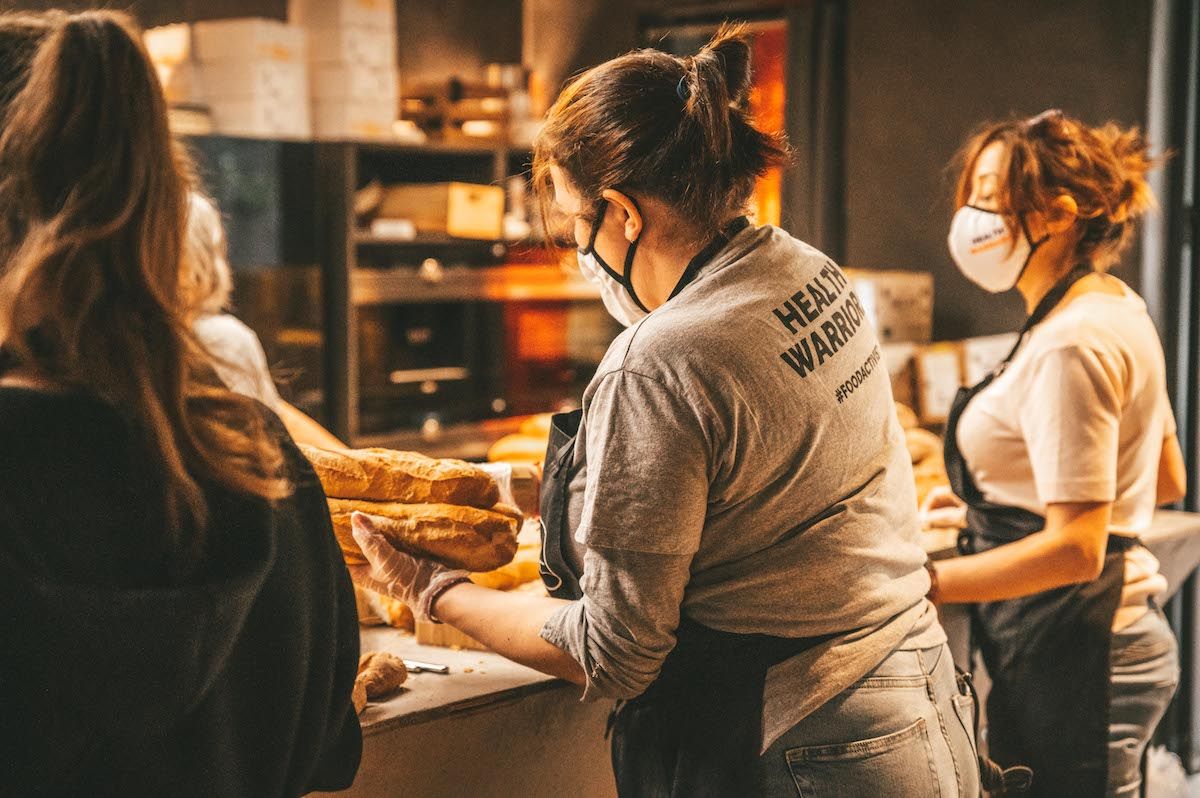
Now, the NGO has refocused the project and distributes the food and products it receives to associations and support networks for vulnerable families in Barcelona. They use the Roc35 space, located in Poblenou, as a warehouse and also prepare sandwiches and other dishes that they then distribute. A few days ago, they launched a new initiative called Operación Neceser (Toiletry Bag Operation), which consists of distributing essential hygiene products to the most vulnerable people. We spoke with the creator of this NGO, Francesc Terns, about how he has experienced the evolution of Health Warriors this past year.
---What prompted you to start this project?
I had a delivery restaurant and, when the state of alarm was declared and we were confined, I closed it. The first few days I was at home doing nothing, like everyone else, and then I saw that in Madrid there was a solidarity movement that distributed food from restaurants to healthcare workers. So I decided I wanted to start doing something similar. Initially, Health Warriors was not an ambitious initiative; I simply saw that I could help and I did it, there was no business plan behind it. I decided I would focus on healthcare workers because at that time they were having a very hard time, working very long shifts and not getting the attention and support they deserved. When we brought them quality food, their happiness was incredible. In fact, they sent us messages from different hospitals asking us to bring them food too, but we couldn't keep up.
---Health Warriors has grown thanks to social media, did you plan it that way from the beginning or did you seize the opportunity?
From the beginning, I planned it as a project based on social media. My idea was to get the collaboration of many restaurants and, in the end, what they are looking for is notoriety, in this case on Instagram. In 365 days we have made more than 430 publications; at first, I published four times a day. I did it through Instagram because I believed that restaurants would be much more receptive to the fact that some social movement would give them notoriety on social media.
---You started this project alone, but how did you manage to attract more volunteers to the initiative?
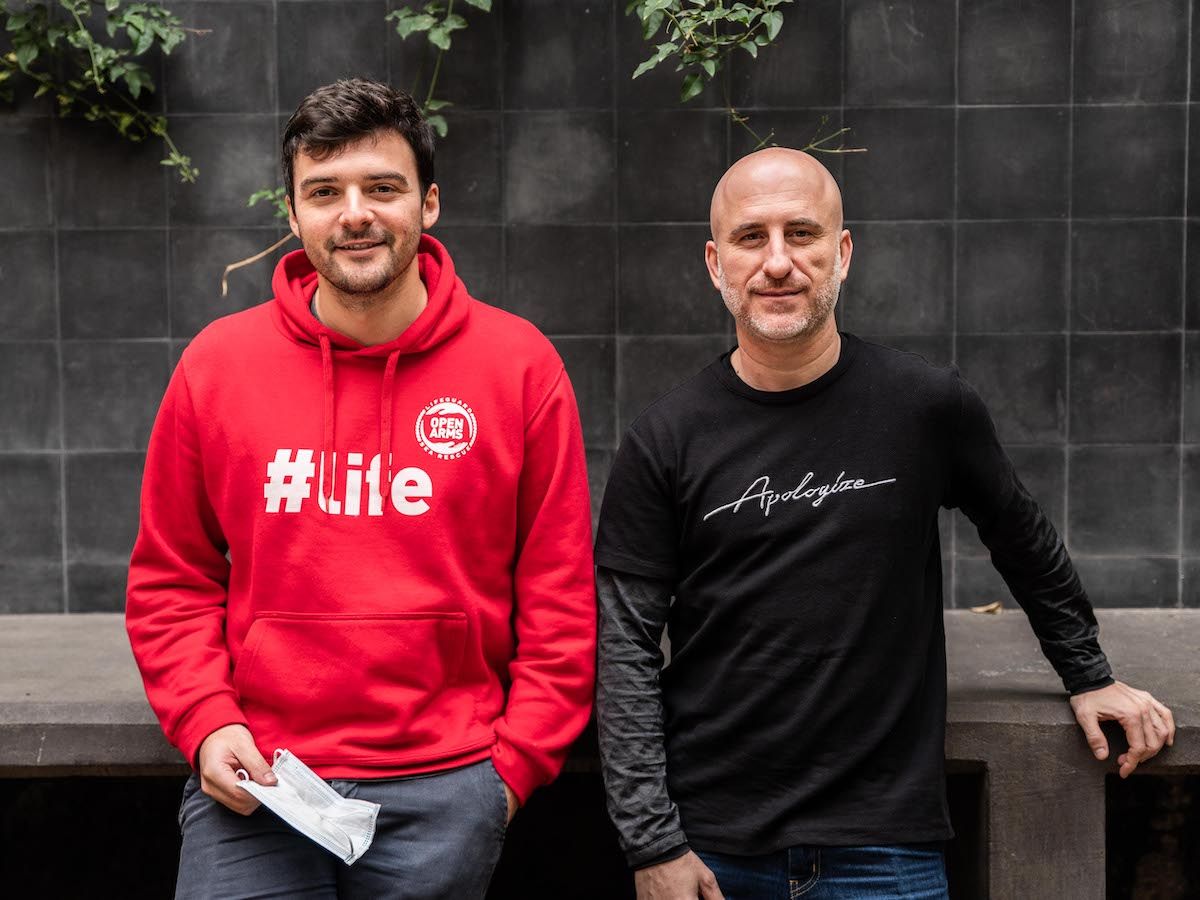
Yes, at first I did everything myself, the logistics, finding the restaurants... but on the third or fourth day, José, who is a taxi driver, wrote to me: "We saw on TV3 that you need cars, we can help." And Morillo, a volunteer who has collaborated since day one, also joined. In a few days, there were already thirty or forty cars driving around Barcelona. Thanks to them, we were able to say yes to all the restaurants that wanted to collaborate ---between 130 and 140---; without them, we would not have been able to reach all the healthcare workers. I, really, the only merit I attribute to myself is that I gave total freedom to people; had I done it differently, it would have been impossible to coordinate all of us. Health Warriors was a social startup that grew very fast; in three days we already had a thousand followers on Instagram. At the strongest point of the first wave, we distributed more than 200 daily rations to 30 hospitals.
---The project has gone from being an aid to healthcare workers to being directed at vulnerable families. What is the reason for this change of direction?
Firstly, this happened because we saw that healthcare workers, once the first wave had passed, were already well covered and did not have as much need. Then, another important factor is that there were restaurants that stopped donating food, which is normal, because they were recovering their activity and could not afford to keep giving large quantities of food. At this point, we decided that the best thing we could do was to target the most vulnerable people, who in the end have been the most affected by this situation.
---So, if restaurants now donate less food, where do they get the products from?
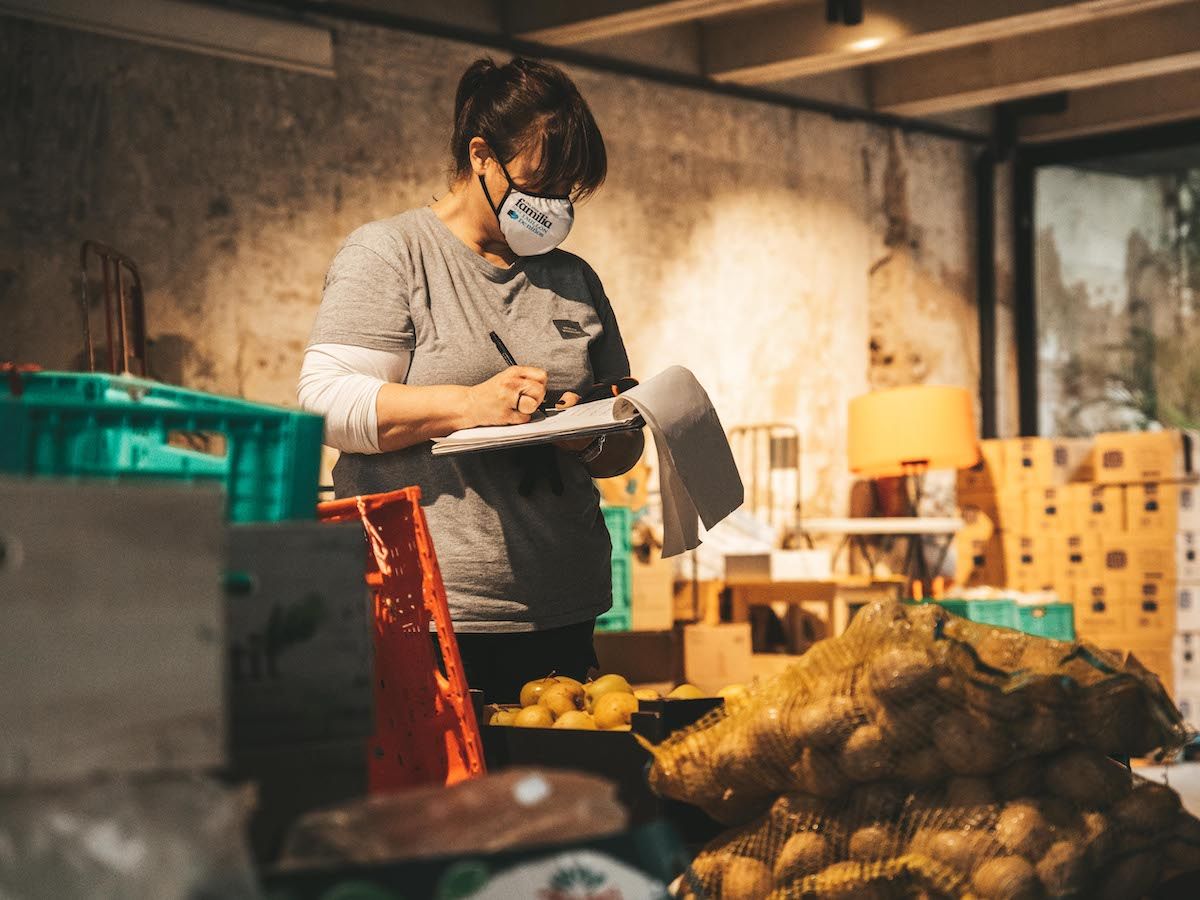
There are still restaurants that give us food, but now, mainly, they are big food brands that offer us their products and thanks to them we keep going. To give you an idea, there was a day when three big food brands called us to collaborate, this never happens, but at that moment we were at such a point of popularity that we kept getting product. This has also meant that we have been able to reach many more people. Very large groups have trusted us because we are very fast and this is key. As soon as the product arrives, in a maximum of three days, we have already distributed everything. In the world of traditional NGOs, perhaps they are slower and brands give us a lot of product because they know we get it out quickly.
---For some time now, you are no longer in charge of directly distributing food to people, but rather you deliver it to associations in different parts of Barcelona. What led you to focus the project in this way?
There came a time when we had so much material that we couldn't distribute it all ourselves and, also, when we stopped helping healthcare workers because they no longer needed it, we wanted to help vulnerable families, but we didn't have the tools or the knowledge that an association can have. That's why we decided that we would take on a bit of the role of distributors. Brands send us the products and here [referring to the Roc35 space, a warehouse located in Poblenou] we organize and prepare it to give to associations and mutual support networks. Some of these associations or networks cannot access the Banc dels Aliments due to bureaucratic issues or because perhaps they do not have the facilities they need. We act as their suppliers, so to speak.
---They have created a more modern NGO model, promoting social networks and new ways of working. Do you think this new model will become widespread in the future?
I believe it is a groundbreaking NGO model. There are two aspects that are very important and on which we have focused a lot. First, communication. If you communicate well, brands, restaurants, and people will want to collaborate with you, and in this, we have focused on Instagram and it has worked wonderfully for us. On the other hand, logistics, which is more complicated because it costs money to have an adequate logistics system, but it is feasible and, if you achieve it, everything goes much better. However, all of this has also come to us a bit, we did not intend to grow so much, we just wanted to help within our possibilities.
---What future plans do you have now that it seems that covid will gradually decrease?
Well, continue with the model we have implemented. Continue helping the most vulnerable people and we hope to continue growing. We are now at a point of stability, but, personally, I would like to be able to continue with a high growth rate, especially on social media. The more people and brands trust us, the better, because we will be able to help many more people who may find themselves in a vulnerable situation. In the future, we also want to create workshops aimed at vulnerable people; the first one we have in mind is about cooking. We believe it is a great way to help, because if you feed someone who needs it, you are solving the short-term problem, but if you offer them training, you are helping them in the long term.
Add The New Barcelona Post as your preferred Google source for free
Stay informed with the latest news.