The center of Barcelona represents for the restaurant industry an infallible (guaranteed) tourist attraction, although it is increasingly less visited by Barcelonians, who fear the crowds. However, there are established businesses that have managed to make their kitchens worth visiting, and some new ones with proposals also focused on the local public. We offer you four plans.
Arcano, the maturity of a special restaurant
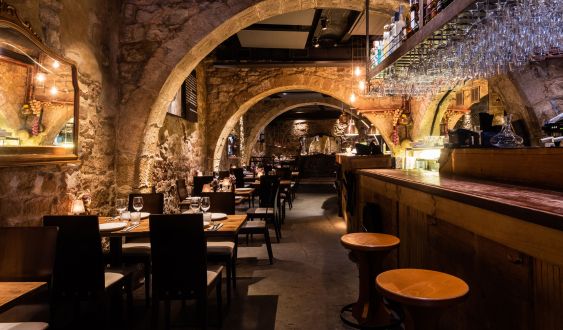
The Arcano restaurantcelebrates its 14th anniversary this year under the baton ofGrupo Quibuch(Gabriel Buchaillot, Claudia Quintero and Germán Buchaillot), with a unique gastronomic premise that connects the memory of Catalan cuisinemedieval with adequate doses of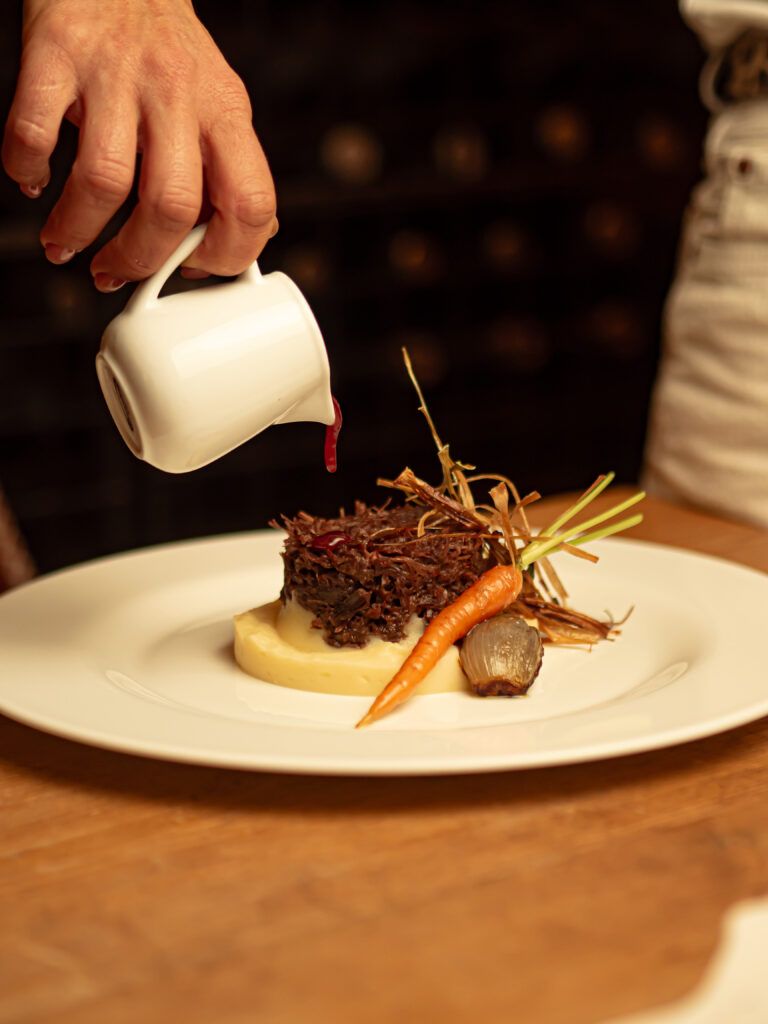
The exercise is not gratuitous, but stems from the unique characteristics of the place: it occupies what were the old stables of the Cathedral, in the 17th century, at number 10 Mercaders street, in the heart of Born. The environment and the rehabilitation of the space, respecting its architecture and enhancing its volumes, full of magic, foster this gastronomic reconnection. The novelty is that now they look more to the past as a source of inspiration, say its creators. And executive chef Nicolás Limarino has achieved this "evolution" with flying colors.
The rearview mirror look points to ingredients and combinations, with a contemporary perspective. Quintero points out that the menu will incorporate "subtle nods to medieval recipes," especially in starters and Mediterranean-based dishes. For example, in the use of almond as a structural ingredient, in the presence of ingredients such as game meat or mushrooms and aged wines, and in slow cooking.
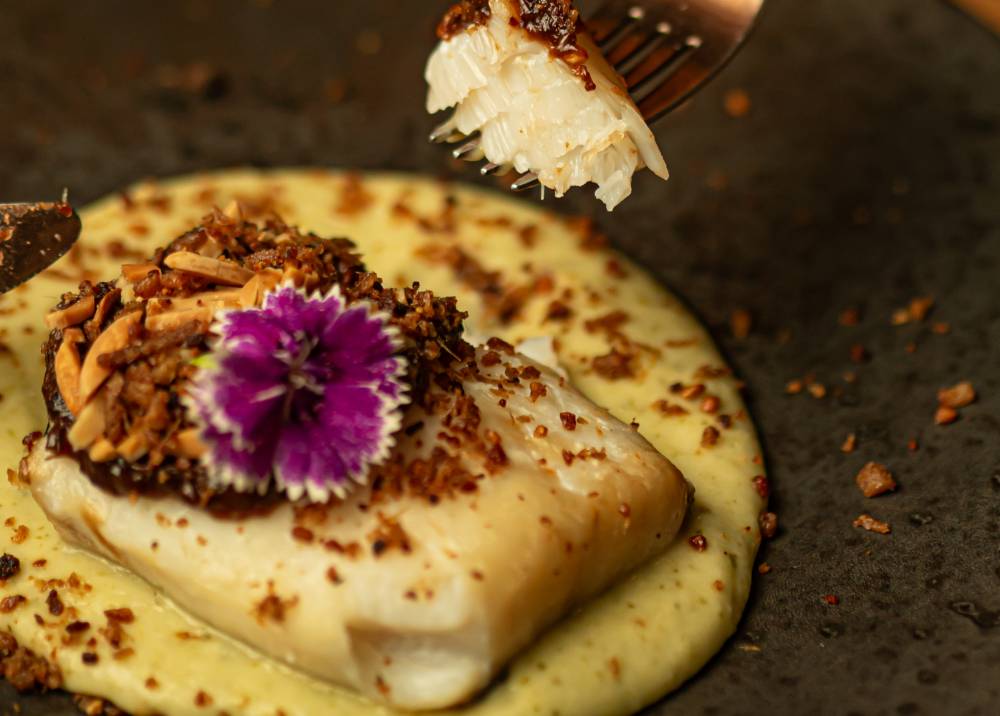
This new objective has not meant remaking their menu, but enriching it. In its recent presentation, little gems shone like the Brioche of country sausage with truffle and mushrooms (evoking forest cuisine and the ancestral use of cured meats and fungi); the Duck salad with mustard and honey vinaigrette, which recovers sweet and sour sauces that accompanied birds in ancient times, with extraordinary results; while it presents the Cod in two cookings with almonds and figs.
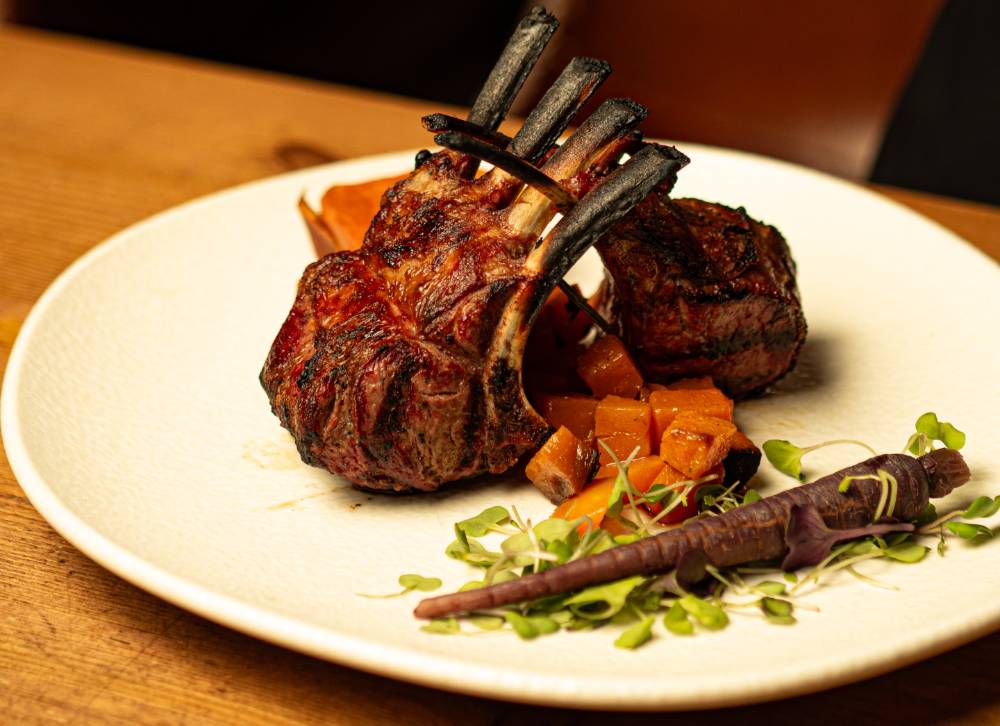
Another infallible ace up their sleeve is the Creamy beef cheeks in aged wine, reclaiming those patient imperishable cookings. And carnivores can discover the grilled lamb 'French rack' with sweet vegetables, recreating in a way medieval banquets. The meat in this case is not local, but it is soft and juicy.
In this scenario, game cuisine also demands its minute of prominence, with the deer sirloin treated raw and presented with red fruits, mustard, and capers.
As a sweet ending, a Catalan classic like 'mel i mató' with nuts and aromatic herbs makes perfect sense, although the menu is lavish with temptations. The average ticket is around 40-45 euros.
A must-visit to Kiosko Universal in La Boqueria
The Rambla and the market for theBoqueria have been eliminated from the routes of many Barcelona residents who flee from tourist-ridden areas. But the truth is that the great souk ofBarcelona well deserves some foray, whether for shopping or for a gastronomic visit. And theUniversal Kioskit is one of the most authentic bars in the venue.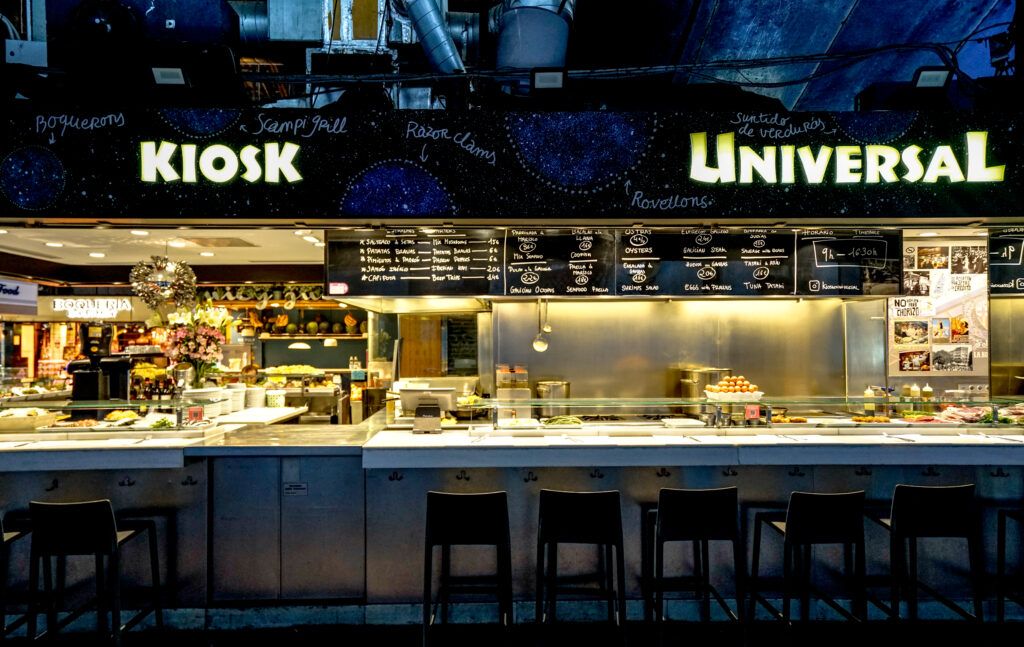
It has more than half a century of history (originally with a third of the current space), but much has happened since its origins, when it opened at dawn and fed many show business clients. Then it had the fortune to achieve a gradual generational change and preserve a certain authenticity, oblivious to the mercantile frenzy of La Boqueria. Always faithful to the concept of market cuisine, seasonal, quality and with minimal manipulation of local produce, it began a new stage after the Olympic Games that opened the city to tourism.
In 1998, Alfonso Domínguez and his two brothers marked the second generation at the helm, although the popular bar experienced an explosion in 2012, after successfully updating the space and concept (which is presided over by a disco ball crowned with cutlery).
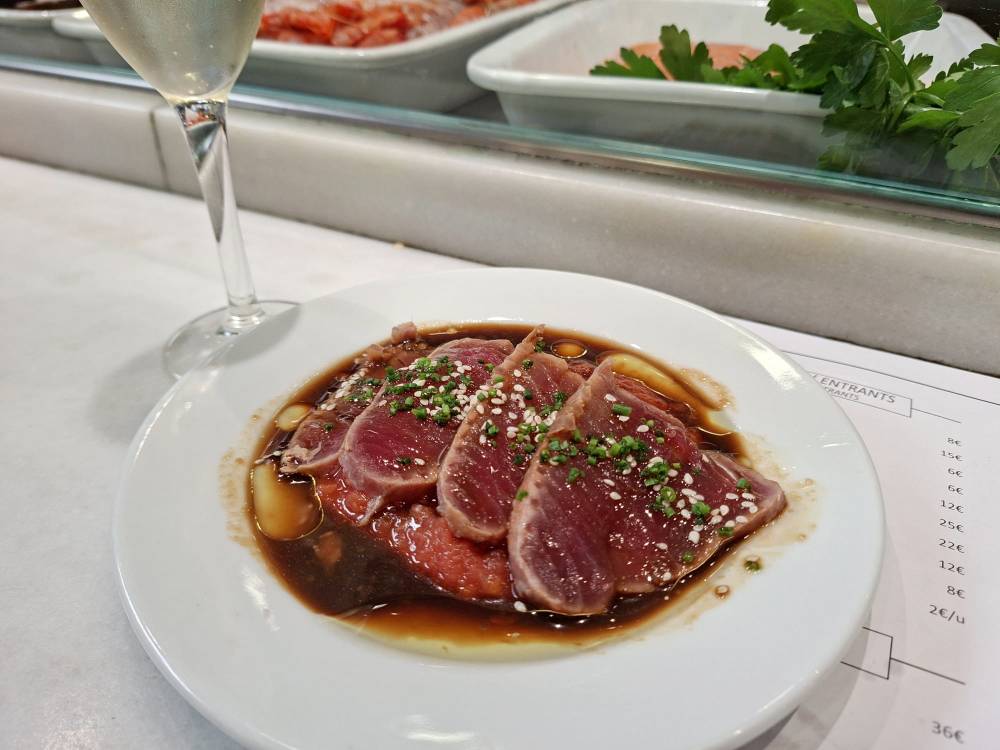
On the menu offered on its paper placemats, one can read the very essence of the market and the fishmongers and other stalls just a few steps from its stoves. From the freshest fish or squid – which barely greet the griddle before jumping onto the plate – to 'delicatessen' of the caliber of its Zamburiñas with foie.
The season is always present, from fried artichokes to sautéed mushrooms, as are the eternal stews. Like the famous 'cap i pota' that Borja Domínguez now masters, behind the bar for 12 years, and the third generation that further refines the repertoire of homemade flavors. The personal Tuna Tataki, a delight here allied with tomato and its soy dressing, cannot be missed in the pool; nor much less classics like the Galician-style Octopus, which they now serve grilled and not boiled, gaining texture.
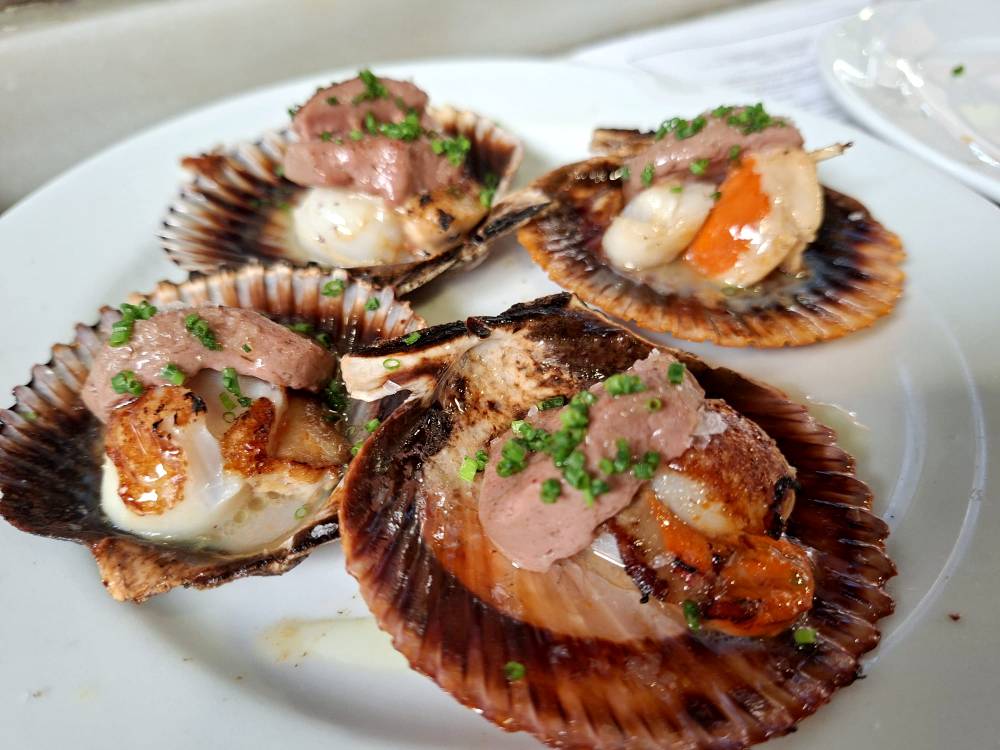
Its selection includes seafood, very fresh fish, eggs (fried with ham, with mushrooms, with foie, or with prawns), some tapas also for vegetarians, and even a few meats, among many other well-executed dishes. Three out of ten customers are from the city, and they practice word-of-mouth, making it clear that La Boqueria is still worth it.
Monday to Saturday, from 9:00 a.m. to 5:00 p.m. (661 39 65 94).
Japan and Barcelona in the new Sophie Kai
The groupBoquerones Bankhas shown a great knack for opening restaurants in the center of the Catalan capital with formulas that combine charming spaces and Mediterranean-rooted cuisine with different influences. In just 15 years, they have aligned businesses such as Elsa y Fred, Casa Lolea, Casa Rafols, Club 61, Can Framis, Pepeta, Bru, and Casa Leopoldo. They are also attentive to renewing proposals, as they have recently done with Sophie (Rec Comtal, 12), reborn as Sophie Kai.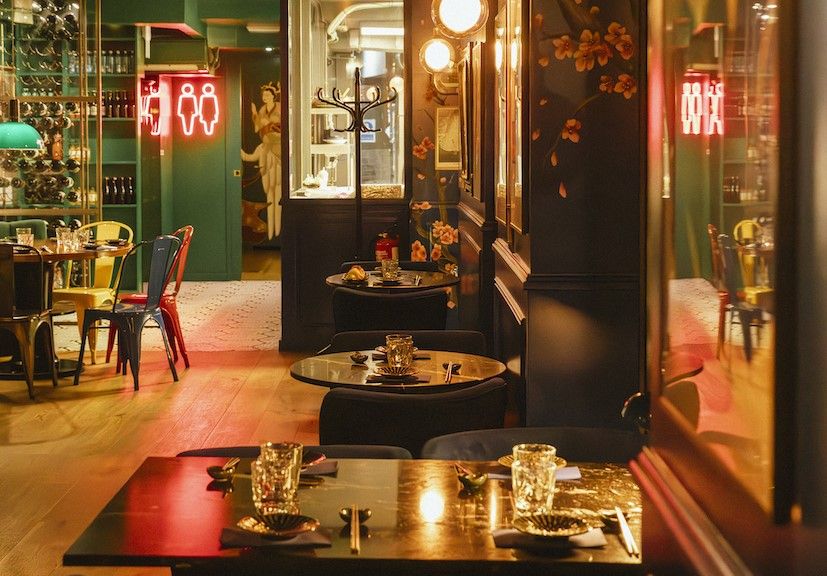
They make it clear that they do not aspire to be a temple of Japanese cuisine, in terms of purism, but "a Barcelona take on contemporary Japan: close, aesthetic, fresh, and sincere." It is located very close to the Arc de Triomf and has just taken off as an uninhibited fusion of local tapas and Japanese dishes. "A Japanese house with a Mediterranean accent," summarizes the gastronomic group led by Bruno Balbás and Sofía Matarazzo. One of its keys is the atmosphere, very intimate, by differentiating its various zones creating ambiances in red, blue, and green, in the warmth of dim lighting and tables for both couples and groups.
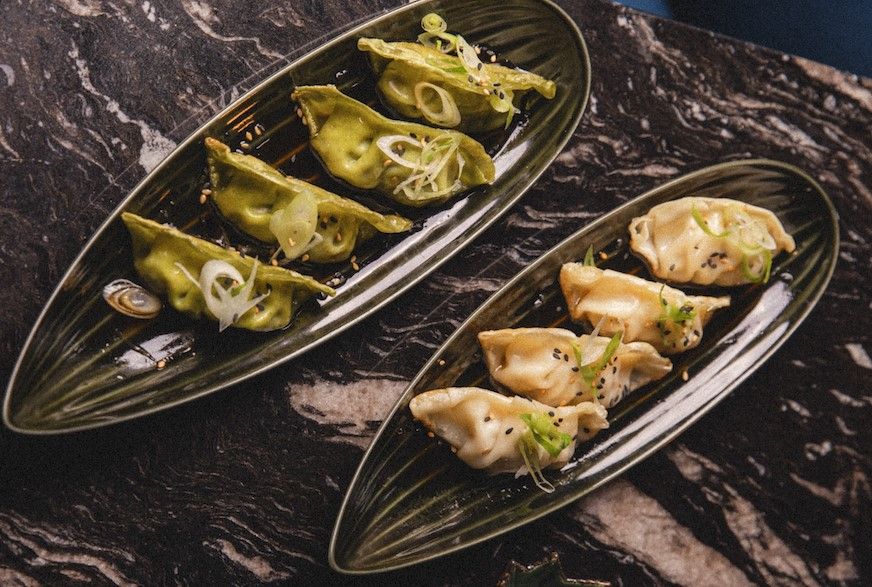
Its menu features sushi, ramen, and robata preparations, but with local influences. You can start by having delicious gyozas (pork, oxtail, or vegetable) and teriyaki skewers (seafood or pork presa), as well as Kimchi Croquettes or Patatas bravas kai (cubed with kimchi sauce and red miso mayonnaise).
In other sections, the Hamachi tiradito and ceviche stand out; among the hot dishes, there is also a casual alliance of cultures, from vegetable Yakisoba or scallop Bao, to the red tuna burger (with avocado, creole onion, and squid ink bread). For an overview of their nigiris, sashimi, uramakis, and tatakis, the best option is the tasting platter (20 pieces for 38.9 euros).
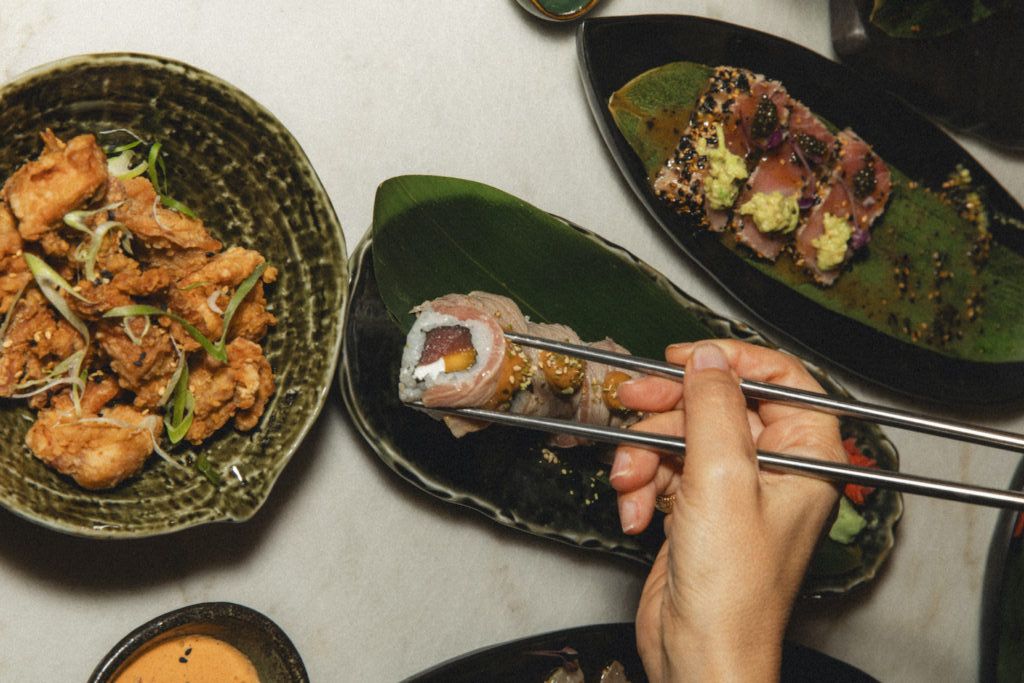
Among some of their specialties are the eel and avocado uramaki, Chilean wagyu tataki a la robata, and pork ramen with chashu and naruto. The place allows going from the freshness of raw fish to fire, according to the diner's taste. Among the desserts, there are attractions such as the transgressive white chocolate and matcha tiramisu, combining flavors from Italy and Japan.
Tapas Lobito: from croquette to sushi
A few months ago the Grupo Tragaluz premiered in Barcelona the concept ofTapas Lobito(Llauder, 1) on the axis of the Porxos d'en Xifré. It is conceived as abar with kitchen for tapas but alsosushi bar, which practices the tightrope walking of cultural fusion via tablecloths.The same group previously managed El Japonés Escondido in that location, but due to its location, it has made a strategic shift towards what most visitors expect: local tapas. The new proposal adds dishes with fresh produce, without frills and at affordable prices. But it maintains, out of nostalgia or loyalty to its previous stage, an area with a sushiman. One space and two recipe books, so that everyone can choose or embrace flavors without fuss.
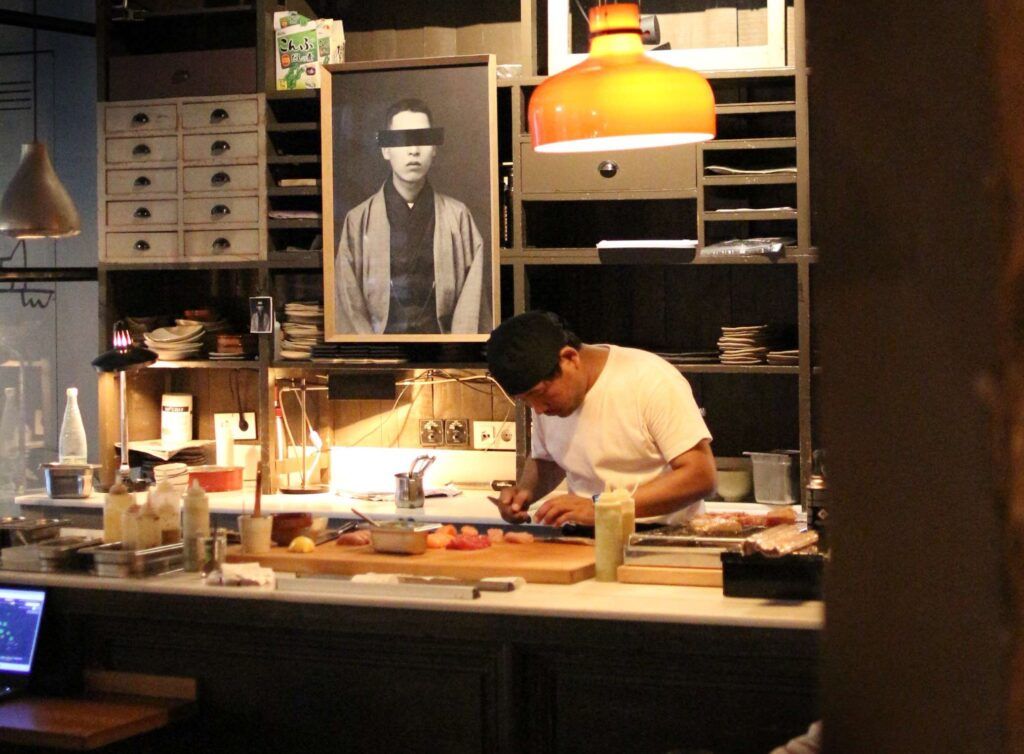
A few meters from Port Vell, the place draws on the charm of the area, which once housed appliance bazaars and is now a very lively gastronomic hub, especially for dinners. Inside, it has high ceilings, large windows, and an informal atmosphere amplified by a foosball table where you can spend hours. In addition to satisfying the appetite, the place wants to be a meeting point and for after-dinner conversations, as evidenced by its large central table.
The new offer, ideal for sharing, starts with classics of the genre such as chicken and Iberian ham croquettes, fried artichokes, tortilla skewer, steak tartare, Iberian loin bikini, garlic prawns, Andalusian-style calamari, mussels (in this case wok-fried), lobito salad, meatball stew with cuttlefish and many more. It is completed with more substantial dishes such as the Smashburger with cheese and fries (with an option for other extras), the Roast beef toast with mushroom or Roquefort sauce, as well as fried eggs with mushrooms and Perol sausage. Depending on the appetite, the bill can generally range between 25 and 35 euros.
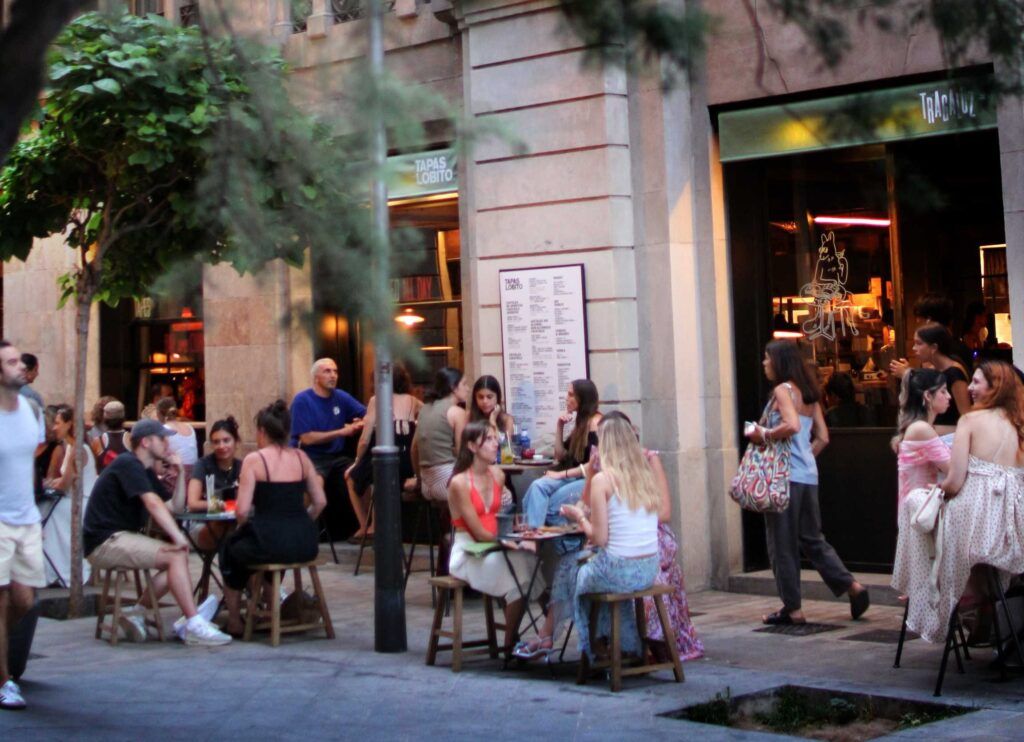
It is also a good place to have a drink, from a cocktail to a wine, with a specialty in natural wines. One of its advantages is the uninterrupted kitchen service until 00:00, and its music and drinks atmosphere, which extends until 1:30 AM on weekends.
Add The New Barcelona Post as your preferred Google source for free
Stay informed with the latest news.