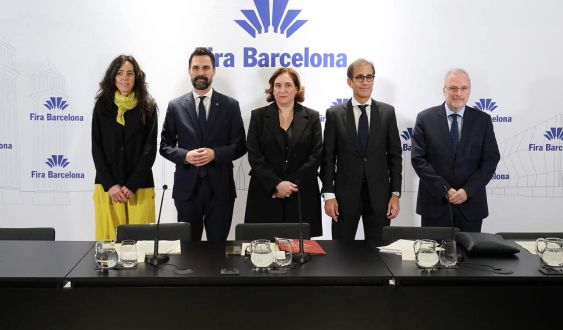
Fira de Barcelona's recovery after taking the hard hit of the pandemic has been faster than expected. In 2022, the trade fair institution demonstrated great strength and resilience by registering revenues of 211.4 million euros, a figure that triples (+234%) 2021 sales and is 25% above the 170 million that had been budgeted. "The recovery of revenues has been very fast, something totally unexpected; a year ago these figures were unimaginable," admits the general director of Fira de Barcelona, Constantí Serrallonga.
This turnover volume is only 4% lower than the historical record of 220 million achieved in 2019. During the two years of the pandemic, in 2020 and 2021, Fira de Barcelona's sales decreased to 60 million and 82 million, respectively. "During the health crisis, Fira did not stop machines and now we see the results; we have been working to guarantee a rapid restart of activity when circumstances allowed. The management team has worked tirelessly to achieve this," emphasizes Pau Relat, chairman of Fira's board of directors.
There is another fact that accredits the "magnificent results" ---according to Relat--- of 2022: Fira de Barcelona has obtained an EBITDA of 36.9 million euros, the highest ever achieved by the institution and which contrasts with the negative 8 million in 2021. Prudence in spending in the face of the strong uncertainty with which the year began and the product mix or type of halls that were held ---with large own events such as Alimentaria--- led to the achievement of this EBITDA, described as "extraordinary."
"To this excellent turnover and record EBITDA, we must add three more qualitative successes: the renewal of the MWC until 2030, the exemplary integration of the Barcelona International Convention Center (CCIB) and the start of the expansion works of the Gran Via venue," points out Relat. According to the president of Fira, the fact that GSMA "has decided to link its future to Barcelona, designating it as the permanent venue for the MWC, demonstrates maximum complicity, and reinforces Barcelona as the technological capital of the world."
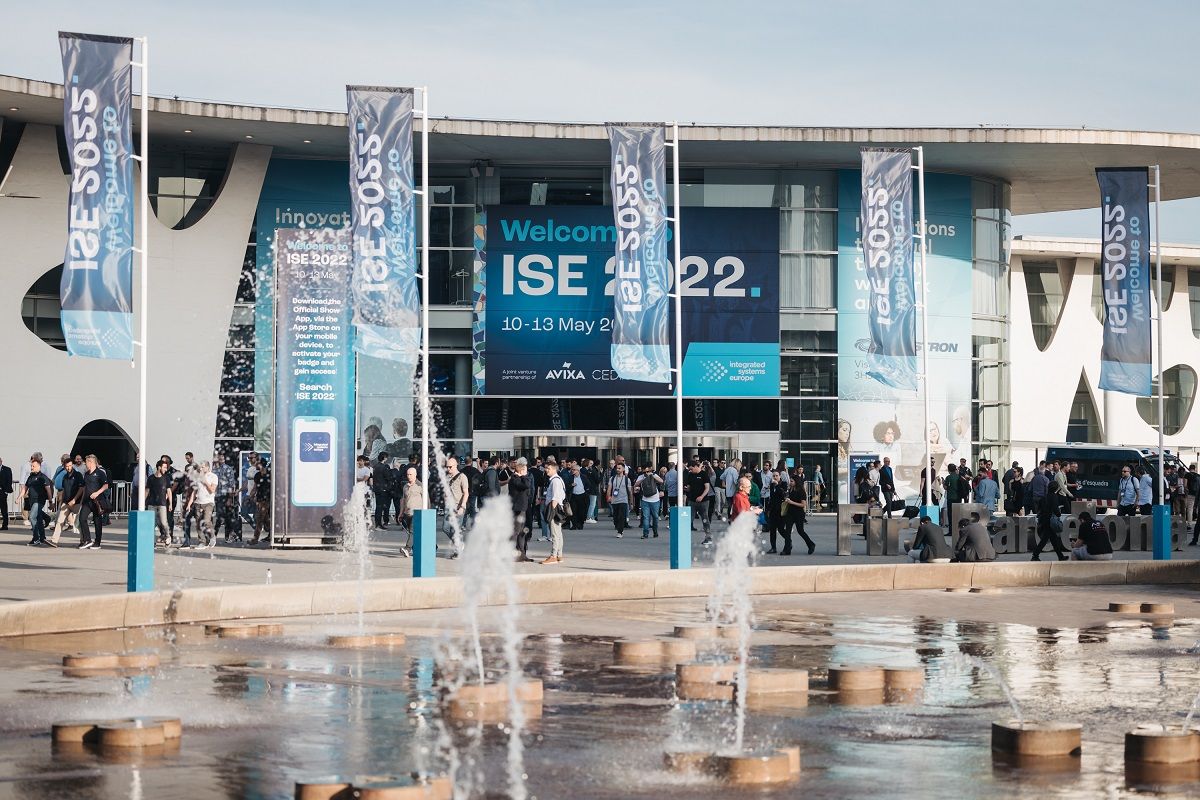
Of the total of 250 congresses, conventions, and fairs held in the last year, the MWC, which next week will bring together more than 80,000 visitors, is the main source of income for the entity. Specifically, it contributes 20% of the turnover, with 42 million euros. In second position is the Alimentaria fair, and the third place in the ranking, at an accelerated pace, is already occupied by the audiovisual technology fair ISE. In the good results of 2022, it must also be taken into account that it has been the first full year of management of the CCIB. This equipment, which allows Fira to operate with three exhibition venues, generated 16% of sales in 2022.
According to Serrallonga, expectations for 2023 "are good," but he prefers to be cautious given the current context of uncertainty, so he estimates to repeat this year the figures recorded in 2022. To achieve this, Fira de Barcelona counts on the return of intercontinental visitors ---especially Chinese ones---, with the magnificent results already achieved by the ISE fair, and with the good forecasts managed by MWC and Seafood. In addition, Fira has new aces up its sleeve. The entity has just attracted a new fair to Barcelona that until now was held in London, Shoptalk, and will once again host the world's largest fair in the pharmaceutical industry, CHPI, which was already held in the Catalan capital in 2016. Another prominent event will be the celebration of the Global Public Transport Summit (UITP), the most important public transport world conference.
Shoptalk is a fair dedicated to innovation in the retail sector that will be held for a minimum of two years at the Gran Via venue, with a volume of 40,000 visitors expected and the participation as speakers of senior executives from companies such as Zalando, Coca Cola, Ikea, Camper, Mars, Pandora, and Unilever. The fair, which will take place in May, aims to be a showcase for technological solutions applied to the commercial and e-commerce sector and combines the exhibition part with a powerful program of conferences and business meetings.
"What has happened in recent years has allowed us to confirm the importance of trade fairs, which someone once wanted to question. There was a great desire to see each other again, to reconnect. We clearly see the need to continue holding fairs and congresses," reflects Serrallonga. In this sense, he considers the expansion project of the Gran Via venue to be key, which will add 60,000 square meters of exhibition space, totaling 300,000 square meters. Once the works on the new pavilion have begun, the goal is to commercially open it in September 2026.
"The expansion of Gran Via is the result of Fira de Barcelona's long-term vision and will allow us to consolidate the strategy of attracting major events," said Pau Relat. The other major project that the entity will promote will be the remodeling and modernization of the entire Montjuïc fairground in view of its centenary celebration, scheduled for 2029. According to the mayor of Barcelona, Ada Colau, in the next plenary session in March, the Barcelona city council will definitively approve the new urban planning of the Montjuïc venue, which will have greater integration with the Poble-sec neighborhood. The project contemplates demolishing the fair palaces with a facade on Lleida street and allocating the space to the construction of housing and various facilities.
Relat demands institutional loyalty be maintained
Finally, Relat has asked the three institutions that make up the Fira's general council, the Barcelona City Council, the Generalitat, and the Barcelona Chamber of Commerce, for maximum loyalty and not to abandon the "broad consensuses" that have been key to the institution's success. "I appeal to maintain the effort so that institutional consensus is maintained," highlights Relat. This request from the president of the Fira is a reaction to the process of electing the two new councilors who will join the Fira's board of directors and also to the fact that the Generalitat has used its majority shareholding in Fira 2000 ---the company that promotes the expansion of Gran Via--- to change the general director of the company, against the opinion of the other shareholders.
"It is not usual, but in the renewal of Fira 2000 there has been no consensus," admitted Mayor Colau. "We do not dispute the legitimacy of the Government to make this decision, but it is better to recover tradition and reach maximum consensus on things," points out the also president of the General Council of Fira. This body—made up of the three institutions—should have met in December to approve the appointment of the new Fira directors and examine the 2022 accounts, but the meeting has not yet been held.
According to the president of the Chamber, Mónica Roca, the two executives who will join the board of directors, Laura Carnicero and Anna Navarro Schlegel, have "an impressive business career" in the automotive and technology sectors, and will favor the board "being fairer in terms of gender and better reflecting 21st century society." Carnicero and Navarro will replace Kim Faura and Pedro Fontana once the general council ratifies the appointment.
Add The New Barcelona Post as your preferred Google source for free
Stay informed with the latest news.
