We are greeted, in the middle of the Passeig, by an enormous caganer. If the intention was to attract attention, mission accomplished, even at the price of the WTF and the weird from passing tourists. The interior areas of White Rabbit Barcelona are well distributed, the space is ample, the staff attends in all languages (even those local ones not yet recognized as official in the EU) and the attempt to catch the eye is immediately perceived. The rooms we will visit are Petó, Xivarri, Capgrossos, Caganer, L'Ou Com Balla, Farra, Esclat, Enxaneta, Bocabadat and Foc. All of them feature the collaboration of an artist. As can be seen, the immersion, both cultural and linguistic, is also notable. Good.
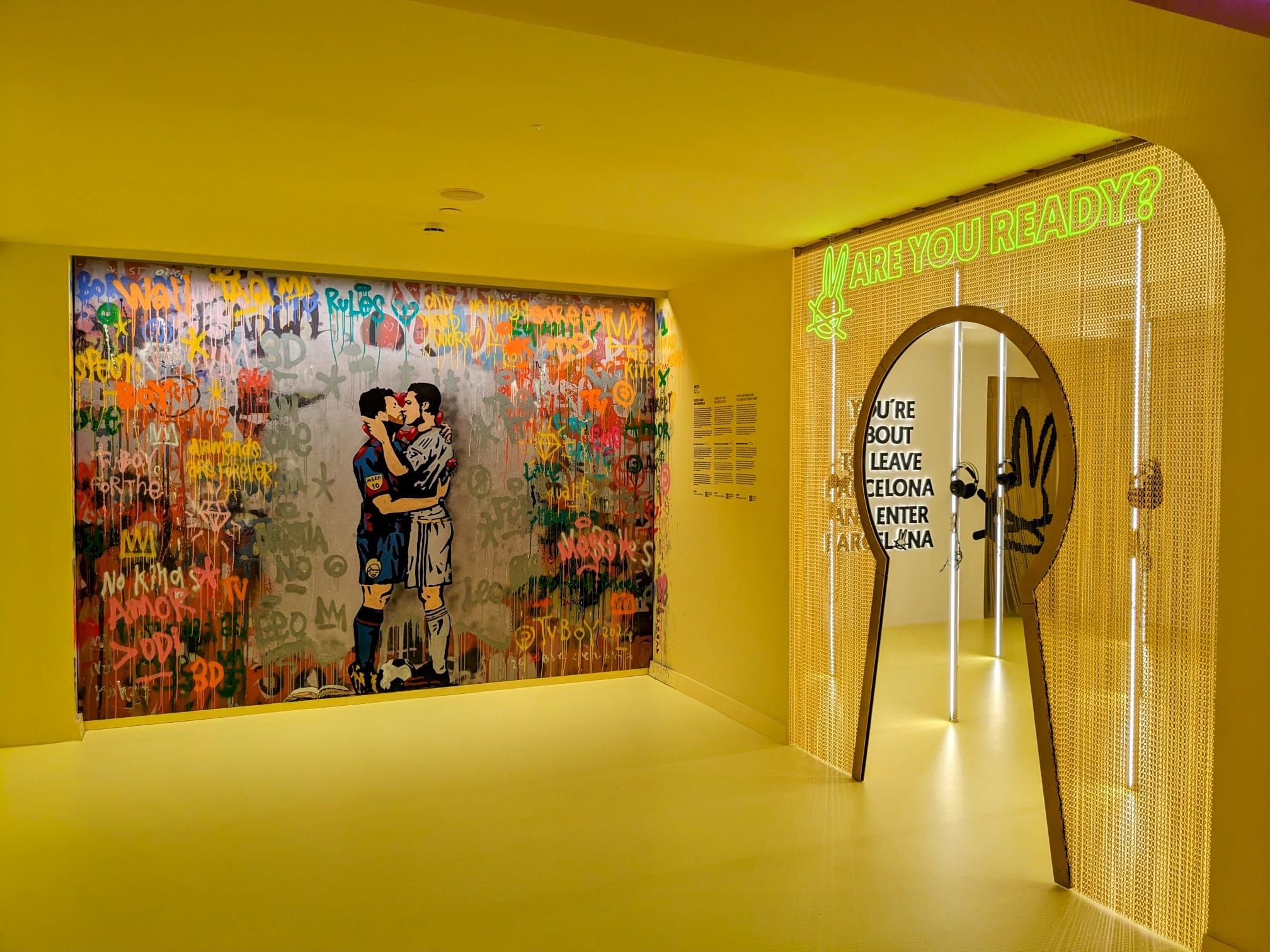
Petó is a mural by TVBoy of a kiss between Messi and Ronaldo, with a rose and a book in hand, inspired by a work by the author that appeared on the street on Sant Jordi 2017 (with the corresponding controversy). Nothing to object to, peace and love. Xivarri, by Mina Hamada, is a rather childish room that evokes popular festivals in the neighborhoods: piñatas, dragons, decorated streets, fireworks, dances, gegants... A bit sober if it intended to include all that, but colorful and friendly.
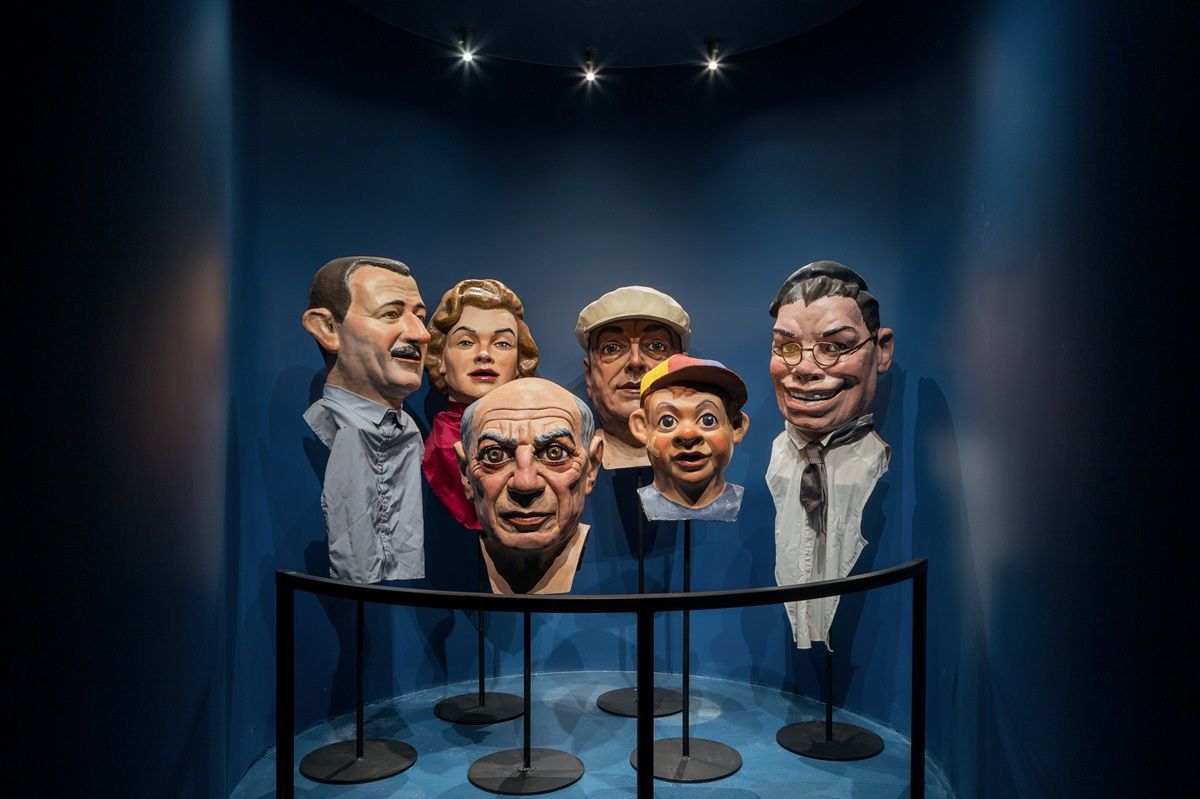
Capgrossos, by Carles Piera, is a spectacular exhibition of cardboard heads that includes illustrious figures such as Picasso, Marilyn Monroe and (I suppose) Neruda, made with traditional methods, but which then caricatures various urban tribes with invented names that we are supposed to identify from the city: the exaggeration makes this task impossible, but we take it as artistic license and the sculptural talent is undeniable. All this leads to one of the most unforgettable rooms in White Rabbit Barcelona, el Caganer, by the same sculptor, immense and golden like a great Catalan Oscar and which dignifies a nativity scene figure that too often we have seen ridiculed internationally.
Now that we have just experienced Corpus, seeing Enric Planas's installation dedicated to the Ou Com Balla, with a series of vertical jets demonstrating the miracles of oviparous aerodynamics, still manages to surprise us. The explanations on the panels, by the way, are brief and sufficient: era, possible origin, and the artist's idea. In all rooms. Without bothering, but with a QR for more information. La Farra is perhaps the least localist room, executed by Playmodes (a digital installation studio), with an immersive purpose and a result that multiplies one's image across the four walls, which look like a discotheque. We are supposed to dance to the rhythm of the music. Well, we continue.
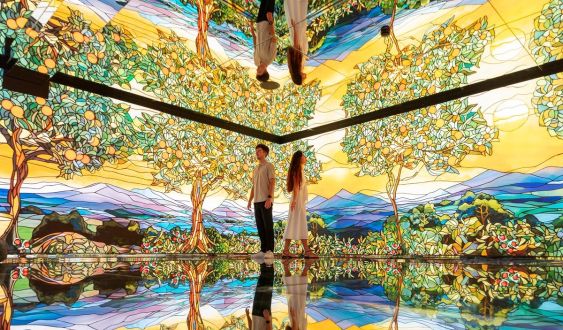
Esclat is a commendable attempt to make Modernism understood, beyond the "wonderful" and the "beautiful," with a (sincerely) brilliant demonstration of how a 360 room can truly make sense. Developed by Onion Lab, it perfectly relates Catalan landscape, Montjuïc fountains, Gothic, Modernism, stained glass, and trencadís with a delicate and inherently didactic spectacularity. A "let them learn" escapes me, directed at some of the latest immersive attempts in Barcelona, and I limit myself to enjoying the walk, which is not heavy at any point, which truly immerses (that is, makes you learn something) and all this without leaving a hypnotic formal abstraction. Bravo.
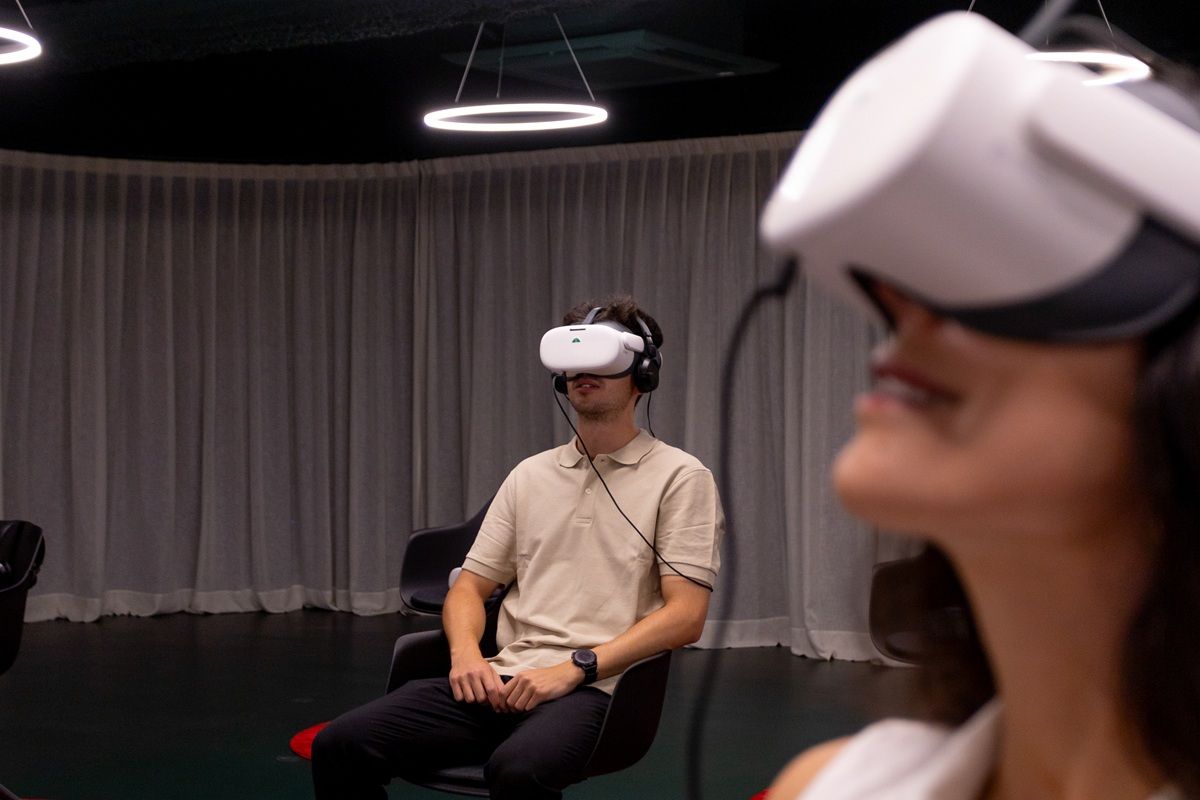
Seeds XR at White Rabbit Barcelona makes us put on glasses to witness an immersive video related to the castells, where you feel like an enxaneta in the middle of a main square with correfocs, and without being spectacular, it works impeccably. It makes you feel, it makes you appreciate, almost even makes you smell. I don't think it can be done better if you want to connect human towers with new technology.
The space is a surprise, a good attempt to correct the general gentrifying waveAfter this space, we move on to the grand finale, a succession of rooms with a more "furero" spirit, with an obligatory reference to the inauguration of the Olympic Games (in the room Speechless) and to the human Mare Nostrum that La Fura deployed. La Fura has come to include here both a large photograph of itself and an explanation about the company and even itsManifest Canalla,to then take us to some mechanisms of primitive cybernetics (Wagner's Dynamo, the Zoetrope where flashes of light create movement, theWoman of the Millenniumthat welcomed the year 2000 in Plaça Catalunya...). And, finally, the installationFoc, from Vitamin Studio,leads us to a labyrinth with curtains of glass illuminated in a thousand colors that seeks to evoke the chromatic of cava, of the firecrackers of Sant Joan, of the parties until sunrise,with a fun and poetic result that finally leads us towards the exit:Exist, says the sign, instead ofExit. Well, that's it: the visitor knows, after this tour, that there is a reality that exists.
"What to do next" is already the detail that demonstrates the good will and good taste of the promoters: when you leave here, spin the roulette and you can choose from Tomàs' bravas to the Vinatería del Call, passing through the Harlem Jazz Club, the Hospital de Sant Pau or the Sant Antoni Market. No quarries, no Sagrada Familias, nor any of the already known, already visited, and already expected clichés. A surprise, good news, a good attempt to correct the general gentrifying wave. I can only add: thank you.
Add The New Barcelona Post as your preferred Google source for free
Stay informed with the latest news.
