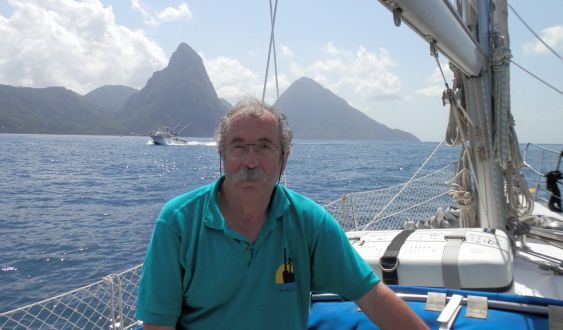
"At an age when I'm supposed to be playing pétanque and dancing pasodobles on excursions with the Imserso, here I am sailing, doing long bike rides, cooking daily, acting as a science popularizer, writing for various media outlets, continuing my activity as an environmental expert, participating in citizen platforms against a poor deployment of renewables, giving conferences, pursuing a second doctorate in Contemporary History, and writing novels. Not bad...", reflects Ferran Vallespinós at the bar, enjoying a Beefeater gin and tonic "with little gin, lots of ice, and Schweppes tonic, no more complications."
He arrived at dusk, "I'm a night owl; investing a third of our very short life in sleeping seems like a bad investment unless you have dreams, then it's wonderful," and he asked for "classical music in the background, and not an all-knowing person talking to spoil our conversation."
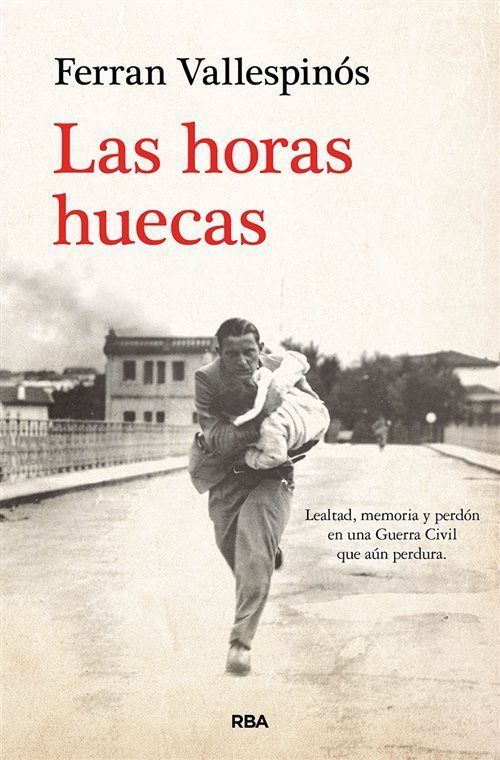
These days sees the release of Las horas huecas (RBA), his second novel after his debut in fiction narrative with Los colores del último puerto in 2020, and with a conspicuous production of books on science, environment, and ecology behind him. "If this new novel is well received by readers, I will feel very proud, because it is my most personal work: just me, in front of the computer, creating and destroying characters as if I were a god."
Born into a working-class family hit by the war, "with my father always working but always close," Ferran Vallespinós was the first to go to university, "I was a good Biology student, almost an outstanding one. I combined work with studies, I never failed a subject, fearful of the last throes of Francoism, I research and do a doctorate, I participate in oceanographic campaigns in different seas of the world, I get tired of science, I translate about 40 books, I found a consulting company, I enter politics and end up as mayor of my town, Tiana, for twelve years. I cross the Atlantic in a small sailboat with two other madmen and, on the way back, we have an accident a thousand kilometers from the nearest island. Now I write novels."
After sipping a good gulp of his gin and tonic, the patron resumes speaking: "After analyzing what I have done, I dare to define myself: restless, sometimes cynical, always ironic, an indefatigable conversationalist, a seeker of experiences, a food connoisseur, I think fair and not conceited, a dreamer, stubborn, always willing to learn. And, despite everything, often insecure. In love with life."
A life that is several
Of his professional career, Ferran Vallespinós highlights four key moments: "Deciding to be a biologist and opting for a scientific career. Abandoning official science and creating an applied science company. Entering and leaving politics as a way to contribute to the common good without attachment to the seat, as I was mayor without a salary. And, finally, writing novels, something I always wanted but postponed for too long. I like to reinvent myself. The pleasure of being reborn in each new project."
He once read "'that life is a sexually transmitted disease that always ends badly'. Consequently, since our path is only disappearance, let's live intensely and with passion and, if we don't have other lives, let's live several in this one."
--- And how many would you say you've lived already?
--- I have successively lived five lives and now I am settled in the sixth, that of a writer.
Regarding his personal life, Ferran Vallespinós believes that "it has been quite flat, without turning points, although I am not sure if I have resolved well the dilemmas that have arisen over the years." Even so, the first, among the achievements of his life's journey, that he cites is "undoubtedly having known how to transmit, in good conditions and results, 50% of my genes to my daughters and 25% to my grandchildren."

History on every corner
"How much would it cost the municipal budget for no one to live on the street or have to beg for food?" This and other aspects such as "inequality, injustice, the gratuitous violence of some, the suffering of children, the lack of real opportunities for all" are some elements of the "invisible drama that occurs in cosmopolitan, cool, design-oriented, intellectual, self-satisfied Barcelona". A city for which, nevertheless, the patron feels a great and special affection.
"I came to live in Barcelona, from a nearby town, in the 70s. A gray city with gray people in the street, near the Escorxador flocks of lambs still passed through the public road, pollution from the thermal power plants of Paral·lel and Sant Adrià was high, the seawater, disgusting. Everything was yet to be done. And it was done, with the hope of recovering democracy. And Barcelona finally transformed with the Olympic impulse and, in a very small part, I participated in those works. The city has incredible things. There is no other where you can meet someone at an intersection and specify: sea-Llobregat or mountain-Besós. Culture, gastronomy, streets to walk, history on every corner". Stories of history, in fact, like one that particularly captivates Ferran: "The construction of the Cathedral of the Sea; if it really happened as Falcones tells in his novel, it is an incredible feat that the people, with their physical effort carrying stones from Montjuïc, managed to build such a sober and beautiful temple at the same time".
"There is no other city where you can meet someone at an intersection and specify: sea-Llobregat or mountain-Besós"--- What is a remarkable feat is the gastronomic offer we treasure at the Bar. We have everything: portions, tapas, menu, mixed dishes...
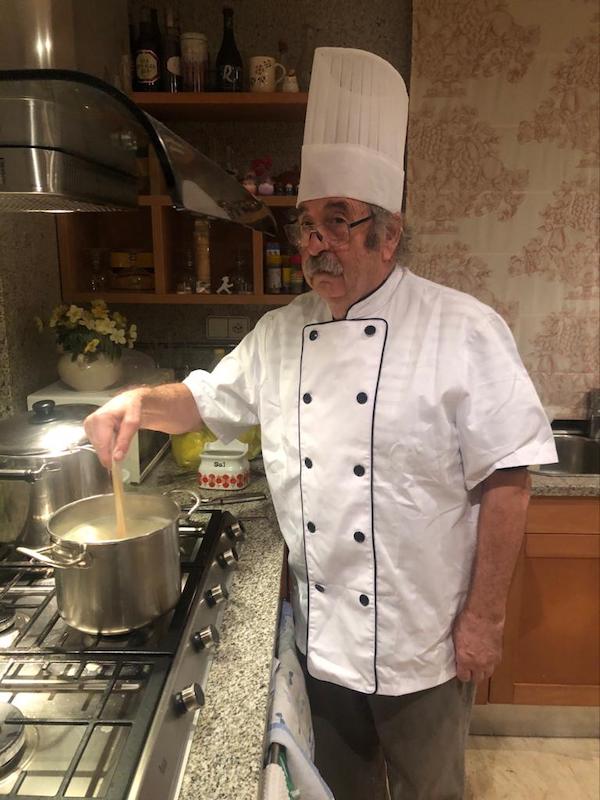
A reverential silence then falls, while the writer, a renowned gourmet and acclaimed cook, examines the culinary display offered to him.
"Combined dish never; it's an average of several things that makes the bad ones bring down the good ones. A portion is a good option, especially in the market bars of Barcelona. There was a pre-pandemic era when I frequently ate in markets, with guaranteed local products. A menu has to convince me by the presence of a good dish that is balanced with the price: if the menu is 12 euros, you know the sea bass will be farmed."
--- Here everything is fresh and, failing that, if you don't want savory we have a good display of sweets.
Ferrán Vallespinós then laughs, with the quick answer on his lips:
--- Let it be savory, I'll provide the sweet myself.
Add The New Barcelona Post as your preferred Google source for free
Stay informed with the latest news.
