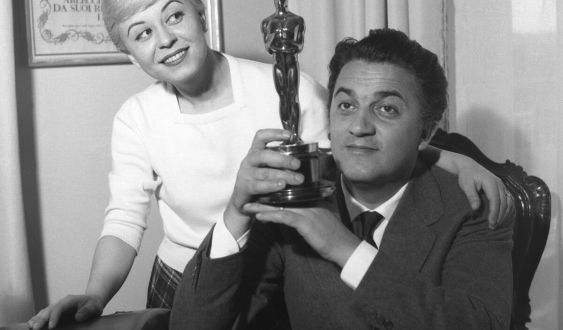
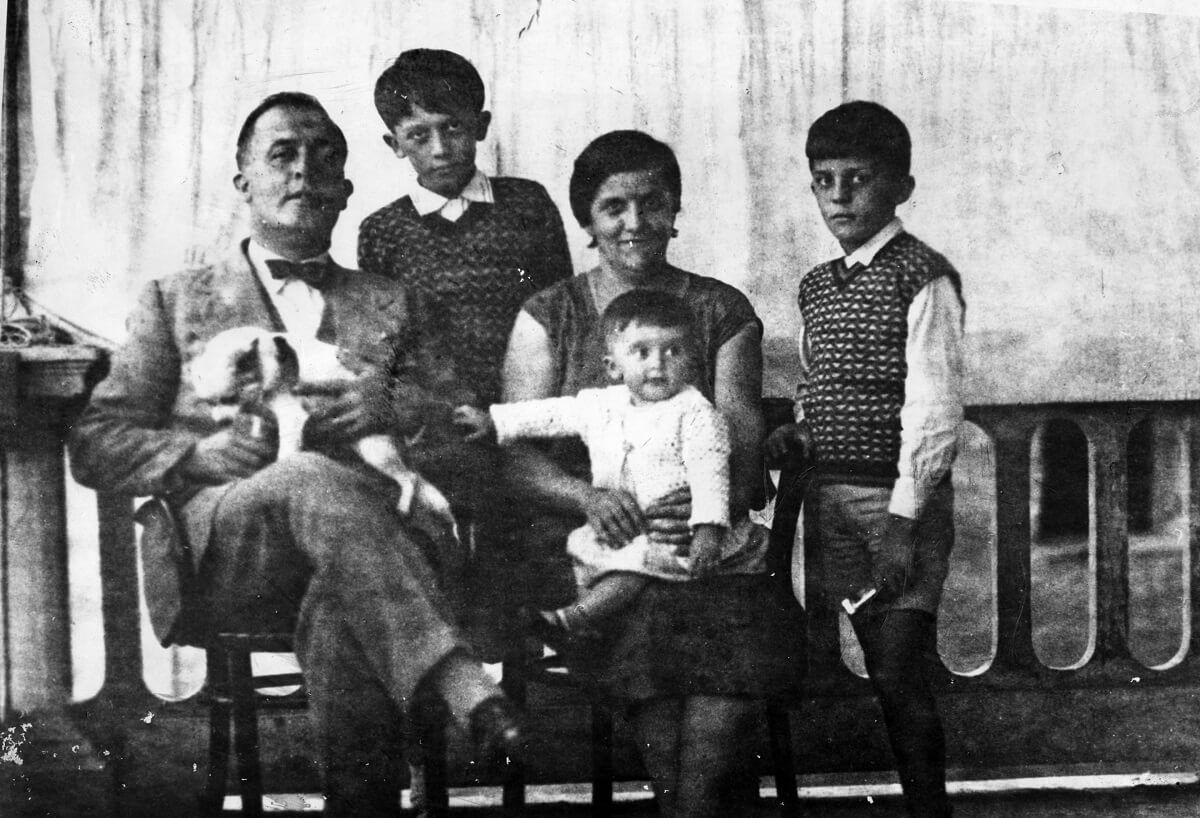
The pandemic delayed the celebration of the centenary of Federico Fellini's birth (Rimini, 1920 - Rome, 1993) with the exhibition The Centenary. Fellini in the World. A year later, El Born Centre de Cultura i Memòria presents more than 80 photographs of film sets and his private life, in which he appears alongside his wife Giulietta Masina and scenes from his childhood, as well as original posters, scripts, letters, contracts, and props, among which stand out the costumes from Casanova (1976) worn by Donald Sutherland and an original page from the lost Il Libro dei Sogni, where the director, by order of his psychoanalyst, noted and drew his recurring dreams throughout the 1960s.
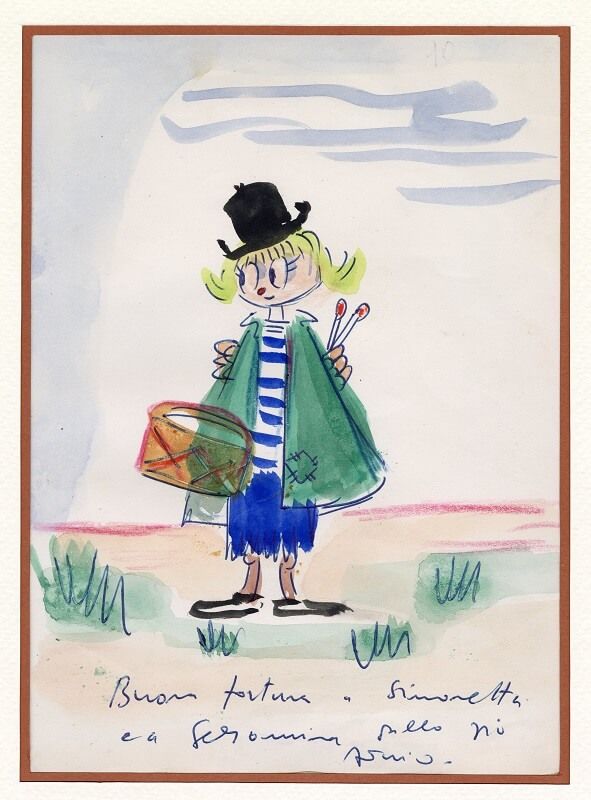
And it is in the drawings where we find the muscle of the exhibition, drawings that Fellini created on disposable paper, on napkins, while talking on the phone or being distracted. They are caricatures, sketched characters that he drew so as not to forget and that take him back to his origins as a cartoonist, when at 17, he arrived in Rome to be a cartoonist.
Comics were the first format in which he honed his skills as a storyteller and in which he learned to structure stories in images. As an anticipation of modernity, Fellini gave this genre more value than cinema itself and remained immersed in it throughout his life. Proof of this is the review of his work alongside his admirer and friend Milo Manara in the volume Erotomaquia or Bataglia d'Amore (1991-92), which we can also enjoy in this exhibition.
The material, provided by his niece and sole heir, Francesca Fabbi Fellini, shows us a more intimate Fellini, immersed in his constant creative processes, and highlights the importance the director gave to them. These processes always started from dreams and memories. The dreamlike as a reference. Invention and idealization serve only to fill the gaps where memory fails.
A framework that always proposes an almost Freudian universe to us. Fellini and the Felliniesque, a term coined to refer to the world created by the director, something that demonstrates the greatness and exclusivity of his legacy, for which common adjectives are not enough, a word that is included in the Italian dictionary and a source from which directors like Scorsese, Lynch or the more recent Sorrentino have drawn. A universe where tensions between tradition and modernity collide and where there is no difference between reality and fiction.
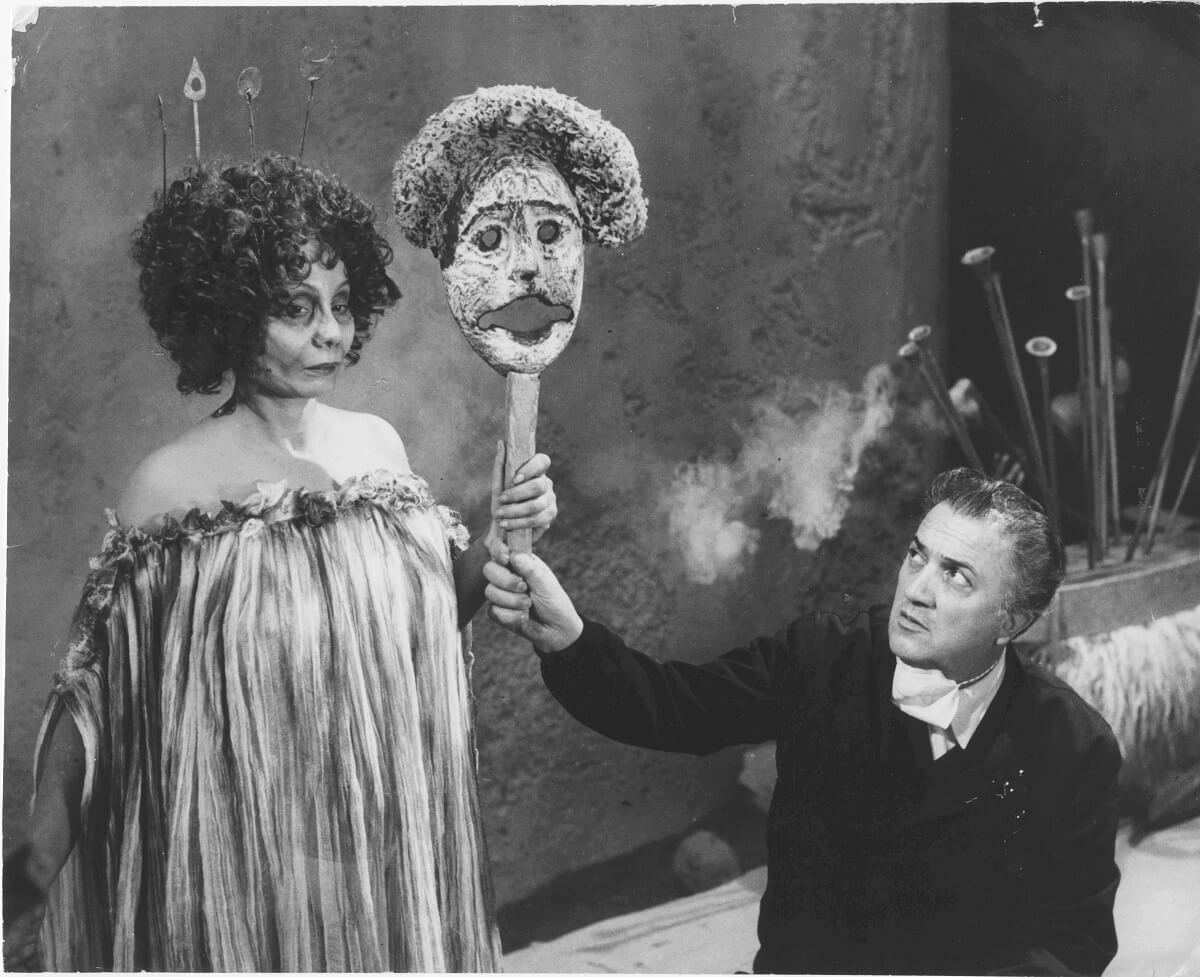
To speak of the director from Rimini is also to speak of his characters, those who appear in Amarcord (1973), extravagant, grotesque, extreme beings, guiltlessly aware of their flaws and virtues. They are idealized, unforgettable characters who, in turn, are recognizable and endearing to us. Fellini enjoyed strolling through the sets of the ill-fated Studio 5 at Cinecittà, he enjoyed the idea of living in a constructed fiction. He defended intellectual, emotional, and political independence.
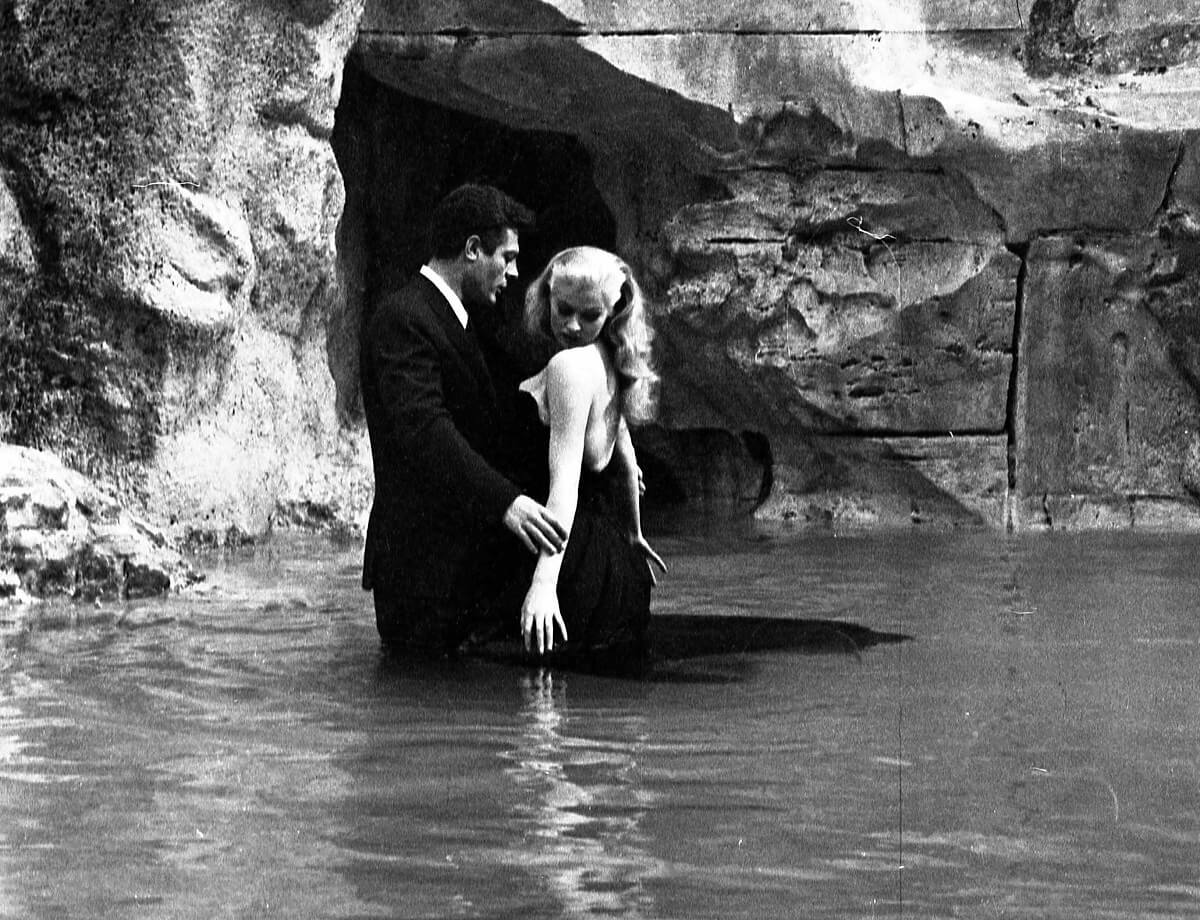
Fellini took, as great geniuses do, his life as a reference, his dreams and desires as triggers, and his urge to reinterpret his past, present, and future, as a driving force.In the last years of his life, he lived obsessed with the rise of the right in Italy, with the ability to manipulate people through advertising, and with the harmfulness of image at the service of power and the effects this could have on children, the future. Fellini also anticipated it, but he couldn't see it; Berlusconi's Italy roared while the director's light faded in a Rome hospital. To his credit, he left us masterpieces such as8 ½, La Dolce Vita,La Strada,The Useless,And the Ship Sails On... and a long etcetera of classics that designed a new Italy for the world, that of Mastroianni and Ekberg, and earned him five Oscars, one of them honorary.
The exhibition, curated by Mariangela Scaramella, is co-organized by the Italian Institute of Culture, headed by Lucio Izzo, and commissioned by Vicenio Mollica, Alessandro Nicosia, and Fabbi Fellini herself. It is a traveling exhibition that has been seen in Moscow, Sao Paulo, Vilnius, Tirana, Ljubljana, Saint Petersburg, Buenos Aires, and Kyiv. It can be visited in Barcelona until January 9 and is complemented by a series of concerts in homage to Nino Rota (fetish composer and indivisible figure of the director's work), a talk on the influence of Dante Alighieri in Fellini's cinema, as well as another to reflect on the stereotype of women in his work, characterized by an exuberant and very particular vision of beauty.
Add The New Barcelona Post as your preferred Google source for free
Stay informed with the latest news.