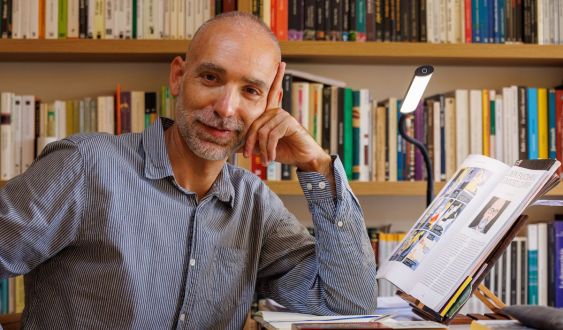
"In life, the acts of listening, looking, and reading are fundamental to me." Leaning on the bar, the writer Fèlix Edo Tena sips vermouth, alternating a beer with a tortilla pincho. "However, I increasingly realize that this cannot replace life: the best album, movie, or novel is your life itself, with all its screw-ups, dramatic turns, and comical situations," he adds while, in the background, Xavier Chavarria explores, through Sincronies of Catalunya Música, the connections that link historical events with some peak moments of musical creation.
High school teacher ---"I like to say that I teach teenagers to listen to music, to watch movies, and to read books"---, father of Joan and Valèria, 9 and 7 years old respectively, for years he has been writing about notes, letters, and celluloid for publications such as Serra d'Or, Núvol or Quadern de les Idees and has had time to draft two novels: El guardià de les trufes (Barcino) and Lluny de qualsevol altre lloc (Onada).
The first is a classic example of a long seller. A story in which the author gave voice "to the masoveros who never had it, in which I explain the social and political circumstances that precipitated the end of that world and the emotional wound that it entailed," and which continues to sell almost ten years after its publication. For its part, Lluny de qualsevol altre lloc represented for Fèlix "a riskier bet, both from the plot and formal point of view." A story of rootedness in the past and, at the same time, "a metaphor for the modern destruction of the País Valencià by speculators and capitalists, and of the policies dictated from Madrid."
Added to these works is the recently published book Dones cineastes: l'altra cara de l'espill (Onada), which compiles a series of articles by various authors for Quadern de les Idees that the writer coordinated. A project that coexists with an essay on Jim Thompson, and numerous monographs on television series and Asian cinema, among others.
Inspiration was there, in the roots
"Fiction has always interested me. I wanted to write novels. The problem is that I didn't know how to do it, which is the same as saying I didn't know what to tell. I remember that when I was very young I tried to be an imaginative writer, and I still didn't know that imagination and inventiveness are not my thing." For this reason, Fèlix Edo Tena began writing essays and articles based on his extensive and varied readings.He won some philosophical essay contests and got involved in a thesis on the philosophy of cinema and music, "despite which, I still wanted to write a novel, and I kept failing in my attempts." Until the epiphany arrived. "I realized that I had a whole narrative vein in front of me. I come from an inland region of Castellón, an area nowadays emptied and very depressed, twilight. Furthermore, it is a Valencian area that has always been faithful to the Catalan identity, to the point that my grandparents didn't even know how to speak Castilian! And I come from a 'masovera' family that lived, literally, in a traditional and pre-modern world, but found itself immersed in modern conflicts such as the clashes between the Civil Guard and the Maquis guerrillas." Listening, looking, reading: the writer realized that every family conversation led to juicy narrative material, "both from the life of those 'masoveros' and from when they found themselves immersed in the battles of history."
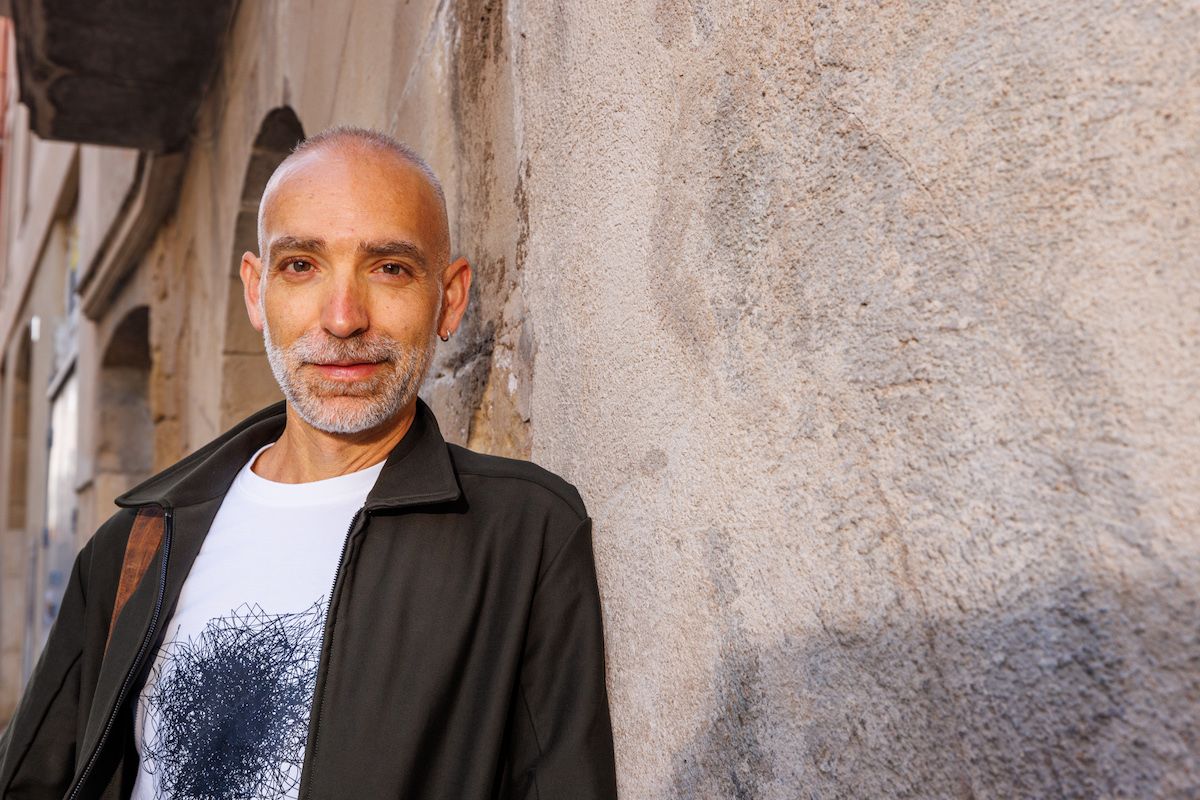
His two books portray that universe about the rural world and its destruction which, shortly, will be completed as a trilogy with the imminent publication of El món exterior. "With this third novel, I wanted to have fun writing a story of existential horror set in the farmhouses of Els Ports." A perfect closing of the circle.
Finding Macondo
After having lived in Barcelona for several seasons, the writer lives in Tortosa, an area that connects with the north of Castellón. "Today they are two different autonomous communities, but historically the area was encompassed in the diocese of Tortosa. We speak a very similar Catalan and have a very similar popular culture. It's my particular Macondo!"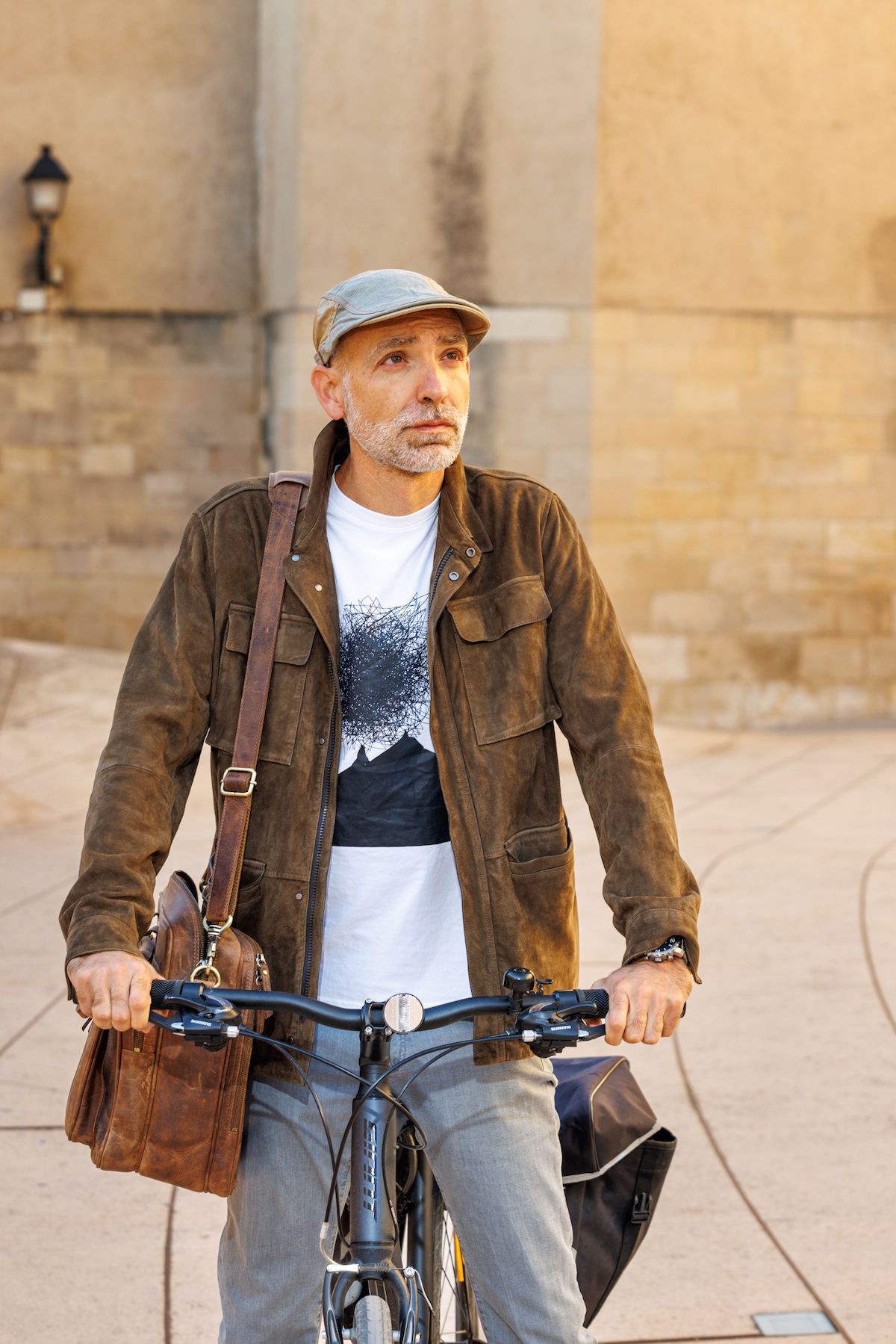
In love with the rebellious character of a Barcelona that has survived bombings and assaults (and that now tries to survive tourist overcrowding), "I find the anarchist and libertarian pretensions of Catalans very interesting, which obviously come from their bad relationship with power and its monopoly on violence. On the other hand, this is a city open to the sea, and this gives us the ability to have very strong opinions, but also great tolerance towards others. Because, in the canteens and taverns of the ports, people argue very angrily, but there is also a very clear idea that the world is diverse and that everyone has their particular point of view."
--- A clear example of this is this Bar. Where human, divine, literary, and subversive topics are discussed, and you also eat very well... in case you want to check it yourself...
Fèlix Edo Tena bursts into a loud laugh. "During the day, I usually eat rations to be able to keep going and function lightly, since my most substantial meal is dinner," he replies. "But what is clear is that it will end, yes or yes, with dessert – he adds –. If I don't finish with something sweet, it's like something is missing!"
Add The New Barcelona Post as your preferred Google source for free
Stay informed with the latest news.
