
Looking straight ahead and seeing nothing but undefined dancing lights and shadows, inconsistent, almost translucent. They intermingle in a senseless and constant dance, which only one artifact can end: a pair of glasses. A device of daily use for many, but absolutely alien to the reality of others. The ignorance of what lenses represent does not exempt anyone from suffering ocular problems that, in some cases, can be completely incapacitating. The Ojos del Mundo foundation was born in 2001 in Barcelona precisely to ensure that people with avoidable blindness problems do not go without a solution, either through glasses or through a simple and economical operation, as occurs with cataracts.
"90% of people with vision loss are due to conditions or diseases that are preventable or curable," explains the foundation's director, Anna Barba. This is the target the entity pursues in the areas where it develops projects: Mozambique, Bolivia, Mali, and Sahrawi refugee camps located in Algeria. In all of them, it has been present for more than 15 years, and works following a method: it intertwines with the local community and the public health and education systems.
"We don't go to countries, operate, and come back; we are there, and our teams are local and remain on the ground," in order to articulate with local actors to address ocular health in an integral and coordinated way, explains Barba. "We do not create parallel systems, but rather we bet on improving existing ones." How? By providing equipment and material and, above all, training professionals.
The foundation's work since its creation in 2001 translates into more than a million people attendedSo much so, that the figure of the entity that most prides its director is the one that reflects that, since 2001, more than 14,800 professionals have been trained through the foundation. These represent an enduring legacy of the entity on the ground, whether or not the foundation's structure is present. This strategy had a baptism of fire that it passed with flying colors: the pandemic. While other entities saw their activity halted due to the impossibility of travel, Ojos del Mundo maintained its influence in the communities where it works.
The foundation's work translates into more than one million people served since its creation in 2001. Its foundation was the result of a trip made by the current president of the entity and former Síndic de Greuges, Rafael Ribó, and the vice-president, the renowned ophthalmologist Borja Corcóstegui. Both traveled with a team of doctors and healthcare personnel to Sahrawi refugee camps the previous year to carry out an assistance project of humanitarian aid to displaced populations. During their stay, 200 visits and 35 interventions were carried out in six days.
It was this experience that pushed them to found Ojos del Mundo, upon realizing the ophthalmological needs of people without access to these services. More than two decades later, in 2022 alone, the entity served 136,000 people and trained 1,500. In addition, it operated on 3,500, most of them for cataracts. "With a simple surgery that costs between 70 and 100 euros, a person can go from not seeing to recovering rights they had lost along with their vision," highlights Barba.
The entity has now gone further: it has created its first mobile optician, to bring basic eye health resources even closer to those who do not have them. A fully adapted van equipped with all the necessary equipment has been traveling the roads of the Mozambican province of Inhambane since July 2022. Since then, the entity has served nearly 3,500 people from the vehicle who did not have access to ophthalmological services, and has delivered more than 180 pairs of glasses.
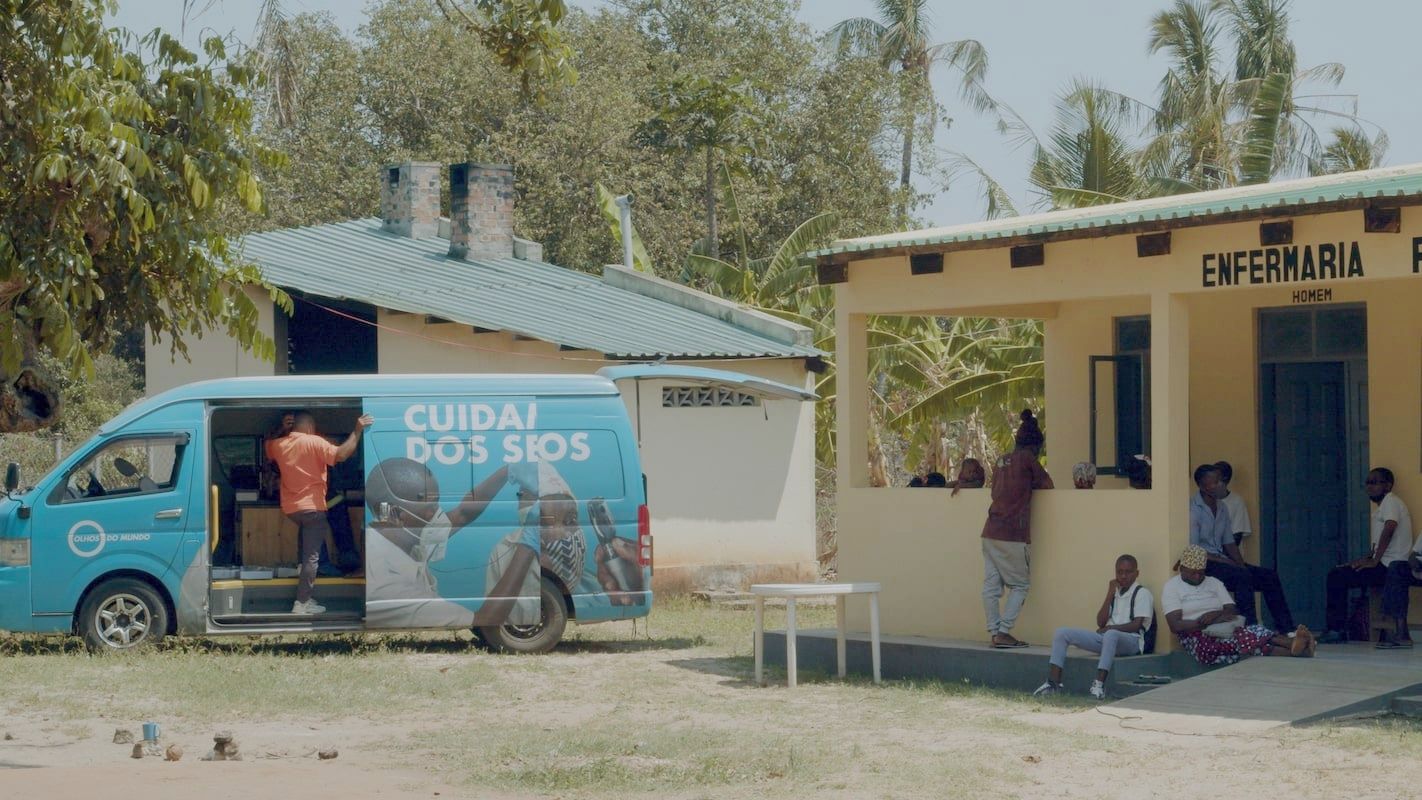
The mobile optician, which aims to be economically self-sufficient, sells them at an adjusted price that allows the acquisition of material to assemble the glasses. It is well below market price but, even so, it is still a prohibitive price for a large part of the Mozambican population: the glasses cost 22 euros, 12 in the case of pre-assembled reading glasses, in a country with a minimum wage of less than 100 euros.
"It is very disproportionate, but the price cannot be lowered further" to guarantee the sustainability of the project, explains Vasco Cote, the coordinator of the Ojos de Mozambique project, where the entity has been working since 2002. However, the organization "always tries to provide a solution" when it comes to serious cases that generate an incapacity for the affected person that would be resolved with the mere gesture of putting on glasses. A 12-year-old albino girl with ten diopters is an example of these cases. "She has such a high prescription that we don't have lenses in Mozambique to make her glasses, and the entity is looking for solutions for her." This degree of myopia practically implies blindness. "So, what degree of academic achievement could she have had? The school failure rate in these cases is very high, and with simple glasses, you can reverse it," explains Barba.
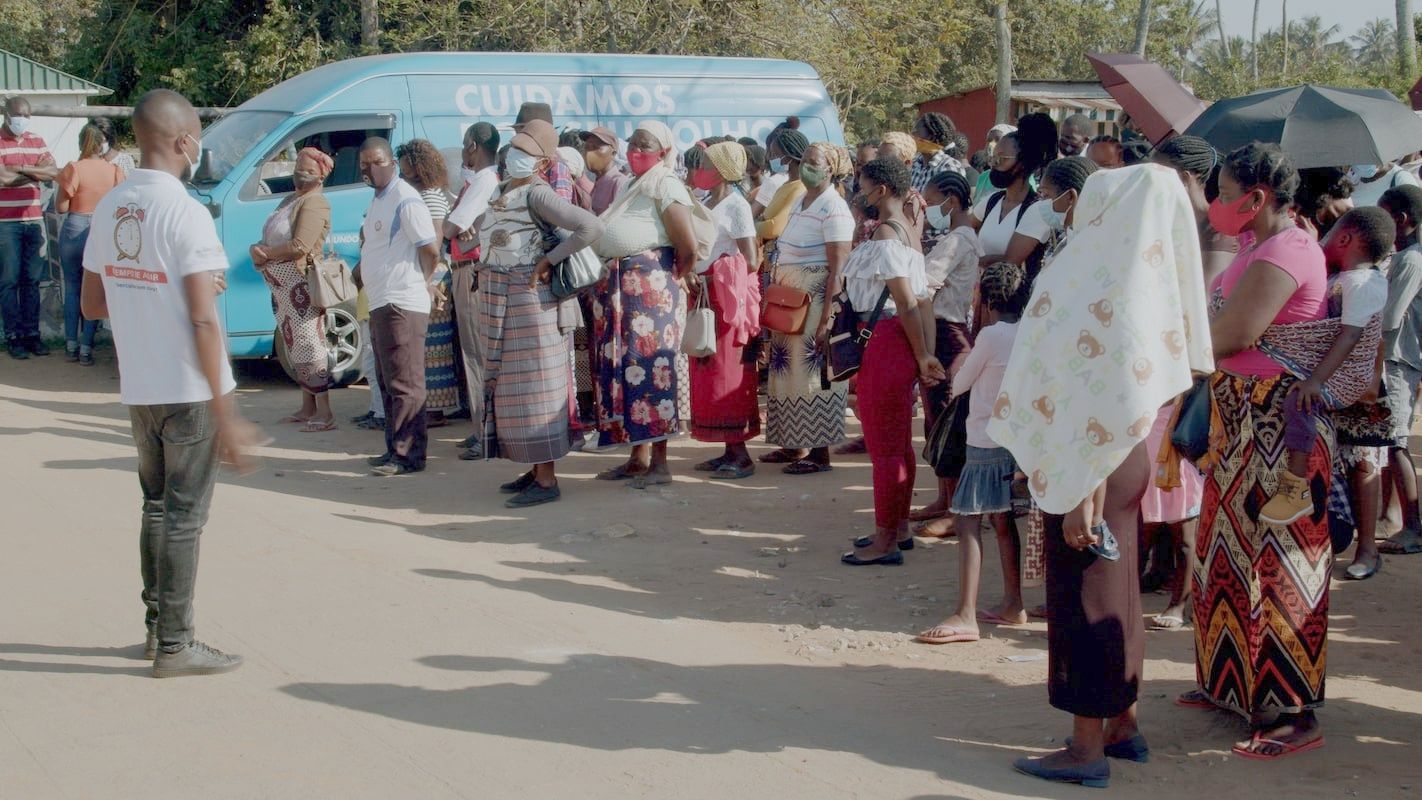
The entity receives donations of glasses, but not enough. And they must be new glasses: second-hand ones can break sooner, and it is unlikely to find someone with the exact same prescription and interpupillary distance: "We neither give nor accept used glasses," Barba concludes. Finding a solution for people who need glasses but cannot afford them is one of the two major challenges facing the mobile optician. The other arises with cataracts: they detect cases that require surgery, but they cannot operate in the van, nor do the affected people usually have the ability to travel to a center to do so. And the distances are not short, and the roads are not good. Traveling a province can represent seven hours by car. "It is a future challenge for us to be able to respond to these two issues," Cote states.
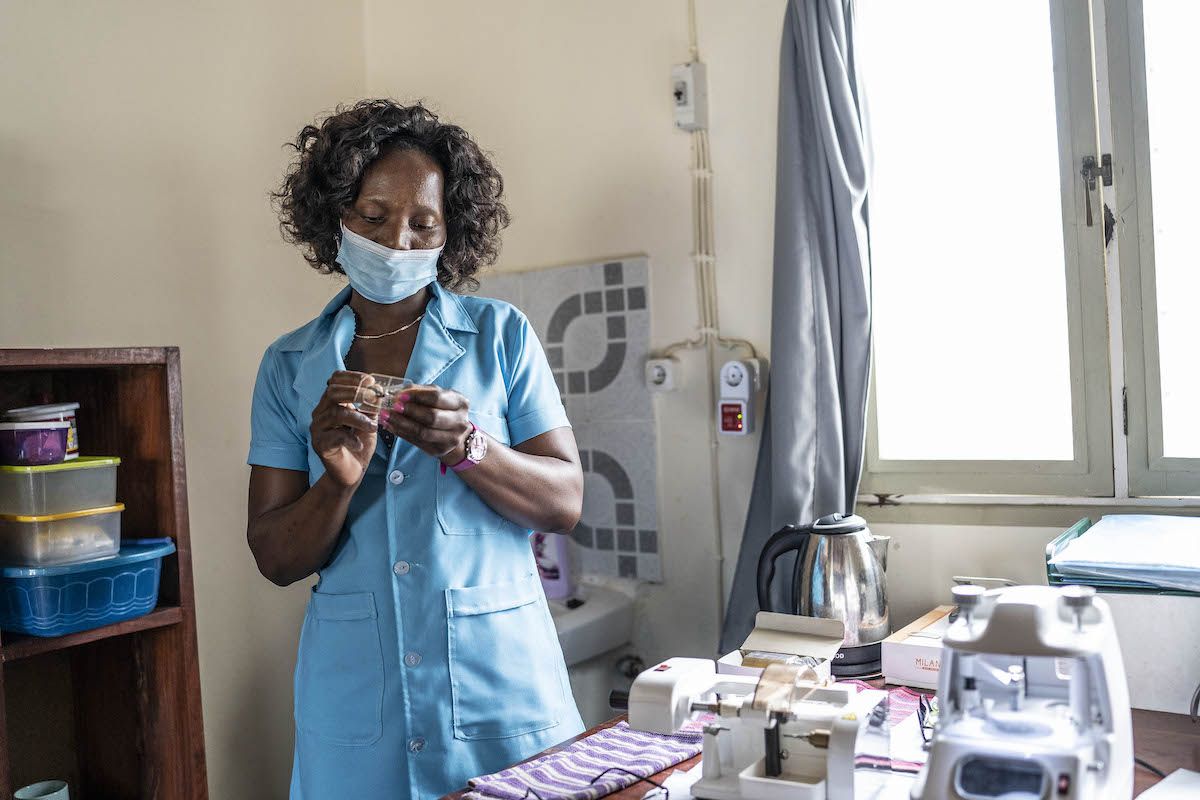
The entity's coordinator in Mozambique explains that the mobile optics unit was promoted with funding from the Barcelona City Council and also from Navarra, with which the van was acquired and equipped. "Now, the goal is for it to be autonomous," a purpose they aspire to achieve with a team of women. The service is managed by women from a local association, who were trained in techniques for assembling glasses and for operating the mobile optics unit, and also received training on management, "so that they can remain sustainable, without the need for external funding," according to Cote. He adds: "The work of these women is not only important in the field of eye health, but also responds to our strategy of economic empowerment of women."
Eyesight and gender inequality
And it is that, despite the foundation's central focus being eye health, it also acts on other areas, such as gender inequalities. But what relationship can inequalities have with eyesight? As women are the ones who assume the tasks of caring for children and other family members, they suffer more eye-related diseases, such as conjunctivitis. And not only that, but "when there is a person with low vision or blindness in the family, the one who stops working or studying to care for them is always a woman or a girl," highlights Barba, who explains that, in addition, there are more women with cataracts due to their longer life expectancy.
Thus, gender inequalities represent a "social determinant of health," as is adequate nutrition and access to clean water. In this context, the entity works with awareness projects and also with improving water sanitation systems, with actions such as the rehabilitation of wells in Mali to prevent an eye disease called trachoma, which can cause irreversible blindness.
With this comprehensive vision of eye health and everything that determines it, the entity faces the coming years with the forecast of growing in the countries where it already has a presence, seeking to expand into new territories. All with the aim of preventing and reversing curable eye problems. It does so with the purpose of ensuring that these problems do not limit access to education, employment or participation in society, objectives that the entity pursues and coordinates from Barcelona to the world.
Add The New Barcelona Post as your preferred Google source for free
Stay informed with the latest news.
