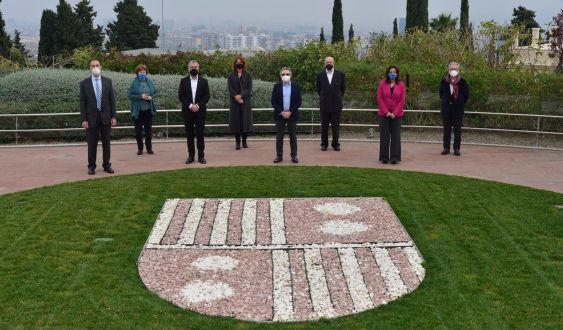
The imminent management of European funds has been in the spotlight for months. The fear of not making good use of them and losing a golden opportunity to strongly reactivate the economy and transform it when the pandemic passes fuels the debate. In this context, IESE has consulted some twenty experts and institutions to begin to draw up consensuses. Participants in the survey included former minister and president of the Barcelona Institute of Science and Technology (BIST), Andreu Mas-Colell; president of the Fundació Hàbitat3, Carme Trilla; doctor and head of Research at ISGlobal Joana Porcel; former rector of the Universitat Autònoma de Barcelona (UAB), Margarita Arboix; president of Barcelona Global, Aurora Catà; president of Fira de Barcelona, Pau Relat, and president of the Port of Barcelona, Mercè Conesa, among others.
[subscribe_newsletter_esp]
A management of the Next Generation EU funds based on metropolitan governance is one of the conclusions of this survey, which considers that the major problems of mobility, provision of services or urban development to generate new housing, offices, research centers and green spaces can only be solved if done jointly among the different administrations that make up Barcelona and its surroundings. The survey also advocates for public-private collaboration, research and innovation, education and training in the use of new technologies, policies to improve equity, the promotion of culture with an alliance between the main actors, and the growth of SMEs.
The experts consulted by IESE believe that efficiency can be gained with the centralized management of funds by the state executive, but warn that bottlenecks can also be generated in the acceptance of projects and greater politicization. That is why they advocate for the creation of a group of independents to be responsible for selecting projects based on public calls. The IESE report includes the idea proposed by the Cercle d'Economia to do so through an independent agency, with the aim of avoiding politicization in the awarding and management of projects, and ensuring that European criteria are met.
For the academic director of the Public-Private Sector Research Center at IESE, Xavier Vives, the survey emphasizes the need to promote administrative and legal reforms to ensure that funds are made effective, after bad experiences in the execution of other European aid, both in Catalonia and in the rest of Spain. For example, he suggests a reform in public procurement that simplifies the administrative system for managing and justifying projects. He also calls for a tax reform to facilitate the growth of startups and an improvement in the processes for evaluating public investment in infrastructure.
Between 1,500 and 2,500 million in funds for Barcelona
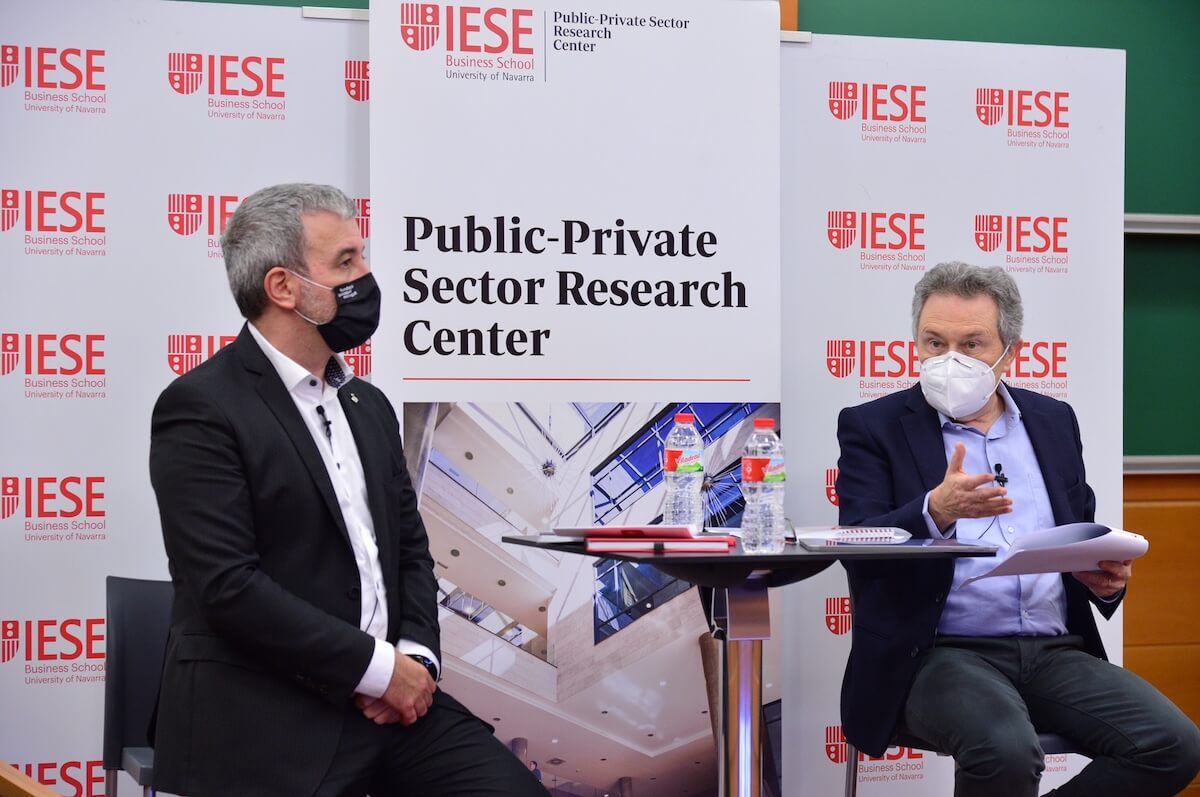
At the presentation of the survey, the first deputy mayor of Barcelona, Jaume Collboni, pointed out that the city could receive between 1,500 and 2,500 million euros from European funds. Primarily, the city council wants to allocate them to boosting the economy through new poles of activity such as sportech or the blue economy, promoting sustainable mobility, committing to renewables and urban rehabilitation, and deploying health and social infrastructures. Collboni added that 80% of the projects that the city council wants to benefit from the Next Generation EU funds are already underway.
The presentation event also included the participation of the president of the Port of Barcelona, Mercè Conesa; the president of Eurecat, Xavier Torra, and the president of the Fundació Hàbitat3, Carme Trilla. Conesa explained that European funds can be used to address infrastructure investments that should have been made a long time ago, such as those necessary to enable railway access, while Trilla indicated that these resources can be dedicated to reversing the current structural lack of affordable housing in Catalonia, which requires at least the construction of 15,000 homes in the next three years. For his part, Torra stressed the need to be rigorous in the management of funds, not only in selection but also in execution.
Coincidence with the projects selected by the Government
The experts consulted by IESE have selected many of the projects that the Govern also wants to benefit from European funds. For example, regarding mobility, they point out the need to increase the capacity of the railway network, with the completion of metro line L9 or the extension of FGC's (Ferrocarrils de la Generalitat de Catalunya) L8 line. However, in this area, experts also advocate for the Mediterranean Corridor and the undergrounding of tracks in L'Hospitalet de Llobregat.
Likewise, in the healthcare sector, the survey agrees with the Catalan executive on the commitment to digitalization and robotization of the health system, in addition to the convenience of strengthening research and retaining talent. In this area, they also see as essential the expansion of hospitals such as Clínic, Vall d'Hebron, and del Mar, and the conversion of the surroundings of Bellvitge. Another aspect in which experts and the Govern are aligned is prioritizing the modernization of industry, the deployment of 5G technology, and a digital education plan.
THE MAIN INITIATIVES TO CAPTURE NEXT GENERATION EU FUNDS ACCORDING TO IESE
- Energy: promotion of renewable energy sources, renewable gases and hydrogen; massive storage infrastructures and development of new generation batteries; energy rehabilitation of buildings; promotion of electric car manufacturing; installation of electric charging points for cars and electrification of the Port de Barcelona
- Digitalization: digital transition in Public Administration, companies, the tourism sector and Fira trade shows; promotion of industry 4.0; deployment of 5G networks; dual education plan and promotion of dual vocational training
- Research and technology transfer: promote research hubs; improve funding; expansion and improvement of research infrastructures such as the BSC and the Alba synchrotron; promotion of talent retention and attraction programs; funding of pilot tests to bring technologies to market and projects to consolidate and grow startups and SMEs
- Mobility: improvement of railway connectivity in Vallès; completion of metro L9; extension of FGC L8; promotion of the Mediterranean Corridor and new accesses to the Port de Barcelona; reorientation of the automotive industry to make it more sustainable and connected and implementation of urban goods distribution centers
- Urbanization and housing: urbanization of underutilized areas; expansion of Clinic, Vall d'Hebron and del Mar hospitals; reform of the Gran Via L'Hospitalet axis; promotion of the Ciutadella del Coneixement; construction and expansion of facilities and promotion of social housing
- Health: talent retention; digitalization and robotization of the health sector; promotion of public-private research; use of artificial intelligence; integration into European data sharing initiatives in genomics and personalized medicine; vaccine research and tax incentives for startups
Add The New Barcelona Post as your preferred Google source for free
Stay informed with the latest news.
