
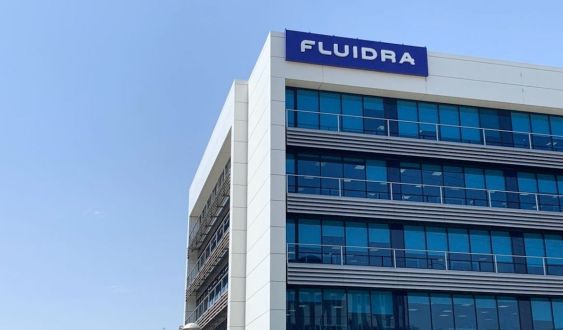
Eloi Planes is president of Fluidra and of the Fundació Catalunya Cultura and vice-president of the Cambra de Comerç de Barcelona. As a young man, he would have put his hand in the fire that he would never work in the family business, but he wanted to buy a car. The popular Renault 4, also known as Cuatro latas. His father proposed him to work by the hour in Fluidra's R&D department and, years later, he has become the president of the leading multinational in swimming pools.
His best-kept secret is dialogue and the unique gymnastics of a company founded by four families who only had one limit: the world. "Failing is a great opportunity to grow," he assures. It is the noble art of learning from mistakes. He dreams of crossing the Atlantic in a sailboat and shares a tattoo with his son: Cycles. Like Frank Sinatra's song in which life is like the seasons and running in cycles.
— You come from a family of entrepreneurs. Childhood memories?
— Family trips in summer that were always to a country where my father had a partner. We all went on vacation, but he took the opportunity to work. I worked, as a young man, moving boxes.
— Learning the trade from a young age.
— My father also made us go to the board meetings of the holding company when we were teenagers, even if we didn't understand anything then. It was part of our training. We lived the company a lot at home.
— You were born the same year Fluidra was founded.
— In 1969. Fluidra was founded by four partners and my father was fully involved. I saw him little because he worked a lot, but he also wanted to enjoy us. It was the duality between the company and the family.
— You studied Industrial Engineering.
— I wasn't clear about what I wanted to study. Antonio, who was my father's right-hand man and the mentor of the second generation, recommended me to do Industrial Engineering to gain time and think about what I wanted to do. I finished Engineering and studied Computer Science, which I was passionate about.
— You trained in business management.
— It was quite difficult for me to decide because I was very curious to learn many things. I also had it clear that I would not work in the family business.
— And here we are.
— If as a young man they had asked me where I would be today, I would have put my hand in the fire that I would not be president of Fluidra.
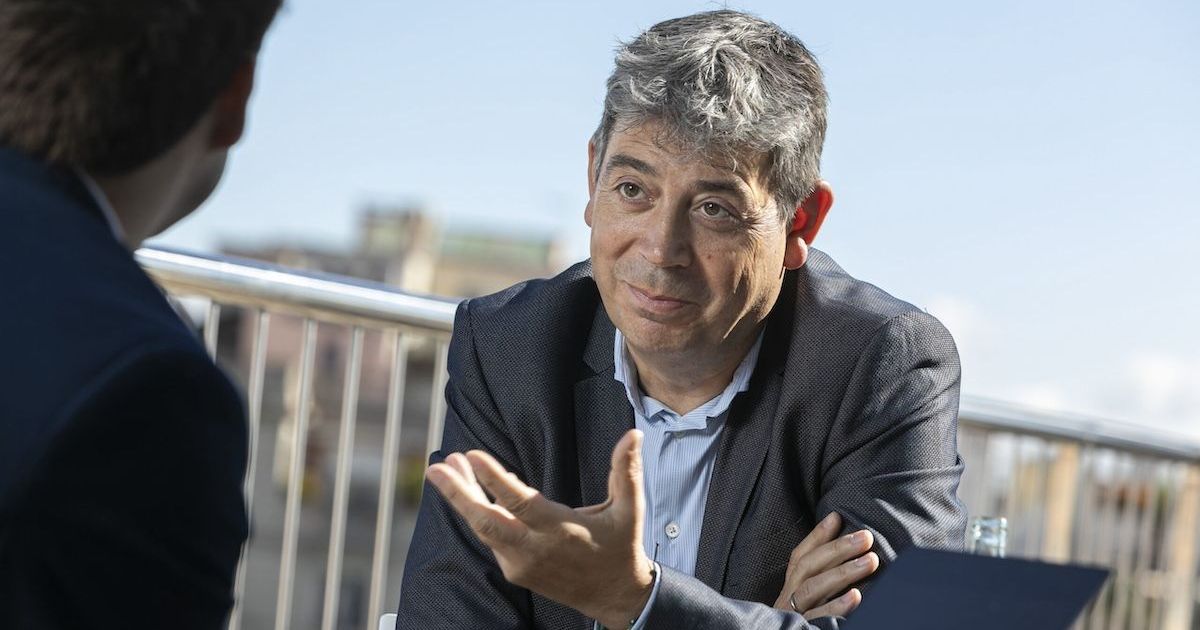
— You would have burned...
— [Laughs]. We used to do programming for companies with a classmate, but we didn't earn much money. I wanted to buy a Renault 4 and my father suggested I work as an hourly engineer in the R&D department.
— You joined the family business to buy yourself an R4 Cuatro latas.
— Antonio encouraged me to get the company into my blood. I went through R&D, product marketing, country strategy, or mergers in the Spanish and European markets, among others. I got into the wheel and I'm still in it.
— How would you define Fluidra: entrepreneurial family or family business?
— It's a company that has the best of family businesses and the best of multinationals. We were born 55 years ago with a core reference of four families. Everyone tells me that if it's already difficult with one family, imagine with four!
"Fluidra has the best of family businesses and multinationals. We are where we are thanks to the exercise of being four families, which forces you to have a common vision and very well-structured governance bodies"
— What is the secret to good coexistence among four families?
— It must be a miracle! [Laughs]. In fact, having four different families, without any kind of bond, has been a great advantage. We are where we are thanks to the inherent exercise of being four families, and that forces you to have a common vision and very well-structured governance bodies.
— What is the family exercise like?
— Having a direct relationship, dialoguing a lot, and reaching agreements. I don't like to talk about professionalization because it can be misleading, as family businesses are very professional. Together we have had to make many decisions; there have been very good moments and others not so good.
— Have you ever thought about selling?
— We have discussed it. We also did a big operation like the merger with Zodiac where the families had to dilute below the majority, even though we were already listed on the stock exchange and were benchmarks. I insist that the capacity for understanding and dialogue has been very important.
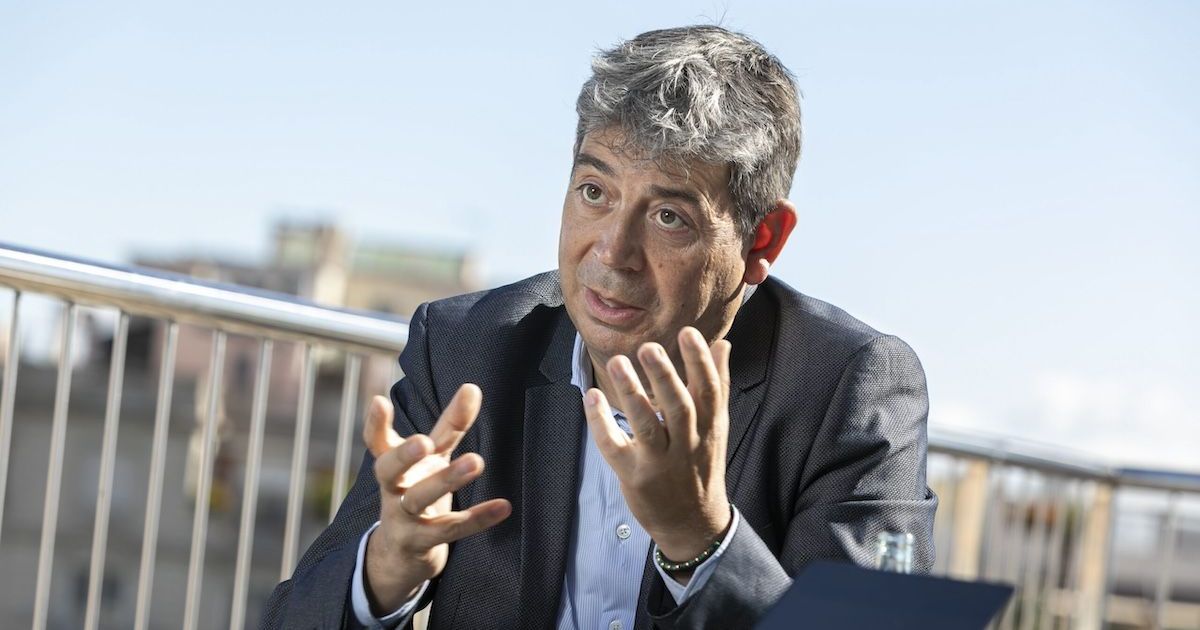
— Dialogue, disposition, and more dialogue.
— Our sector is very interesting, and the company has had good margins, a lot of cash generation, and resilience. Our market is large enough to grow, and we have ended up leading it. This is a good broth to keep everyone together, pay dividends, and have a vision of growth, leadership, and internationalization.
— We return to childhood family trips.
— Exactly! From a very young age, we already understood that the limit is the world.
— How was the merger with Zodiac cooked up?
— Since 2003, we had been growing organically and inorganically. Ours is a very fragmented sector where there are many possibilities for M&A (mergers and acquisitions) operations that help you accelerate product or market strategy, reduce time-to-market, and generate more added value.
— Grow, yes, but not at any cost.
— With the entry of Banco Sabadell in 2003, we carried out many relatively small operations, buying companies that invoiced between 5 and 30 million euros. We went public in 2007 when the American market represented 50% of the world market. We were one of the four major industrial players, and the other three mainly did business in the United States.
"The cooking of the merger with Zodiac was slow-cooked for a decade, and that gave us a lot of perspective on the why of the operation, how we had to do it, and what value we could generate"
— The American dream was trading upwards.
— We became strong in international markets and went from having a presence with our own company in 20 countries to 45 countries in an approximate period of 6 years. We started talking with the three North American players from 2009 onwards. Thus, the cooking of the merger with Zodiac was slow-cooked.
— A cooking of almost 10 years.
— It didn't happen before for different reasons, such as the 2009 crisis. There was a moment when we were not yet ready, and then they weren't either. We started the operation when all the stars aligned.
— The importance of knowing how to find the right moment, between too soon and too late.
— The slow cooking gave us a lot of perspective on the why of the operation, how we had to do it, and what value we could generate. Strategic fit is very important; paper holds everything until the moment of execution.
— The moment of truth.
— 80% of mergers do not end up meeting the objectives and targets that had been set. Fluidra and Zodiac are in the remaining 20%. We took on all the challenges we had set for ourselves and overcame them. I make a very positive assessment of the merger since all the stars aligned in 2017.
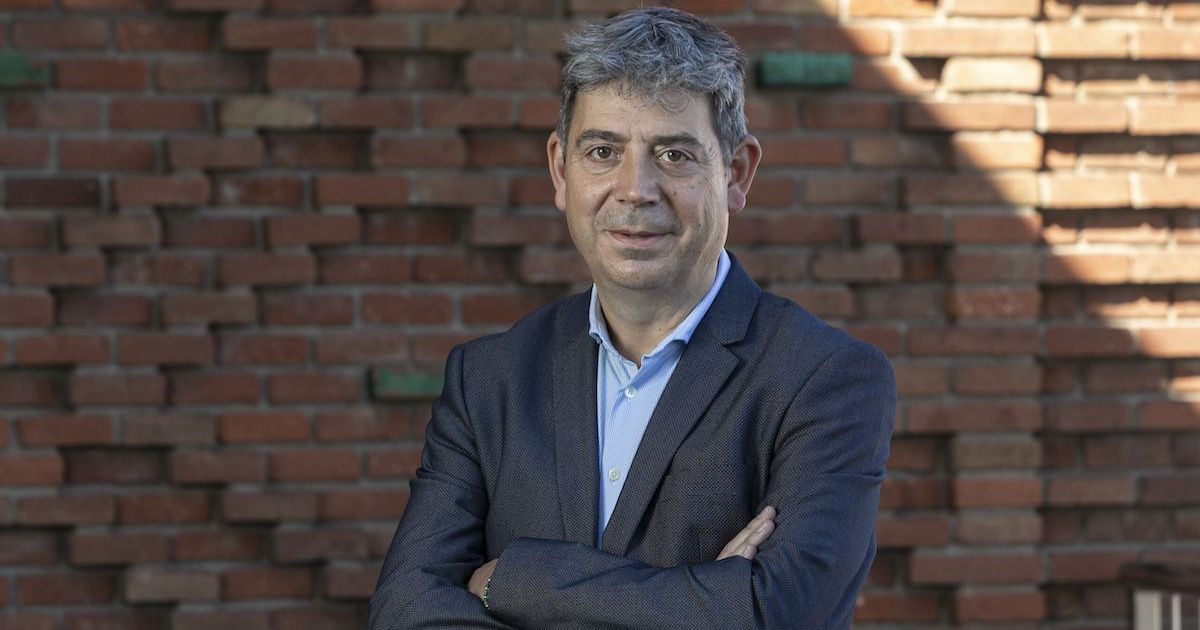
— 2017 was the year of the referendum, the relocation of registered offices...
— We had conversations both in our board and with the fund. We closed the last details of the operation before entering into the full discourse at the end of October. I was flying to London and Carles Puigdemont had just called elections.
— What did they tell you in London?
— I expected all kinds of questions and reactions, but we arranged to meet again in Barcelona a few days later with the lawyers. I remember being on a Friday having lunch with my wife, they called me and I thought they would postpone the operation. They only told me to meet in Madrid. Politics was in the air and it was talked about, but it was not a conditioning factor for the merger because the operation generated a lot of value and had great strategic sense. Those were long days...
— What mistakes have allowed you to advance?
— Some have been unforeseen moments and others, by mistake. We had nothing to do with the economic crisis, but it hit us hard when we were coming from accumulated annual growths of 25%.
— Hit, but not sunk.
— We thought we were Messi's Barça and that the ball would always go into the top corner and we realized that we had to manage differently. We became much stronger as a company and team because we learned to manage complexity.
"Great growth always leads to a scorched earth policy. This has a lot to do with Yin and Yang or expansion, inspiration and aspiration to gain strength"
— What kind of complexity?
— Great growth always leads to a scorched earth policy. This has a lot to do with Yin and Yang or expansion, inspiration and aspiration to gain strength.
— The noble art of learning from difficulties.
--- We also entered a small company in Santander for turnkey projects, but the processes and control systems did not work. It was a significant mess that led to learning when it came to strengthening our control system and growing.
— Digesting growth is not easy.
— One of the problems of growth is its sustainability. Processes and control are an important part. We opted for diversification and had to correct to focus on what we knew how to do. The great risks we can have are also great opportunities and strengths can become weaknesses. When everything goes very well you can lose perspective.
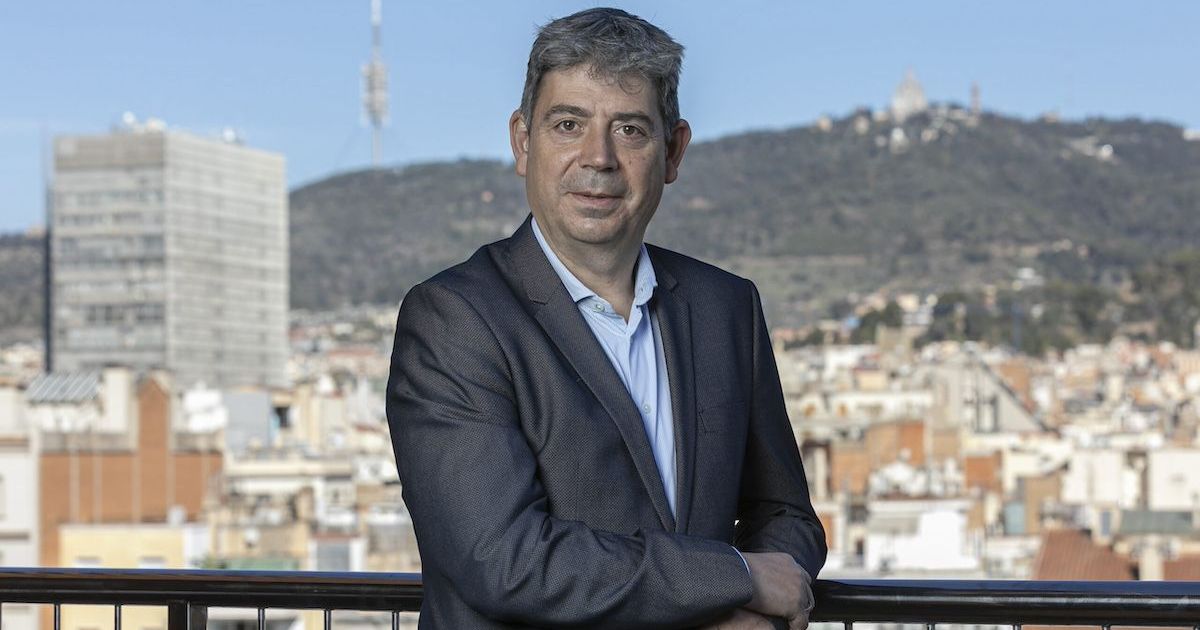
— Failure and success on the same coin.
— We have experienced suffering and also effort. Failures and successes have strengthened us as a company. I remember one day an Anglo-Saxon bank called me because they wanted to organize a business meeting in Spain where failure would be discussed.
— And it failed...
— I said yes, but after a few weeks they called me to say it was canceled because there were no people who wanted to talk about their failures. The Anglo-Saxon mentality believes that one cannot say they have succeeded in life if they haven't failed before, and yet, here it's better not to say you've failed. Failing is a great opportunity to grow.
— You have opted for venture capital.
— It's the open innovation mentality, knowing that to face new challenges we cannot innovate with the formula of the 80s or 90s. When I joined the R&D department, nothing was shared, but innovation now is collaborative and done with alliances.
"Every year we experience droughts somewhere in the world. The big question is how to address it internationally and globally?"
— What alliances?
— Everything goes so fast that you have to try to understand where new technologies and new business models are going. And you can't do it alone. Based on this mentality, we have a structure that works very well for us, which is Fluidra Lab, and it seeks solutions to the challenges we pose. We don't buy businesses with very high risk, but perhaps we put a foot in.
— Let's talk about drought, even if it's no longer fashionable.
— Every year we experience droughts somewhere in the world, for example, in Australia or California. The big question is how to address it internationally and globally? At the Barcelona Chamber, we have established the Observatory of Water Transition because it is a crucial issue that must be tackled with responsibility and a transversal vision. How do climate change and drought affect the swimming pool sector?
— You tell me.
— It's positive because it makes the sector bigger. Although it is a container full of water, the swimming pool has a relatively low consumption because it is a closed circuit where water loss is basically 80% due to evaporation. I'll give you a couple more facts: swimming pools account for 0.15% of the total water consumption in Catalonia, and a hotel with a swimming pool consumes between 1% and 2% more water than a hotel without a swimming pool.
"Swimming pools account for 0.15% of total water consumption in Catalonia. Regulations must be well thought out and not made for show. The swimming pool is the best climate refuge we have and it is not true that it is for the rich or upper classes."
— It won't be because of swimming pools...
— Regulations must be well thought out and not made for show. It is evident that the sector consumes water, but much less than what is said. Technology could reduce this water consumption and make it only 0.05% instead of 0.15%. It must be regulated positively.
— How do you regulate positively?
— They don't prohibit driving a car, but they recommend taking an electric or hybrid car because it has a different environmental impact. In a normal world, outside the specific stress of an extreme drought, you have to regulate positively. The sector has to win the narrative and the drought is an opportunity to do so. The swimming pool is the best climate refuge we have and also the most efficient in terms of water use. It is not true that swimming pools are for the rich or upper classes.
— How do you debunk this narrative?
— The swimming pool has an impact on people's mental, physical, and social health, while technology can reduce its water consumption to almost zero. It only needs to be regulated and see how a drought is managed on a global scale. For example, in Australia, a positive regulation has been made and a house with a swimming pool is now more efficient than one without because they have been urged to optimize the efficiency of their household unit.
— Said like that...
— The black spot of the drought is something else. There are places like Singapore, Israel, or California that have been working on water infrastructures or desalination plants for years. It cannot be that a country like ours goes more than a decade without investing in infrastructure. If we had done the work, we would not be talking about the drought now.
— What more work needs to be done?
— There must be sectoral plans to reduce consumption, for the Administration to provide facilities, and for the sector to commit to executing it. You have to act on supply and demand to make it as efficient as possible. Positive regulation must ensure that final water consumption is efficient.
— A regulation that accompanies before penalizing?
— Why do I pay for a desalination plant if I don't keep it active? Let's secure the aquifer plan. What worries me? That the human being is a bit of a strange animal and everyone relaxes when it rains again. We have a structural problem that will repeat if we do nothing. In 2009 there was a drought and there was an overreaction, but nothing else has been done since then in infrastructure. Very little progress has been made in sectoral plans and regulations.
— You are also president of the Fundació Catalunya Cultura.
— Andreu Mas-Colell told us in 2014, coinciding with the second looping of the crisis, that the Administration had no more money to invest in the culture sector, while culture did not have the necessary recurring investment to develop with all possible strength.
"How could we help the cultural sector beyond direct patronage? We decided to accompany cultural projects in their most entrepreneurial and business aspect to make them more solid and sustainable"
— Patronage was not enough.
— All the companies present had a certain impact on the cultural world because it was part of our corporate social responsibility, but we had to do something more. This is how the Fundació Catalunya Cultura was born.
— And that day will be 10 years.
— It was complex and I thought it was impossible for it to turn out well. How could we help culture beyond direct patronage? We decided to accompany cultural projects in their most entrepreneurial and business aspect to make them more solid. More than 200 projects have passed through Impulsa and our will is to give them visibility, help them find the resources they need and make them more economically sustainable.
— How to do business pedagogy from a cultural perspective?
— Culture has great importance in the territory and in the country because it makes it more cohesive, more cultured and people want to move forward. We have explained it and we continue to explain it, developing a Patronage Law or the Artist's Statute and ensuring that public investment in culture per inhabitant is at the level of the European environment.
"Culture has great importance in the territory and in the country because it makes it more cohesive, more cultured and people want to move forward"
— Is the balance positive?
--- It is important to help the cultural entrepreneur or creator make their project as solid as possible, with longevity, talent, and a competitive environment. Catalonia is a great creator of talent; let's make sure it doesn't leave.
— How do we do it?
— Yes, all this is very nice... But how do we do it? And 10 years have already passed. We have more and more people associated with the Fundació Catalunya Cultura, we have launched the seal of companies committed to culture, we award the Impulsa Cultura Prize, we celebrate the Business and Culture Night... We have managed to broaden business sensitivity towards cultural perspectives.
— Is the Patronage Law a good solution?
— We are very proud that the foundation has played such an important role in the Patronage Law. It's not exactly what we wanted, but at least it has been moved forward and approved at the state level. It's the culmination of 10 years. We always said it would never happen...
— And it happened.
— We needed a Patronage Law because the previous law did not contemplate, for example, crowdfunding or the expanded sections. This law is more than just a facelift because it represents a significant advance for culture. Even so, it still has a long way to go.
— What is this journey like?
— A Patronage Law is as important as dedicating resources to educating about patronage. The French created the house of patronage where they explained, town by town, the benefits of patronage and its return. France has many more foundations in culture, society, and research than Spain, and at the same time, it has many more people engaged in patronage.
— Saving culture and not just for the love of art.
— Making projects sustainable and less dependent on the Administration or patronage. Supporting cultural projects in the territory has a direct return for the company. We are not talking about romantic patronage, but real patronage.
"The Patronage Law is more than just a facelift because it represents a significant advance for culture"
— In France, they are very clear about it.
— Their pride in culture is immense because they are very clear about what it brings to them as a society. Patronage is about making society stronger through a small theater, an old mill, or a cultural event. I remember a company that gave music lessons to its employees, and then they formed a band.
— Not all impacts are measured in an Excel spreadsheet.
— There are tangibles and intangibles. If the entrepreneur believes in it, then they push. Everything in life balances out. We go back to Yin and Yang. I am second generation, I took over a company that billed 300 million euros and today it already bills 2,000.
— What is more difficult: starting or scaling?
— Building a company of 300 million euros from scratch is very difficult due to the risks involved, as well as the way to build and consolidate. Scaling is not easy either, but you can only do it if a good foundation has already been built around the entrepreneurial DNA, internationalization, or people's values.
"Barcelona is an extraordinary city and helps a lot to attract talent. The cultural legacy of the business world is spectacular! We are also an associative society. We have to take a step forward as a society in cases like housing or water"
— How do you see Barcelona?
— Barcelona is an extraordinary city. To improve, one must be critical, but Barcelona is a much-loved city if you travel around the world. We have practically everything: culture, climate, geostrategic position...
— Are the winds favorable?
— Without being the country's capital, Barcelona is a global city with a size large enough and small enough to have warmth and a close way of doing things. Barcelona helps a lot to attract talent.
— What role does civil society play?
— Barcelona has a civil society that, in general, is quite involved and makes a difference. The cultural legacy of the business world is spectacular! We are also an associative society. Sometimes we err on the side of setting up too many small ventures and it's a bit hard for us to come together, but we have been an example in many things.
— Do we need more and better public-private collaboration?
— It is an excellent solution, which is already being done and we should aspire to do even more. At times there has been suspicion and at others, a lack of focus. We must take a step forward as a society in cases like housing or water. We have a good broth, we must be critical in many things but we must also be positive with the ingredients we have.
— What should happen after the criticism?
— We must push. We must take advantage of those moments with administrations where things flow quickly. It is a job that takes time, drop by drop, and constancy. I believe and firmly believe that we have the foundations to push. We can be critical, but to build and not to destroy.
— The previous interviewee of Persona a Persona, Helena Guardans, asks you the following questions:
— Do you think it is important for a company to contribute to the patronage of culture where it develops its business?
— Companies generate impact wherever we have activity, whether it is productive or commercial activity. The people who work in it, the suppliers, the customers are part of our people. If the company thinks about being close not only generating impact but also taking root, creating pride of belonging and helping the society where it develops its activity to grow, then one of the best investments is to help and support the cultural world around it. I firmly believe that a company that supports culture receives an enormous return in the form of more cohesive, more loyal and happier people.
— What is the main factor that would explain Fluidra's success and growth worldwide?
— Fluidra has always thought that the limit was the world. When we have gone out to sell abroad, we have always done so with a clear idea, how and when we could open a subsidiary in the country. We have not looked for opportunistic sales, but have always thought about the next step. We have done it systematically, looking for local partners to accompany us. Sometimes we have arrived late, because the market was already very structured, in these cases we have made acquisitions or alliances with companies and we have incorporated the talent of the acquired companies. At Fluidra we are convinced of the need to adapt to the market, we are Americans in America, Australians in Australia, French in France or South Africans in South Africa.
— Any advice on your leadership model?
— I believe in the strength of teams, if you want to go far you have to be very well accompanied. Diversity in thinking, commitment to the project, effort, resilience, passion for what one does are essential values in the team that accompanies you. Ensuring that people fight every day for a common goal, listening and reflecting, I believe is part of our DNA.
LIFE SET
- Role model: Joan Planes, my mother and Antonio Estarri
- Book: The Alchemist by Pablo Coelho
- Movie: Life is Beautiful and Anatomy of a Fall
- Song: Cycles, by Frank Sinatra (I have it tattooed with my son)
- Favorite spot: Es Tamariu (Seu d'Urgell)
- Life motto: We are in the world to love, learn and enjoy
- Dream: Cross the Atlantic in a sailboat
Add The New Barcelona Post as your preferred Google source for free
Stay informed with the latest news.
