The Kenyan writer Ngũgĩ wa Thiong'o, in his book Decolonising the Mind, said: "Artists are part of the process of image-making. Artists make pictures of the world." Faced with a European ethnocentrism that has marked cultural hegemony and has displaced other creative centers to the margins or turned them into attractive exoticisms, current trends show a willingness to bring closer and make visible the multiplicity of social realities to obtain, with the voice of their protagonists, a genuine understanding of other cultures. We are talking, in short, about decolonization, shared customs, about swimming in other imaginaries.
With these ideas in mind, the Etnoscòpic festival is born from the joint proposal of Eufònic, the festival of the Ebro Lands, a reference in sound, visual and digital-performative arts, and the Museu Etnològic i de Cultures del Món of Barcelona and is held from May 27 to 30 at the museum's headquarters on Montcada street, in the Born neighborhood. It brings together a wide variety of artists who show the creative diversity of Africa, Asia, America and Oceania and who reflect on ethnology, the science that studies world cultures through the combination of artistic and digital techniques with a disruptive yet dreamlike background.
A wide variety of artists who show the creative diversity of Africa, Asia, America and Oceania gather there.Frisland is a well-known phantom island in the Atlantic Ocean that first appeared mapped on a map by Nicolo Zeno in 1558. After almost a century and a half of constancy on maps, its trace was erased from 1693 onwards. We can only hypothesize whether it was a voluntary creation or a mistake in which a nearby island was duplicated.Through this anecdote, the artist and musician Andrew Pekler (Uzbekistan, 1973), in collaboration with anthropologist Stefanie Kiwi Menrath, presents the installation Phantom Island: A Sonic Atlas, a world map that traces the sounds and stories of these phantom islands through pseudo-ethnographic music, synthetic music, and unreal field recordings.
This dreamlike aesthetic that blurs various planes of reality is also perceptible in Blacksea Não Maya, led by DJ Kolt, who presents his new album Máquina de Vénus, a work of dark atmosphere and obscure sounds, a mix of traditional Angolan rhythms and contemporary club music from the suburbs of Lisbon.
The Etnoscòpic festival program features other musical activities and concerts: collages of popular music linking the different peoples of the Mediterranean (Antropoloops), Greek folklore combined with the futurism of auto-tune (Christos Chondropoulos), avant-garde electronics (Sandra Monfort), radical and psychedelic pop (Atomizador), symbolic correlations between makina music and Catholic folklore (Marc O'Callaghan) and a DJ set that transports us from Japan to America (Troya Modet).
In addition, there are a couple of dance pieces (Toni Jodar and Raquel Gualtero), an audio guide that questions the real uses of museum objects (Irene Visa) and sculptural artistic installations (Martín Kaulen) and visual ones (Lola Mansilla), where we highlight the intervention of the French-Guianese artist Tabita Rezaire (France, 1989) who questions electronic colonialism and decolonization through the politics of technology and ancient African-rooted spirituality. Her provocative language explores themes such as the disconnection from life, racism, and identity.
Tabita Rezaire (France, 1989) questions electronic colonialism and decolonization through the politics of technologyIn addition to the multiple scenic proposals, the Etnogràfic includes a cycle of talks. The first, with the artist and ceramist Rosa Amorós, who talks about her private collection of primitive art and the links between it and her work, marked by primitivism and symbolic elements; the second, with Tania Adam, journalist and cultural producer who explores black diasporas and African music; and the third, with the philosopher, writer and cultural agitator Franco "Bifo" Berardi, where he reflects on the transformations of work, society and the media in the era of globalization.
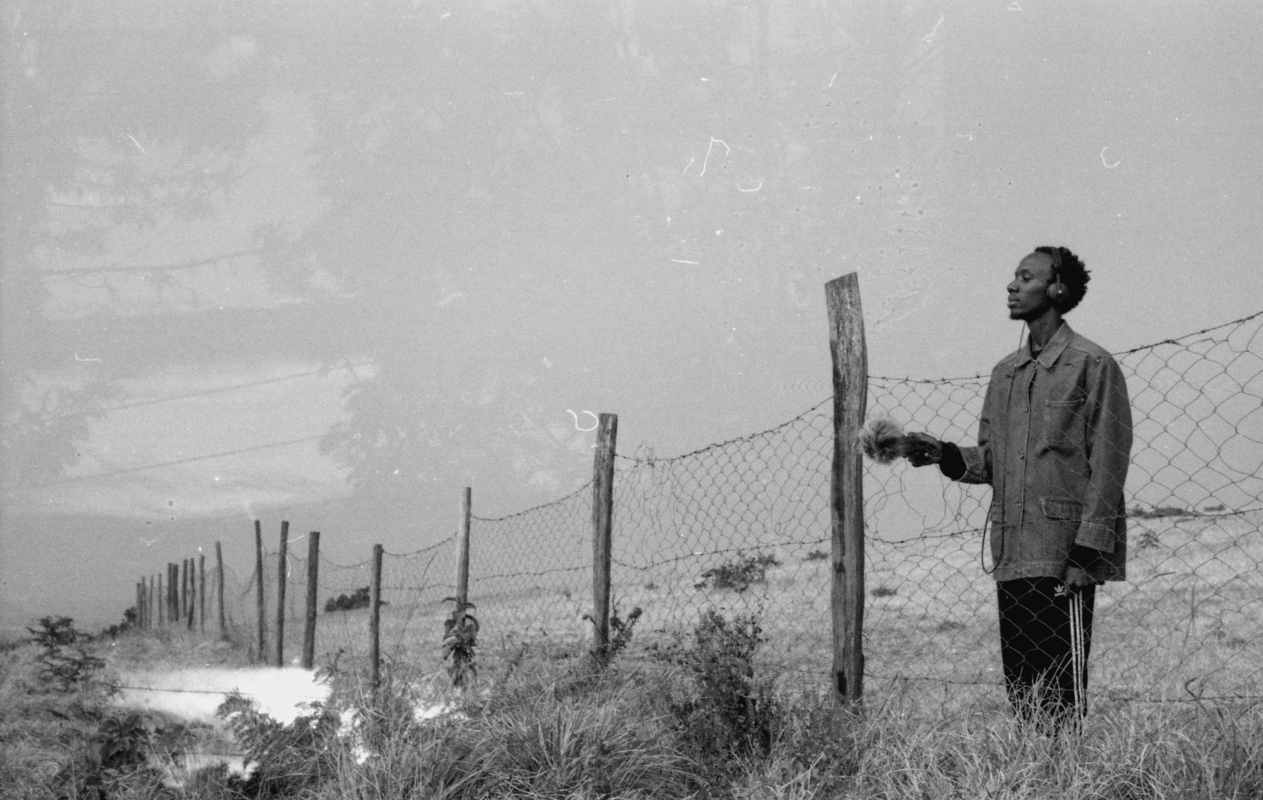
As a grand finale, the Etnoscòpic festival organizes an exclusive concert in the Basilica of Santa María del Mar by the musician and producer KMRU, alias of Joseph Kamaru, born in Nairobi and residing in Berlin, a leading exponent of the East African experimental music scene. His productions include field recordings, improvisation, noise, radio art and machine learning.
Add The New Barcelona Post as your preferred Google source for free
Stay informed with the latest news.