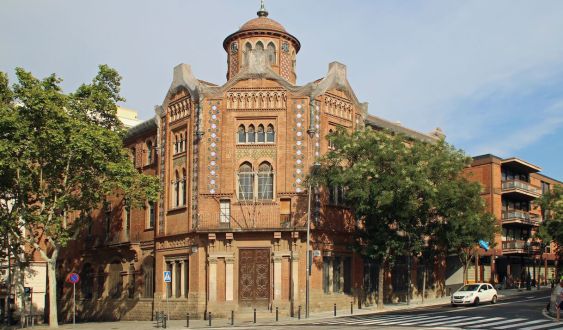
The Casa de la Premsa is one of the surviving palaces from the 1929 International Exposition. It is located in Montjuïc, at the confluence of Rius i Taulet avenue with Guàrdia Urbana street, and has been closed for decades with accumulated structural problems. A few weeks ago, the Barcelona City Council, which owns the building, announced the umpteenth project since it definitively fell into disuse in the 1980s and has been insistently demanded by the residents of Poble-sec for it to be given a purpose.
Now it seems there is a decision that is expected to be definitive, and that is for it to be used as a library. Just a few months ago, there was talk of it becoming the headquarters of the Museum of Performing Arts, currently at the Institut del Teatre. This possibility now seems discarded, and another abandoned building, the old cannon foundry at the beginning of La Rambla, is being considered for the location of a facility also long demanded, this time by the theater community.
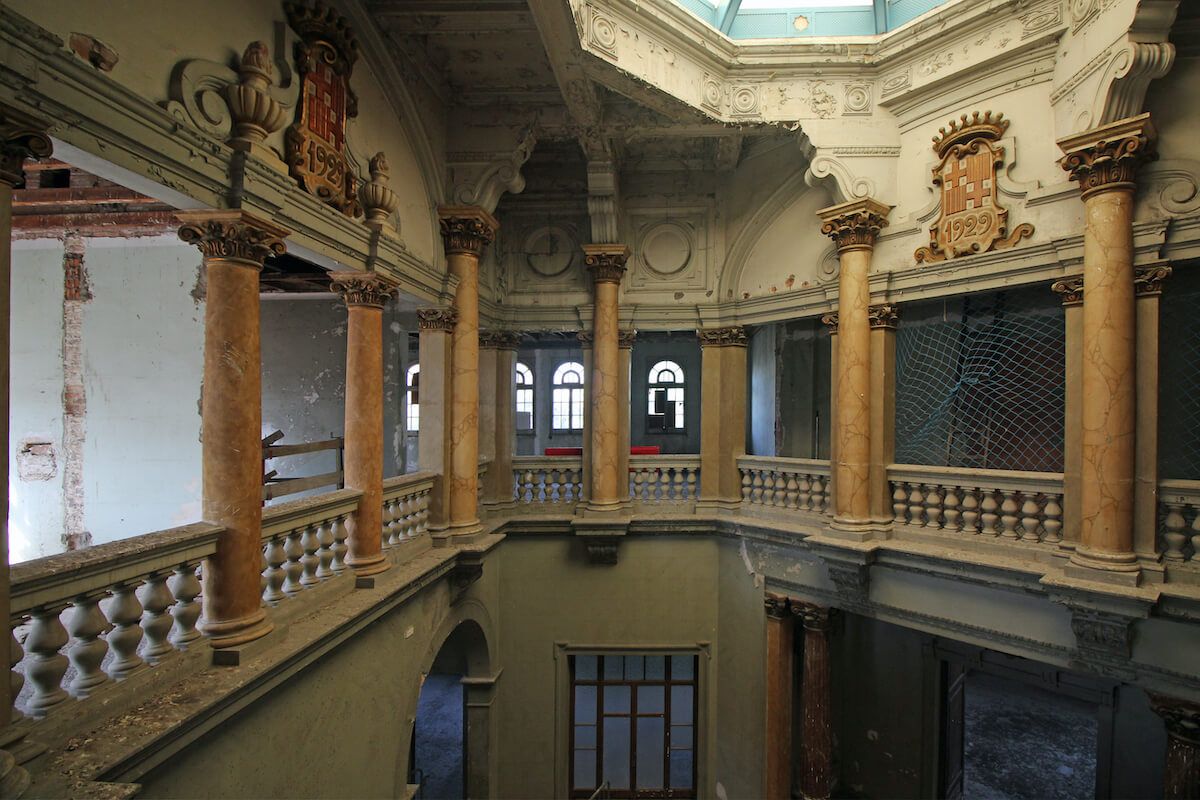
The Casa de la Premsa from 1929 is a spectacular building, especially its interior. It was commissioned to the architect Pere Domènech i Roure, son of Lluís Domènec i Montaner. This explains some architectural similarities with the Hospital de Sant Pau, one of the masterpieces of Domènech senior. It is distributed in spacious areas, very suitable for the installation of a library. A grand staircase, a dome that allows natural light to enter, and some elements from the past, such as unique Barcelona shields, also give it personality.
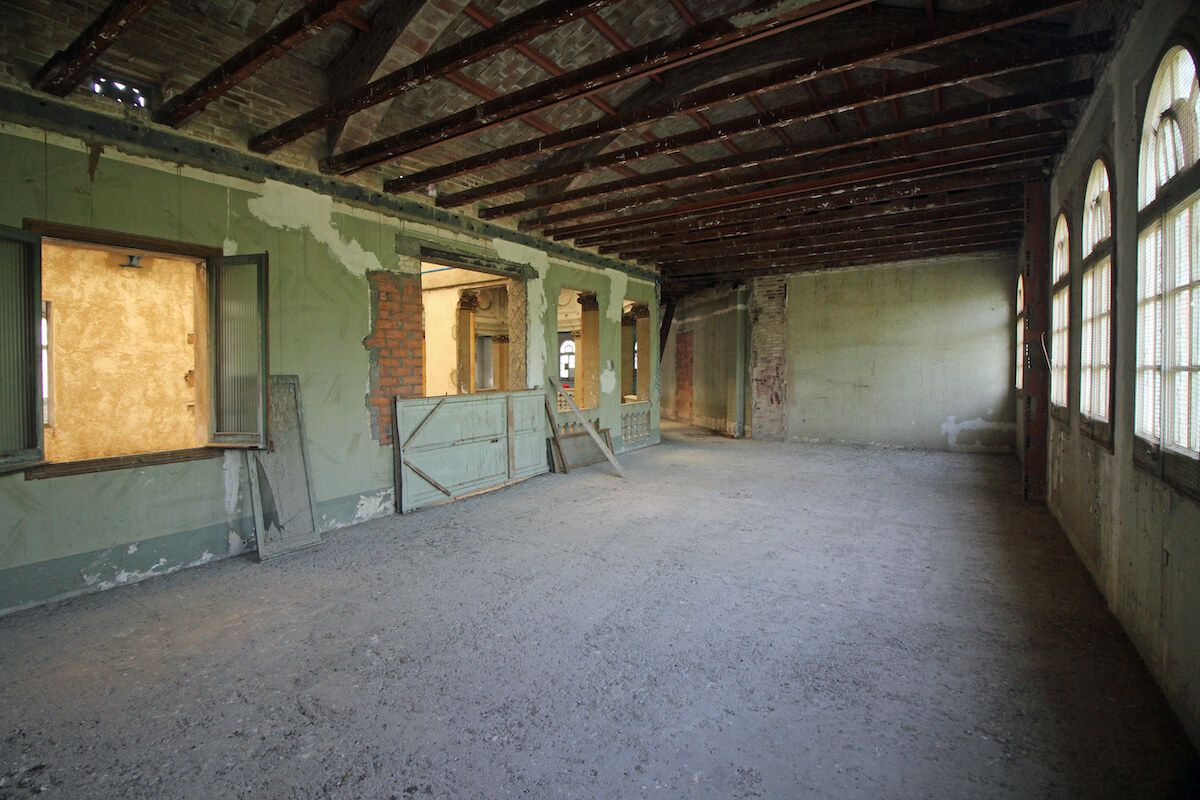
In its day, the Casa de la Premsa was a cutting-edge press center, with the latest innovations in communication that allowed international journalists covering the event to comfortably and promptly send their reports and photographs. Today it would seem like archaic technology, but at the beginning of the 20th century, having the latest in mail and telegraph services, telephone booths, a photographic laboratory, a library, and offices and meeting rooms equipped for work was a luxury for professionals. Even 13 bedrooms with bathrooms were enabled on the upper floor.
In fact, it was proposed that after the exhibition it would continue to function as a press center and international promotion center for the city, but it did not happen. Initially, it was allocated to the exhibition liquidation offices, and later it was transferred to the Guardia Urbana, which occupied it until the 1980s. Since then, 40 years in search of a destination.
Now, the possibility of it becoming the Poble-sec library, in addition to a community and neighborhood facility, means that seven million euros are foreseen to rehabilitate and adapt the building to its new use. The idea is for it to be launched in 2029, when the centenary of an event that, in addition to urbanizing Montjuïc, served for Barcelona to promote a great transformation that included the monumentalization of Plaza Catalunya, the opening of Via Laietana, the first metro lines and the rehabilitation and construction of large public and private buildings, among other actions, will be commemorated. Saving the distances, in its time, the international exhibition represented a global transformation almost equivalent to what six decades later was associated with the Olympic Games.
Within the framework of the initial forecasts, the opening of the new library will not mean the closure of the current one on Blai street. Thus, the project contemplates the coexistence of both facilities and that in this way the necessary library surface ratios for a neighborhood of just over 40,000 inhabitants are met.
One of the architectural complications has been resolving the union of the building with the current headquarters of the Guardia Urbana, which prevented, for example, the future library from having the mandatory fire exit. The solution will be to eliminate two rooms on the ground floor of the police headquarters and, in return, add a new floor that compensates for the lost space.
Now we just have to cross our fingers and hope that this is the definitive one and we can finally enjoy a building that made history in 1929.
Add The New Barcelona Post as your preferred Google source for free
Stay informed with the latest news.
