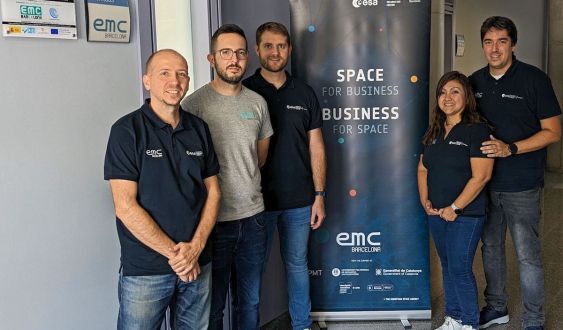
The struggle for technological sovereignty is no longer only fought on Earth, but has also moved into space. A struggle in the form of nanosatellites orbiting at low altitude that allow obtaining information about life on Earth or ensuring connectivity across the planet. And in this aerospace race, not only powers like the United States or China compete, but territories like Catalonia also seek to establish themselves as relevant actors in this new space economy (NewSpace). So much so that, since 2020, the Generalitat has promoted the NewSpace Economy Strategy, successfully sending the first nanosatellites into space.
Even so, in this new and powerful economic sector, not only are companies responsible for manufacturing and launching nanosatellites into space essential —such as OpenCosmos or Sateliot—, but in parallel, an entire ecosystem of innovative Catalan companies is also being created that make possible and improve the technology of these essential instruments for conquering space. Companies like EMC Barcelona, focused on verifying the electromagnetic compatibility of space devices, that is, verifying that these devices can function correctly without interfering with other electronic elements in the environment.
The origin of this startup, in reality, is very far from the aerospace sector. Marc Aragón, Marc Pous, Iván González, and Marco Azpurúa, researchers from the electromagnetic compatibility group at the Universitat Politècnica de Catalunya (UPC), decided to found the company in 2020 with the objective of "checking and guaranteeing that any electronic device can function correctly without interfering with the operation of others, focused mainly on telecommunications," summarizes Marc Aragón, co-founder and CEO of the company. That is, carrying out tests to check, for example, that the microwave can function without interfering with other electronic devices in a house, or that a mobile phone can be used on an airplane without causing a problem.
Thus, EMC Barcelona provides its services to companies that develop electronic machines and want to validate the compatibility of their devices. But, in addition, the startup also stands out because they can provide advice or recommendations so that a machine meets the necessary electromagnetic compatibility requirements.
In addition to its commercial services, the constant research and innovation of its technology also stand as an essential pillar for the company. "Electromagnetic compatibility tests have remained practically the same since World War II, and, for this reason, one of our missions is to optimize and make these tests more efficient and updated to current technology," emphasizes Aragón. In fact, so high is the company's investment in R&D, that research represents almost 50% of the startup's activity, in addition to another 50% of its activity focused on providing services to clients.
In this sense, the startup's relationship with the UPC ---a center where some of the founders of EMC Barcelona are still associate professors--- is essential to carry out research projects through collaboration agreements. In total, in the company's five years of trajectory, they have managed to attract aid for public projects worth 1.2 million euros, among which are included the Neotec aids promoted by the CDTI (Center for Technological Development and Innovation of the Ministry of Science, Innovation and Universities).
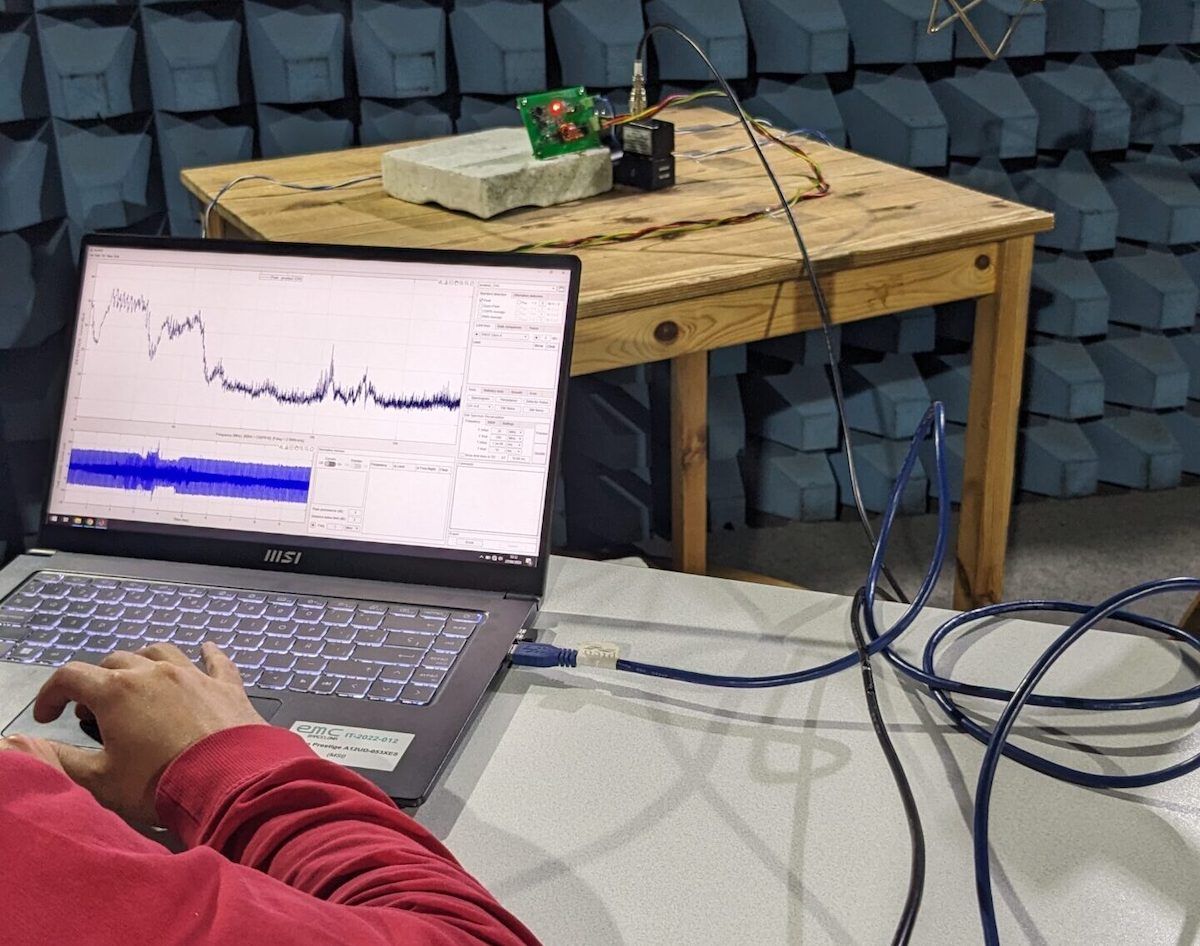
"For us, research is essential, not because it provides us with immediate profitability, but because it allows us to improve our services and always be one step ahead of client needs, since there are new technologies and machines to which different compatibility tests must be applied than those of a century ago," remarks Azpurúa, co-founder and head of R&D at EMC Barcelona.
One of these new technologies that require innovation and new innovative compatibility tests is the NewSpace sector, as companies must be able to guarantee that these new nanosatellites do not interfere with other machines in space. Thus, it was in response to this innovative spirit of the company that its founders decided to apply to the ESA BIC (European Space Agency Business Incubation Centers) incubation and acceleration program, that is, the European Space Agency's business incubation center located in the Parc Mediterrani de la Tecnologia, at the UPC of Castelldefels. A program they have been part of since the beginning of the year and which, they say, has offered them training and advice on topics as varied as intellectual property or business planning.
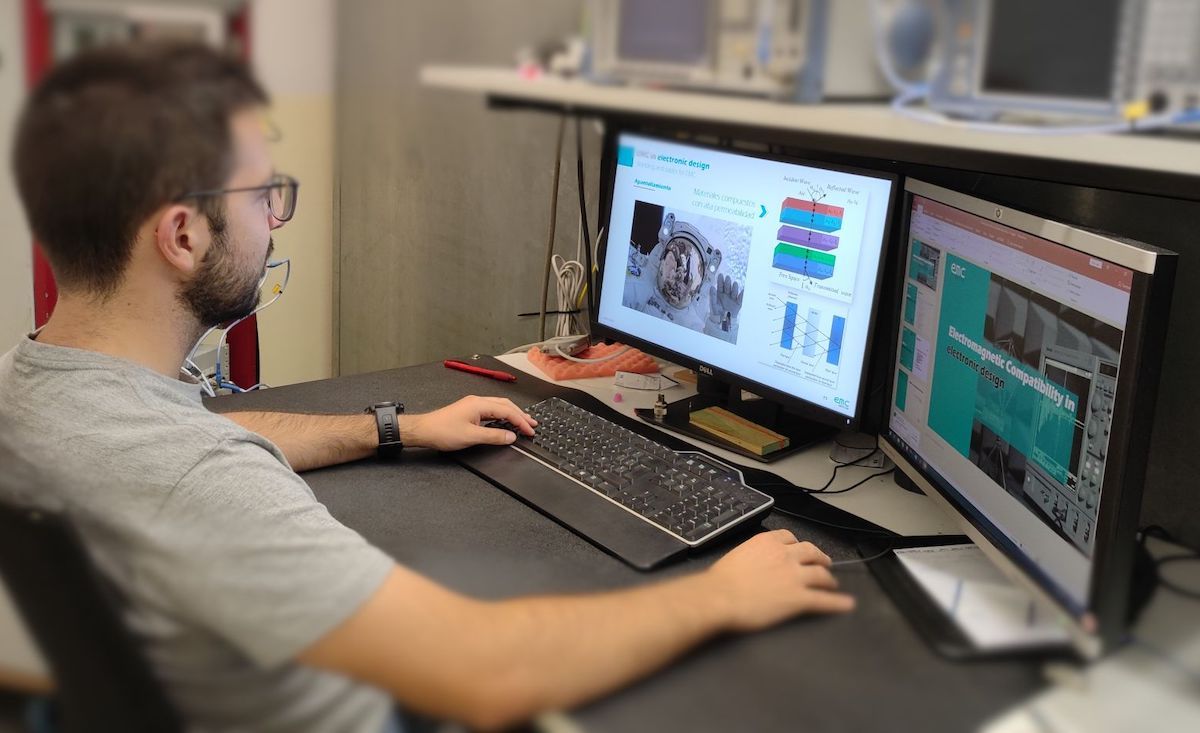
All in all, the company provides services to about fifty clients annually, especially small and medium-sized companies that develop electronic devices. Even so, and especially after having entered the aerospace sector, they are increasingly taking on larger projects, both in terms of complexity and profitability, reaching their first major international clients.
On the other hand, in addition to providing specific services to clients, EMC Barcelona, which already has eight employees, also markets emiGO, its software compatible with oscilloscopes to carry out, quickly and easily, electronic compatibility tests. As part of its time at the ESA BIC incubator, the startup has adapted this software to the NewSpace sector and has managed to integrate this system into the European Space Agency's electromagnetic compatibility group. With all these commercial services, the startup expects to reach a turnover of half a million euros by the end of the year.
Even so, in order to develop increasingly larger projects and continue betting on research and innovation, EMC Barcelona recognizes that its facilities, on the UPC's Nord Campus, are starting to become too small. Thus, one of the company's objectives is to be able to have its own laboratory in which to carry out these compatibility tests, a facility that would entail an investment amounting to two million euros. To get closer to this objective, a large part of the economic aid provided by the ESA BIC program, of 50,000 euros, has been allocated to equipment that will be integrated into this new laboratory in the future.
Add The New Barcelona Post as your preferred Google source for free
Stay informed with the latest news.
