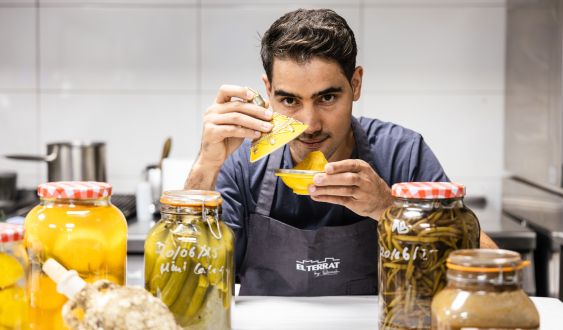
The name of Mohamed Quach is one of the most promising on the Catalan gastronomic scene. And his restaurant, El Terrat —already in the Repsol Guide with one sun—, is among the most interesting you will find in the ancient Hispania Citerior. Although it opened its doors in 2018, it was the revelation award at the 2025 National Gastronomy Awards that put the spotlight on his cuisine; a sensitive fusion of Mediterranean tradition, international influences, and sustainability that has consolidated him as a talent. What makes him different? The passion, the gaze. In his menus, he explores the recipes and pantry of Tarragona —that of yesterday and today— and his excellent pairing examines the designations of origin of the province.
Quach is a chef who glides through the recipes respecting the essence, but without being a purist, exalting the flavor but giving it coherence with the present moment. For example, presenting the garum romano at the table with its glass jar, that reuse brine invented by the Romans that connects ancient Tarraco with this current city that, being so seen, sometimes forgets its origin and lives with its back to the sea.
A story worth telling
Who is Moha Quach? El Terrat is very close to La Rambla, in an alleyway that looks out onto the Mare Nostrum, the sea that names its main menu. The maritime proximity inspires the chef to blend his vision of Catalan cuisine (especially from Tarragona), Roman, and Moroccan. Because, born in the Rif (northern Morocco), Quach finds in his dishes a perfect assembly to explain himself and his trajectory; elaborations that breathe sea, waters that bathe his trajectory and his cuisine.Art, cuisine, and memory
A small sculpture —a female head— greets us on the immaculate table. It is —they tell us— the work of a local artist who has her studio right on the same street. An artistic start that holds up: Miró appears in the appetizers. Few people know that the author of The farmhouse (1922) spent a significant part of his summers in the neighboring Mont-roig del Camp where that farmhouse, considered a summary of his entire life in the countryside, was located. The artist also found great inspiration in Miami Platja. And it is, precisely, that coastal town where a young Moha arrived in Catalonia at just twelve years old. There — he explains — his mother continues to live.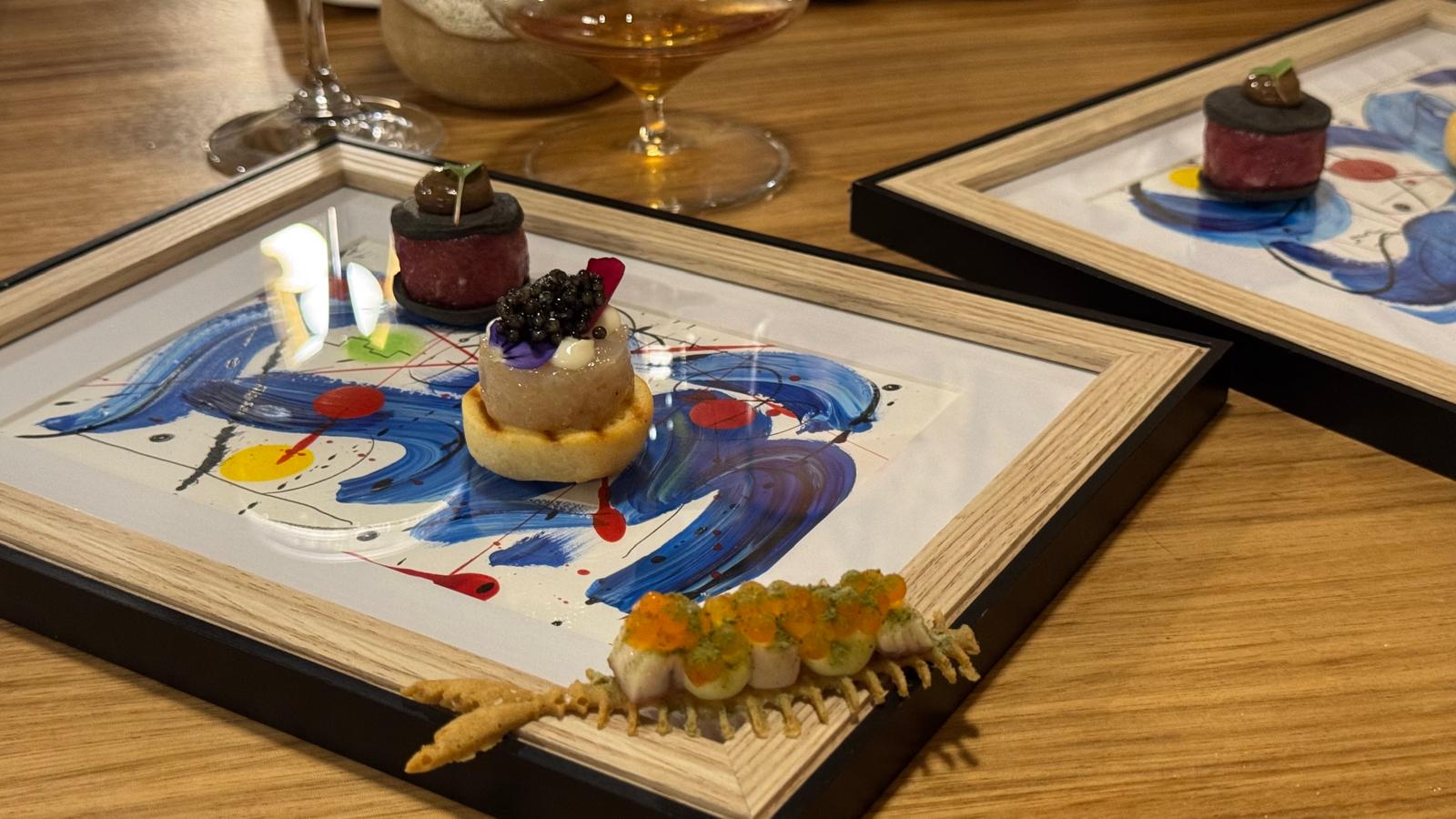
That emotional landscape of southern Catalonia runs through young Moha's table in the form of three outstanding appetizers from the Mare Nostrum menu (115€): the crispy squid ink macaron with a filling of soft marinated red tuna and black garlic emulsion; the butter bread, white shrimp tartare, lime mayonnaise and a touch of caviar; and the false crispy spine holding a Delta smoked eel tartare, plankton and salmon roe with a herb mayonnaise. It is accompanied by a Tarragona white shrimp consommé with seaweed foam (better if it kept its temperature better) served in a mini cocktail glass. The liquid menu also represents the territory with a journey through different wineries and production methods that begins in El Priorat with the Celler de Escala Dei with a vi ranci made from Grenache from a recovered solera.
Continuing the navigation, the menu then turns south, to Morocco, to the Rif Valley, with the second part of the appetizers that opens with a fritter with a liquid filling of porcini, chanterelles and hazelnuts; a delicate tempura nasturtium leaf filled with marinated beef with a touch of hollandaise and the chicken meringue, liver mousse and truffle, accompanied by a pasture chicken consommé with mushroom and cumin foam.
For the end, the classics are left: appetizers with which Moha pays homage to his time at the Disfrutar and Lasarte restaurants; a spherified olive bathed in cocoa butter —his version— and a sandwich cut of crispy black sesame filled with smoked eel, vi ranci gel from Tarragona and foie gras inspired by Martín Berasategui's famous eel and foie millefeuille. "These are the two houses that have really impacted and inspired me the most," he asserts. In these appetizers, as in his cuisine, there is no obsessive mimicry of wanting to apply a technique, but rather an adaptation that evolves. And an emotion and gratitude for what has been learned that also transcends to the diner.
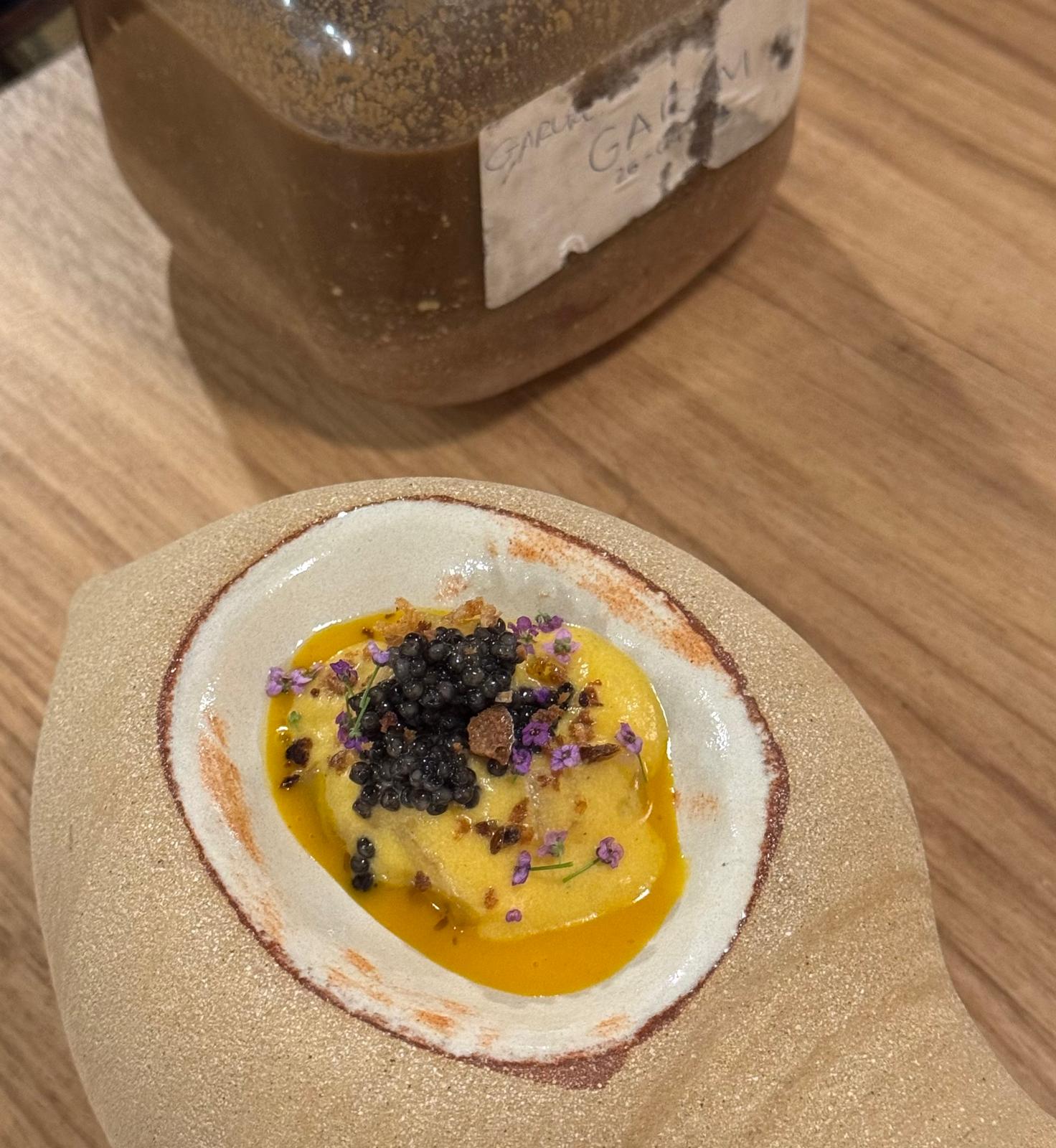
From Escala Dei, we move on to an ancestral wine made in a small village of 603 inhabitants called La Nou de Gaià by Celler 9+ with xarel·lo vermell: El 3r. It is moving to find such sought-after and curated wines on the menu of this type of restaurant. It is the personal project of Moisès Virgili i Rovira, a winemaker passionate about agriculture since childhood, who promoted the idea of making natural wines with minimal intervention from indigenous varieties from his own vineyards influenced by the Mediterranean Sea. Núria Vidal, responsible for the selection of wines that accompany the entire journey, tells us about it. El 3r accompanies a marcona almond cream from Riudoms, white shrimp, olive gel, and seaweed air; a light and elegant dish. The next course, sea bass marinated in garum, pickled pumpkin textures, and truffle, elevates the discourse and stands out as one of the most important moments. Plated on a dish that imitates a Roman amphora, a preparation like this supports the entire discourse that in ancient Rome they also had their "soy sauce" for seasoning and that it is worth showing the client its preparation and claiming it as their own. It is accompanied in a glass with a 45-60 year old saline-cut white garnacha from Batea.
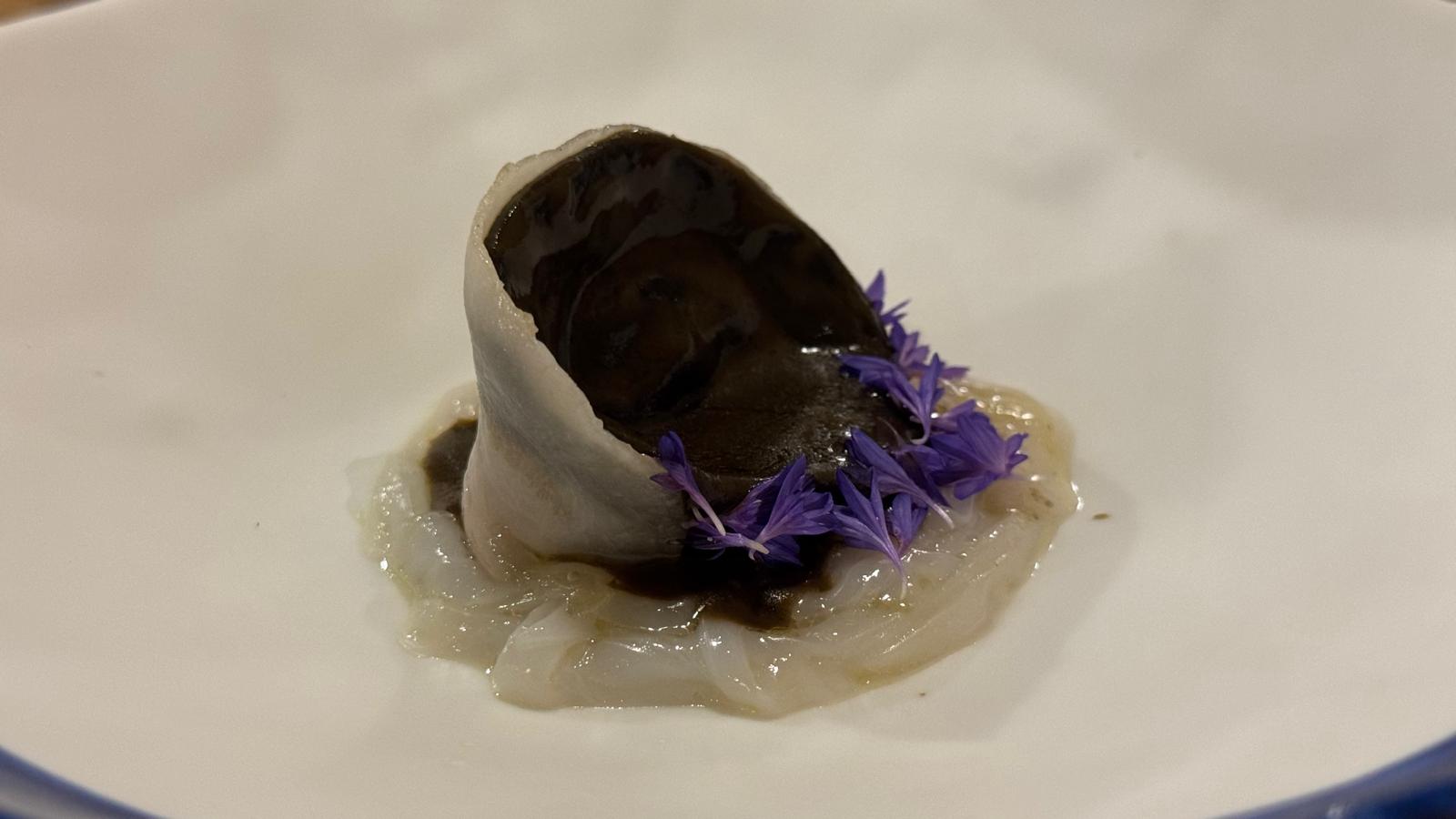
The hot starters open with two mar i muntanya. One textbook with a very attractive visual concept: spectacular squid tagliatelle, squid ravioli with its ink and Iberian jowl at low temperature on a cauliflower base. And another, more robust in style, made with scallops with a foie pilpil, mushrooms, and seasonal truffle. In the glass appears Julieta 2024 by Josep Foraster, a very floral, light, and organic trepat, from an indigenous grape from Conca de Barberà of which it is an emblem.
Romesco, much more than a sauce
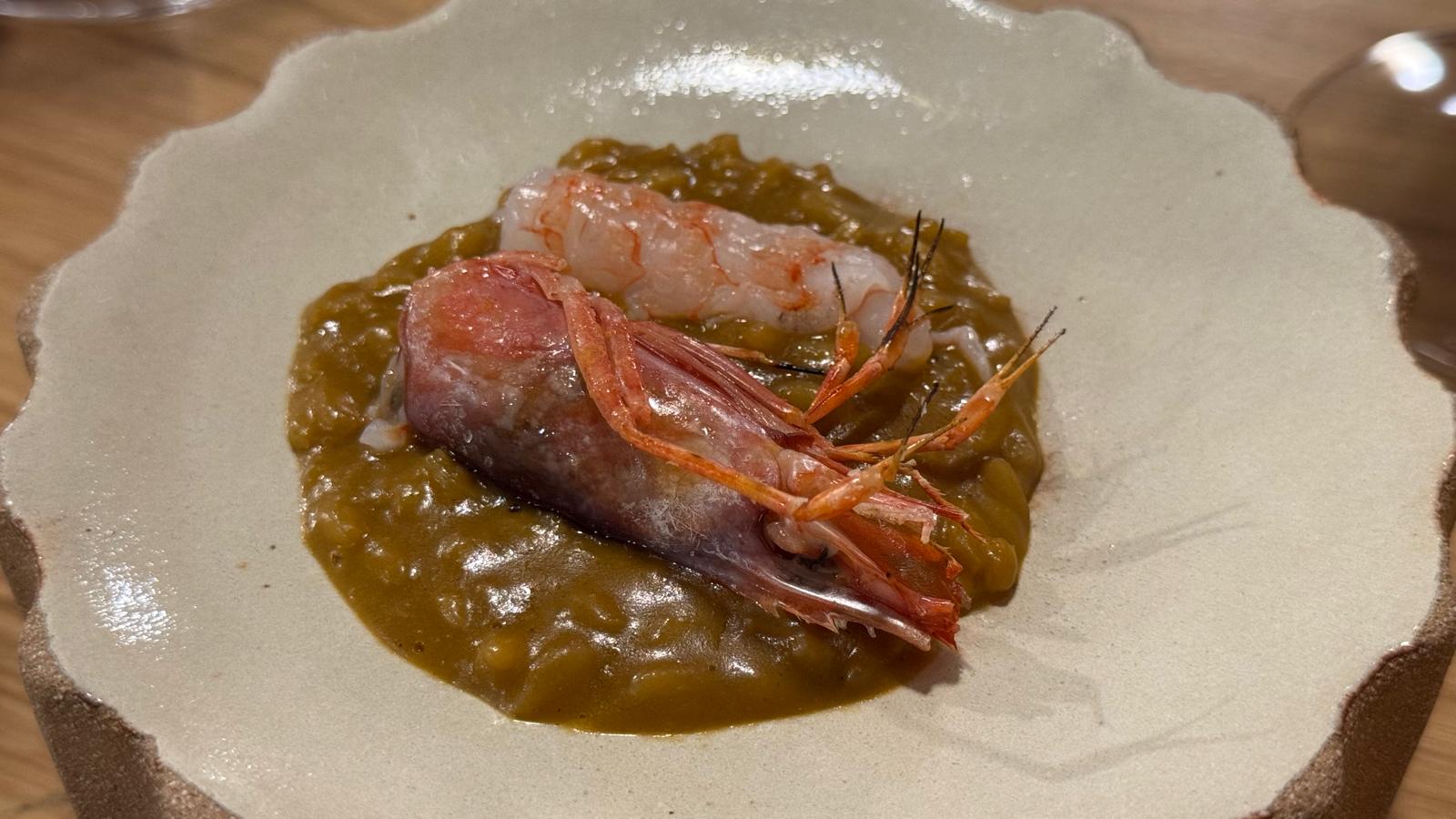
The next dish is an ode to romesco, one of Tarragona's characteristic sauces, which is also a seafood dish. Quach vindicates it as the local heritage it is, in a stew with prawns from Sant Carles de la Ràpita. It is a dish full of intention that explains why romesco is experiencing its great moment in Tarragona. However, the langoustines with beef tripe in suquet — "a dish that reminds me of a stew from the Rif, where I was born," details the chef— is another highly celebrated dish on the menu. And it is that products and cooking methods are very similar on both sides of the Mediterranean, and it is in the use of their spices and the distinctive spiciness (here very restrained in everything) where one notices which shore our feet are treading. In the use of aromatic herbs, spices, dates —illustrates Moha — is where the most inspired elaborations from ancient Rome shine.Moha: "My dream is to create a benchmark for traditional Catalan cuisine"Two other outstanding dishes from El Terrat in which, for obvious reasons, there is no trace of potato, tomato or pepper are the creamy red shrimp rice from Tarragona and the blue lobster with zucchini flower, toasted butter, garum and caviar that closes the savory part.
New horizons
"I would like to open a traditional Catalan cuisine restaurant, a place where you could eat a good fricandó, as I believe it is increasingly difficult to find traditional dishes. It is something we are losing, and that cannot be," says Quach, who is not against trends, but is surprised that it is hard to find good meatballs with cuttlefish. "My dream is to create a benchmark for traditional Catalan cuisine."For now, El Terrat has already become a benchmark in its league and an extra reason to visit Tarragona, its ruins and, incidentally, learn a little more about our history. And there are menus that go far beyond the tablecloth. They are territory, they are story and craft.
El Terrat
Address: Carrer de Pons d'Icart, 19, 43004 Tarragona.Telephone: 977 24 84 85.
Average price: 85-115 euros.
Add The New Barcelona Post as your preferred Google source for free
Stay informed with the latest news.