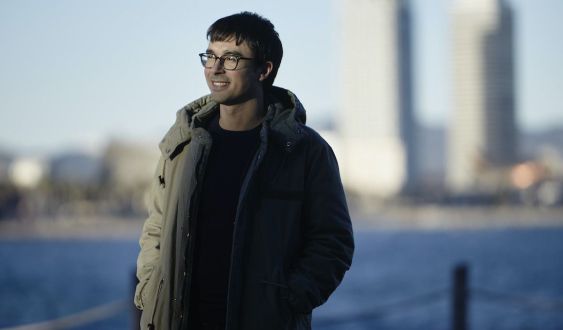
"I am not one to make unexpected decisions or have great revelations, but I do remember when I convinced myself that I could perfectly write a novel that could aspire to be published. For a long time, as a reader, I thought that writing fiction was a titanic task, only within reach of privileged minds. And of course, talent matters, but there is also technique, persistent work, personal style, and even the inspiration of the moment or luck."
Journalist and novelist Eduard Palomares makes this reflection aloud, enjoying his "vermouth with a splash of soda" at the bar while, in the background, Roland Alphonso and his Soul Brothers fill the Bar with the notes of Phoenix City.
--- Hey, and since you're at it, if you have some, get me some olives.
--- Coming right up, but explain to me how you went from thinking that writing was a titanic task to reaching this moment where you've just released a new novel.
"I don't like the hackneyed concept of 'leaving the comfort zone' as something constant, like that permanent need to stand out, challenge ourselves, or evolve... But, without a doubt, from time to time you have to dare to go for a walk in unknown territory," reasons the regular, convinced that "sometimes we have to give ourselves permission to do something that deviates us from the main path, often built on our beliefs and fears."
This is how his first literary work, No cerramos en agosto (We Don't Close in August), saw the light, the first adventure of the Barcelona detective apprentice, Jordi Viassolo. A novel "written without anyone having asked me to, without any guarantee that it would see the light of day. And it ended up being published by a publishing house like Libros del Asteroide," he explains before concluding: "That's something that makes you feel truly proud." Precisely, these days Igual que ayer (Just Like Yesterday), the sequel to Viassolo's adventures, is being released.
Living and explaining precariousness
"I am a grassroots journalist, one who grinds and plays for the team," argues the writer who defines himself as an all-rounder editor: "One day I can write about economics and another about football, environment, or gastronomy. With me, the cliché of 'knowing a little bit of everything and a lot of nothing' holds true." A dynamic in which he feels comfortable, because "I have never wanted to focus completely on one area, as that would prevent me from knowing the rest." An approach that he also applies to his literary and musical tastes ---"always within certain quality parameters"--- and which, he assures, has contributed a lot to his literary facet.
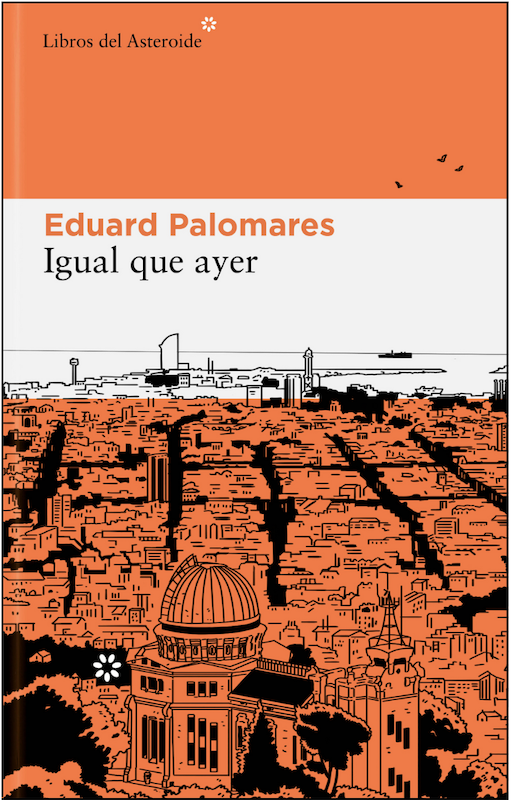
And yes, something of that ability to adapt, to jump from one point to another and land honorably, to weather the hardships of precarious fields and unpromising future prospects, is reflected in Jordi Viassolo's adventures. In the new novel, he finds himself "following the usual path of any young person currently trying to make their way in the labor market: going from intern to precarious worker. That is, he will have to face not only a mystery, but also dead-end jobs, temporary contracts, unfulfilled job promises, the impossible search for an apartment, becoming an adult...". The detective plot thus gives rise to an intentionality of addressing the everyday; of sprinkling each page with the author's vision of life.
2,000 years of history right under our noses
"We love Barcelona and we criticize it in equal measure. Surely, we criticize it so much because we love it a lot. Sometimes you think Barcelona is unbeatable, other times you want to move to the first town that comes along," explains the writer who highlights the city's capacity to surprise. "There are always new things to discover, which perhaps have been right in front of your eyes all along and you hadn't even noticed, because we are always caught up in our own things and are not capable of observing consciously. It is a city with more than 2,000 years of history that have been superimposed layer by layer, and I am sure there are infinite things left to discover. Also countless mysteries that will never be solved or stories that will never be told. And this is also encouraging on a literary level."
"We love Barcelona and we criticize it in equal measure. Surely, we criticize it so much because we love it a lot"To illustrate this capacity for surprise, Eduard Palomares uses a recent anecdote: "In the past Night of the MuseumsI participated in a guided tour organized by the Museu d'Història and they showed us the remains of the Roman aqueduct of Barcelona. Well, I admit I had no idea of its existence, even though I had passed by it thousands of times. In fact, in the Plaza de la Catedral there is a very evident remnant, and I had never wondered what it was."
The point is to maintain the essence. "If you let me make a football analogy, when Barça abandons its style of play, we all throw our hands up in the air. We must maintain the essence, the DNA, the values, La Masia and blah blah blah. But, on the other hand, we hardly protest when we see that the city is rapidly losing its essence, its own characteristics, what makes it unique, due to the interests of economic elites who only look out for their own benefits."
--- Are you referring to the hordes of tourists?
--- The focus is put on the tourist, people say "tourist go home" and so on, but it's our thing. We are the ones who accept certain things and do not confront a development model that harms us and an open bar that changes the configuration of the city.
Eduard Palomares finishes his vermouth to the rhythm of Last train to Ska-Ville by the Soul Brothers with Jackie Mittoo, orders another, and reflects for a few moments before stating: "I still remember, in the middle of the pandemic, when it was said that we had to make Barcelonans walk along La Rambla again. And what has been done?"
--- Exactly, what has been done?
--- Go to La Rambla now and look at the panorama.
Add The New Barcelona Post as your preferred Google source for free
Stay informed with the latest news.
