The mayor of L'Hospitalet, Núria Marín, met yesterday with the city's main economic operators (Mobile, Fira, Planeta, Siemens, Agbar, Hospital de Bellvitge, Puig, Seat) to set the roadmap for post-pandemic economic and social reactivation. One of the conclusions is that one of the axes of this process must be the development of digitalization, in the Administration, in business, and in society in general, in order to overcome the digital divide that currently affects some socioeconomic and generational groups. This is something that the coronavirus has highlighted. Digitalization is also one of the priority destinations for European funds for reconstruction and resilience.
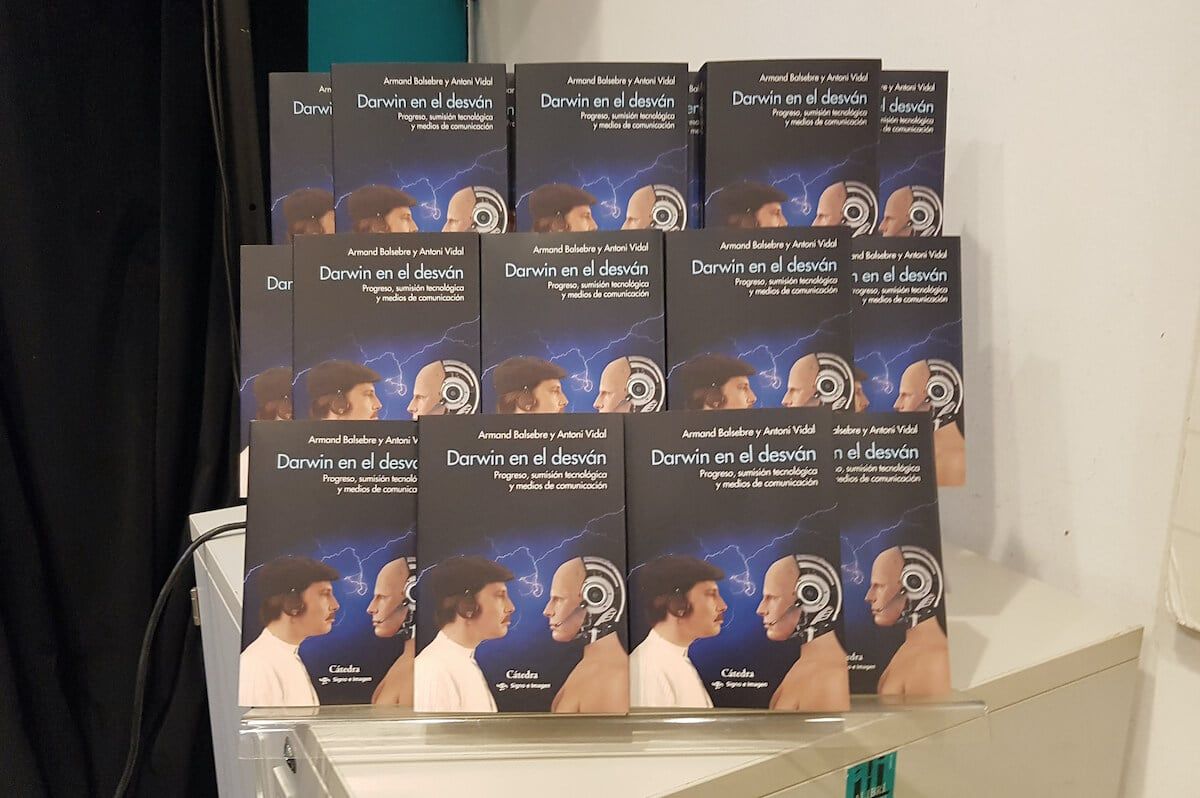
In the midst of the debate on this process, the book Darwin en el desván, by Armand Balsebre and Toni Vidal, has just appeared, presented last Tuesday at the Alibri bookstore, on Balmes street in Barcelona. Both authors are professors at the Universitat Autònoma and specialists in radio. Their book could not be more timely, as it provides a critical view on the consequences of the rapid and enormous progress that new technologies have been experiencing for some years.
According to Balsebre and Vidal, the 20th century has been characterized by the irruption of technologies that have improved communication, such as radio, television, the walkman, flat screens, home video, the internet… And although television was the first medium to generate addiction and human servitude to the machine, all the previous advances contributed to the democratization of information. However, the 21st century is bringing about such a phenomenon of transformation in this field that it already presents adverse consequences.
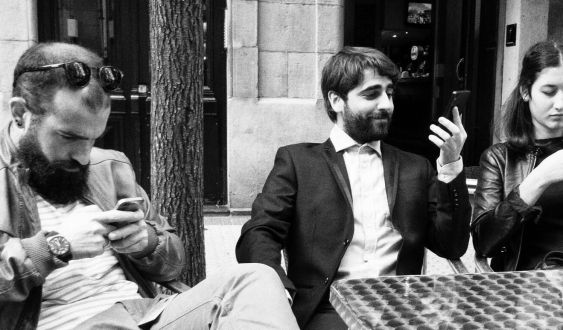
For example, the loss of privacy, in a digital galaxy where our private life is in the hands of a set of algorithms and gadgets connected to the network that spy on everything we talk about and consume. Now we are addicted to the mobile phone, that object where all media converge and which creates the pathology known as nomophobia, the fear of being without a smartphone and, therefore, isolated from the world.
Now we are addicted to the mobile phone, that object where all media converge and which creates the pathology known as nomophobia"We are more connected, but not better," assures Professor Balsebre, for whom the image now dominates over the word. This servitude to the image deprives us of imagination, which makes us lose creative energy. And in this continuous circulation and exchange of information, hoaxes and lies are found, the fake news, which we share without any verification.
One left the presentation of Darwin in the Attic with an apocalyptic anguish, that we are irremediably heading towards a Huxleyan brave new world of technological servitude, where man, alienated, is replaced by machines and where it will not be necessary to ban books because no one will want to read them.
Fortunately, after a while one reacts. Not all technological progress leads us to alienation as a human race. Technology applied to health cures us. And even in this period of confinement and restriction of our movements and meetings, in which we have basically worked and related through teleconferences and consumed what the screens offered us, it turns out that the book has experienced an era of increased readership that has saved the publishing sector from the worst global economic crisis we have known.
Technology applied to health cures us. And even in this period of confinement, it turns out that the book has experienced an era of increased readership.Despite his grim predictions, the authors clarify that they do not attack technology, but its socially irresponsible use"We attack cyber-dependence", the "passively accepting" the incorporation of technology into our daily lives without thinking about its side effects. Their fight focuses on us remaining citizens before just consumers.
One accepts the dangers pointed out by Balsebre and Vidal, but hopes that human intelligence ---let me cling to it and call me naive if you want--- corrects this course and that we take advantage of the good side of technology and do not allow it to enslave us.
We are heading towards a planet where it is estimated that by 2025 there will be 75 billion devices connected to the internet. A world dominated by the new capitalism of the so-called GAFA (Google, Amazon, Facebook, and Apple). Therefore, reading Darwin en el desván should perhaps be mandatory. Now that we are still in time, it could be the vaccine that immunizes us from the technological pandemic.
Add The New Barcelona Post as your preferred Google source for free
Stay informed with the latest news.
