What do Calatrava's Palace of Arts in Valencia, whose facade began to crack, detach, and bulge shortly after its completion; the Ecce Homo of Borja after passing through the hands of Cecilia Jiménez, or the shameful version of Angie, by the Rolling Stones, by Melendi, have in common?
All three are considered Destructive Art: "A disturbing, strange, and controversial artistic expression that proposes to create by destroying," explains Manoli Mansilla, coordinator of the Legax Art gallery ---331 Aragó Street--- which from May 20 to June 25 exhibits the collective exhibition La Ruina Anticipada, an exhibition that brings the latest trends in this artistic movement to the public with works by Rafael Jiménez, Miquel Sabaté, and Joan Vilacasas.
"I have always been interested in extreme political phenomena ---Mansilla argues--- whether in art or in culture, and Destructive Art is part of those footnotes to official History that allow us to understand the 20th and 21st centuries."
Discontinuous Trajectory
Normally, the origins of the phenomenon are dated to 1961, when the Argentine artist Kenneth Kemble gathered artists, critics, psychoanalysts, sound engineers, architects, and musicians with the aim of conducting a collective reflection on the principles of destruction. The fruits of that debate would materialize on November 20 of that year, in a ten-day exhibition at the Lirolay Gallery in Buenos Aires.
--- But did Destructive Art really originate there?
Mansilla takes the floor: "To be honest and rigorous, it should be noted that in 1959, two years before Mr. Kemble led his exhibition in Argentina, the German artist Gustav Metzger wrote the Manifesto of Auto-Destructive Art in which he underlined the destructive powers of man with the intention of contributing to a series of social changes."
Even so, the coordinator of Legax Art denies that, in her opinion, Destructive Art follows any fixed model or criterion. "It's more about questioning that kind of Art History that everyone believes is a given capital. The best Dadaists didn't make art, they had a true spiritual sense of adventure. Contemporary Art itself has never disavowed destruction and uses it as a means of expression. The entire avant-garde movement is a thought of rupture, and, in certain -isms, the destruction of the past became an essential core of their artistic theory. The First Futurist Manifesto couldn't be more explicit: "We want to destroy museums, libraries, academies of all kinds...".
It is clear, then, that there is no formal common thread and that destruction, in Art, requires broad reflection and analysis and not to be crammed into the rigidity of historiographical criteria.
Path of destruction... to create
Mansilla talks about Robert Rauschenberg's Erased de Kooning, "who literally erased a pencil drawing by Willem de Kooning," about the Fluxus group "and their famous destroyed pianos," about Jean Tinguely "and his machines whose purpose was entropy and destruction," about Jake and Dinos Chapman's interventions on Goya's engravings, about Pete Townshend smashing his Rickenbacker guitar against an amplifier to produce that unique sound that would define the sonic expression of Pop Art, about the "shattering of glass to the sound of Calanda drums" by Catalan Punk ante litteram Jordi Valls and Vagina Dentata Organ, at the Pompidou. "All these artists have shown that it is possible to create by destroying, and the exhibition project of La Ruina Anticipada is part of this artistic tradition," she states.
--- In what sense, specifically?
--- In the sense that, in some way, artists Rafael Jiménez, Joan Vilacasas, and Miquel Sabaté have the uncontrolled need to destroy or manipulate the physical support of an art they consider limited by the constraints of the medium.
A reflection on time
In the exhibition, the works of Jiménez, Sabaté, and Vilacasas are placed in a suspended time where there are no transitions between past, present, and future. Before their works, we observe that they have imagined, created, and disfigured an Art History that ended a long time ago but remains alive, in perennial transformation. "The Anticipated Ruin is an attempt to make History something more than a simple collection of dead facts," argues Mansilla, who explains the criterion with which the exhibition was conceived, developed, and cemented.
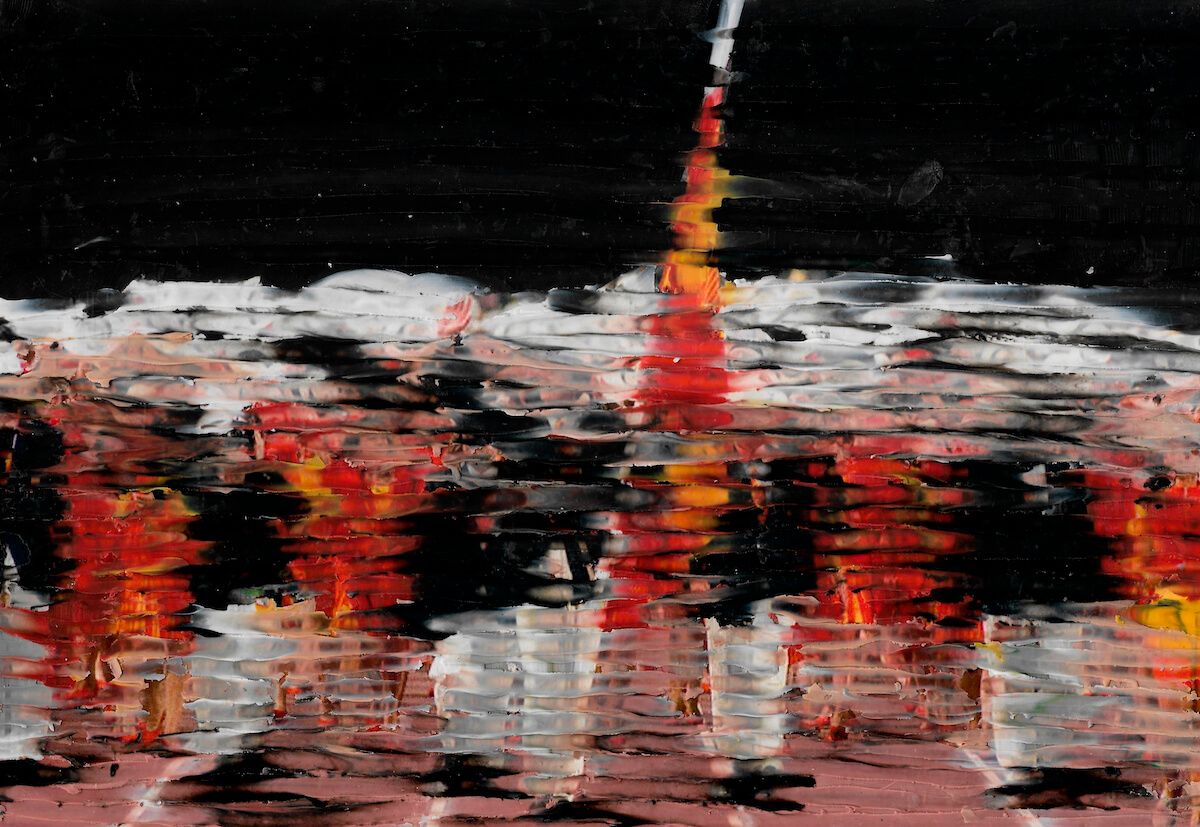
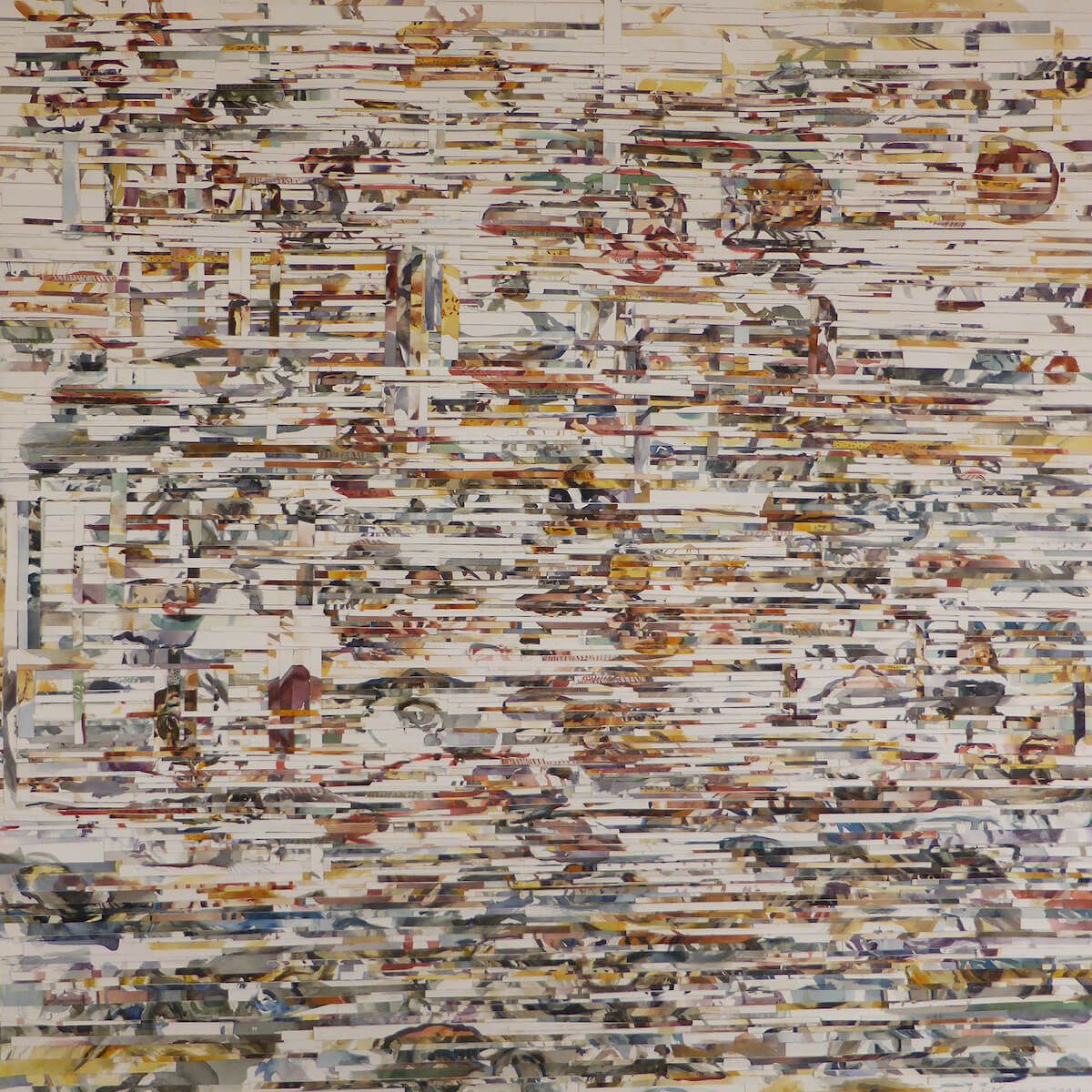
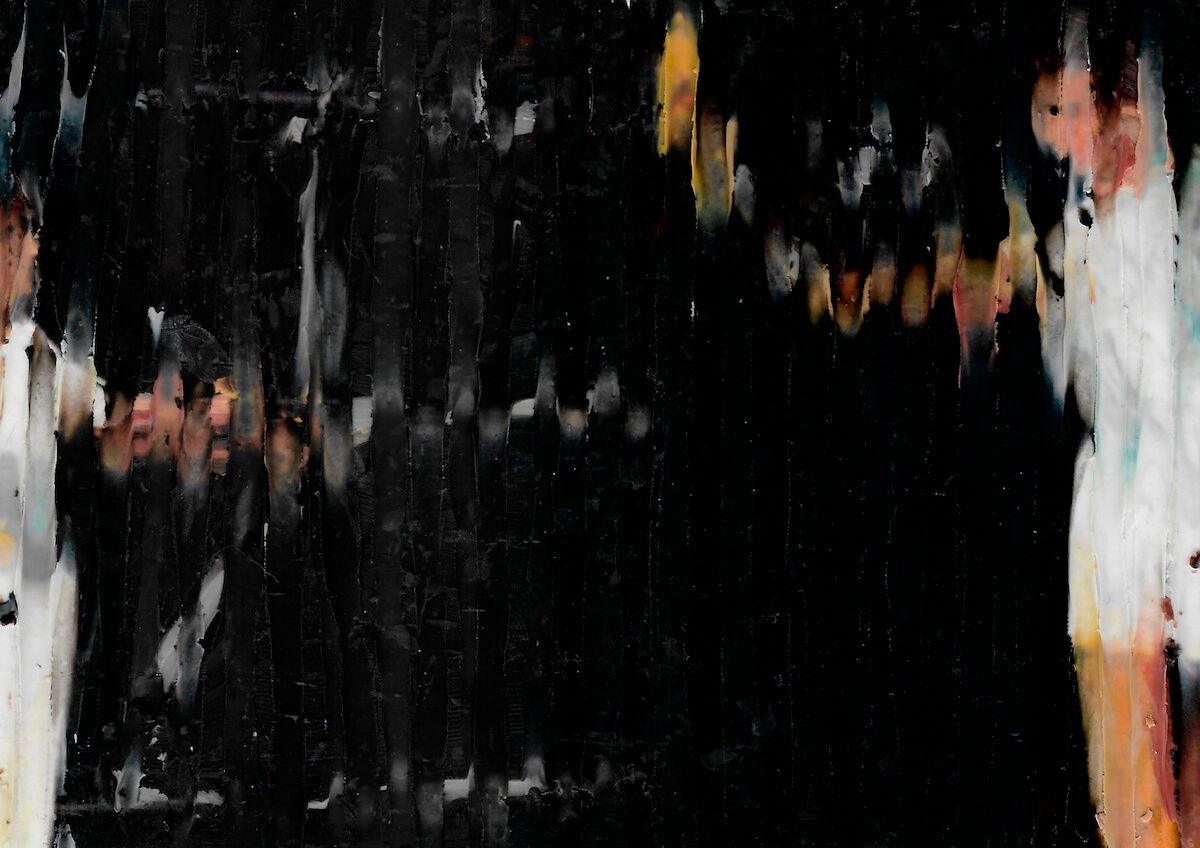
The Anticipated Ruin is an attempt to make History something more than a simple collection of dead facts," argues Mansilla"I discovered the work of Rafael Jiménez from Cordoba years ago and I have always wanted him to come and exhibit in Barcelona, because his technique is mysterious and original: he paints with plasticine. His works stem from reflection on common memory and distortion from mental images associated with the past." Shortly after, he would meet Miquel Sabaté from Barcelona: "I was fascinated by his works, in which he guillotines his old projects, sketches, and studies, from which he reorders the pieces at randomweaving themin a geometric plot, in which the progression between the spellings and the tonalities composes a new distortion of reality."
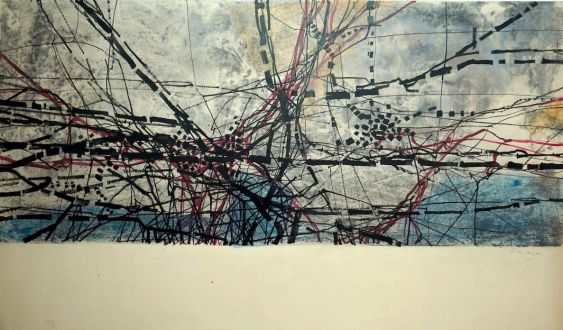
Finally, a month ago Mansilla found a folder full of Joan Vilacasas's planimetries at the back of the gallery: "The planimetries are a plastic expression that Vilacasas invented in the 50s. They are labyrinthine compositions inspired by cartographic maps. Vilacasas studied them closely during his military service in the Army's topographic section. They are fictional micro-landscapes that he drew throughout his life, to the point that he ended up being an outsider." The artist would pass away in 2007, at the age of 87.
--- And the title of La Ruina Anticipada, exactly, where does it come from?
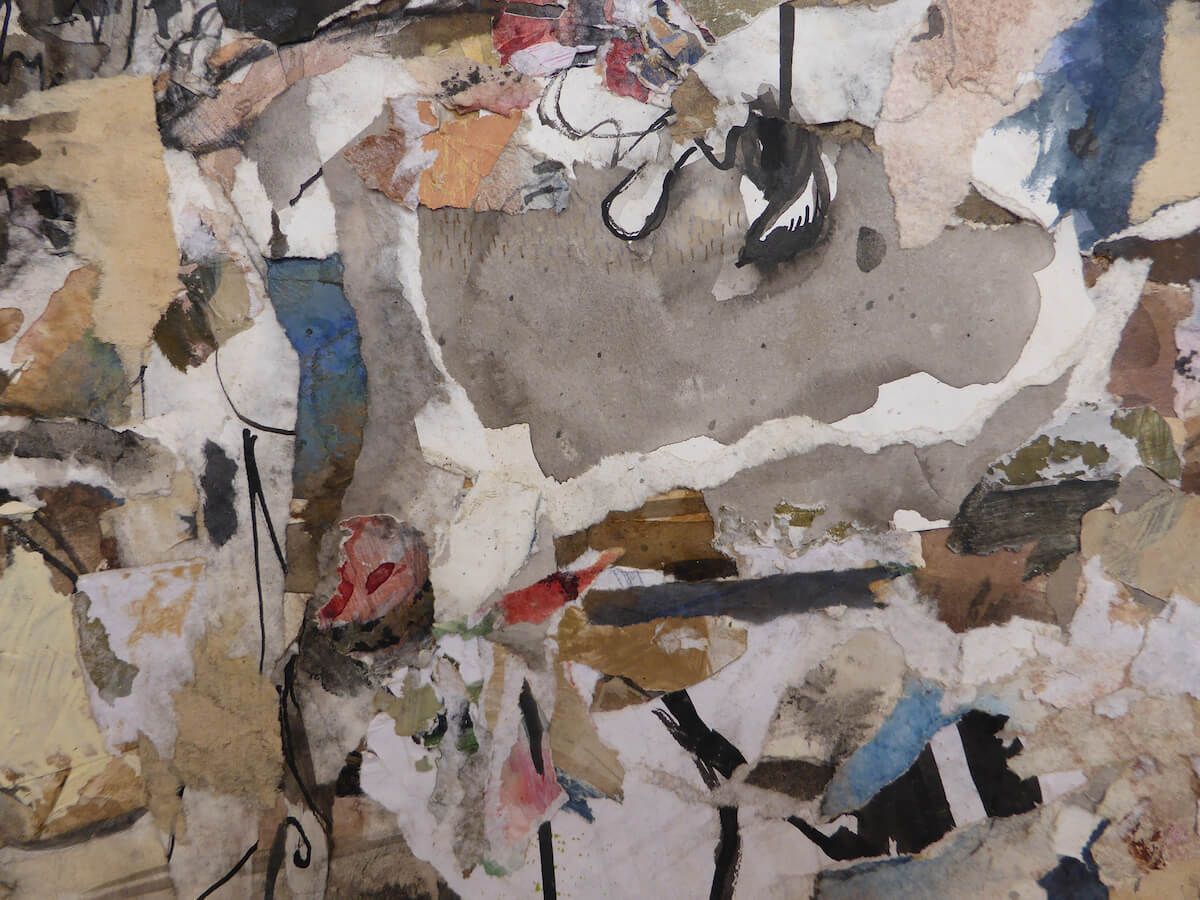
"Lacan says that in any painting there is a representation of war, as if it were a battle scene. In a way, I understood that war was present in the works of these three artists and not necessarily in the foreground: in the works of Sabaté, Jiménez and Vilacasas the battle has already been fought, guillotining, distorting the plasticine with their fingers, scratching the paper. And, as a consequence of this destruction, only the ruins remain. Hence the title of the project," illustrates the coordinator of this small gallery in the Eixample, before saying goodbye with a quote from Victor Hugo that, for the case, fits perfectly:
--- "When you make a ruin, you have to make it well."
Add The New Barcelona Post as your preferred Google source for free
Stay informed with the latest news.
