--- This is one of the interviews I most wanted to do and I think one of the most difficult.
...
--- Because we are touching on a very complicated subject like the death of a child and I have many questions. The first, how do you manage to tell it with such serenity and without breaking down when you speak?
--- Although it may not seem like it, while writing the book, I broke down. I had to stop to cry, I would go for a walk, rest for two or three days and then go back to writing. I think it was fundamental to find this island ---Koufonisia--- so small, solitary and far from everything to be able to lock myself in myself and in Marc.
--- You wouldn't have been able to write it at home?
--- It would have been impossible. There were too many things that hurt me and there was also the danger that, if I couldn't continue, I would go to the cinema or see a friend. In Koufonisia there was nothing to do. Only walk. It is 5 square kilometers.
--- Some people walk this much going to and from work.
--- In less than a month I walked more than 300 kilometers.
--- One thing is writing the book and another is talking about it in interviews. Is the promo tough?
--- What I wanted with this book is for people, when they finished reading it, to think that it is about life and not about death. I already had a few months to get used to the idea of how to explain it, because I knew it perfectly and was prepared to talk about it.
--- After reading it, I think I would have loved to meet Marc.
--- Because Marc provoked this in people. When you had just been with him, you were happier. He transmitted so much love, so much sympathy and so much goodness that people remembered this.
--- Did he notice it?
--- He was a very smart guy. He picked up on people and saw if they were someone who gave him peace or not. He sought peace and tranquility because he had never had them.
--- What would you be doing on a Friday afternoon?
--- Lately, I would go to Madrid on Thursdays so that on Friday I could pick him up from school, which is one of the things I liked the most. And if I stayed in Barcelona, I would think about him. I would wake up thinking about him and fall asleep thinking about him. I lived in Barcelona, but my mind was in Madrid. I keep thinking about him and try to keep him alive.
--- Marc was born with two rare diseases. When did you realize he was sick?
--- 20 minutes after arriving at the room. We were getting ready to go to sleep, we were very tired and thinking about what the return home would be like. But when the nurse came in to check that everything was fine, she told us that she didn't like the color Marc had. She took him down to the ICU for a moment and he never came out. That's where it all began.
--- Did they give you any life prognosis?
--- They told us that the oldest patient with Ondine's syndrome was 30 years old. But we weren't clear about the degree of his illness. This syndrome causes those who suffer from it to stop breathing when they fall asleep. At that moment we didn't know if Marc would have to be connected to a machine his whole life, whether he slept or not. Little by little you overcome it, but with the certainty that the child will have to be connected when he is unconscious. The other disease, Hirschsprung's, in principle, was going to be easier to control.
--- From the first day, Marc faced the possibility of dying. Were you surprised by his ability to overcome constant adversities?
--- Without that ability to overcome, he would not have survived. His immense love for life made him capable of finding happiness in the smallest things. From a pineapple juice to a walk or a starry sky.
--- You say he was your life teacher.
--- Without being aware that he was.
--- Marc's first three years of life were spent in a hospital. Did you receive psychological support?
--- Now that we talk so much about equality, psychological help from the hospital was only offered to the mother.
--- And not to you?
--- No. And the father, who is responsible for the child just like the mother, also has the right to receive psychological support.
--- Didn't you claim it?
--- No, because you are so lost in those moments. You don't make plans beyond 24 hours because you don't know what's going to happen. And you burn out inside and end up angry. Every day I passed in front of San Joan de Déu, I saw it from the Diagonal and suddenly that hospital became part of your life. And you enter a complex world that you never imagined existed.
--- Marc lived very hard, terrible moments if we think he was a child, but you say he never complained.
--- The first time he told us "I feel very bad" he died four days later.
--- Did you think something was wrong then?
--- No, because Marc always pulled through. I remember when he was admitted, one of the nurses came in and told me: "trust that everything will be fine, it's Marc." And she said it because Marc always pulled through. He was a beast. After an operation, the first thing he did when he woke up was smile.
--- Was he aware that he could die?
--- Death had been a life companion, hence the title of the book. But it came to him at a time when he was well. He was starting to write, he wanted to read, to do things that the people he loved did. He wanted to learn, to go to school. And that's what hurts the most of all. Because he was well and he died from a hospital bacteria.
--- In the book there is a direct criticism against medical errors. Have you lost confidence in doctors?
--- I have lost confidence in certain doctors who have certain attitudes.
--- What attitudes?
--- A sick person must rely on two fundamental points to stay strong: family and doctors. I always say that I couldn't be a doctor because the responsibility they have to try to save lives is extremely difficult. But one thing is responsibility and another is irresponsibility.
--- In what way was he irresponsible?
--- In half-truths. In medicine, when you are a patient, half-truths are like the cruelest lies. I want to know what is happening to my son and if an operation goes wrong, tell me it went wrong and from there, I will come to terms with it. But to beat around the bush for a year and for the word incontinence never to appear, is something I cannot forgive.
--- You have written a beautiful book. I have recommended it a lot. But I have met people who have told me they have it, but are not ready to read it.
--- Many people have told me this. That's why from the very beginning I already do a spoiler telling how the book ends, because I don't want to deceive anyone. From here you decide if you want to read it or not. But I tell them that I think they will be surprised because deep down it is a book about love. Also about death, but there is a lot of love and light, grief, journeys and instinct for self-improvement.
--- And you have achieved something very difficult, which is to explain the death of a child avoiding the tearful.
--- There is no need to make a tearful book to talk about grief. My son was life. He was a guy who didn't cry because for him crying was showing a weakness he didn't want. People who read it can feel identified in many things.
--- Everything you have lived, would you say it has made you more spiritual?
--- Much more. And I regret not being religious. Perhaps I am closer to pure Christianity than to Catholicism. I would tell you I am a false atheist.
--- There are many of these in life.
--- I don't know if I did it out of necessity, to try to find an answer as to why my son is no longer here. Two years after he died, I went to Montserrat and lit two candles for him. And now, every church I go to, I light candles. And I also talk to him.
--- A way for him to be here every day.
--- Yes, but there are things I used to do with him, paths we walked together, that I still haven't been able to do again. Places I don't enter because I went with him. For example, since his death, I haven't eaten watermelon again. One of Marc's dreams was to be able to learn to chew and eat watermelon like his father did.
--- When did you decide that you had to tell this in a book?
--- I felt the need to explain Marc's passage through the world. He was a 10-year-old boy who had always been sick, but who had been an existential model for everyone who had been by his side. And I was lucky enough to find a brave editor, Ernest Folch, who trusted me and had patience.
--- Who was the first person to read it?
--- Cris (Jolonch).
--- How important has Cris Jolonch been in your life, right?
--- She is the sister I never had. We met when we were 18. She is a very important person, who was there during the week my son died and who helped me overcome my addictions. She came every Friday to family therapy, with my mother.
--- Why were you addicted?
--- Because I have an addictive temperament. Think that when you are admitted, you do seven hours of therapy a day and blows come from all sides. You have a lot of time to think and reflect on your life and you realize that you have used alcohol and cocaine to alleviate your addictive nature. Also with romantic relationships. Because for an addict it's all or nothing. And then you realize that in life there are also grays.
--- Why is it important to make your bed?
--- Because it's the first thing you do when you leave the rehabilitation center.
--- Didn't you make it before?
--- No. Making the bed is order. Starting the house from the foundation. You don't have all this when you're an addict. And then comes the whole issue of shame and confession.
--- What shame?
--- At first, if there's a family gathering and there's alcohol, you don't go. Sometimes family and friends tell you: "there won't be alcohol so you can come." All of this needs to be managed. You also realize over time that when you go to a restaurant, it's better to tell the waiter you're allergic to alcohol than an ex-alcoholic.
--- Why?
--- Because if you say you're an ex-alcoholic, they look at you as if to say: "bah!" and, on the other hand, if you say you're allergic, they'll be very careful not to serve you anything with alcohol. I always recommend that if you're embarrassed, you say you're allergic.
--- Marc's death must have been a real test.
--- Many people thought I would relapse. But it was the opposite. What would Marc think if he saw that I had started drinking again?
--- Does the phone ringing in the early morning still scare you?
--- Of course! Recently, my other son, Dani, called me in the early morning to remind me of something and I almost killed him! I told him: "don't ever do that to me again."
--- You found out about your father's death also with an early morning call.
--- Yes. Do you know I had a script written that begins with a guy who wakes up at 4 in the morning because he gets a call telling him his father has died? I wrote it in '99 and my father died in 2003. I remember when my mother called me at 4 in the morning to tell me my father had died at Bangkok airport, I thought: "holy shit!"
--- How scary!
--- I don't know if I wrote it because I was obsessed.
--- Because your father traveled a lot.
--- Because my father had a shitty heart and lived a shitty life. Because wherever he went, everything was "live life to the fullest." He always said he would live 5 years longer than he actually did.
--- Before becoming a journalist and writer, you went to live in New York to make films. You wanted to be Coppola.
--- And I didn't even become Ozores.
--- What prevented you from becoming Coppola?
--- Wrong decisions. If I had led a different kind of life and had a different mindset, it could have turned out well. My scripts were too literary, they told me.
--- That's what happens when you're Vázquez Montalbán's son. Did you ever ask him if you were any good?
--- Over the years I grew closer to him to tell him confidences. My father was very sensitive, even if he didn't seem like it. And at 30, in the midst of a personal crisis, one of those where everything is chaos, I told him I was quitting cinema. And he said: "how do you want to quit something you haven't done yet?" And I said, he must be a bastard! My father was a man of few words, but every phrase he said was a book!
--- Did he tell you to write?
--- He told me very often. He always supported me in everything. And when I wrote my first novel, I gave it to him as the first reader.
--- What a moment...
--- I remember it perfectly. The problem is that he died six months after its publication.
--- You end up being a journalist and writer, like your father. It must not have been easy being the son of who you were.
--- Deep down I already knew what I was getting into.
--- What do you mean?
--- Well, that I was the son of one of the authors who was most politically committed. And it happens that, when these authors are no longer around, the piranhas appear.
--- Did many come out?
--- A few. And the worst piranhas, those who despised me the most, were people very close to my father. This was very hard.
--- Have you been back to Koufonisia?
--- Not yet. Next summer, surely. You have to go now because in ten years it will become a Mykonos.
--- Do you have another book in mind?
--- Yes. I want to do one that will be called The Happy 80s.
--- Let's see what you tell, I'm very much into the 80s.
--- Me too! All my platonic loves are from that decade: Nastassja Kinski, Kim Wilde, Olivia Newton-John...
--- Duran Duran, Spandau Ballet...
--- I saw Tina Turner in London and do you know who the opening act was? Bryan Adams.
--- Do you want to demystify the 80s?
--- It's not about demystifying them, but about explaining things. I want to start the book talking about the death of John Lennon.
--- How do you remember it?
--- I had been a Beatles fan since I was 5, but a true fan, a Beatles fanatic. Think that I wore my watch on my right hand because Paul McCartney wore it on his right, I went around the world with Beatles records and a battery-powered record player! I knew all their songs. And I remember perfectly the day when, driving to school with my father, they said on the radio that he had died. Tears started falling and my father, who was driving, took my hand. He didn't have to say anything else.
--- Are you having fun writing it?
--- I'm looking for the tone. It's hard, but I think I've found it. In two phrases, one that former minister Solchaga said, that one about "Spain is that country where one can get rich in the shortest possible time" and the other, a phrase by Groucho Marx that says "happiness is made of small things: a small yacht, a small plane...". ---laughs---
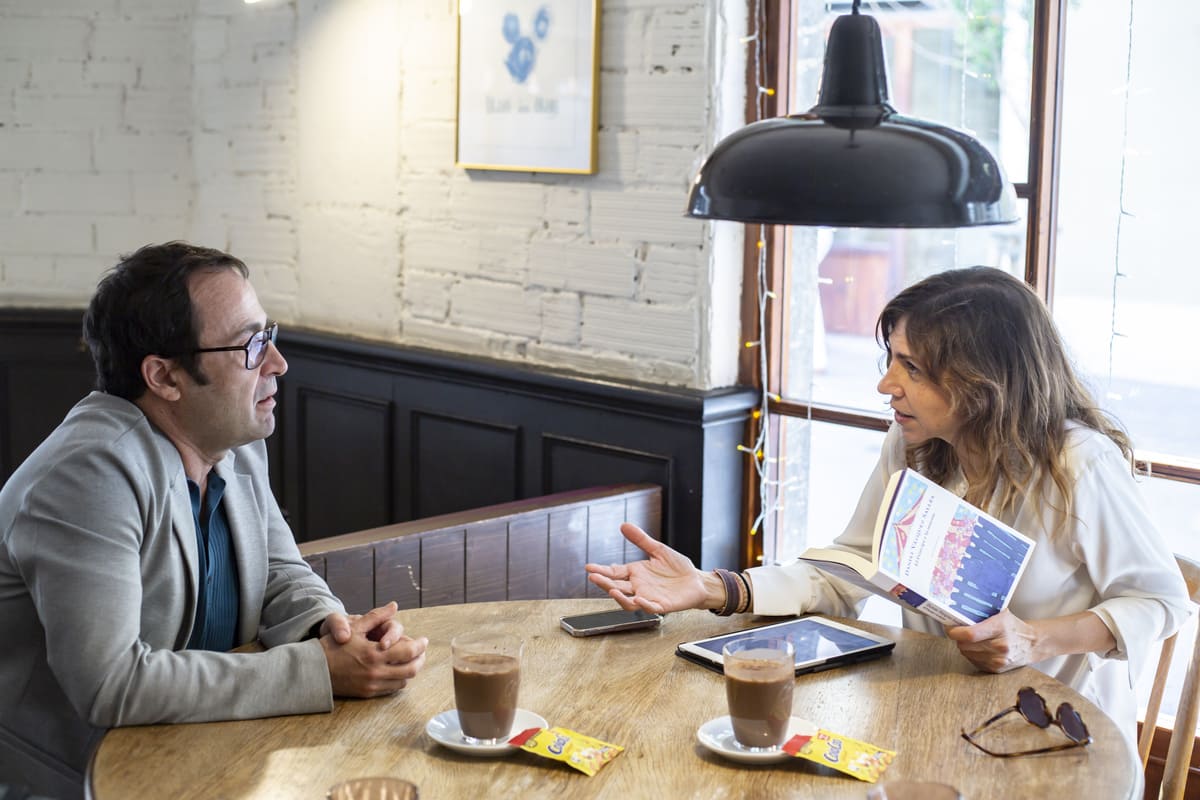
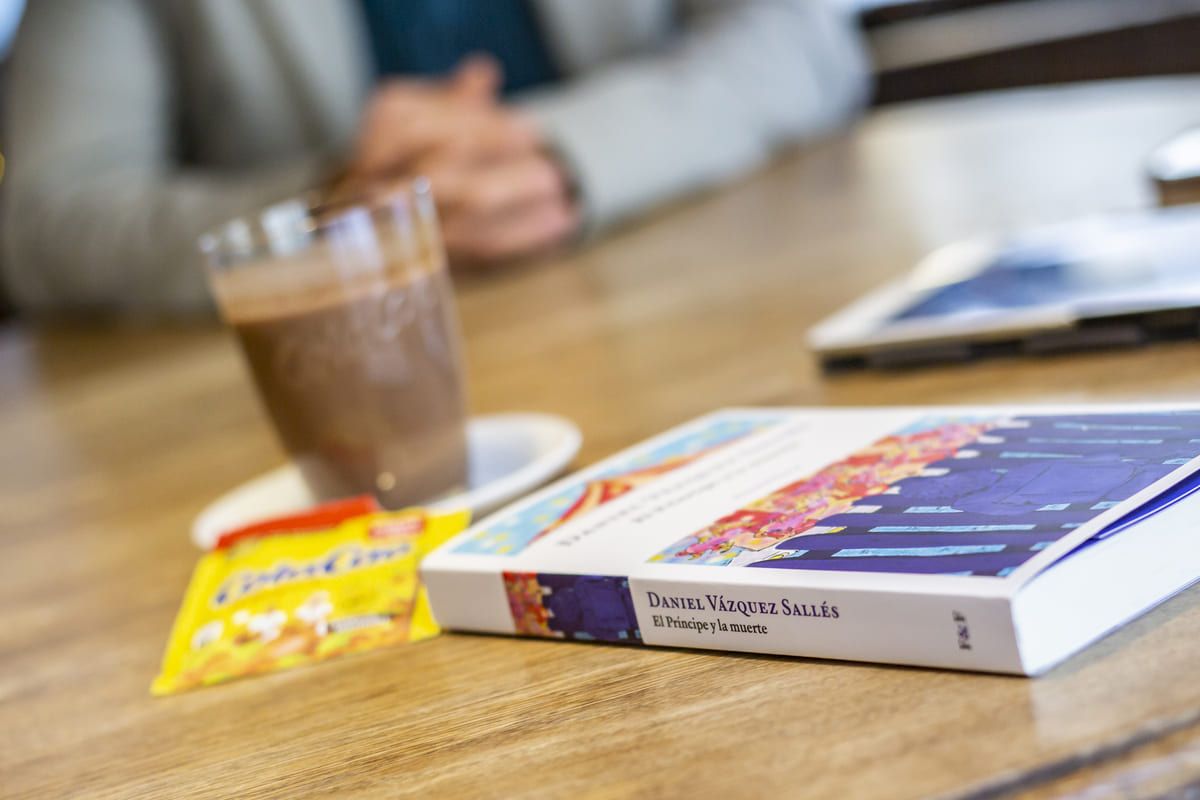
--- How do you like to drink your ColaCao?
--- Although I don't like milk, I occasionally have one and it's like returning to the country of your childhood. And that fun ritual of trying to break the lumps.
Add The New Barcelona Post as your preferred Google source for free
Stay informed with the latest news.