The Mundet Campus will see a new international research center emerge. The former theater of the Universitat de Barcelona (UB) campus will become the Barcelona Center for Applied Neurosciences (BCAN), which aims to be an international benchmark and a driving force for research and innovation in the field of neuroscience and neurotechnology applied to health.
With this new center, Barcelona will strengthen its role as a scientific hub and an attraction for talent and investments. Work to launch it is expected to begin in 2027 and finish in December 2028, to shape a center that aims to become an international benchmark from a multidisciplinary and intersectoral perspective. Thus, it will accommodate professionals and agents from the fields of research and innovation, as well as healthcare, teaching, technology, and the business world. To provide them with space, the building will include laboratories and advanced research areas, as well as a neuroincubator with technology validation spaces for new research.
Led by the UB through the Institut de Neurociències, the BCAN is open to other public universities in Barcelona working in this field, in order to maximize its impact. The center, which has the support of the Generalitat and the Diputación, will be built with a budget of more than 11.8 million euros, assumed in equal parts by the Diputación and European Feder funds.
"New era for neuroscience"
The BCAN not only aims to be an international benchmark but also to represent the starting point of "a new era for neuroscience," as has been defended Jordi Alberch, director of the Institute of Neurosciences. Precisely Alberch has led the project since it was presented to the Provincial Council and the Generalitat three years ago, with the aim of "making an unprecedented scientific leap in the field of mental health," with the development of technical equipment and knowledge. In fact, the BCAN will be a unique center in its characteristics at the state level, and few centers in Europe will be able to match its capacity in areas ranging from cognitive neuroscience to neurostimulation, genetic bases, biomarkers, and applied artificial intelligence, among others.The long journey of the project has allowed progress to be made in several lines in parallel with the arrival of funding, such as the acquisition of material and equipment, and an initial hiring of personnel that has led to the Cognitive Neuroscience Unit. And there is no time to lose: the incidence of neurological and mental diseases is increasing, which makes research in this area a priority. In this sense, it is estimated that there are ten million people with dementia in Europe and it is calculated that this figure could double by 2050, while some forty million people present clinical pictures of depression. In this context, the BCAN wants to play a decisive role in addressing these diseases, making Barcelona an international benchmark in development and innovation in applied neuroscience.
A new resurgence for Llars Mundet
The center's headquarters will be installed in the old theater of theCampus Mundet,that will transform the space into a research center while preserving the memory of the building. It will do so with a project led byBarceló Balanzó Arquitectes andScob Arquitectura i Paisatge, winner of a public tender in June, which recognizes the uniqueness of the building, designed by Josep Maria Baldrich and with a capacity for 1,300 spectators.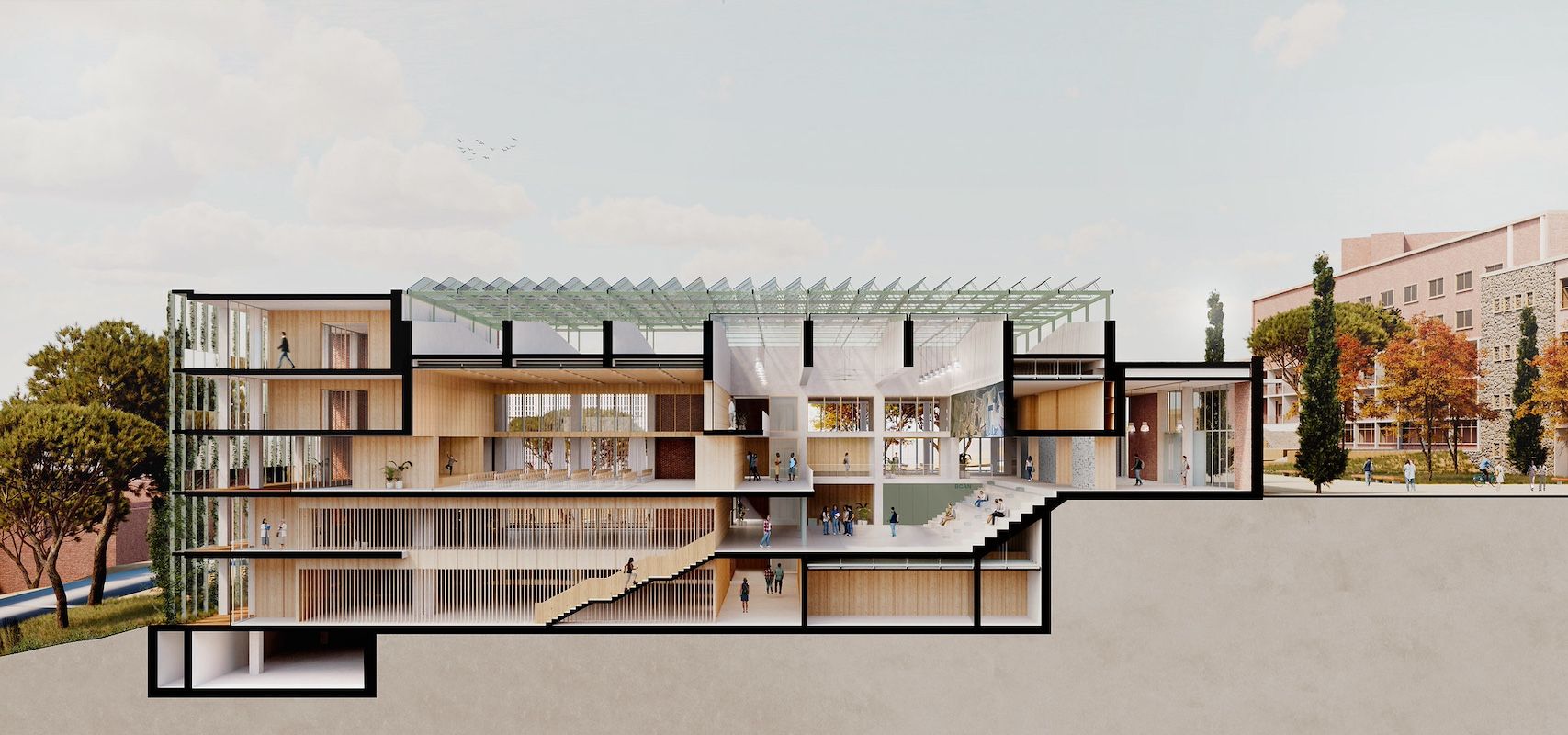
The 14-hectare site —with six hectares of forest— will acquire this new role as a neuroscience benchmark in the same spaces that were built in 1954. Then, under the name of Llars Anna Gironella de Mundet, the space took shape to be dedicated to the care of vulnerable people. The facilities —promoted to replace the obsolete Casa de la Caritat del Raval— came to house more than 2,200 people, including staff and residents, which included orphans, the elderly, and sick people. The site began to fall into disuse in the 80s and 90s, and the Diputación ceded the theater building to the UB to expand its Mundet Campus in 1994.
Since then, and although the UB has partially used the sides of the building, the central auditorium hall has remained unused, and will now house the new BCAN. To maintain that memory, the project preserves characteristic elements of the property, such as the theater stands, which are integrated into the new organization of the space. It also highlights the artistic legacy of the theater, with pieces by Josep Guinovart, Julio Bono and Armand Olivé, which become the common thread of the space. The objective? To hybridize artistic and patrimonial memory with scientific and technological innovation, so that they coexist naturally in the center.
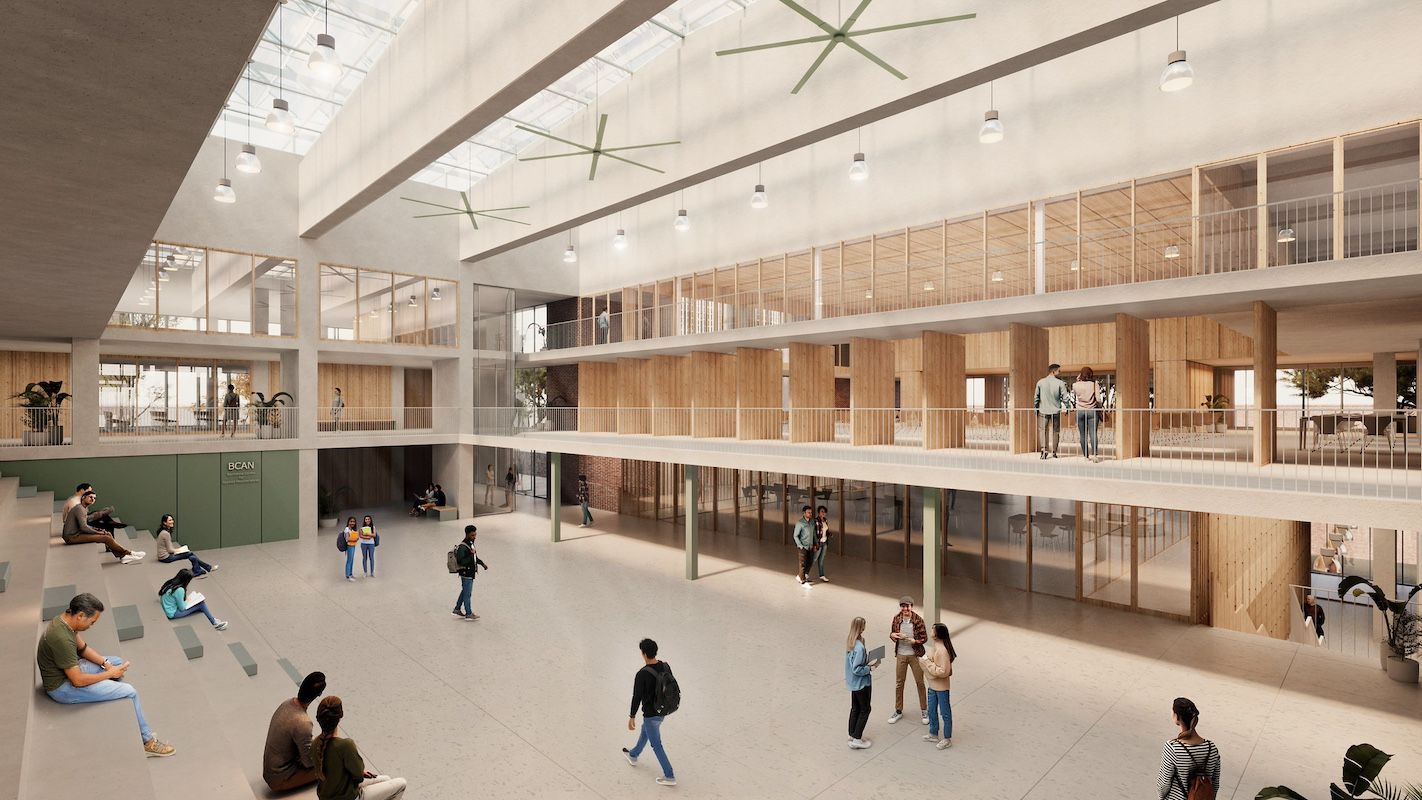
The works will take advantage of the existing structure and use industrialized dry systems to reduce time, waste, and costs, to have a building ready as soon as possible that will include a green roof with photovoltaic panels, tools for comprehensive water management, and low-impact materials, within an architectural model that seeks sustainability and adaptability.
With this project, scientific Barcelona will add a new research hub, on a path that the city has been treading for years, with projects such as the new Clínic, the Fraunhofer center, the Ciutadella del Coneixement, the CaixaResearch Institute and multiple first-rate scientific infrastructures, in a clear commitment to science and innovation from the Catalan capital.
Add The New Barcelona Post as your preferred Google source for free
Stay informed with the latest news.