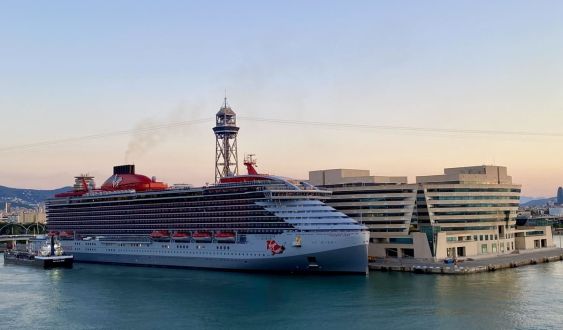
Barcelona will host around 800 cruise ship calls this year, an economic activity that generates a turnover volume in the city of more than one billion euros and more than 9,000 jobs. In 2019, the sector reached a record of nearly 2.3 million passengers, a figure that in 2022 was significantly lower, at 1.7 million. Forecasts for 2023 are positive, but it is still too early to know if shipping companies will manage to reach or exceed pre-pandemic occupancy volumes.
Already in the midst of the pre-election campaign, the Deputy Mayor for Ecology and Urban Planning of the Barcelona City Council, Janet Sanz, reiterated her request this Thursday to the Generalitat to limit the "disproportionate" presence of cruise passengers in the city. "In May there will be 400,000 cruise passengers who will overcrowd the most tourist areas, such as La Rambla, El Carmel or Park Güell," the councilor assured.
But, will 400,000 tourists really arrive this month in the Catalan capital? "Absolutely not," says the director of the International Cruise Lines Association (CLIA) in Spain, Alfredo Serrano. According to the executive, this type of statement is a clear example "of the confusion that exists with the data," which is why he asks that criticism "be made rigorously" and not confuse, as in this case, the number of port movements ---that is, passenger embarkation and disembarkation operations--- with the number of actual visitors.
Even so, are the two million annual cruise passengers that have made Barcelona the largest port in the Mediterranean for the cruise industry a "disproportionate" figure, as Sanz indicates? To answer this assertion, CLIA has commissioned a study from the University of Barcelona to put into context, solely through the use of available objective data, the impact of cruise activity on the entire Barcelona tourism sector.
The main conclusion of the study, using record data from 2019, is that "only 4.1% of Barcelona's visitors come from cruise tourism", according to Professor Jordi Suriñach, director of the AQR-Lab Applied Economics Laboratory at the University of Barcelona. "There are many opinions and few studies with real data, but with our work we see how the weight of cruise passengers on total visitors is only 4.1%", says Suriñach. The professor points out that in the months of greatest activity, in September and October, this weight is not much higher, being 5.6% and 5.3%, respectively.
The study, says Suriñach, helps to "relativize" the messages that attribute to cruises being the cause of the tourist congestion that the city suffers. "Between 2010 and 2019, only five days (in the years 2011, 2014 and 2018) have been recorded in which more than 30,000 cruise passengers arrived in the city, that is, only on 0.1% of the days over ten years has this volume been exceeded. On the contrary, in the last decade on 75% of the days there was a traffic of less than 10,000 cruise passengers, and on 98% of the days less than 20,000 were counted. These are the real data, so certain discourses need to be nuanced", argues the director of the UB's Applied Economics Laboratory.
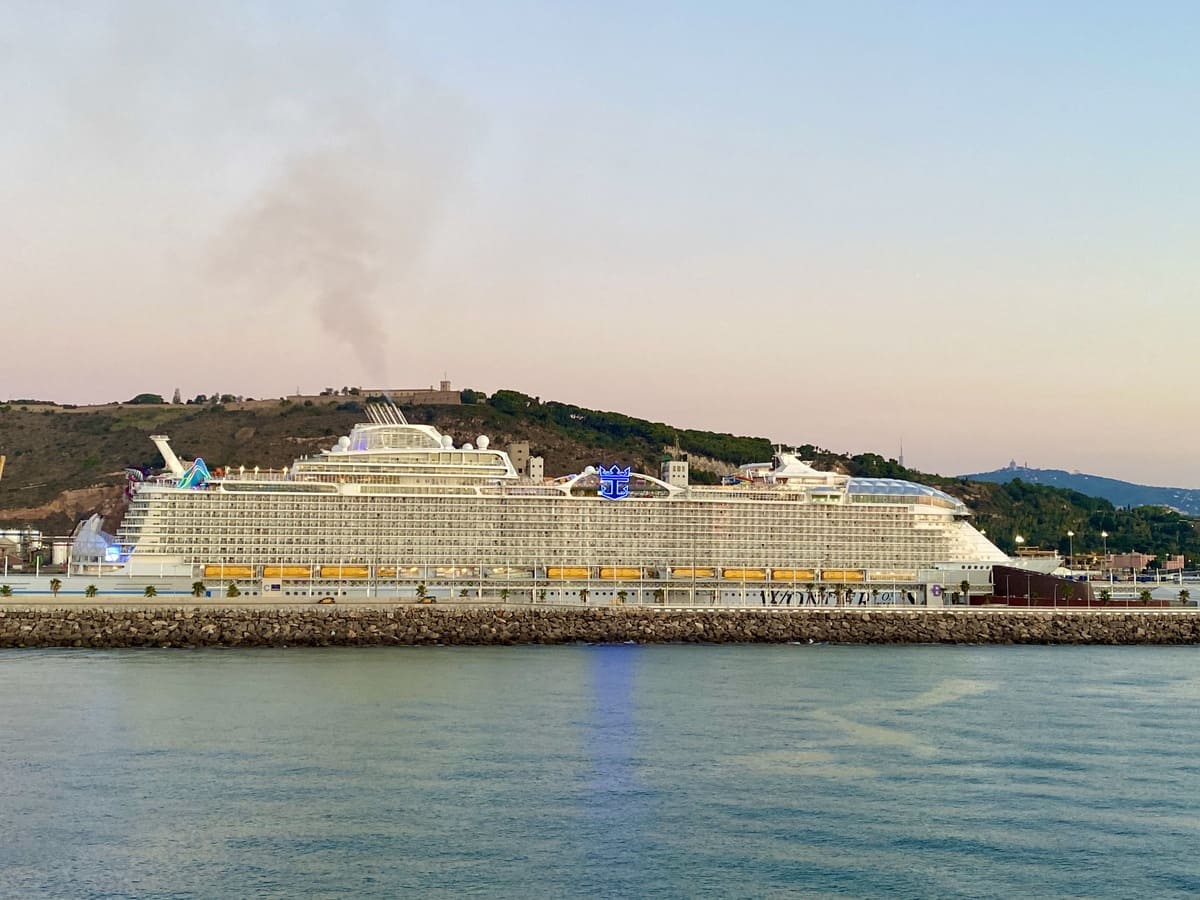
According to the study, in the last decade, homeport cruise passengers have grown especially, that is, those with higher added value, since before or after taking the cruise they stay overnight in city hotels (2.8 nights on average) and, consequently, spend more. "In this decade, the average annual growth of homeport cruise passengers has been 3.7%, compared to 2.8% for transit cruise passengers or those who only spend a few hours in the city," he pointed out.
If both segments are added, the average annual growth of cruise activity in Barcelona has been 3.1% over the last ten years, a percentage that is below the total increase in the number of visitors (+4.3%), the increase in hotel overnight stays (+4.5%) and the growth of Barcelona Airport (+8%).
"We see how the data indicates that there is no evidence to justify that the cruise sector is responsible for tourist congestion in Barcelona; we cannot be when we only move 4.1% of visitors," Serrano highlighted, after stating that shipping companies associated with CLIA are the first to want to avoid "a congested destination."
In this regard, he has been very favorable to maintaining and deepening the agreement that the Barcelona City Council and the Port of Barcelona reached in 2018 and which limited the number of terminals to seven instead of eight, placing all of them in the Moll Adossat, as far as possible from the city center. "With seven terminals, we have limited the number of calls we can make in Barcelona to more or less 800, it is not a figure that will move much in the coming years," he confirmed. "We feel Barcelona as our home; we bring quality tourism to the territory and we want to continue developing the industry in a sustainable way, both from an economic and social point of view as well as environmental, and always within the framework of the agreement signed by the City Council and the Port of Barcelona in 2018," he added.
Serrano has asked politicians for "a rigorous analysis of tourist congestion" and the drafting of a strategic plan that contributes "to spreading out" certain areas of the city through "the development of new icons and tourist areas" and also by taking visitors to discover other points of the territory, beyond Barcelona. "We are willing to listen and collaborate with all the different administrations, economic, social and neighborhood agents to, with rigor, draw up a plan that allows maximizing the advantages of cruise tourism and minimizing the negative externalities that could be identified," he reflected.
Municipal collection from cruises skyrockets
A central part of the report prepared by Jordi Suriñach and Professor Esther Vayá, professor of Applied Economics at the Faculty of Economics and Business of the University of Barcelona, has focused on taxation ---the sector pays more than 200 million between VAT and personal income tax and other taxes--- and, specifically, on the revenue generated by cruise activity through the Generalitat's tourist establishment tax (IETT) and the municipal surcharge applied since 2021. "We start from the premise that cruises are the only means of transport that pay the tourist tax, along with hotels and tourist housing," the professors point out.
In 2019 ---when the municipal surcharge was not yet paid--- the sector generated 2.4 million for this tax, a figure equivalent to 8.4% of the total collection, a percentage that, however, doubles the weight of cruise passengers (4.1%) in the total number of visitors the city receives. Of these 2.4 million, 50% was collected by the Barcelona City Council, that is, 1.2 million.
This volume of municipal income, however, will multiply by six between 2023 and 2024 due to tariff changes and the municipal surcharge, reaching 8 million this year and 9 million euros in 2024, respectively. The calculations have been made assuming a constant number of cruise passengers. With these figures, the weight of cruises in this tax goes from 8.4% to 13%.
More North American tourists thanks to this activity
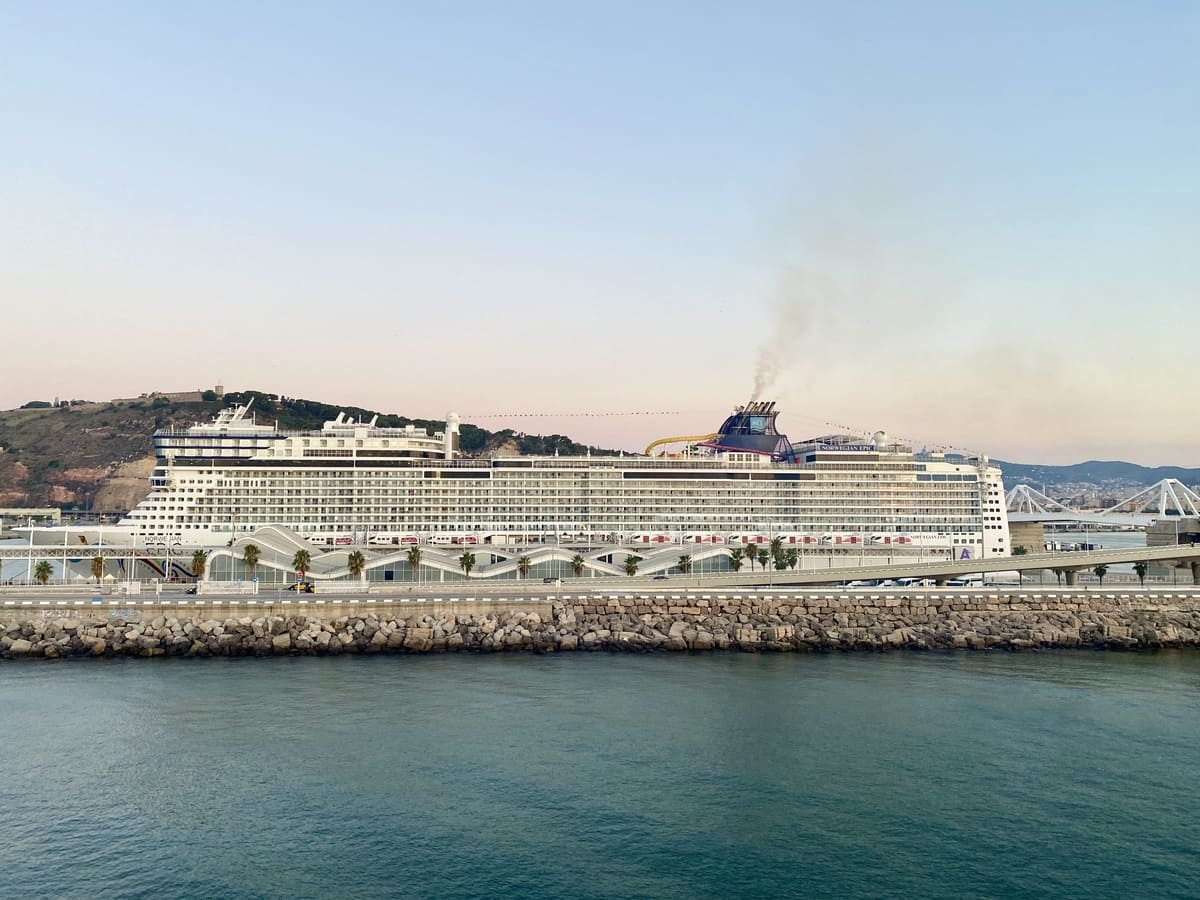
The UB report also highlights "the low seasonal nature" of cruise activity. "Between the months of June and August, only 35% of cruise passengers arrive, that is, 65% do so the rest of the year," Suriñach emphasizes. The professor also highlights that Barcelona's strength as a cruise home port translates into attracting a very interesting tourist profile for the city, the North American, since they spend more than the average, with 187 euros per day, compared to 137 euros for all tourists. "The weight of North Americans in cruise activity is almost 30%, a very high figure in relation to the 7% weight of tourists from this origin in the total number of visitors to the city," he points out.
The report provides other data, such as that 80% of cruise passengers who disembark from the ship —not all do— visit Las Ramblas and 62% travel to the Sagrada Familia. The Gothic Quarter and Passeig de Gràcia occupy the third and fourth positions in the ranking of most visited places. Their impact is also high in Park Güell, where cruise passengers account for 15%, a percentage that rises to 18% in summer. According to Suriñach, this type of visitor primarily engages in shopping tourism and cultural tourism —in higher percentages than the rest— and mainly moves by taxi or public transport.
Commitment to the environment
The director of CLIA, which represents 95% of shipping companies, has reiterated the sector's commitment to achieving net-zero carbon emissions by 2050, although much earlier, in 2026, there will already be a substantial change thanks to the electrification project of Barcelona's docks. "Today, 40% of the fleet is already prepared, but by 2027, 75% of ships will be, and all those arriving in Barcelona will turn off their engines in port and connect to the grid," he explained. In parallel, progress is being made in the introduction of liquefied natural gas (LNG), a more sustainable fuel that will already be the protagonist of 20% of the calls made in 2023.
In a context of extreme drought, Serrano also wanted to combat some messages by stating that 80% of cruise ships operating in Barcelona no longer take on water upon arrival at port because they have their own desalination and osmosis plants on board. Of the vessels that do need to be supplied with water, he explained that consumption is 27 liters per cruise passenger per day, compared to the usual consumption of 106 liters per citizen per day in Barcelona.
Add The New Barcelona Post as your preferred Google source for free
Stay informed with the latest news.
