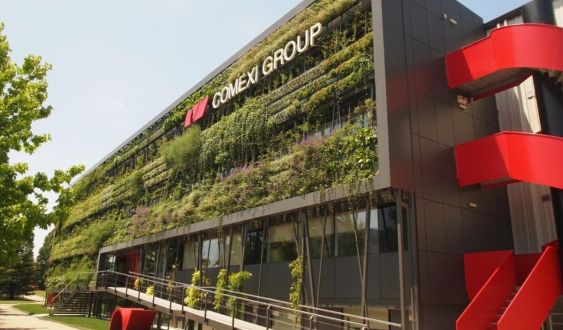
Comexi, a company specializing in the flexible packaging printing and converting industry, has allocated some 16 million euros to the remodeling and equipping of its CTEC technological centers, which it makes available to its clients to foster technology transfer.
The capital goods manufacturer wants to contribute to solving the challenges faced by companies that produce and package any product ---of all the diversity that can be found in a supermarket--- and that are increasingly concerned about having production systems that leave a smaller carbon footprint.
The most widespread problem in the sector is the use in wrappers of a high percentage of solvent-based inks and adhesives and glues, due to the high quality and productivity needs in the printing process, and its subsequent lamination, so that the packaging fulfills all its functions (from containing and preserving the product to offering an attractive image to seduce the consumer).
Therefore, Comexi cooperates with its clients with industrial tests, research and development, and innovation support because "what the client is looking for is machinery that facilitates the transformation process of wrappers by improving productive efficiency and promoting sustainability," explains Albert López, director of the technological centers. And, for this reason, it is not enough to just search for alternatives to ink and adhesives and glues, but above all to "look for materials that have structures that are easier to recycle on their own and, if they are laminates, that can be separated better," he adds.
Hence the importance of collaboration between the capital goods industry and producers because there are many aspects of the value chain that need to be "rethought" and "it is where from the technological centers we can deepen the transfer of knowledge about the sector and try to respond to their needs" from each of Comexi's product lines. The manufacturer produces machinery for flexographic printing, offset printing, lamination, and cutting of wrappers, in addition to advising on logistics aspects.
The resources allocated to the CTEC have been, on the one hand, for the renovation of the center that has been operating since 2010 in the industrial complex of Riudellots de la Selva (Girona) to consolidate it as a benchmark in industry 4.0. Nine state-of-the-art, self-manufactured machines have been installed, and a pioneering prepress area has been adapted where leading companies in the sector such as ESKO, DuPont, and Asahi collaborate, in addition to an area for offset plate engraving. In total, the investment has been close to 14 million euros, taking into account the value of the machinery and the cost of renovating the space.
Comexi cooperates with its clients with industrial tests, research and development, and innovation supportOn the other hand,a thousand-square-meter CTEC has been launched in Miami (Florida), with a cost of 3 million euros, for the development of tailor-made solutions "more agilely" for US customers, explains Albert López. The technology center, which consists of 1,000 square meters, will begin its activity with the installation of a laminator and a slitter, "and a CI flexo is expected to be installed next year," to have a replica of the Girona space dedicated to training, research, and industrial demonstration.
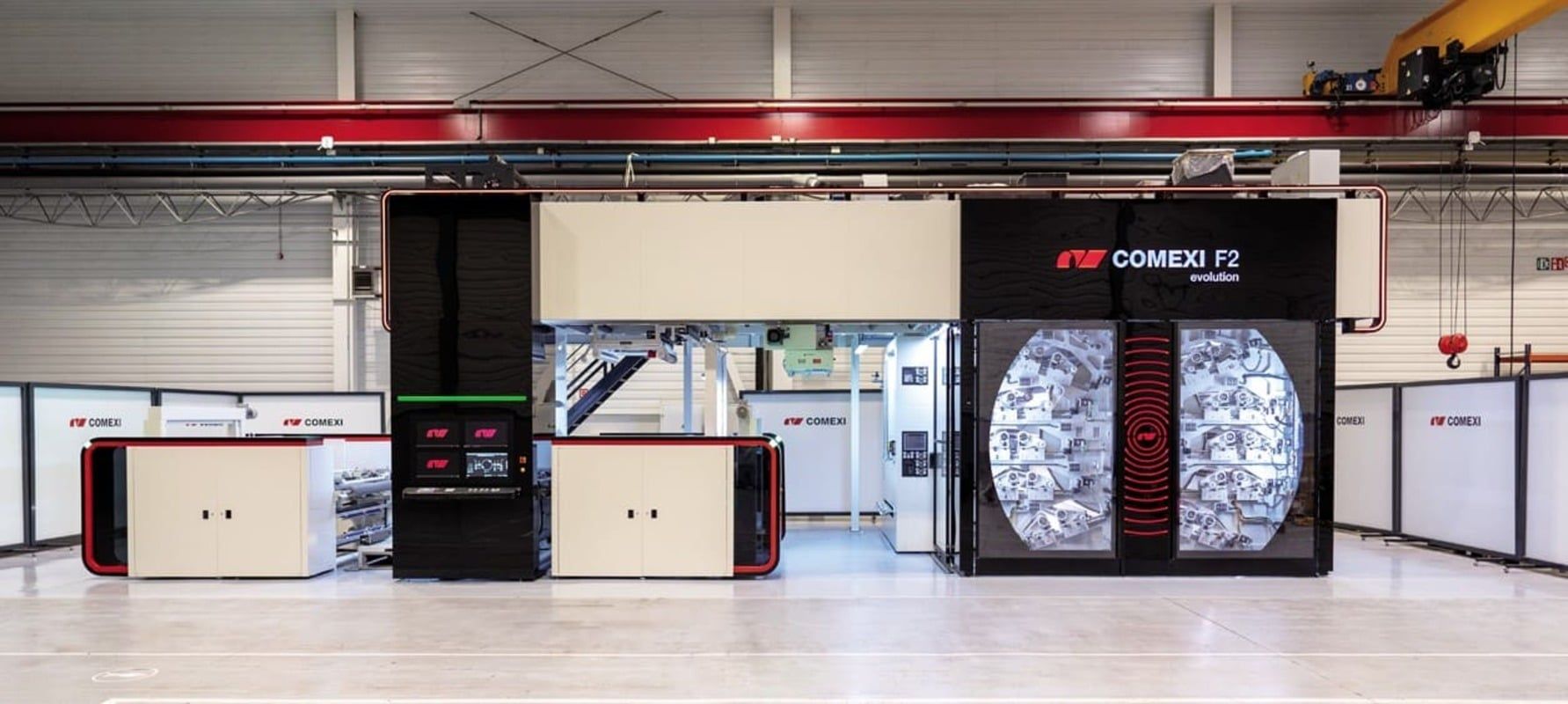
The technology centers in Girona and Miami ---which together have a staff of 18 people--- are a step forward in the digitalization of processes, with tools such as Comexi Cloud, a digital platform that provides solutions to customers to improve the performance of their plant through real-time production data analysis, allowing them to build and develop smart factories. Comexi also has a CTEC in operation for three years in Montenegro (Brazil), where it also has a production plant.
In an effort to improve its presence in the United States and gain market share, the company chaired by Manel Xifra Pagès, a member of the second family generation, will open new offices and a spare parts warehouse in Miami, with a logistics investment of more than one million euros. Penetration into the American market by favoring proximity to customers should strengthen Comexi's turnover starting in 2022. The company expects to return to growth this year, after the waiting period of 2020 when, with a turnover of just over 100 million euros, a very tight profit that avoided losses, and a restructuring of staff and debt, the company closed the year of Covid-19. Last year, the firm suffered from the closure of international markets, as 97% of its production is destined for export.
Add The New Barcelona Post as your preferred Google source for free
Stay informed with the latest news.
