Just fifteen days ago, on January 28, Brussels was the scene of Barcelona's proclamation as the first European Capital of Proximity Commerce. Specifically, the recognition that the Catalan capital has achieved, competing with Zaragoza and Utrecht, is in the category of Visionary City: strategic leadership for economic growth for municipalities with more than 250,000 inhabitants. It is an award that recognizes large cities that place small businesses at the center of their long-term strategy to forge a sustainable and prosperous future.
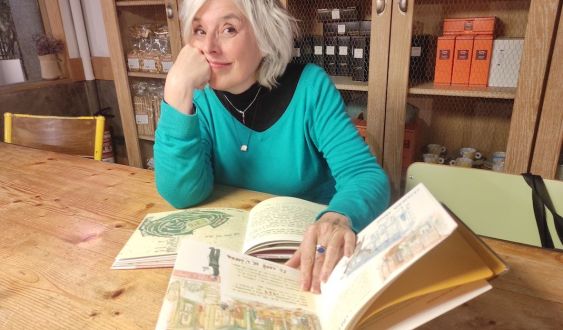
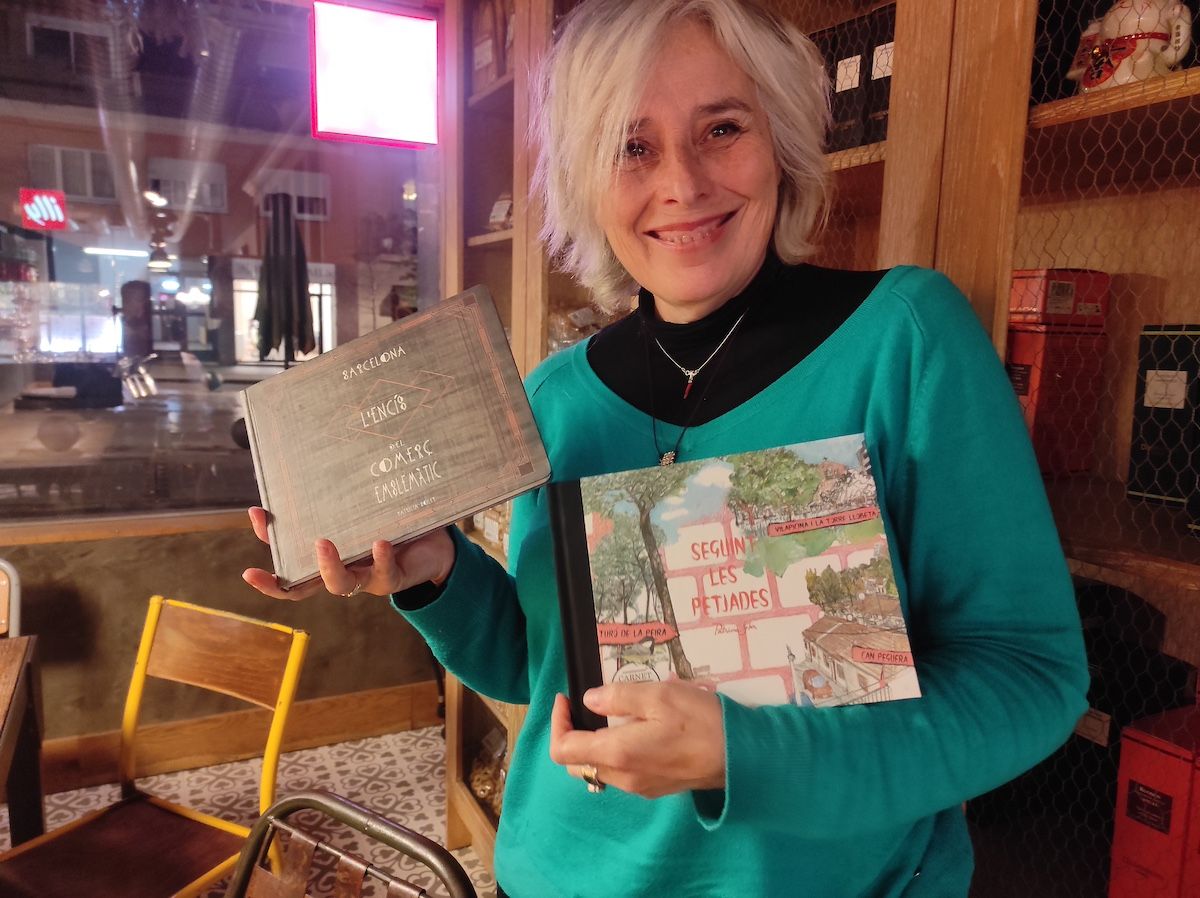
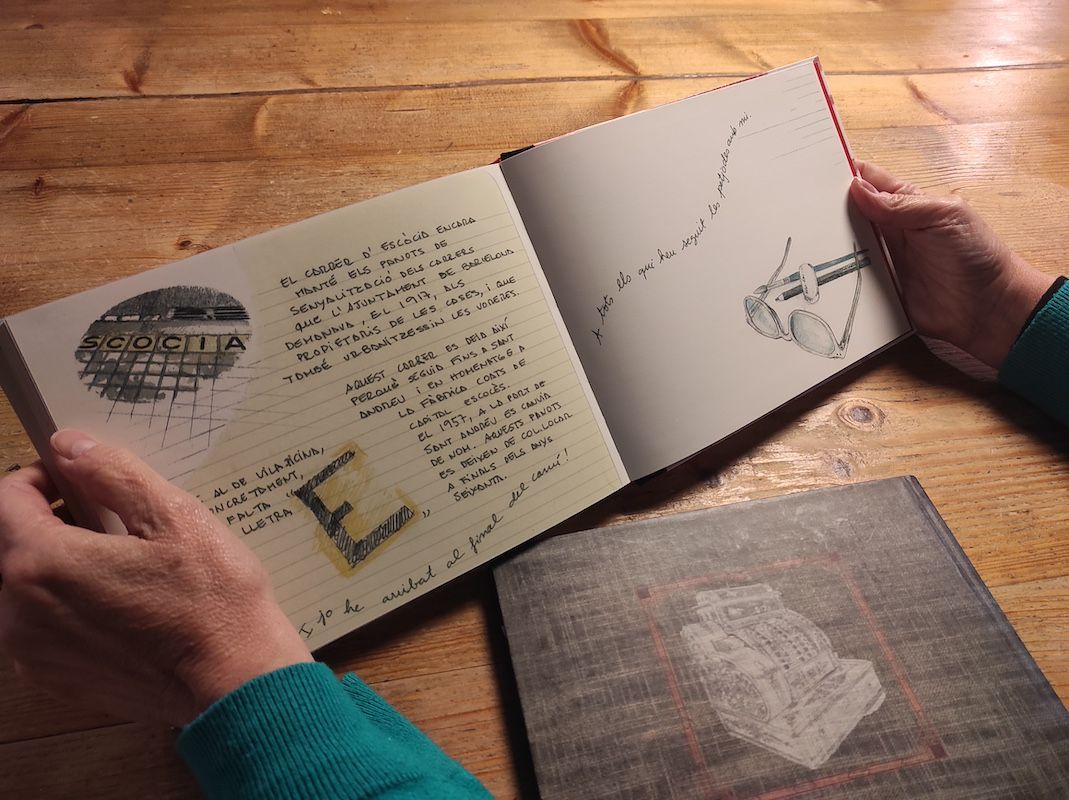
"The city of Barcelona has a treasure in plain sight for everyone, which becomes invisible to our eyes when the rush of everyday life kidnaps our natural curiosity." With these words, Patricia Soler Vico introduces the presentation of the walk that led her to draw Barcelona, l'encís del comerç emblemàtic. It is a small book with about seventy illustrations of shops in this city, those that have been opening their doors every morning for the longest time, bringing light and life to the streets and weaving neighborhood relationships.
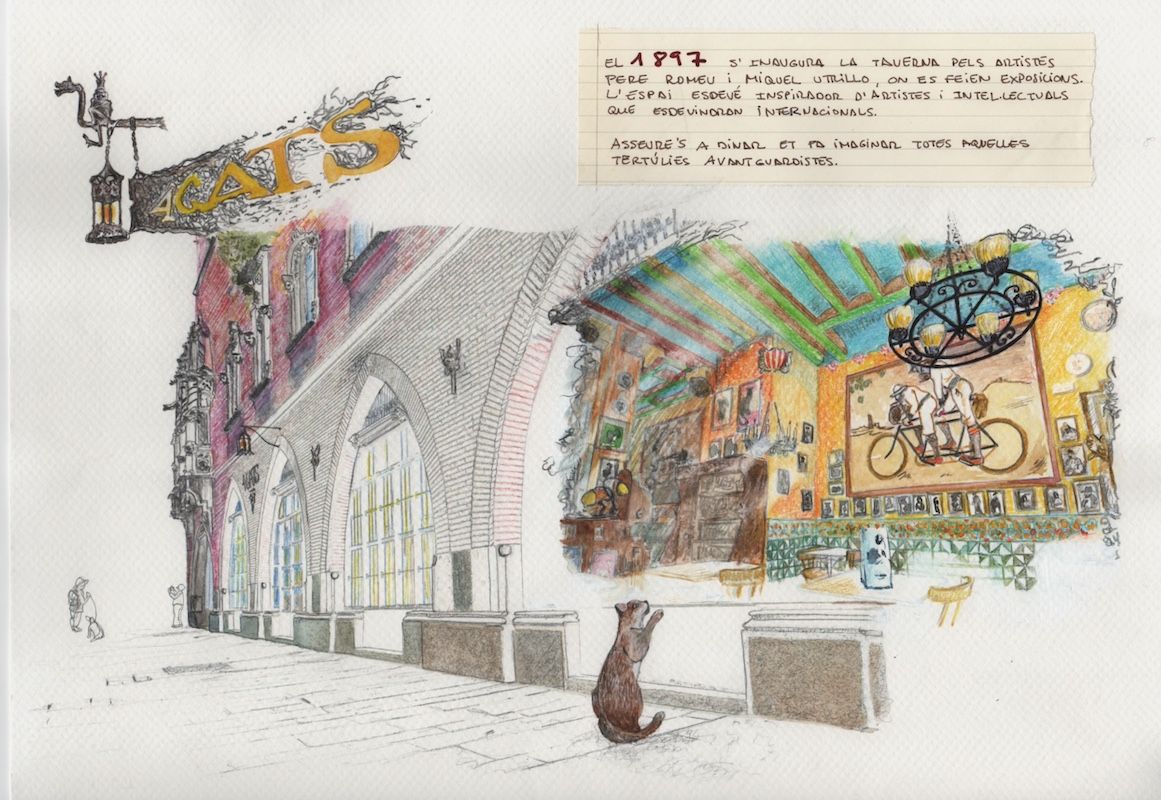
The pencil strokes and colors with which Patricia has reproduced each establishment give them a narrative, fairy-tale dimension. She reveled in the small details, which is precisely what makes these shops great. La Lleteria, the Farmàcia Antiga de Les Corts, the horchatería Tio Che, the grocery store Mantequeria Lasierra, the cutlery shop Roca, in Plaça del Pi, the Guanteria Alonso, the Confitería... All these establishments gave Patricia a magnificent excuse to delve into what makes the city most authentic. These unique shops, each with its specialization, have a personal, family history behind them. In Patricia's peculiar illustrated chronicle, with text handwritten by herself, we find drawings ranging from the vermouth olive at Quimet & Quimet, to the glass of horchata Che on the Rambla del Poblenou, passing through old pharmacy jars and hand-stitched mattresses.
"Having the excuse to look for emblematic shops made me see this city in a totally different way, because I didn't know the history of these stores," she says. "This commission has made me value not only modernist art and the Barcelona that is seen and has more projection abroad, but it also led me to learn about all these families, parents, grandparents, great-grandparents... who took care of their businesses. And this is one of the things about small businesses that I miss most in our city now."
And she explains: "I do like to walk around and see how there are many young people who are committed to opening very alternative and different small businesses from what would be the lifelong grocery store, with the provisions and drinks and everyday consumer products. But all these stores that were ignored for a long time, that were not valued because they were old, ancient... they tell the history of this city. They are the shops where our great-grandparents, grandparents, parents... already bought." From all these merchants, self-employed, she learned "that they are making a super effort to keep everything as their ancestors had left it, and some, already in 2017, had problems maintaining them."
Local culture, a common good
She is very clear about what it means to become aware of what is lost if this type of business closes. And also what can be done to help prevent it from closing. "I always shop at the stores in my neighborhood. I don't like to buy on Amazon or any platform. I like to consume the product sold by the lady who bakes bread, the one who makes prepared food, the hardware store owner, the bar that makes those sandwiches, the lady who sells beauty products, the one who gives massages. And everything I can, I buy in the neighborhood, and I really like it. I feel a lot of anger when I see that, in a premises of an emblematic business, someone who does not value our culture and does not sell anything from here is now installed, this is a contempt for ourselves. I'm not saying that people shouldn't earn a living, but I like to think that in Barcelona there are still Barcelonans from whom we can buy products made here, and do it in all our neighborhoods, from Mrs. María, or Joan. And also, that when you enter, you can greet them and chat with them. I believe small business is a good that should not be lost."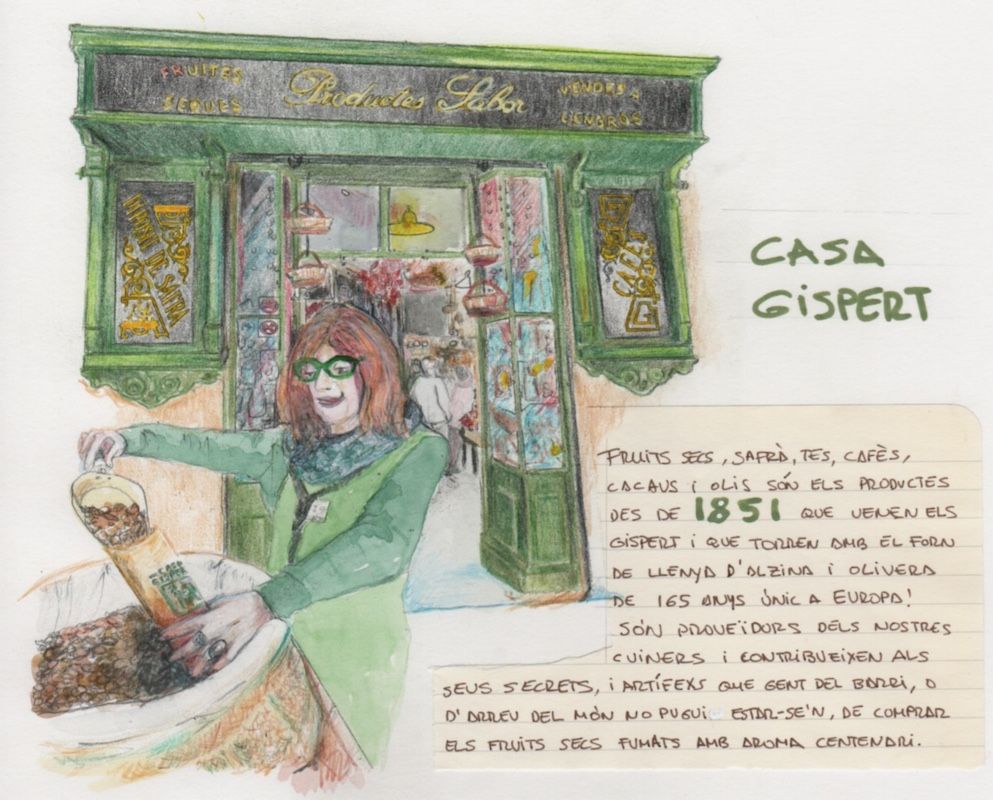
The one-on-one life
Illustrating Barcelona's traditional shops, and coming into contact with all these personal stories of small business owners, connects with the past she experienced as an artist in this same city. "Studying Fine Arts, I lived a very free era, in a very lively Barcelona, in the field of creation and galleries, and I tried the artist's life, with many more possibilities than one can have now, I think." "Yes, today ---she says--- there is a lot of projection on Instagram and, on different social networks, there are many media showcases, but I tried thatone-to-one relationshipwith the gallerist, and I learned not to be afraid when it comes to expressing who one is, how one can and how one sees fit. And this is always good."Patricia started exhibiting very early, while she was still studying. She painted very large canvases, enormous formats, an abstract art that unburdens and condenses artistic expression. "Today the lifelong gallerist is disappearing," she explains. "I was still able to enjoy that direct link with gallerists. You would go into the galleries and they would listen to you." In each exhibition she held, she displayed about thirty works. She did collective and individual exhibitions, and also in other countries like Argentina and the United States.
In the Sala Parés she met who would become her husband, Eduard Batlle, who was one of the restorers. "Through him, I got to know Catalan painting by Simó Busom i Grau, by Anglada Camarasa, by Ramon Casas... Well, she already liked Casas much earlier. "At eleven, I copied a drawing of his." From all that, she began to work more on realism, with very special series of flowers, still lifes on wood with strange perspectives and collage on metal.
"We lived in the Born and, at first, we were very well, because it was a neighborhood. You could buy fish, vegetables, meat, bread... When I left home, I would order it, and when I arrived, I could pick everything up. But over the years that was lost until finally it was no longer a neighborhood, but a theme park," she laments. In that apartment, she was able to dedicate herself very well to large-format painting and sculpture, because she had a lot of space, in rooms with very high ceilings. But in 2013 she ended up leaving due to the street noise, tired of not sleeping well. She left behind many experiences and the farewell of her partner, who was taken by a long illness. Years later, Patricia let out all the emotions contained by that loss, and in her mourning she wrote the novel ¿Dónde están tus zapatos?.
Now she lives in Horta, which is where she once again enjoys neighborhood life, and even more so since, through a gallery owner, she received that beautiful commission to draw the ancestral shops of Barcelona and learned to read the city and its commerce with another perspective and much proximity and detail. Later, she once again added color and her personal touch to a piece of Barcelona, reliving illustration as she does, as "a space to dream." She wrote the text and illustrations for another book, a "carnet de voyage," as she presented her work Seguint les petjades. In this case, it is a journey through the history and appearance of the neighborhoods of Vilapicina i la Torre Llobeta, Turó de la Peira, and Can Peguera; all three are very close to her home. "This book is part of a collection that covers seventy-five neighborhoods of Barcelona." The cheap houses, farmhouses, a war shelter, small passages of low houses, markets and shops, and the people she met by delving into drawing the life of these places make up another route through a lesser-known, but no less authentic, part of this city where this Barcelona artist lives, creates, and recreates herself.
Add The New Barcelona Post as your preferred Google source for free
Stay informed with the latest news.
