To become leaders in the tea refreshment sector and double the consumption of these products by 2030. This is the objective that Coca-Cola pursues with Fuze Tea, after one of the most significant business separations in recent years. Ready-to-drink teas arrived in Spain in the 1990s, led mainly by Nestea, a product resulting from the agreement between Nestlé and Coca-Cola, an agreement of more than thirty years that broke down at the end of 2024. Nestlé announced that it would continue to market under the name of Nestea, through an agreement with Damm to distribute this product. However, the original recipe would be kept by Coca-Cola, which would sell under the name of Fuze Tea, a brand it marketed in other countries.
Since January, the American multinational has launched to market and promote this new product, reminding that the original formula is owned by Coca-Cola. Since 1999, the recipe has been developed at the R&D center that the company has installed in Brussels, a formula from which it is manufactured and distributed in more than 90 countries. In fact, a blind tasting by the Organization of Consumers and Users (OCU) certified that consumers identified Fuze Tea as the drink that preserved the original flavor, compared to its competitors.
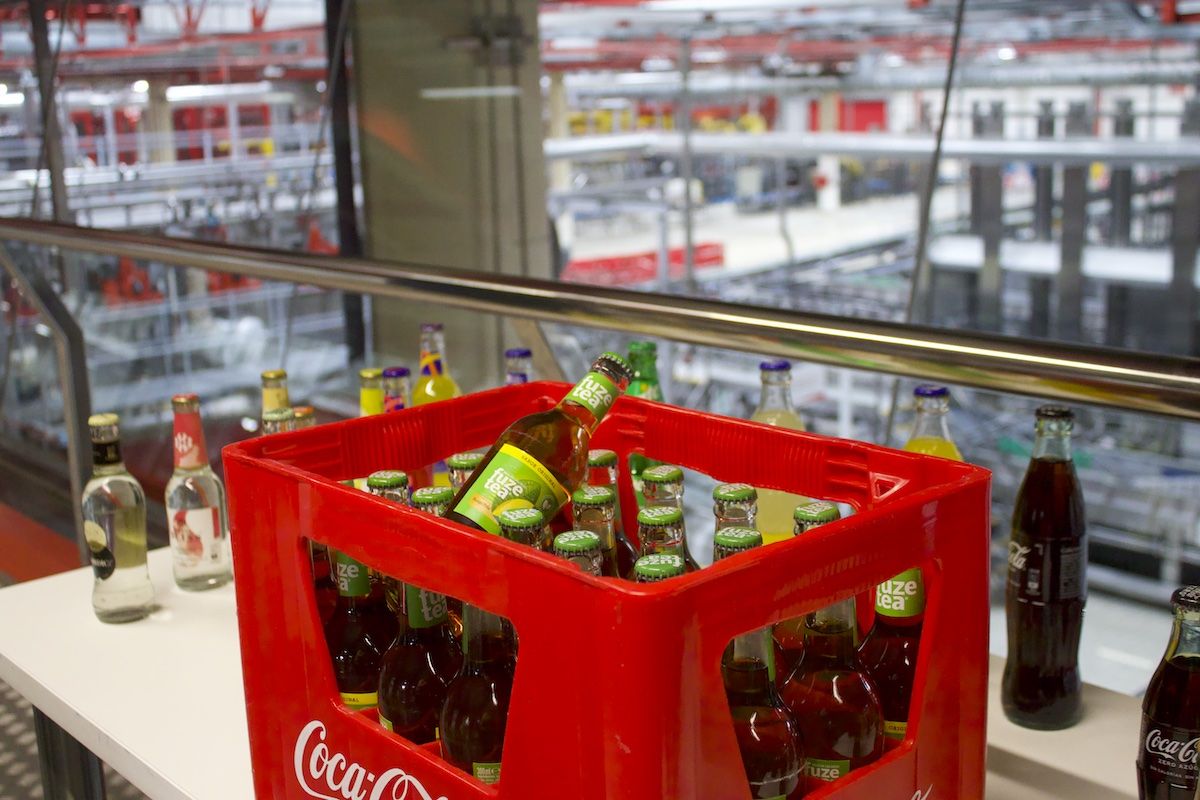
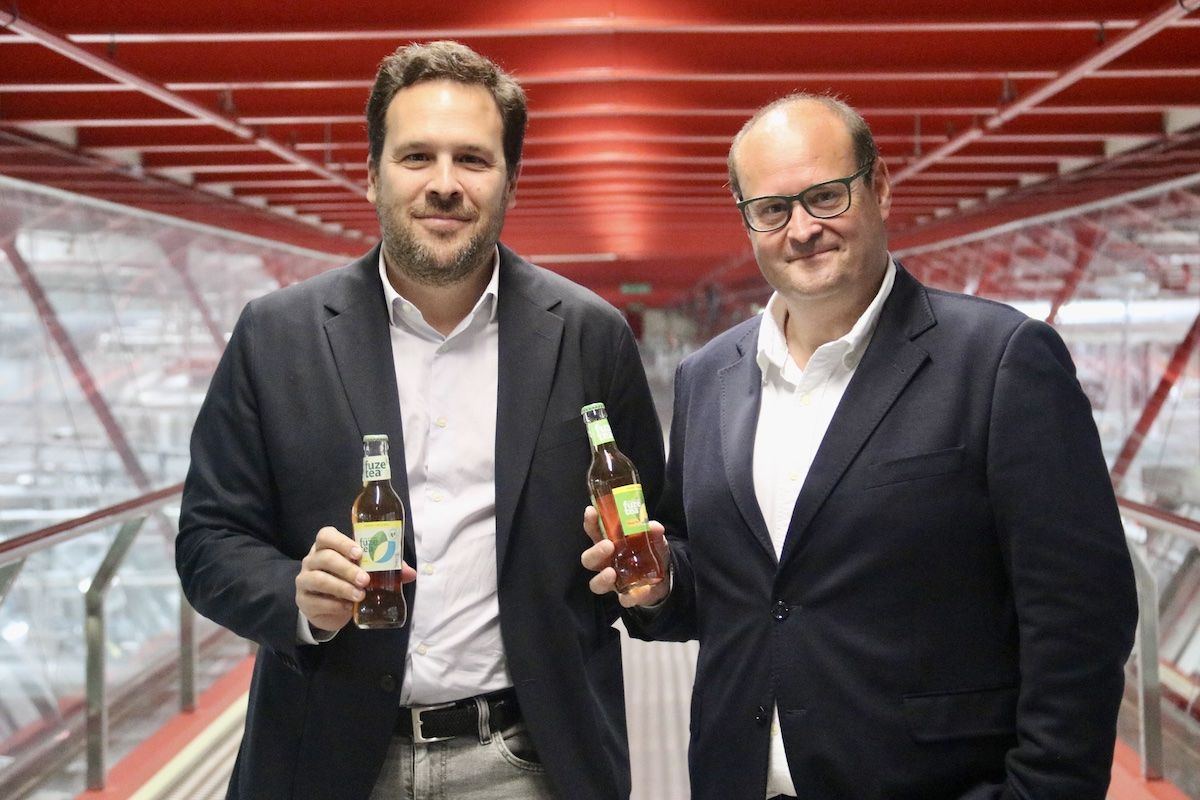
"Fuze Tea preserves the usual flavor, to manufacture it we have not had to make any investment, beyond changing the cap and labels," assures Manuel Mogollón, director of the Coca-Cola Europacific Partners factory in Barcelona. The plant that the American giant has located in Martorelles (Vallès Oriental) is one of the six that the group has throughout Spain ---which has centers in Valencia, Seville, A Coruña, Tenerife and Bilbao---, from which this new product is manufactured. Specifically, in the Catalan plant, two of the six flavors that are marketed throughout the peninsula are manufactured: the original flavor, and the low-calorie and sugar-free one.
Although the company has not wanted to reveal sales data for these first months since the launch, it has assured that the response from supermarkets and consumers is being very positive. "All Spanish supermarkets are prioritizing Fuze Tea over the competition," assures Javier Murga, Associate Director Category Management of Fuze Tea at Coca-Cola Europacific Partners. To consolidate the product in the hospitality sector, the multinational plans to deploy 30,000 activation kits throughout Spanish territory.
In addition, Coca-Cola's commitment to this new product has also had a direct impact on the consumption habits of these soft drinks among Spaniards. According to the latest Nielsen data, in the first two months of the year, the consumption of tea soft drinks ---which includes both sales of Fuze Tea and other beverages in the same category--- increased by 4.1% in Catalonia.
Looking ahead to 2030, the multinational's ambition is to double the consumption of these products. Coca-Cola assures that it is a sector that still has opportunities to grow, as the consumption of ready-to-drink teas in Spain is still far from other European countries. In Italy, for example, twice as many of these beverages are consumed, and in Belgium, three times as many. An ambition they will pursue through strategies such as the manufacturing of new packaging that can adapt to different consumption situations ---although meals remain the occasion when this type of product is most drunk---, with the aim of "deseasonalizing these beverages, which are still very associated with summer," according to Murga.
In addition, the company also wants to surprise consumers with new flavors. Coca-Cola is preparing the launch of a new flavor, mango-pineapple, which until now could only be found in the Canary Islands, and which will arrive in supermarkets on the peninsula and the Balearic Islands this week. A launch that responds to the tropical preferences of customers, who are mostly young people between 18 and 34 years old, as the green tea-passion fruit flavor is the one growing the most in Spain out of the six currently marketed by the brand.
Although the Fuze Tea formula is a global recipe, present in supermarkets and restaurants in more than 90 countries, the drink is manufactured locally in each of the company's plants in Europe. The one in Martorelles (Vallès Oriental), despite being the youngest on the peninsula ---inaugurated in 2006---, is one of the largest in Europe by size and production capacity, as it produces more than 120 million cases of cans each year, each of which contains 24 drinks. There are only eight plants in all of Europe that are capable of reaching manufacturing levels like those of the Catalan plant.
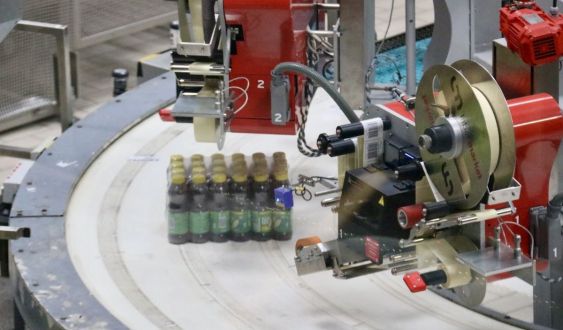
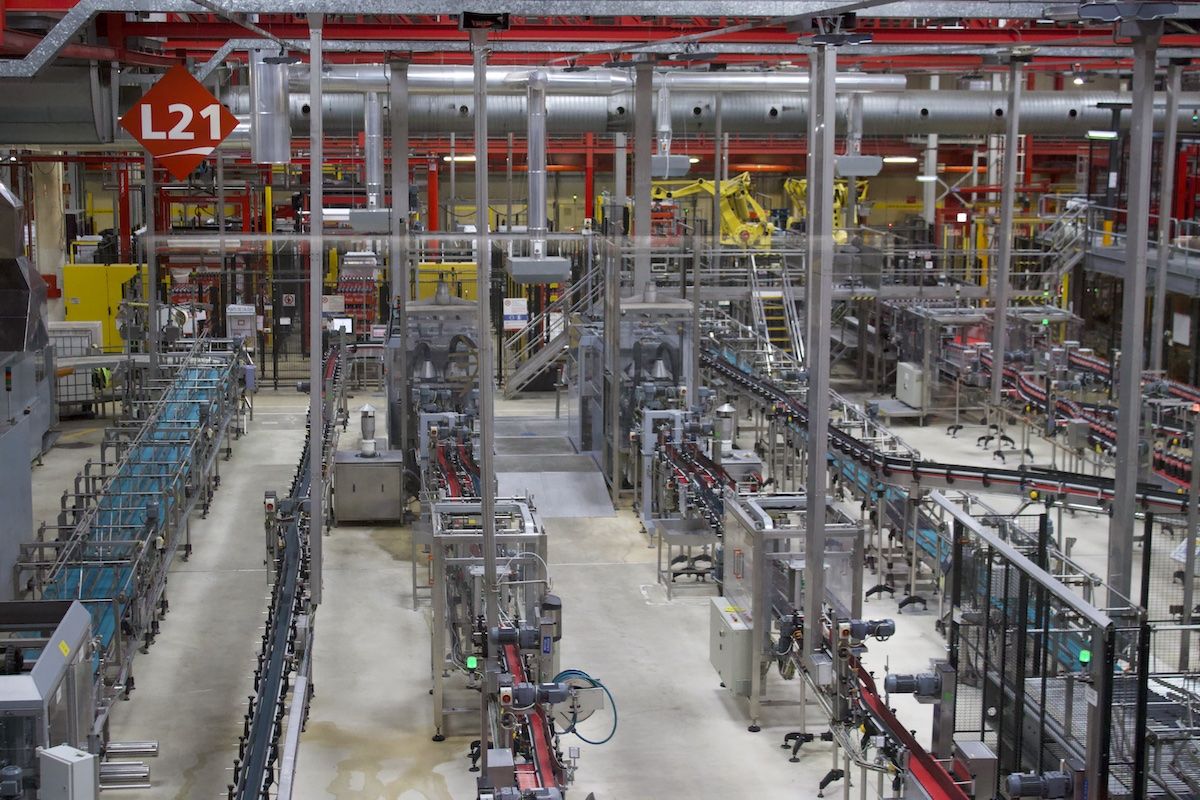
With more than 500,000 square meters of surface area, the factory employs a total of 514 employees, accompanied by machines and robots that, at high speed, produce, package and distribute Fuze Tea, as well as other brands belonging to the brand, such as Fanta or Aquarius. Coca-Cola's cold tea soft drink is packaged in five different formats on four of the eleven production lines that the Catalan plant has.
Cans, glass and plastic bottles circulate at full speed along the plant's conveyor belts, under the watchful eye of workers and robotic arms that help transport the product from one side to the other. The Martorelles plant manufactures, on average, 6,000 liters per hour of Fuze Tea in its returnable glass format.
A calculated mechanism to ensure the quality of the packaging and the drink. Thus, despite the fact that manufacturing is automated, a team of tasters is responsible for certifying that the original flavor is maintained in each of the cans and bottles that leave the Martorelles plant. In addition, every three months, the team of workers must pass tests to certify that they maintain their abilities to detect changes in the drinks, through a blind tasting of products that have been modified with aromas, to check if they are able to identify them.
In the summer season, the factory multiplies its production, and works from Monday to Sunday to respond to growing demand. In fact, Mogollón has emphasized that the plant in Vallès Oriental has the capacity to manufacture any of the six flavors of this soft drink sold in Spain if demand so requires.
Add The New Barcelona Post as your preferred Google source for free
Stay informed with the latest news.
