"Climate change is widespread, rapid, and intensifying." This is how forceful the United Nations Intergovernmental Panel on Climate Change (IPCC) has been in its latest report, published in a week where fires and heatwaves have once again highlighted the risks that humanity has caused to the planet. With the participation of more than 200 scientists, 15,000 documents have been analyzed to assess the changes occurring in the climate. It has been concluded that many of them are unprecedented in hundreds of thousands of years and that some of them will not be reversible for centuries or millennia. And, above all, it has been pointed out once again that human action is the clear culprit.
The only Barcelona and Catalan institution that has participated in the report has been the Barcelona Supercomputing Center-Centro Nacional de Supercomputación (BSC), through ICREA researcher and director of the Earth Sciences Department at BSC, Francisco J. Doblas-Reyes, one of its authors. The climate simulations that Doblas-Reyes and his team perform from the MareNostrum supercomputer have also been part of the IPCC's analysis, as well as articles that have been written on climate change from the BSC.
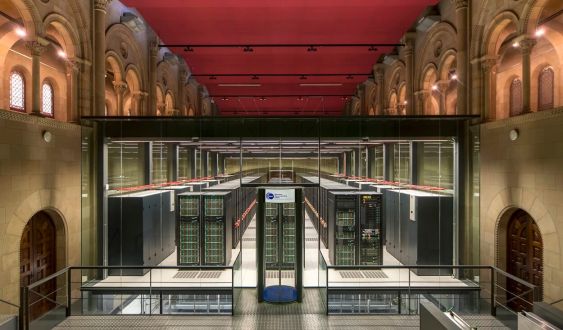
This infrastructure, located in the old chapel of Torre Girona, at the Universitat Politècnica de Catalunya (UPC), allows modeling past and future global climate, and proposing various scenarios, such as what its evolution will be if polluting emissions are mitigated, its variation depending on the degree to which it is done... The supercomputer's capabilities also mean being able to analyze all this data ---almost infinite--- and extract only the necessary information to draw conclusions.
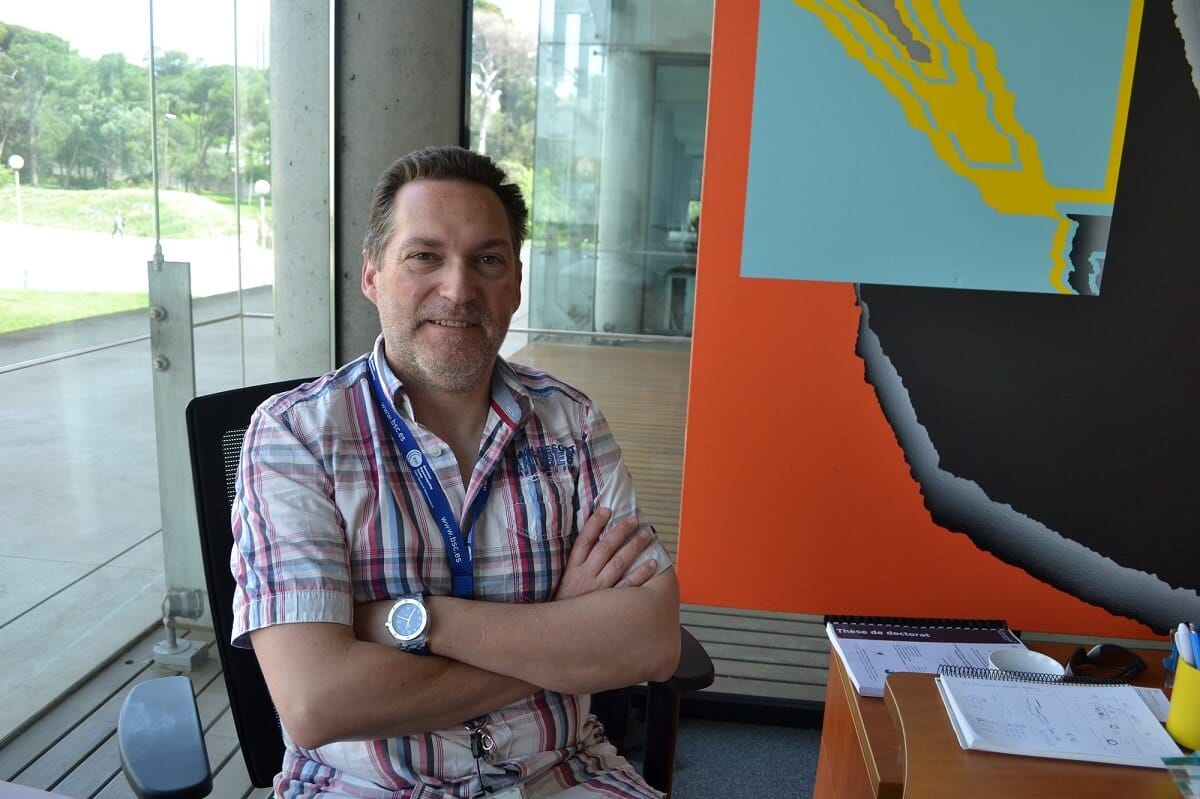
Scientific infrastructures and research centers like the BSC have the capacity to participate in top-level discussions such as those of the IPCC, but their research depends on securing funds, mostly European, which are competitive and have a limited duration, in addition to not allowing them to focus only on Catalonia and the rest of Spain to influence their immediate environment. All this places them in a position of weakness, laments Doblas-Reyes. In this way, more local phenomena such as storms Gloria or Filomena are not usually addressed by the BSC, even though the capacity to do so exists. According to the expert, it is necessary to commit to structurally allocating resources to these investigations, as other European countries and the United States already do, with the aim of being able to determine what contribution climate change has had to these episodes and why they have occurred, facilitating the search for policies that can have a more direct impact.
Another way the BSC has of disseminating the knowledge it generates about climate change is by working hand in hand with companies. For example, companies like Decathlon approach Doblas-Reyes' department to find out how climate variability can affect their economic activity. BSC researchers evaluate their operations and point out vulnerabilities, with the aim of enabling them to better adapt to the environmental situation. Companies in the wine sector, such as Codorníu and Familia Torres, have also sought the help of researchers from the Earth Sciences area, as well as from the electricity sector, such as Iberdrola.
This task is also done with institutions. In this sense, the expert emphasizes how administrations will increasingly have to make decisions that regulate this phenomenon, understanding the data currently available and knowing how to translate them into norms. "A greater involvement of the agents who will experience the changes is needed," he stresses, but not with small projects, but with an investment that provides stability. That is why he sees it as necessary to create companies that can transfer the knowledge generated by the BSC to other companies and institutions. Unlike other research areas of the supercomputer, the Earth Sciences department has not yet seen the birth of any spin-off that responds to the climate emergency, an issue that still represents too small a market, but which, without a doubt, will grow over time.
Add The New Barcelona Post as your preferred Google source for free
Stay informed with the latest news.
