
On Christmas Eve, the historic Catalan brand Chocolates Simón Coll has just opened a store in Barcelona with the aim of strengthening consumer awareness of its products. Located in the heart of the Eixample, at the confluence of Rambla Catalunya and Mallorca street, the establishment is set to become a mandatory stop for chocolate lovers, as it sells the entire range of products manufactured by the company, from its emblematic stone-ground chocolate bars to nougats with whole hazelnuts, its best-selling item, without forgetting its range of chocolates and the extensive collection of bars with different types of dark chocolate (70%, 85% and 99% cocoa), milk chocolate or with nuts.
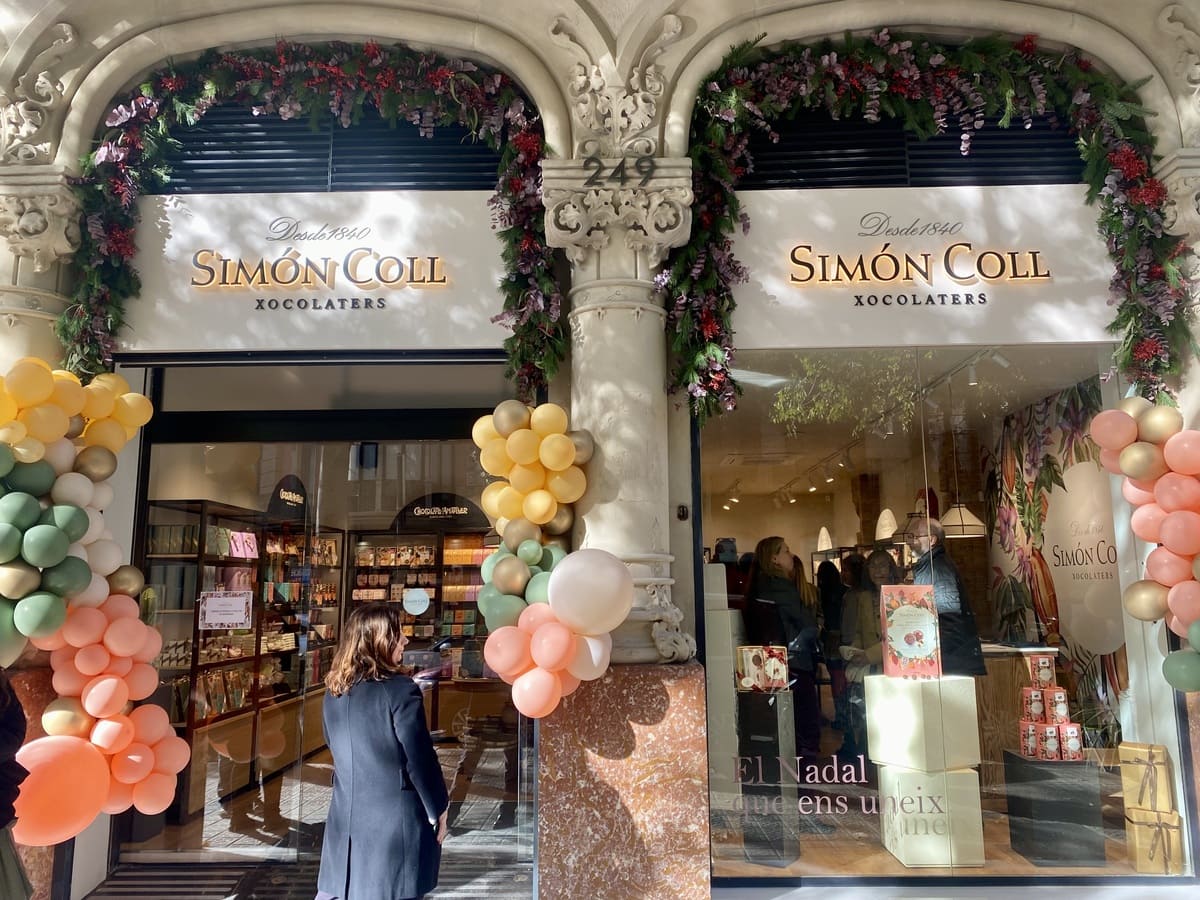
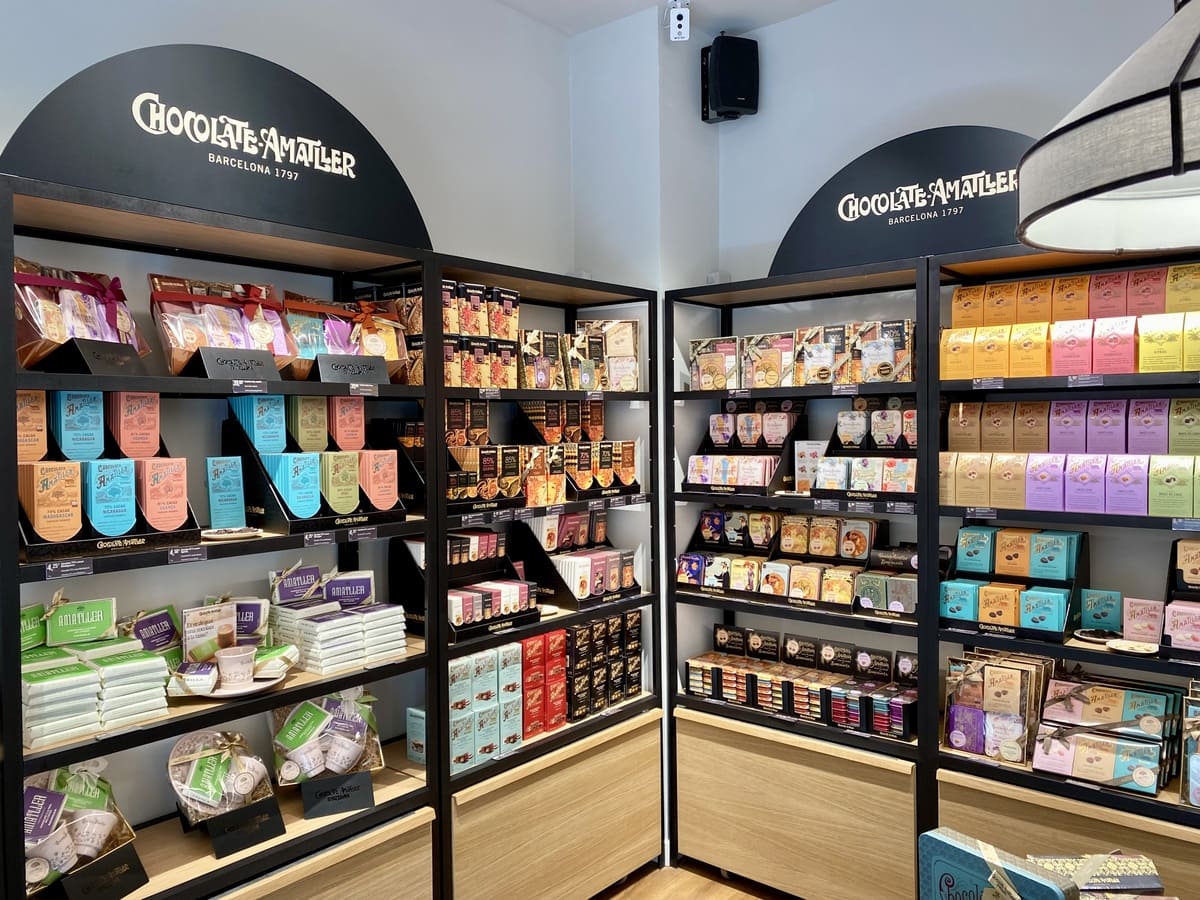
"We have decided to open the first Simón Coll store in Barcelona to be able to transmit the essence of the brand to our customers and strengthen its notoriety," explains Maria Coll, CEO of the company and belonging to the sixth generation of the founding family, to The New Barcelona Post. Simón Coll already had an establishment in Sant Sadurní d'Anoia, its city of origin, but this is the first time it has chosen to establish itself in the Catalan capital with its own store where it also sells the iconic Barcelona brand Chocolate Amatller, which was acquired by the company in 1972. Amatller, specialized in more premium products, chocolates and gifts, also has its own store in Barcelona, located on Provença street, next to La Pedrera. It also has a corner in the modernist Casa Amatller building on Paseo de Gràcia, where the founding family of the brand lived.
Founded in 1840, Simón Coll is a family business that this year expects to reach a turnover of 25 million euros, a figure that will represent a growth of around 10%. According to Maria Coll, this increase is a consequence of the continuous launch of new products and the greater number of points of sale where the brand can be found, which operates through multiple channels: wholesale for professionals, selected or gourmet product stores, and supermarkets. The firm distributes its sales between the Catalan market (33%), the rest of Spain (33%) and exports (33%). Chocolates Simón Coll began exporting in 1986 and today its two brands reach countries as far away as Australia, Korea and Japan, not forgetting the United States and the European market, which accounts for 50% of foreign sales.
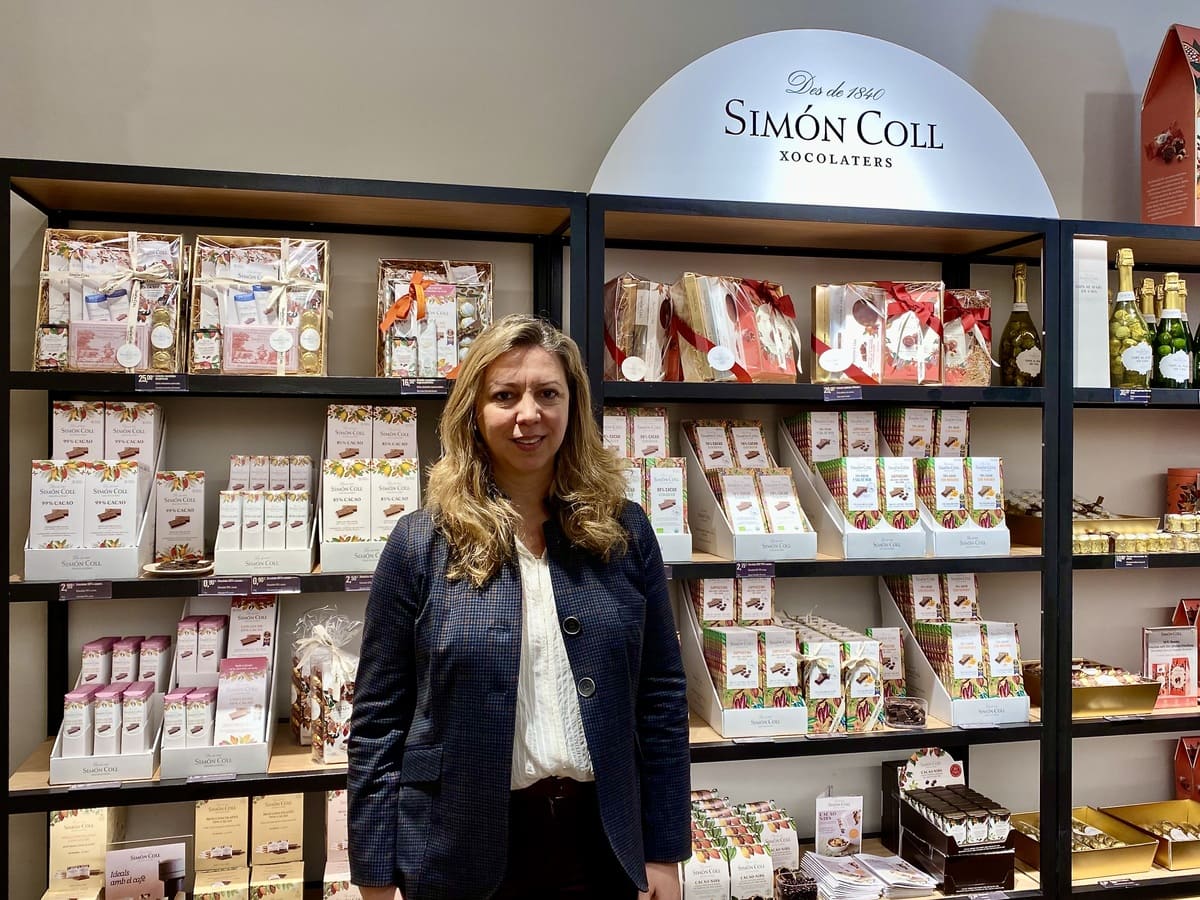
Unlike other chocolate companies that focus on the production and sale of bars, Simón Coll's great specialization is seasonal products associated with the Easter and Christmas campaigns, with dozens and dozens of references that are marketed in all types of establishments. Thus, bakeries and pastry shops are regular customers of Simón Coll, from whom they buy, for example, classic chocolate eggs and all kinds of figures to decorate the "monas" at Easter. Now, at Christmas, Simón Coll is the reference brand for children's chocolate products, such as coins, bottles, balls and umbrellas, Advent calendars, and figures of Santa Claus or the Three Wise Men.
According to Maria Coll, these seasonal products, which are also sold in supermarkets and through the impulse channel, generate more than 50% of the company's sales, accustomed to working with strong seasonality. "Many people consume our products, but they don't always know our brand," says the businesswoman, who this year, for the second time, will invest in an advertising campaign on TV3. In this vein, the Barcelona boutique is part of this strategy to boost the Simón Coll brand. "As of today, we don't have a plan to open new stores; our goal is not to create a franchise network, but we don't rule out opening another store," she says. "What we want is to offer in a single space the entire Simón Coll world, from the most basic children's products to our most premium and organic chocolates, and to serve customers with our own highly trained staff," adds the executive.
With a staff of 150 people, Simón Coll has two factories in Sant Sadurní d'Anoia, where it also has a visitor center, the Espai Xocolata, which receives 50,000 people every year. The company controls the entire production process, from the purchase of cocoa beans at origin ---in countries like Ghana, Ecuador, and Nicaragua---, to the chocolate making and final packaging.
Add The New Barcelona Post as your preferred Google source for free
Stay informed with the latest news.
