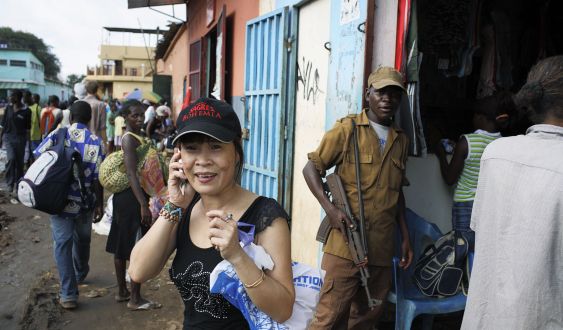
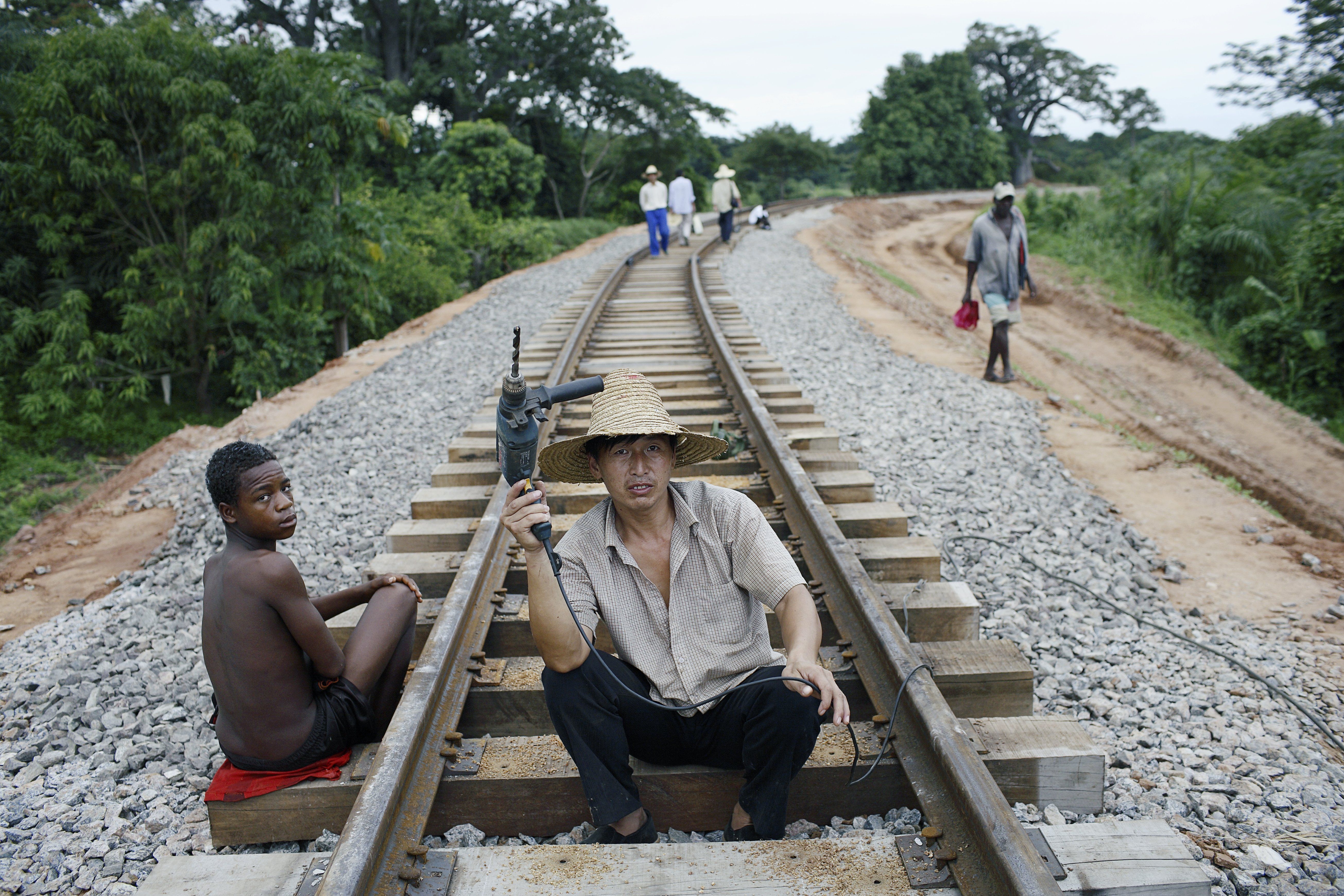
When the coffees arrive, Fenaux points out one of the factors that have led to this take-off. "At first, Chinese products or roads were of poor quality; but that is no longer the case; those guys know how to do things well when they want to, they certainly do...". To understand China's presence on the black continent, a bidirectional reading is essential. It is not China in Africa. It is China and Africa. Although it is undeniable that African natural resources are the fuel the Asian giant needs to function —approximately 80% of its imports from Africa are oil and minerals—, China saw before anyone else that the continent is not only a large expanse of fertile lands and a rich subsoil, but also a market opportunity. According to economist and development expert Vijay Mahajan, the absence of prejudices regarding an African society not as impoverished and immobile as it might seem has given the Asian giant an advantage. "China has noticed —says Mahajan— that there is a consumer class of about 400 million people in Africa eager for products and services. Cheap, yes, but the market is huge." The African Development Bank (AfDB) places the number of Africans with the capacity to have between 2 and 20 dollars daily at 350 million. Although 60% of this incipient African middle class only spends between 2 and 4 dollars daily, China has embraced this humble purchasing margin that goes beyond spending on food for survival: its main imports are vehicles, clothing, machinery, footwear, and plastic materials. From Angola to Senegal, passing through Mozambique or South Sudan, the "Made in China" of counterfeit football shirts and shoes or Chinese letters on vans, motorcycles, or SUVs are a constant. The best news for China is that this is the market that will grow the most in the world. The demographic revolution in Africa has barely begun: if the continent has just surpassed one billion inhabitants, the United Nations estimates that this figure will have doubled by 2050. And the demographic bomb will not stop: by the end of the century there will be 3 billion Africans, more than the current population of China and India combined. Among these numbers could be Beijing's next master move. If to the demographic explosion we add the youth factor —almost half by Xavier Aldekoa 20 NEW CYCLE OF AFRICA of Africans are under 15 today—, a future with hundreds of millions of young people of working age is approaching. For British economist and Oxford professor Paul Collier, China could direct its sights of economic expansion towards them. "If we add increasingly high production costs in China to the great business opportunities in Africa, I believe that, within ten years, China will relocate some of its companies to the continent to reduce costs. If this happens, the change will be spectacular," he maintains. Spectacular," he maintains. But there is no need to travel to the future. Theskylinefrom Luanda, capital of Angola, spurred by several dozen cranes, indicates that Sino-African business is booming. Angola is the paradigm of the tone of commercial relations: China imports more oil from Angola, its first African partner, than from any other country in the world and, in return, stays out of internal political issues, navigates comfortably in a sea of opaque contracts and Chinese laborers who change the face of the country with skyscrapers and asphalt roads. Another of China's major partners, South Sudan, a country the size of France with only 90 kilometers of paved roads and full of oil, is perhaps the greatest example of the continent's need for infrastructure.Most of the 2,500 companies currently operating in Africa bring their own Chinese workers and only employ locals in the toughest tasks (...) The impact is not local, it is continental
The South African president Jacob Zuma last year put figures to Africa's business opportunities and offered to act as a gateway to the continent, as Singapore did in the seventies and eighties in Asia. He said this at a BRIC summit, a group formed by the main emerging economies, Brazil, Russia, India, China, in addition to South Africa. "In the next ten years, Africa will need 480 billion dollars for infrastructure development, which should interest the BRIC." From Brasilia, Moscow, New Delhi and Beijing they took good note. China, which represents 65% of total African imports among the BRIC, will continue to lead the group. There is nothing improvised about the Chinese presence in Africa. The creation of twenty-one special economic zones (SEZ) in African countries is a firm commitment to strengthen trade ties and contribute to the industrialization of the continent. In the SEZ zones, with world-class infrastructure, administrative facilities and tax incentives are offered for Chinese companies to sell their products and be competitive on African soil. And it remains to be seen what the result of the latest collateral effect of the era of the African dragon will be: the human one. The decade of greatest commercial expansion between China and Africa has led more than a million Chinese to settle on African soil. Most return home when their contracts end, but thousands have decided to stay and invest their savings in a new life in Africa. And since some will succeed, a call effect is likely to occur. If it happens, we will be on the verge of the first great generation of Chinese born in Africa. A few weeks ago, the death of the president of Zambia, Michael Sata, brought the vice president to provisional power, born in Livingstone but of Scottish father, and who became the first white president in an African country since independence, with permission from Madagascar. Perhaps there is less left to see an African president with pale skin and slanted eyes."If we add increasingly high production costs in China to the great business opportunities in Africa, (...) China will relocate some of its companies to the continent to reduce costs. If this happens, the change will be spectacular"
Add The New Barcelona Post as your preferred Google source for free
Stay informed with the latest news.