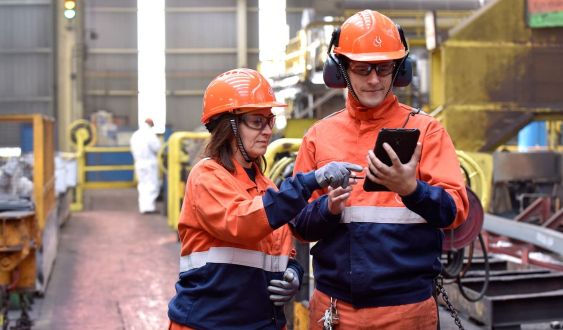
Celsa is one of the industrial pillars of Catalonia and, in turn, one of the largest consumers of electrical energy. Minimizing environmental impact is a strategic objective of the family company, which has been very focused in recent months on straightening out its finances due to the large debt it carries, a situation that has led the Government to decide to rescue the steel group with an emergency loan of 550 million euros channeled through the state holding company Sepi.
In this context, and in parallel to the negotiations it is holding with its creditor funds to restructure the debt, Celsa has announced the launch of Hymet, a project whose objective is to study new technologies applicable in the steel industry for the revalorization of by-products from the process itself and decarbonization through the use of renewable raw materials, such as hydrogen.
This initiative will involve an investment of 5.8 million euros which will be financed with subsidies and with contributions from Celsa (two million) and the other companies involved in the project, such as Técnicas Reunidas, Ames PM Tech Center, Ariema Energía y Medioambiente and AESA. Various technology centers linked to the CSIC and the Institut de Recerca en Energia de Catalunya (IREC) are also involved in Hymet. The Center for Industrial Technological Development (CDTI) will grant a subsidy of 3.9 million to the project.
The challenge is to find innovative technological solutions that allow progress in the decarbonization and circularity process in the steel industry. It should be noted that, in the case of Celsa, its business has always been based on the circular economy, since the company's raw material is a waste product, ferrous scrap, which is transformed into steel in the electric furnaces that the company owns in Castellbisbal (Barcelona).
Hymet will study the generation of green or renewable hydrogen through high-efficiency electrolysis technologies. The project will also investigate a new system to capture CO₂, again with electrolysis, and generate synthesis gas. Finally, the valorization of an industrial waste product, the scale produced by rolling mills, will be promoted thanks to the implementation of a new type of reactor.
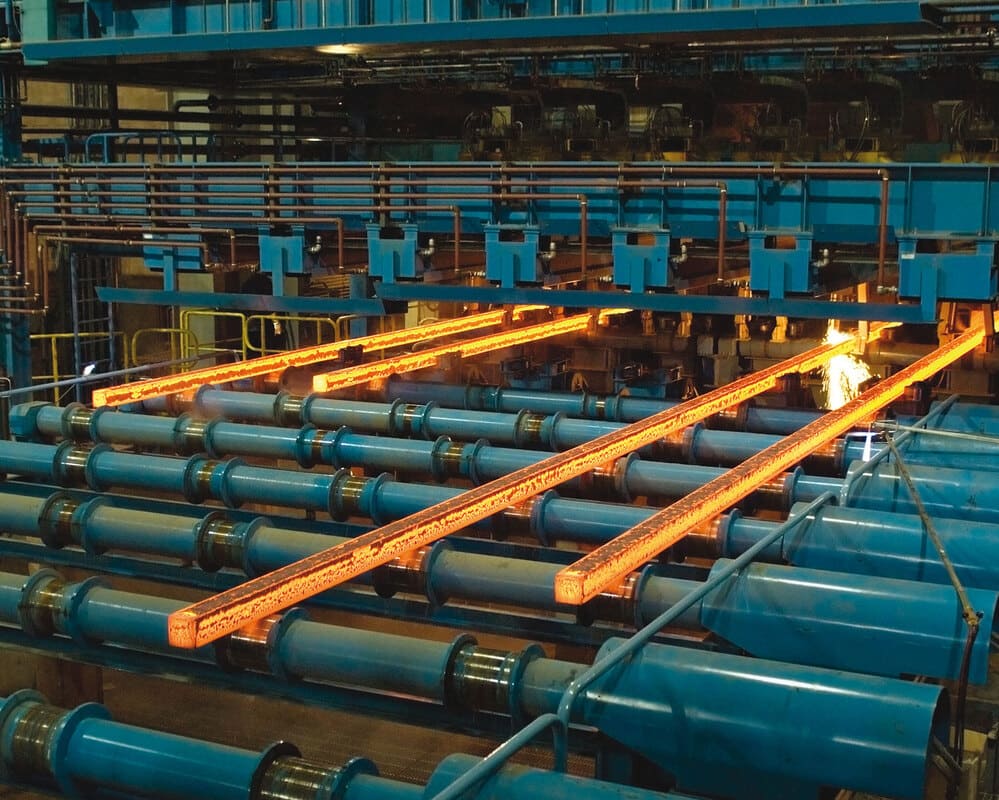
Celsa assures that it currently "already valorizes more than 90% of the waste it generates in its steel production process" in Spain (70,000 tons per year) and states that its goal is to reach 100% by 2025 thanks to initiatives such as the Hymet project. "Our strategic objective is to achieve complete circularity in the next five years and become a Net Positive company (with a positive impact on emissions) by 2040," assures the group owned by the Rubiralta family.
The Catalan steel company manufactured more than 6.5 million tons of steel in 2021, of which 3.6 million correspond to its plants in Spain and the rest to the steel mills it owns in Poland, the United Kingdom, France, and Norway. This volume makes it the largest European producer of steel from scrap and one of the largest recyclers of this waste on the continent. In 2020, a year marked by the pandemic, Celsa invoiced 3.3 billion euros, compared to 4.12 billion in 2019. Its intention in 2021 was to break its historical record, with sales of 5.2 billion.
Add The New Barcelona Post as your preferred Google source for free
Stay informed with the latest news.
