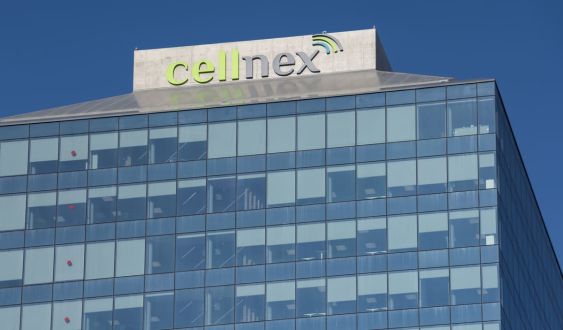
Cellnex Telecom, Europe's leading operator of wireless telecommunications infrastructures, has moved its offices in Barcelona to the BcnFira District business center, located on Paseo de la Zona Franca. The newly opened facilities, in addition to accelerating digitalization, focus on people and talent as the company's greatest asset.
The digital transformation, accelerated by the impact of the pandemic, has not only modified the way people interact with each other, but has also changed the way of understanding work and working. The philosophy of hybrid work, which had been a trend in large business corporations, has become a necessity for companies like Cellnex.
Hence, the inauguration of the new building has coincided with the establishment of Smart Working for the almost 500 employees who work in the group's new headquarters, 17% of the entire workforce at a European level. For all of them, the 60%-40% hybrid work model has been established, that is, three in-person working days and two of teleworking.
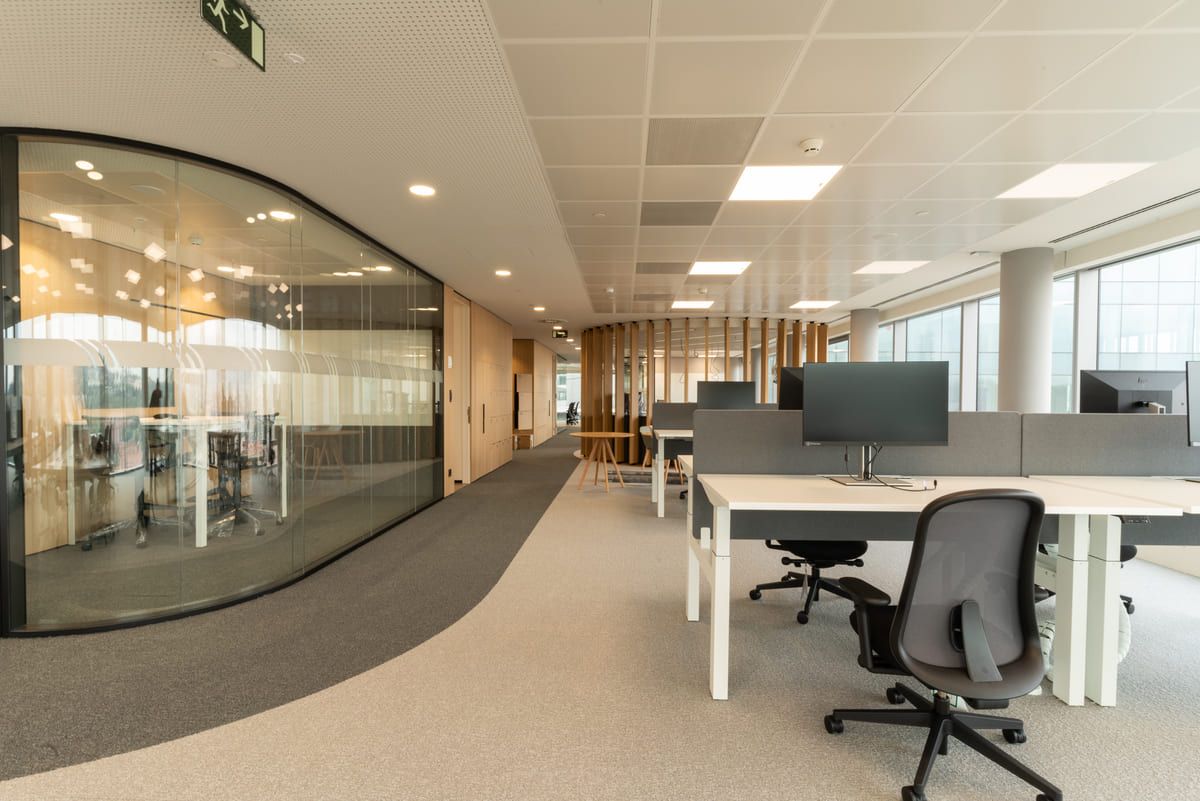
The project therefore addresses a new way of understanding the work environment, based on three fundamental pillars: empowerment, effectiveness, and collaboration. "We have created a place where teams can collaborate and share their experiences. A place that facilitates people's performance and fosters a cohesive work environment," summarizes Laia Bernà Gironès, architect and Global Workplace Manager at Cellnex.
There are 7,500 square meters, distributed over eight floors, in the Torre Llevant office building, from the developer Iberdrola Inmobiliaria. True to the idea of Smart Workplace, your workplace is where you are, most of them are standard floors and versatility of use prevails in them, with shared desks and a multitude of collaborative areas more open to cohesion and the convergence of thoughts. "At Cellnex, we were already working on a change to a more flexible model before the pandemic and 2020 was an exceptional year in a context of forced confinement that has allowed us to draw very valuable conclusions," explains Anna Bufi, Director of People and Organization at Cellnex Spain.
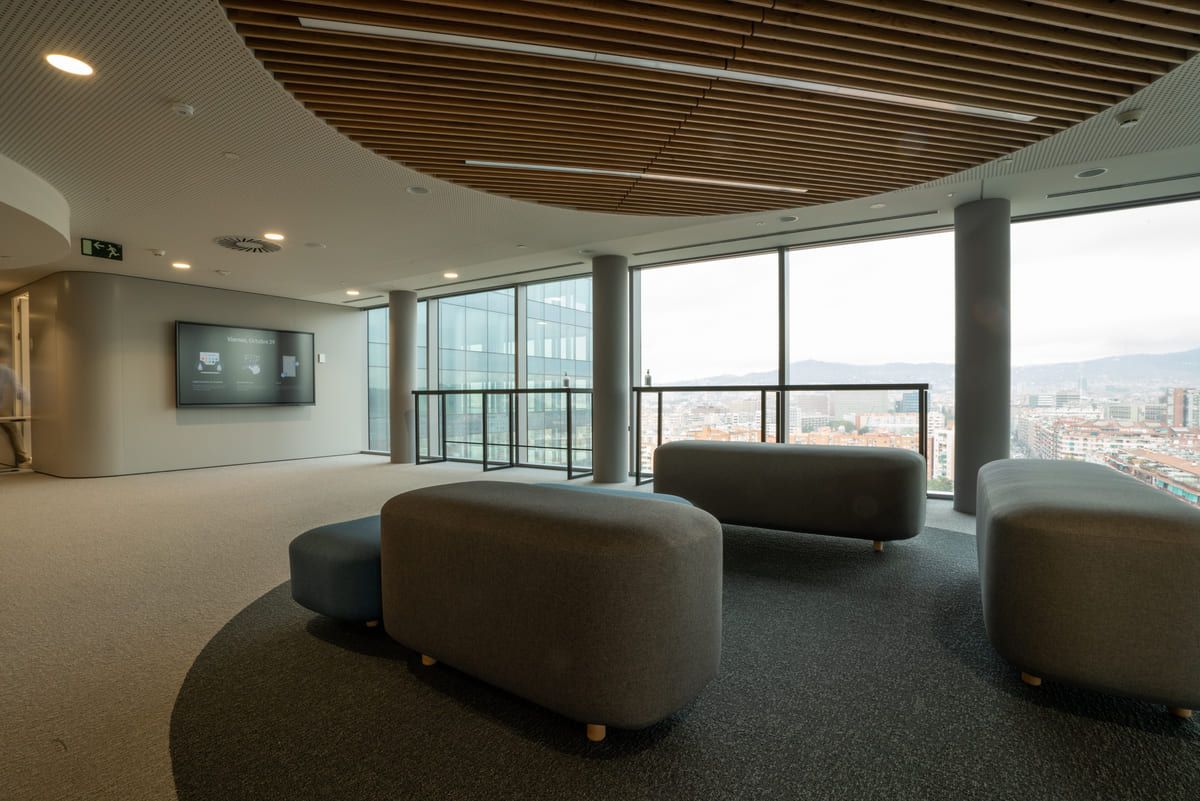
For her part, Laia Bernà adds that "the new spaces give us a flexibility that we didn't have and that has translated into a balance between individual workstations and collaboration spaces, which we have enhanced by incorporating more informal areas for spontaneous meetings and to foster collaboration between teams." A flexibility that, in turn, facilitates hybrid work on the basis that results are met regardless of where the employee is working. In addition, the shared desk will allow "to absorb the future growth of the company," she specifies.
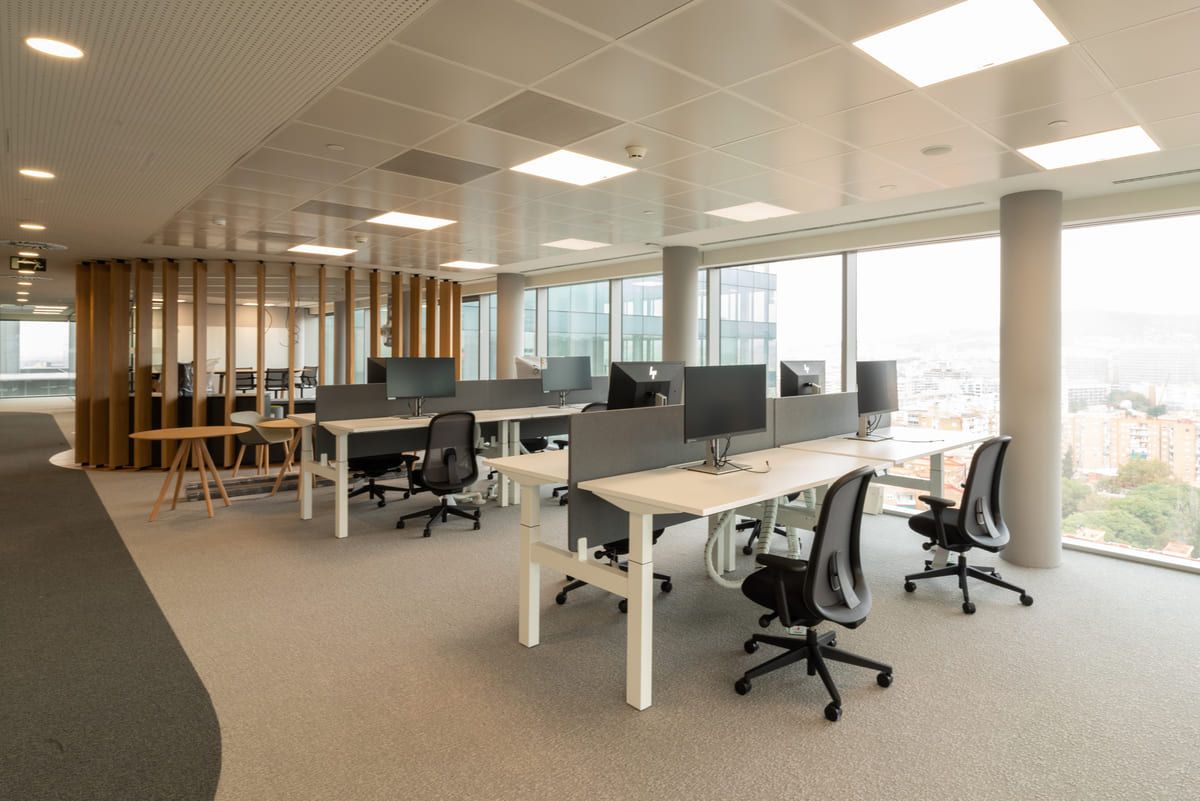
Laia Bernà has coordinated the project with the IT team to provide the spaces with tools that facilitate the objectives but without technology predominating over the environments. "We have opted for a design that seeks to improve the user experience by simplifying connectivity, so that with a single click you can connect in any of the spaces and use all its collaborative elements, either wired or via wifi," explains Miguel Ángel Gil Castilla, IT architect at Cellnex.
There is also a diverse services area ---some of which already existed in the old offices on Avinguda del Parc Logístic, located in a building in the Consorci de la Zona Franca area--- such as a dining area that includes as a novelty a Casa Ametller corner, medical service, or changing rooms with showers, among many others.
To successfully implement the entire transformation process, Cellnex has boosted internal communication with its employees so that they perceive the advantages of the new work system and labor flexibility which, ultimately, will result in improved professional projections, quality of life, and even the well-being of those who make up the company.
Add The New Barcelona Post as your preferred Google source for free
Stay informed with the latest news.
