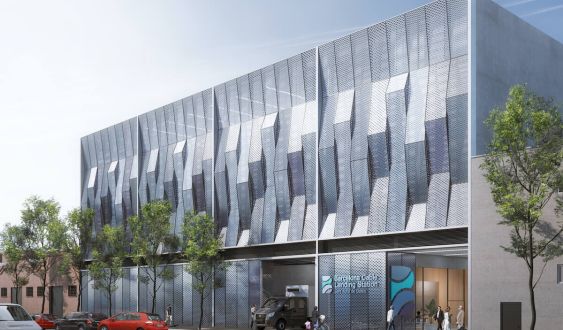
Sant Adrià del Besòs will become a submarine cable landing point starting in 2022, with the construction of the first landing station in Catalonia. But, what is a submarine cable? It's like a fiber optic cable ---the one that allows you to connect to the Internet from home and watch series---, only it's buried in the sea. And protected with steel so it doesn't get damaged. This is explained by the CEO of Barcelona Cable Landing Station, Norman Albi, the company in charge of piloting this new port, which aims to compete with other similar ones in the Mediterranean, such as Marseille.
[subscribe_newsletter_esp]
The signs of this future digital port can already be seen on Sant Adrià beach, where works have excavated in the sand to bury the infrastructure that will connect it with the rest of the world. Specifically, data, the modern raw material, will arrive in the city via the sea: some will continue their journey to other destinations and others will stay. This is the opportunity the municipality has: to boost a digital industry around bits and generate a new ecosystem.
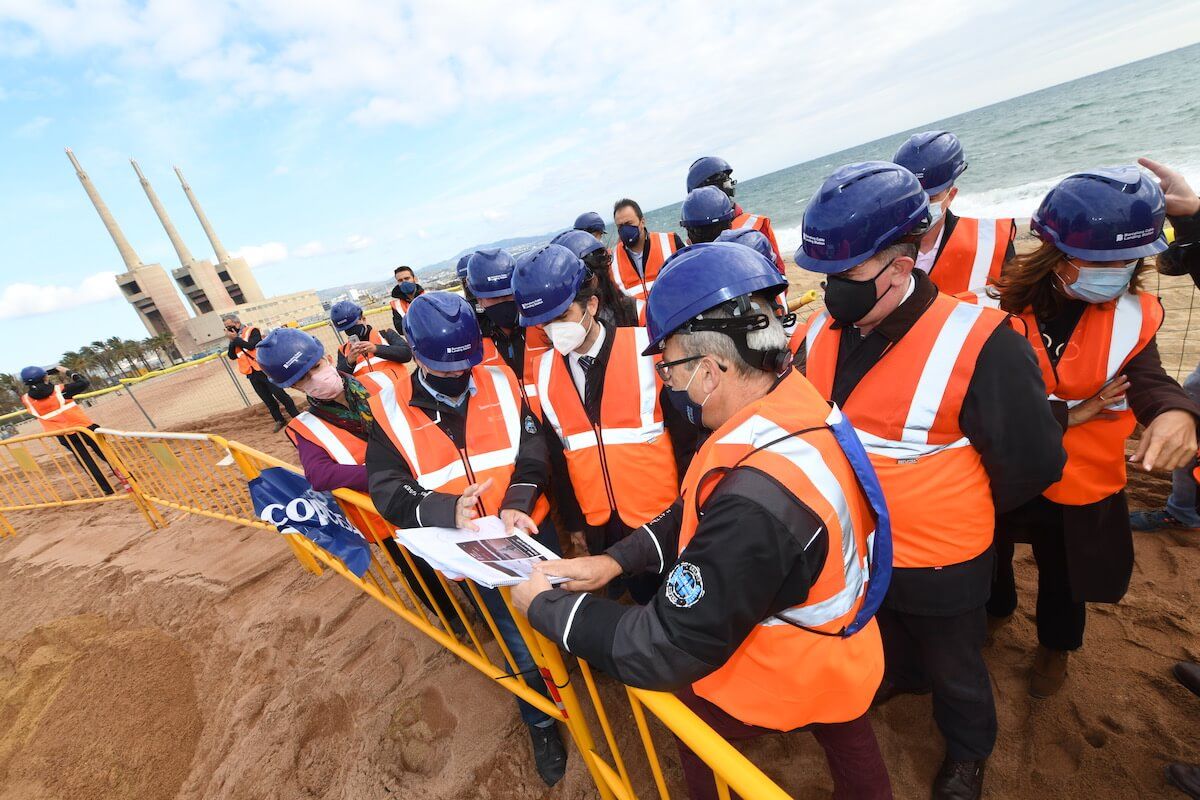
The mayor of Sant Adrià, Joan Callau, indicates that projects like this are what allow the city to be transformed and provided with the necessary resources to overcome the inequalities that currently divide the people of Sant Adrià. "We do not resign ourselves to being specialists in drugs and poverty," he defends. In this sense, Callau emphasizes that the Sant Adrià coastline has "great potential" to be exploited, taking into account its geographical position and its proximity to Barcelona ---and to 22@---. The Diagonal-Besòs Campus of the Polytechnic University of Catalonia (UPC) is an example of how the town can be revitalized with the cable port, even if it is a long-term and slow process. But, as Callau says, "transformations are like that."
The Barcelona Cable Landing Station will work with international cable operators to offer them a secure and unrestricted landing service in Barcelona. Some of the 400 submarine cables in the world that connect all continents will be able to benefit. It will be able to work with the main data centers located in Southern Europe and will serve as a link for cables from Asia, Africa, and the Mediterranean that want to connect with the United States via the fastest possible route. The company's executive, Norman Albi, explains that this port will function like an airport, attracting airlines and making passengers arrive ---and stay---. "The exact same thing happens with data," he remarks. For now, the company is in talks with several submarine systems and expects to announce the agreements they will reach shortly.
The Generalitat calculates that the new submarine fiber optic cable port can increase Catalonia's GDP by between 2% and 4% in the next four years and continue accelerating job creation in the ICT sector to exceed 200,000 jobs by 2024. The Government has allocated some 800,000 euros to amplify the impact of the development of this landing station, in addition to having handled the processing of all maritime-terrestrial permits.
The Minister of Digital Policies, Jordi Puigneró, maintains that for the digitalization of Catalonia, 21st-century infrastructures like this are needed. Puigneró emphasizes that the port of Sant Adrià is a "great opportunity" to develop a new digital district in the city. And he adds that, while before smoke came out of the Tres Xemeneies and thanks to that one could have light at home, now it continues to be so even if they are off, thanks to the light of fiber optics.
Add The New Barcelona Post as your preferred Google source for free
Stay informed with the latest news.
