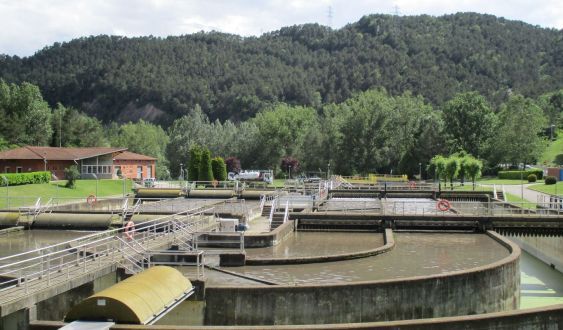
It will soon be a year since Catalonia has had a pioneering system in Europe for the detection and monitoring of the SARS-CoV-2 virus. The Catalan Water Agency (ACA) anticipated this in July 2020 with the launch of a network to control the presence of coronavirus by analyzing wastewater arriving at 56 Catalan treatment plants. This is a very representative sample, as these treatment plants cover practically all Catalan regions and treat 80% of the wastewater generated in Catalonia.
The European Union issued a recommendation on March 17, eight months later, proposing to member states the need to deploy control systems like the one implemented in Catalonia. This fact confirms the ACA's capacity for innovation and the vision of the Generalitat to provide the Department of Health and Procicat with a complementary instrument when making decisions to reduce the spread of the coronavirus.
This surveillance and control program, called SARSAIGUA, will require an investment of 2.4 million euros, of which 400,000 euros were already contributed in 2020 and the remaining two million will be distributed between 2021 and 2022.
According to the Department of Territory and Sustainability, to which the ACA belongs, monitoring the evolution of the pandemic through wastewater "constitutes a valuable and cost-effective tool to complement the clinical and epidemiological surveillance of covid-19, as well as other diseases that may be of interest in the future."
The ACA highlights that the SARSAIGUA control network has been successfully implemented thanks to the existence of previously active research groups, which had the appropriate means and expert knowledge in the field. Thus, the uniqueness and success of this innovative project is due to cooperation with four advanced research groups and the participation of three leading laboratories.
Specifically, the Institut Català de Recerca de l'Aigua (ICRA), Eurecat and the University of Barcelona (UB) participate in the initiative. In parallel, the samples collected in the 56 wastewater treatment plants are taken to two UB laboratories specialized in virus analysis in environmental samples (the Enteric Virus Molecular Biology Laboratory and the Water and Food Contaminant Virus Laboratory) and to the Center for Omics Sciences (COS) that Eurecat has in Reus.
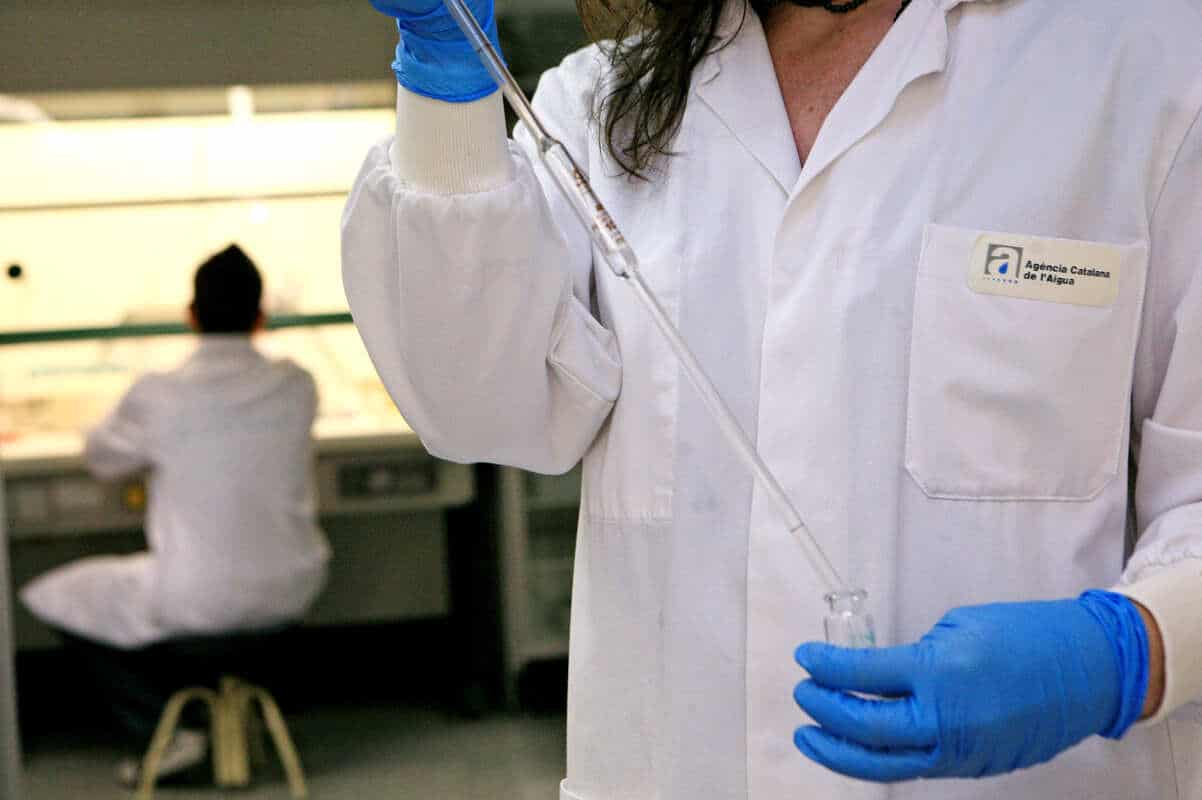
Wastewater has proven to be a good indicator of virus circulation among the population, without the need for massive diagnostic screenings. The weekly monitoring carried out by SARSAIGUA allows tracking the evolution of the pandemic and anticipating possible outbreaks in certain areas. The system consists of weekly sampling of incoming water to the treatment plants, i.e., before its treatment. Subsequently, the samples are transported to the three laboratories for analysis. The quantification of SARS-CoV-2 genetic traces is done by amplifying the RNA present in the samples with a method that analyzes the concentration of this viral RNA using quantitative PCR.
Results are obtained within 48 hours, and this information on coronavirus concentrations in the wastewater of each population is made available to technicians from the Departament de Salut and Procicat. Since last November, in addition, the data is also made public, so that the general population also has access through the portal sarsaigua.icra.cat.
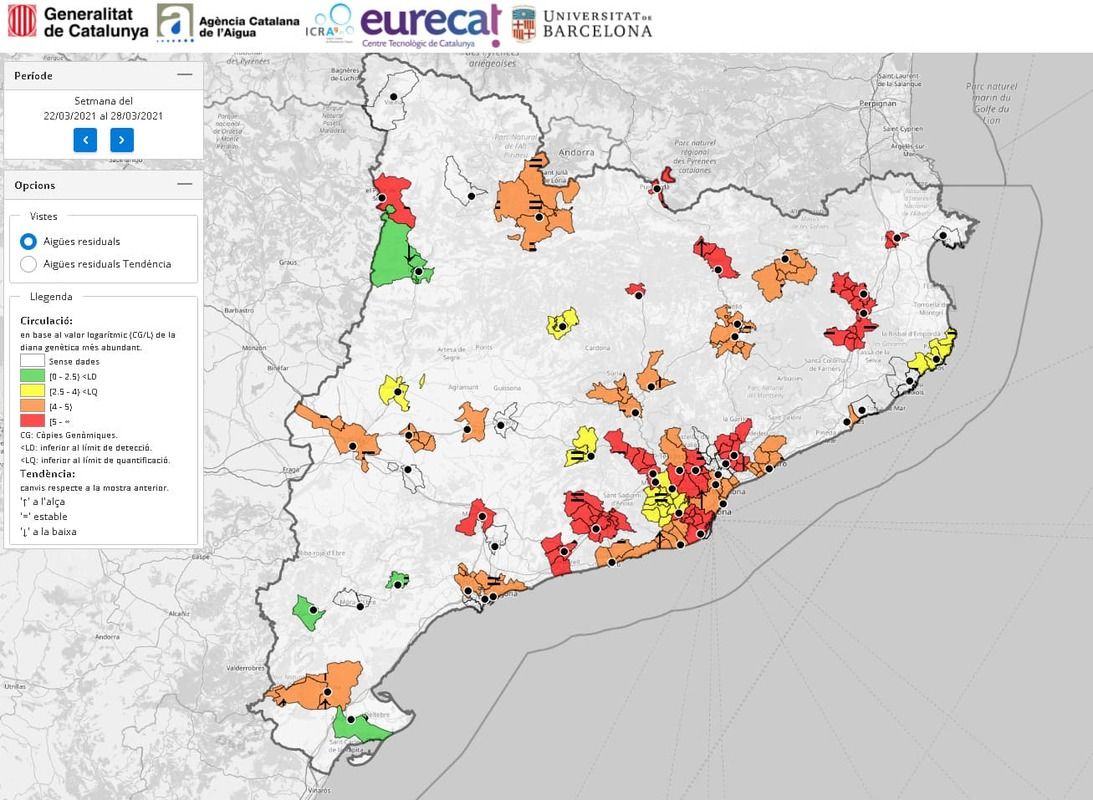
On this website, you can visualize the map of Catalonia colored differently according to the amount of coronavirus detected in each treatment plant. The trend of change is also shown, meaning it informs whether concentrations are rising, falling, or remaining stable.
After all these months of operation, one of the objectives of the SARSAIGUA project is to exchange knowledge with other systems that have been launched in the rest of Spain and in countries such as Switzerland, the United Kingdom, and the Netherlands to improve and optimize the functioning of these control networks through wastewater.
Add The New Barcelona Post as your preferred Google source for free
Stay informed with the latest news.
