Carlota Subirós has brought together the three tragedies of the Labdacids and has taken them to the stage that corresponds to them: the stage of the TNC's Sala Grande. Èdip & Antígona is a production with 13 performers. It is not a production that a small theater can do. It is a production that the TNC has to mount.
On stage we will see Oedipus Rex, Oedipus at Colonus and Antigone. The text on which the adaptation is based is the text by Carles Riba, philologist, Hellenist, classicist… A cultured man who made a Catalan translation of Sophocles' texts trying to maintain the musicality of the original text, with all the necessary stylistic resources. The Catalan used is a luxurious Catalan, with an exquisite and very careful vocabulary. A text to read and reread. A text to enjoy.
A choral spectacle
The dialogues are mixed with monologues, addressed to the audience or to the rest of the actors who, at those moments, act as a chorus. Oedipus is a man condemned by an oracle at the moment of birth. An oracle that comes from further back, because his ancestors had already committed unpleasant acts against the gods. Sophocles focuses on Oedipus and his descendants. The children will pay for the sins of the fathers.
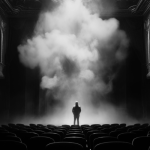
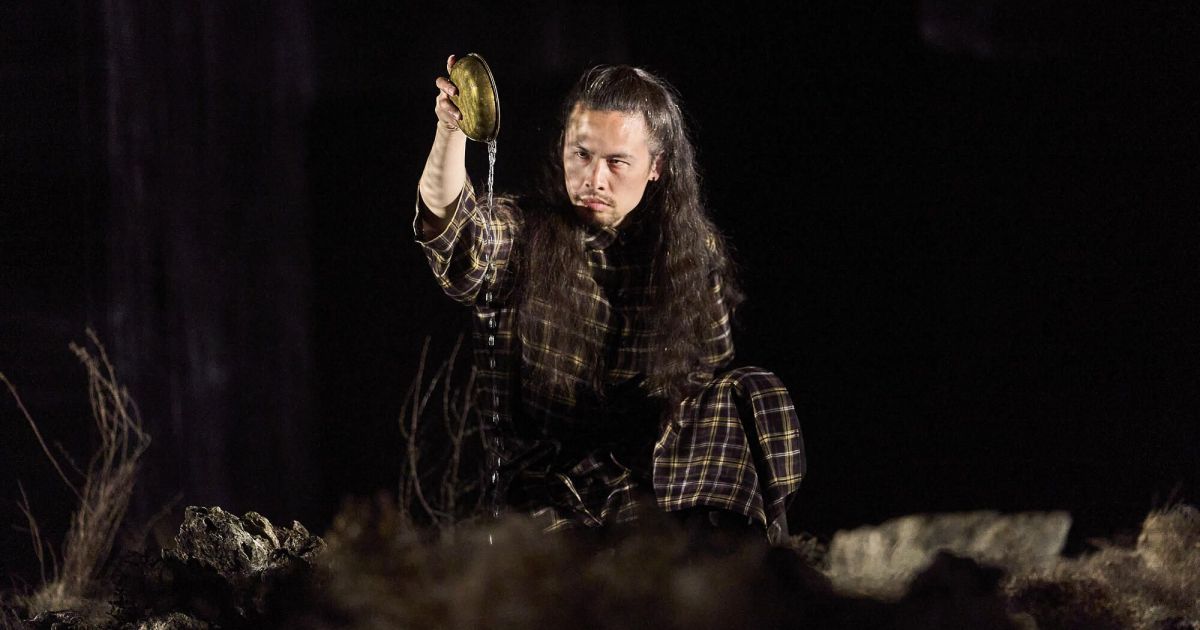
In the first tragedy, Oedipus Rex, a screen traps the performers and leaves them little space on stage. Behind, as there is no lighting, a terrain with earth is glimpsed. The screen makes the audience see themselves reflected… the performers are enclosed between the real audience and the reflected audience.
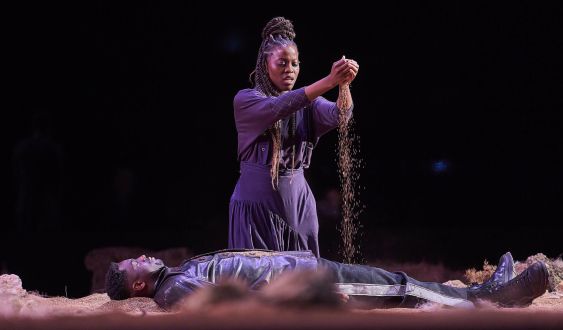
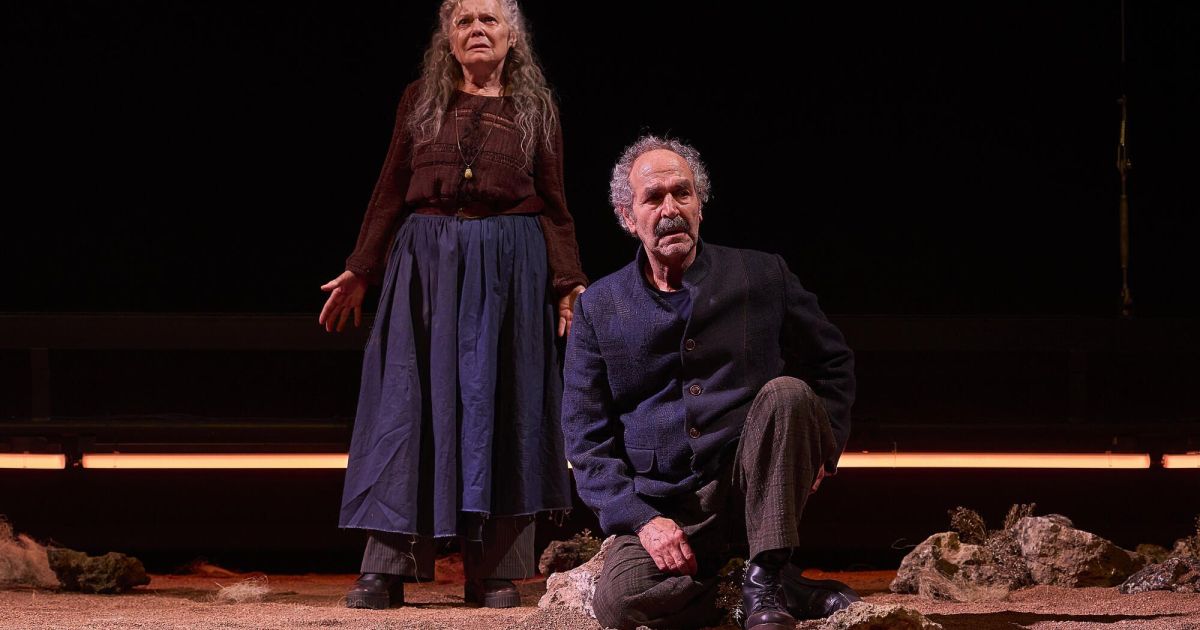
In Oedipus at Colonus and Antigone, the screen is not there and we can see an open field, with a lot of earth and some plants. Around, an immense structure that could be a Greek theater, with two enormous columns, on both sides, and a high wall with some accesses. A semicircular structure.
A dark, more modern wardrobe
The wardrobe does not follow the cliché of tunics, chitons, cothurni or himations. The wardrobe is modern, it is dark, black. Unlike the classical era, where color was vivid and, moreover, served to differentiate who was who (kings wore purple, sad characters wore dark colors, white was worn by pure girls or, also, by gods, because it was the color that shone; red was worn by violent characters…) Carlota Subirós has dispensed with these color codes and has dressed all the characters in dark colors.
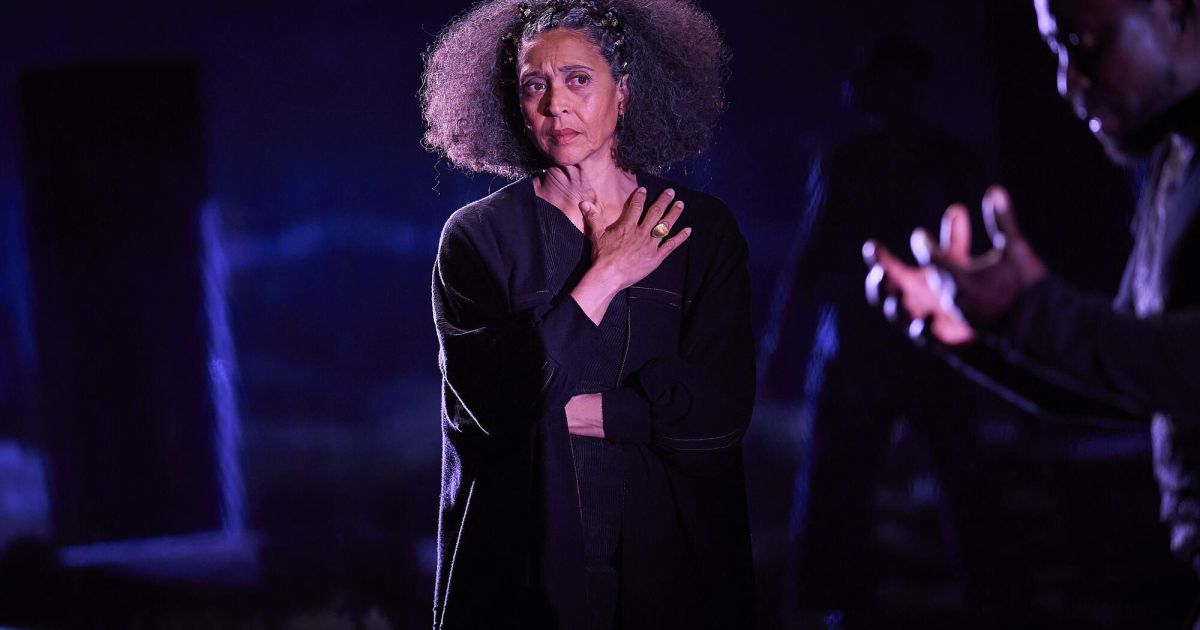
As the lighting design also creates many shadows on stage, the mix of shadows with the dark color of the costumes means that, at times, we hear the characters' voices but struggle to see them on stage, camouflaged in the darkness. On the one hand, it gives a lot of power to the text; on the other hand, it makes us lose the interpretation.
The characters' limited movement, the darkness of the costumes, and the lighting make it seem, at times, more like a dramatized reading than a theatrical production. And there have been dramatized readings with more movement.
Good interpretations
Among the actors, Vicenta Ndongo stands out, recreating a Jocasta who goes through all emotions in a short time: from the most intense joy to the deepest pain. To terror. And also Jordi Martínez is an arrogant, humiliating, self-satisfied Creon, capable of anything to get what he wants. And he interprets it very convincingly.
In a production where the text is so important, Babou Cham's diction is not always the clearest and, even with a microphone, it is difficult to follow his text.
The cast is complemented by Moha Amazian (Theseus), Lurdes Barba (Maid), Babou Cham (Oedipus), Joel Cojal (Haemon), Oriol Genís (Tiresias, the seer), Jordi Martínez (Creon), Vicenta Ndongo (Jocasta), Albert Pérez (messenger), Kathy Sey (Antigone), Yolanda Sey (Ismene), Yolanda Sikara (Eurydice), Junyi Sun (inhabitant of Colonus), Moïse Taxé (Polynices).
The music, live songs performed by the actors themselves, gives an ancient air to the entire production. It takes us back centuries. It is a success.
Oedipus & Antigone is a play that must be seen because one must go to the TNC when it truly acts as the National Theater it is, and stages productions that other smaller theaters could not undertake. Because the TNC can have a company of 13 people on stage (by the way, Lourdes Barba is well-found!), because it can afford immense scenographies... If the National Theater doesn't do it, no one else can.
It also has to be seen because it is a classic that is more than 2500 years old and is still alive, very much alive. And some characters will make us think of people we see in the news every day
And, finally, it has to be seen because the text, Carles Riba's Catalan translation, is written in exquisite Catalan, with careful and precise vocabulary. A Catalan that is not simplified at all. A Catalan that does not insult our intelligence with a lowering of the level: a Catalan that caresses us.
Add The New Barcelona Post as your preferred Google source for free
Stay informed with the latest news.