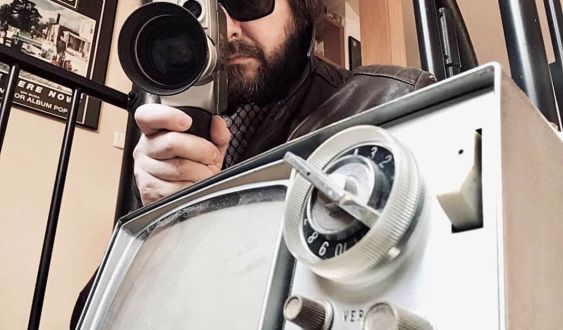
"If I were to meet the Carles who played bass in Los Negativos and sang Habitación realmente pequeña, he would surely seem to me like a boy full of enthusiasm, somewhat innocent, a little shy, very timid with girls, passionate about music and reading, and very much a dreamer. He would surely think that I am a guy who no longer has illusions, who has lost his innocence, who hides his shyness very well, he would share my musical and literary tastes and would be surprised that, despite my age, I am still a dreamer," meditates Carles Estrada at the bar, after having ordered a coffee with milk because, he confesses, "my thing is caffeine with lactose and sugar."
Singer, bassist, and composer in the most bizarre, singular, and colorful musical group that the Barcelona 80s underground ---and one could say national--- was capable of producing, Los Negativos, Carles displays a smile rich in readings, experiences, and ideas.
"In this country ---he reasons--- being underground has never been easy and, over the years, I have realized that everything I come up with has zero chances of selling. I am proud of all the people who love Los Negativos and feel them as their own, I am proud of my writing, although I know I am not a writer, not even a musician. I have never dedicated too much time to perfecting my technique as a bassist, guitarist, or singer. I should have written more. Read more. I feel that I am a creative person. I need to express myself, to say things."
Things that, in addition to Los Negativos' albums and songbook, are reflected in other projects undertaken by this polyglot Barcelonian, in love with French literature and culture and 60s pop, such as Lestrade ---a musical alter ego focused on French pop--- and a literary facet that has already produced two novels.
He confesses that he is not good at painting or drawing. "I would love to draw comics, for example. But I express myself as I can and with music or with the pen I think I succeed."
French pop and strobe effects
In 1982, a very young Carles met Valentí Morató on bus line 19. That was the beginning of what would end up leading to Los Negativos, who in 1986 broke with all the canons of pop being made in these latitudes with their debut, Piknik Caleidoscópico. Over time, the group died and resurrected until the stroke suffered by Valentí in 2014, coupled with the tragic death that same year of guitarist Alfredo Calonge, put an inevitable end to the adventure that closed with the band's sixth album, Duplexin. All that history has just been compiled by the Lleida journalist Àlex Oró in the overwhelming ¡Bony es Dios!, an oral biography that covers and explains the entire musical and subcultural phenomenon created around Los Negativos and the timeless and vibrant private world with which they continue to infect listeners of all conditions and ages.
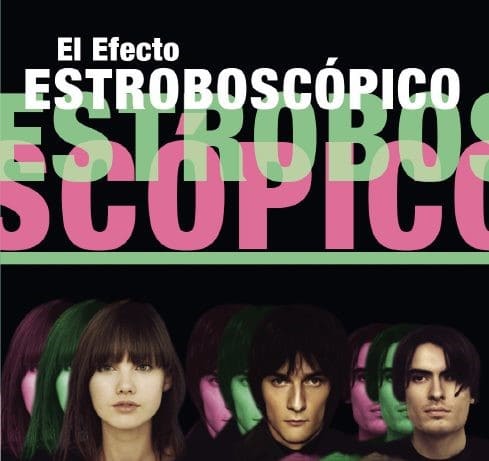
This bibliographic novelty is joined by Carles's recently published second novel, El Efecto Estroboscópico (Sílex), focused on the adventures and misadventures of a fictional band from the 60s. "I hope not to disappoint Ramiro Hernández, my editor, too much, and that he continues to trust me after this book, because I'm going to keep writing." The previous one, a psychedelic Pulp in Catalan titled L'Afer Whitestone, was a love letter from the parishioner to Swinging London.
--- And with Lestrade, do you have any news in sight?
--- With this project, we are going to try to publish the second EP. The idea is to make an entire album. If I also manage to trick some musician friends, I would love to play live.
Carles Estrada adds more sugar to his coffee and, after a brief and meditative silence, resumes speaking: "I am one of those who believe that as long as I have something pending to do, a novel to write, a song to record, I will continue to have a desire to live. You have to devour life in bites!"
The city seen through the eyes of a lover
The parishioner confesses to feeling a deep love for Barcelona: "I know it's not as beautiful as I see it, but I'm in love and love makes you lose perspective. I lived my youth in Carmel, a neighborhood with little charm and, in my time, poorly connected, with unpaved streets and its good share of delinquents. However, I look back and still think that Carmel marked me positively. Now, I've lived in Gràcia for many years and, like everyone here, I think I live in the best neighborhood in the world. I know that, like in all big cities, there are people who have a very hard time, but that's not just a problem in Barcelona. I'm afraid we have no remedy. I have little faith in the goodness of humanity."
And he continues: "People who don't make ends meet, who don't have decent housing, who sleep on the street, rapists, abusers, life so expensive and salaries so low, jobs so precarious... all that doesn't just happen here. We are dandies among garbage!" exclaims Carles.
Passionate about Barcelona when it was the Rose of Fire, the parishioner would like to see himself transformed "into a tourist of that time, protected by a proton shield to avoid getting hurt, if that exists and, in any case, sounds good. Those were hard times and I'm not hero material, but also very creative. I've always felt a great attraction for that era."
--- What images does that early 20th century evoke for you?
--- For example, I imagine my grandmother at seven years old and a smile paints itself on my face.
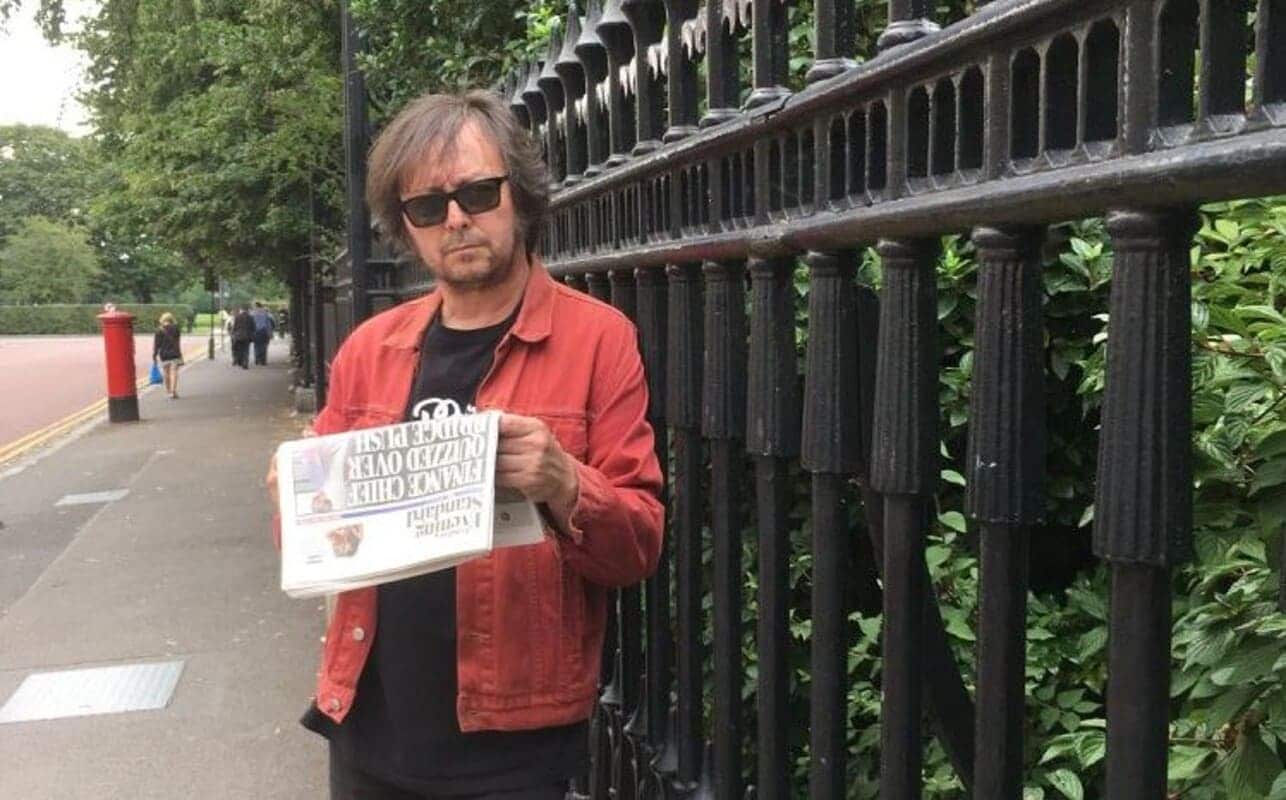
And, as he utters those words while finishing his coffee with milk, a placid expression of well-being and joy indeed appears on Carles Estrada's face.
Add The New Barcelona Post as your preferred Google source for free
Stay informed with the latest news.
