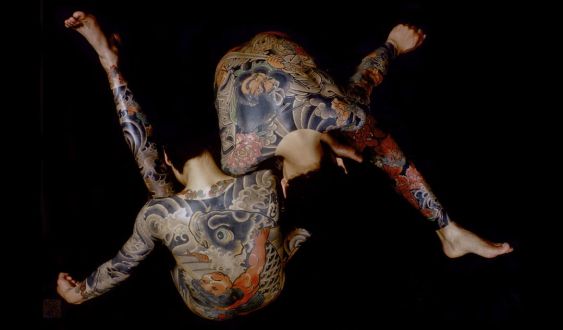
Hand in hand with the Musée du Quai Branly-Jacques Chirac, CaixaForum hosts the largest exhibition on the history of tattooing we have ever seen. An exhibition that, from an anthropological perspective, aims to analyze the uses of this art in different eras and cultures, and the social role that this ancestral practice has played.
Structured into five blocks, the exhibition travels across all continents to reveal the origin, the evolution of techniques, and the way different currents linked to the art of tattooing coexist in syncretism. From a global perspective, passing through tattooing as art in motion, or the rebirth of traditional tattooing in places like New Zealand, Samoa, Polynesia, Indonesia, the Philippines, Malaysia, the East, and Thailand, in addition to the expansion and emergence of schools in China, Taiwan, and Latin America. The exhibition follows tattoo artists and tattooed individuals to explore the meeting points that have turned this technique into a form of artistic expression and a global phenomenon, concluding with a reflection on tattooing today and its meaning.
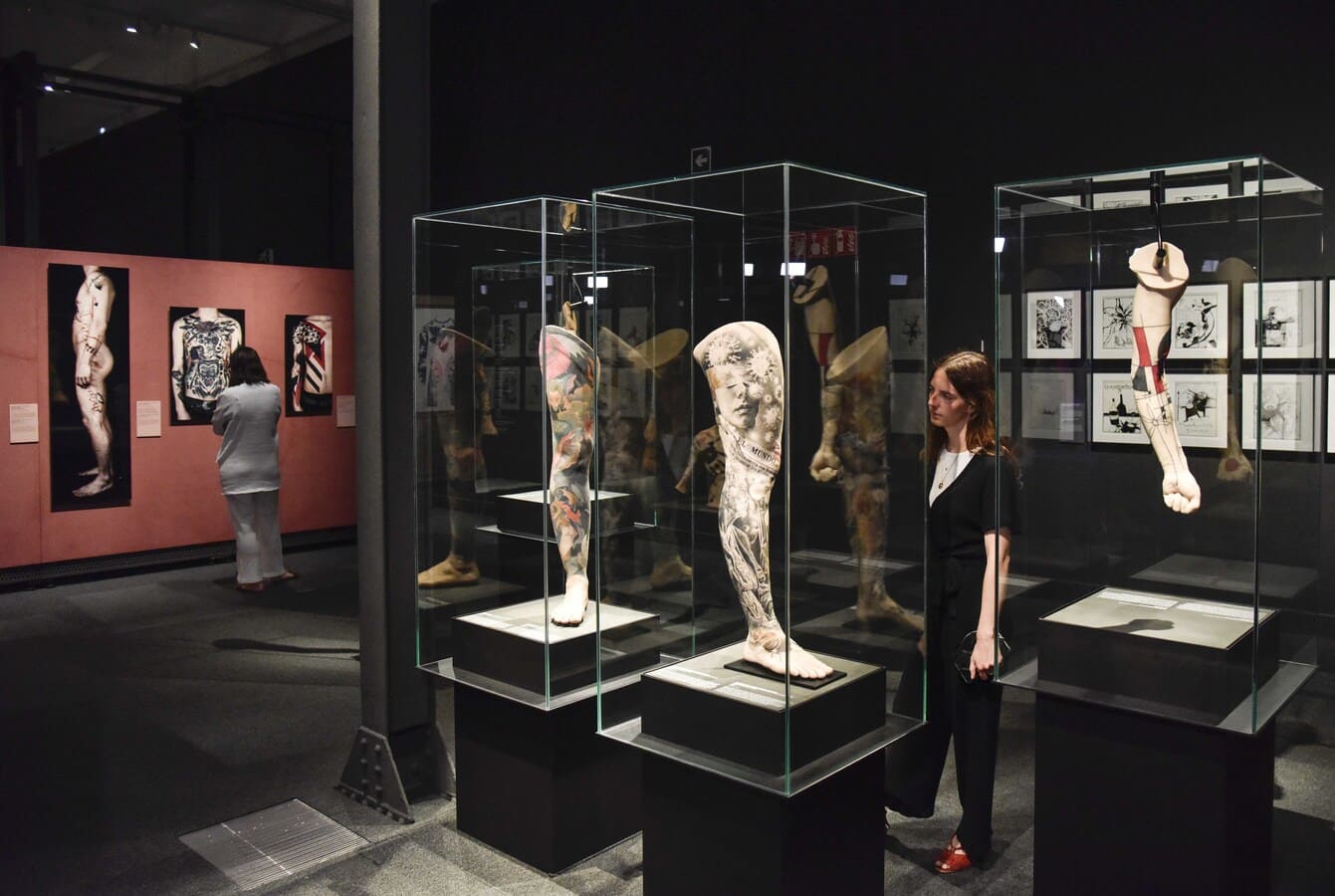
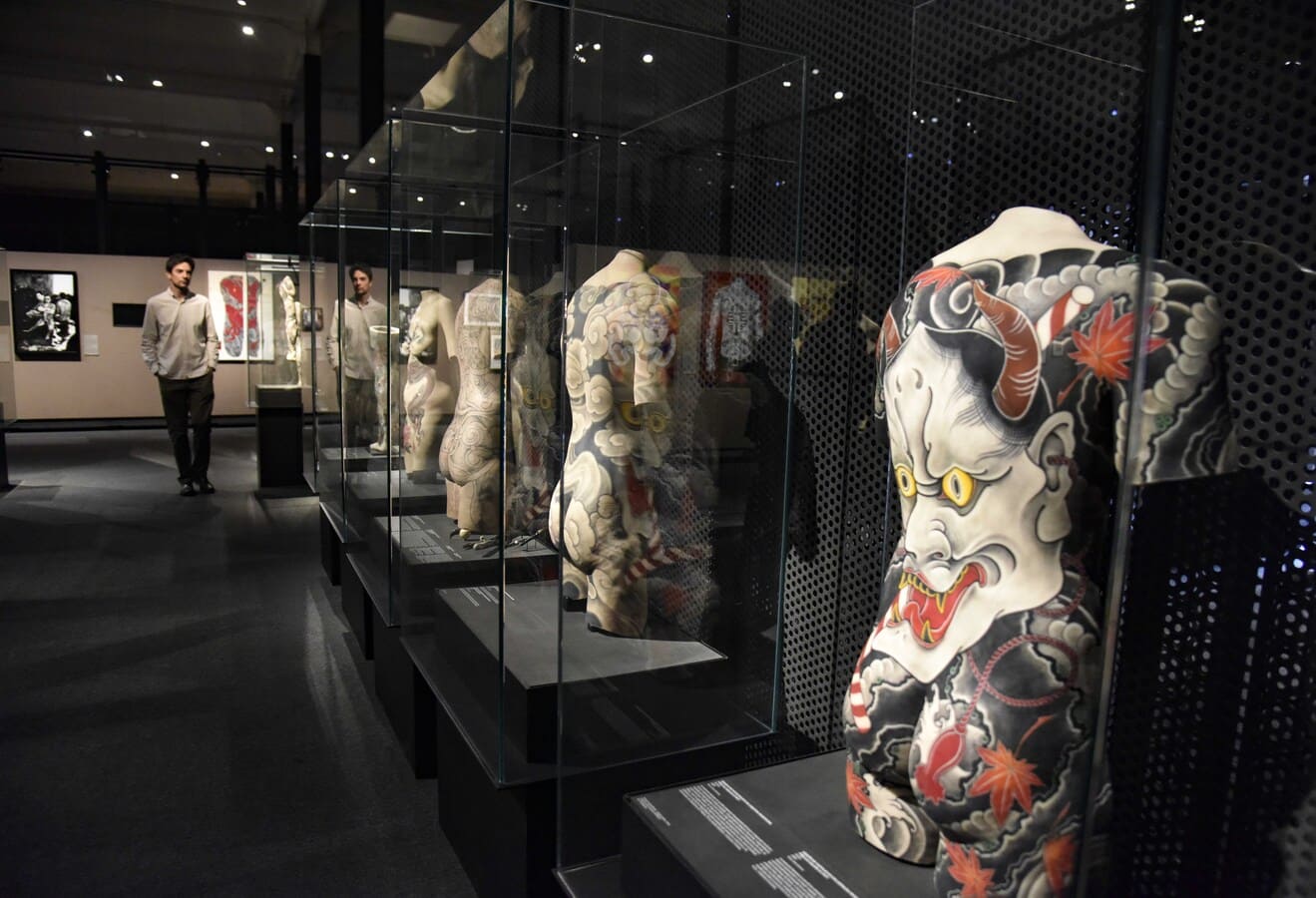
With more than 240 exhibition pieces, among which we can find drawings, paintings, photographs, tattooing tools, and objects related to the universe of tattooing, what most catches the visitor's attention are the hyperrealistic prototypes modeled in silicone of body parts, such as legs, arms, or torsos, which have been literally tattooed by masters of this art from around the world expressly for the exhibition, and which continues to grow and enrich itself with new examples at each stop of its journey.
Among the various activities organized in parallel to the exhibition, such as the series of conferences and round tables coordinated by specialist Clara Peñalver, which address the phenomenon from perspectives such as history, art, spirituality, science, fashion, or mental health, it is worth highlighting the Night of Tattoo, an evening that featured the participation of internationally renowned tattoo artists working live, as well as talks, an urban art exhibition, and music.
We spoke with one of the participants of the evening, professional tattoo artist: Paula Cruz. Specialized in Nordic tattoos, specifically traditional Scandinavian art from the Viking Age, Paula uses Hand Poke, a traditional technique without an electric tattoo machine. Her designs are based on historical findings dated to the Viking Age, to which she brings her knowledge of the era and her personal touch with her dot work technique.

We asked her about her vision and opinion as an artist regarding this unique exhibition. "I really enjoyed seeing the exhibition. I found it quite complete and, above all, striking, for all types of audiences. I highly recommend it!", says the tattoo artist. "The experience of participating as a guest artist in the Tattoo Night was wonderful. It's always nice to see how people are interested in your work and appreciate the art to which you dedicate all the time in the world."
The exhibition travels through all continents to discover the origin, the evolution of techniques, and the way in which different currents linked to the art of tattooing coexist in syncretismThe profound reflection that the CaixaForum exhibition provokes in us is to see how the art of drawing on the skin, which for many peoples is part of their identity and tradition, for others generated rejection with strong prejudices, turning its bearers into characters in shows such as bearded women or fakirs. This leads us to wonder if perhaps the existence of this type of exhibition ---in a prestigious cultural center like CaixaForum--- is nothing but an advance in the consideration of tattooing as another form of art in our country. "I really do consider it an advance. Today, in the 21st century, tattooing is still not well regarded. That's why I believe that, with these small steps, like the exhibition in question, we help to normalize it and understand it as another artistic expression," Cruz tells us.
When we reflect with Paula Cruz on the phenomenon of trends, she states: "there is a sector in the world of tattoo that is being over-commercialized and becoming fashionable, especially due to social networks, instagramers and influencers, content creators… it could be said that in them there is 'a trend' perhaps more fleeting. But, on the other hand, I would affirm that, thanks also to networks and the exposure of famous people, athletes or artists in the media, we are learning to normalize tattooed bodies and reach all types of public."
"Today, in the 21st century, tattoos are still not well regarded. That's why I believe that, with these small leaps, like the exhibition in question, we help to normalize it and understand it as another artistic expression," comments tattoo artist Paula CruzWhat is clear is that tattooing, marking the skin or simply applying ink to the epidermis, goes beyond aesthetic trends. It is an art that will continue to be practiced as a display of tradition, religion or symbolism, as shown in much of the exhibition. When we talk about moko of New Zealand considered national treasure, or the legacy of tattooing kalinga, embodied today by the artist Whang-od Oggay, who at 104 years old is considered the oldest tattoo artist in the world and the last practitioner of this millenary gesture carried out by warrior tribes.
In September 1991, during work in the Alps to recover the mummified body of Ötzi, the Iceman, scientists discovered that the corpse had a series of tattoos in the lumbar region. Later, up to 61 marks were found on the skin of this man who lived more than 5000 years ago. The art of drawing on skin is as old as man, although its use has varied throughout history and across regions.
Perhaps today we still do not know the reason why Ötzi has these marks on different areas of his body. Did they have a therapeutic, symbolic, or religious function? Perhaps the most beautiful thing about it is that we are lucky that, like an ancient work of art, it has been preserved to this day.
Add The New Barcelona Post as your preferred Google source for free
Stay informed with the latest news.
