[dropcap letter="T"]
hree perfectly complementary exhibitions in theme and format coexist this autumn at CaixaForum. Art and Myth. The Gods of the Prado brings together works that illustrate some of the most memorable episodes of classical mythology. Vampires. The Evolution of the Myth focuses on a popular character that the romantic mentality, so interested in the reverse of light, paradigmatically captured. While So Lazy. In Praise of Waste, invites reflection on consumption habits and productive time management.
Fascination with Mythology
The relevance of myth lies not in its being anchored in strict actuality, nor does it respond to a linear and irreversible conception of time. As if inspired by the cyclical nature of nature, so influential in archaic societies, it illustrates the return of men and women to behaviors that have occurred throughout time. The exemplary use of the stories collected by Homer and Hesiod -or, thinking of Latin antiquity, and in a much more systematic way, by the poet Ovid- reveals their potential for meaning. A potential so deeply rooted in the human mind that even the father of psychoanalysis, Sigmund Freud, resorted to some egregious names to try to explain the inexplicable.
[subscribe_newsletter_esp]
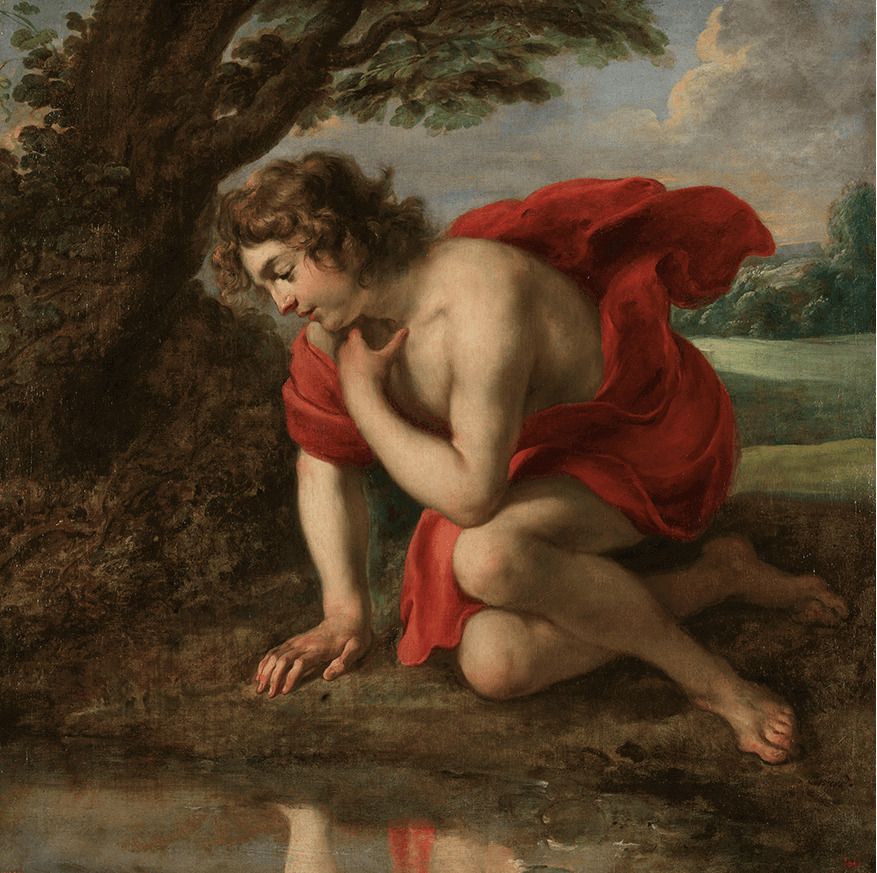
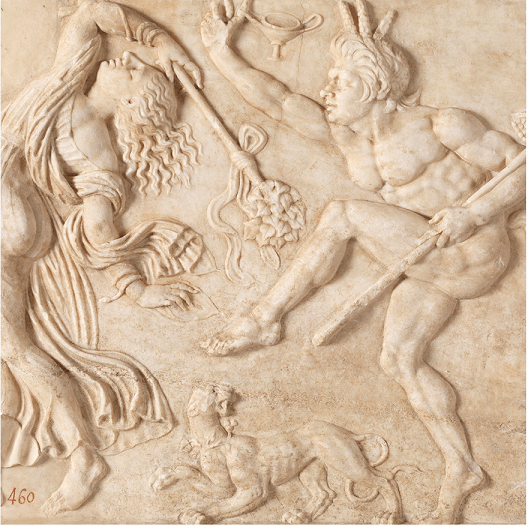
Art and Myth. The Gods of the Prado, at CaixaForum starting October 15, is an impressive exhibition that not only includes canvases from the renowned art gallery, but also displays sculptures, reliefs, and other objects linked to Greek religiosity. The arrangement of the pieces is thematic - it is a "diachronic" exhibition, the organizers warn - and therefore the viewer enriches their expectations with the differential treatment of the same episodes. Episodes such as the one starring Narcissus, falling in love with his living image in the pond, before plunging in and losing his life; an imprudence comparable to that of Phaeton, who wanted to drive the chariot of the sun god. The irrepressible amorous tendency of the immortals is also reflected in Apollo Pursuing Daphne. Not to mention references to the god of wine, Dionysus, who is torn apart in his own celebration to be reborn and promote the fructification of nature.
The anthropomorphic nature of Greco-Latin divinities enables identification, in a kind of augmented realityLate antiquity reliefs coexist with the baroque sumptuousness of a Rubens, or the neoclassical reminiscence of creators from the 18th and 19th centuries. All of them offer an eloquent vision of classical mythology, whose resonances are part of the popular imagination, in a far from casual way. The organizers opportunely point to the anthropomorphic character of Greco-Latin divinities, which is precisely what enables men and women to identify with them, in a kind ofaugmented realitygods, heroes, nymphs, satyrs, and maenads mingle in stories full of human vices and virtues," implying not only the transcendence of the undertakings that concern us, but also the external and internal factors that virtually threaten them.
Sinister creatures: dead who do not die
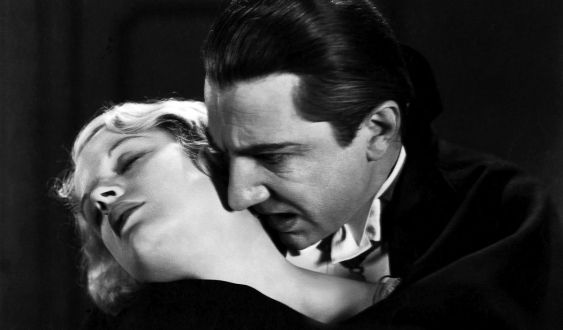
Bram Stoker's Dracula, a fantastic tale that appeared at the end of the 19th century, represents the embodiment of a real concern from time immemorial. The possibility of encountering one of the strange beings that tend to appear at night to feed on the blood of the living has also been formulated in terms such as the bogeyman or "sandman" (according to the tradition collected in E. T. A. Hoffmann's narrative). The atavistic fear is justified against the human tendency for self-preservation and the healthy perpetuation of the species. In its most psychologically subtle versions, however, the figure of the vampire is not shown from a Manichaean perspective, as contrary to the hopes of life of the innocent; but rather suffers himself, for being trapped between two worlds. The magic of the art of moving images - cinematography - manages to capture that state of death in life. The reality of the shadow comes to life, the specter becomes visible, which fulfills the fantasies of writers like Edgar A. Poe, Mary Shelley, Guy de Maupassant or the aforementioned E.T.A. Hoffmann.
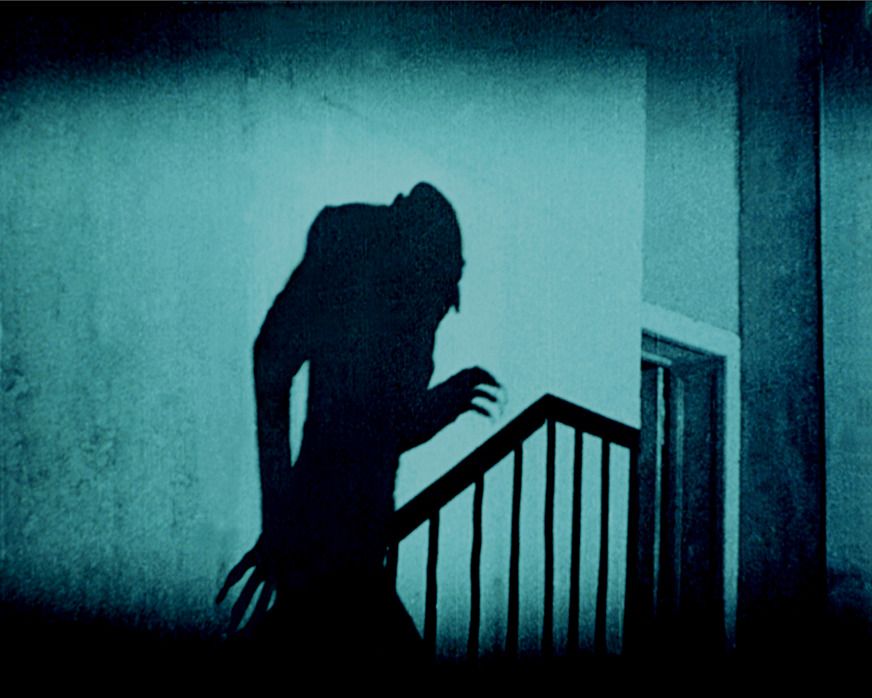
The CaixaForum exhibition commemorates the sinister and iconic profile of Max Schreck's Nosferatu, whose surname literally means "fright"The iconic figure of the vampire takes us back, in its first visual representations, toNosferatuof Friedrich W. Murnau. A 1921 film, in which romantic concerns and aesthetics still emerge, inevitably present in the CaixaForum exhibition.Vampires. The evolution of the myth, inaugurated two days before the Day of the Dead, recalls the sinister and yet recognizable profile of actor Max Schreck -his surname literally means "fright"- nails first, climbing the stairs in search of the victim. Of course, the charisma of Bela Lugosi, protagonist of theDraculaof Tod Browning, elevated by the irresistible exoticism of his accent (which could not have been enjoyed four years earlier, before the sound synchronization of films, in 1927). Likewise, creations closer to our time can be contemplated, which ratify the validity of the fears that gave rise to the vampire metaphor. In the 50s, he would already appear equipped with the typical features and attitudes -as, in the version starring Christopher Lee- that would make him even parodiable.
Nevertheless, the evocative power of this perfect antihero, comparable to the myth of Don Giovanni for the physical and emotional raptures he perpetrates, remains largely intact. The collective imagination is sown with references to him: coffins, bloody fangs, or nocturnal creatures of dubious reputation, such as bats. Perhaps one remembers the celebrated engraving with which Goya delineated the sinister possibility, contrary to the skillful use of reason. Some of the monsters that appear to the figure of the enlightened man, slumped over a desk, are precisely these viscous little animals. Their paradigmatic fluttering is unsettling, even though science has declared in our century that they are endowed with a radar system. Receiving their a priori fortuitous impact is an experience that most of us would like to avoid.
About the hypoactivity/hyperactivity dialectic
Time management can be approached as a symptom of what we are. Even today, the mythical separation between leisure and business (otium/nec otium), free time and productive time, is preserved. Less clear is the precision regarding the deep meaning of each, for each individual. Saint Augustine was the first to explicitly connect the state of mind with the temporal measure of relevant events, those that happen to us -always to us, necessarily- and in the 20th century Martin Heidegger formulated it with alarmingly abstruse language to allude to what, in fact, is more common: everyday existence. What we do in time speaks of how we are being, in a non-essentialist sense; yes, in an existential sense, open to interpretations. As an example, the phenomenon of boredom, which has given rise -according to psychological studies- to nefarious ideas… but also to brilliant ones.
That despicable time, a dwelling for practices of pure and insubstantial pastime, also represents a kind of condition of possibility for profitable activity
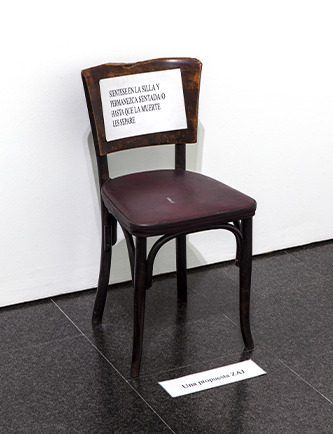
A complete success, that one of the CaixaForum spaces is reserved for proposals by young curators. It is a merit of the exhibition So Lazy. In Praise of Waste, curated by Beatriz Escudero and Francesco Giaveri, and open from November 27, to show the inherent ambivalence of non-productive time. Despicable time from a traditional perspective, a dwelling for practices of pure and insubstantial pastime ("Zeitvertreib" in Heidegger's language, that is, an activity whose sole purpose is to disguise the disturbing fact that "nothing" relevant is actually happening) and, at the same time, following Georges Bataille's dictum as collected by the organizers ("in The Accursed Share he defines "waste" as the unproductive activity necessary for good communal living"), that time represents a kind of condition of possibility for profitable activity.
On the informative website, this exhibition is announced as "a critique of contemporary hyperactivity," which "introduces the hope of a redistribution of resources and time capable of rethinking the common." Precisely for this reason, it seems of great interest to immerse oneself in a journey that combines graphic work, installations, and audiovisuals, showing attitudes in which we can eventually see ourselves reflected. A mirror, that of art, deliberately distorted—even when it appears "realistic," without apparent artifice—which in this case invites us to take back the reins of the time we are, with greater awareness. A falsely alienated time. For, even in the most precarious conditions, it has never ceased to belong to us.
Add The New Barcelona Post as your preferred Google source for free
Stay informed with the latest news.
