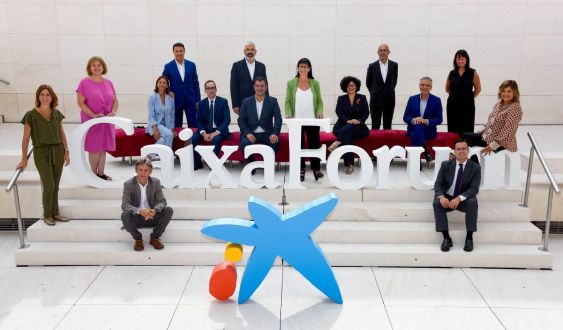
The presentation of the 2021-22 Exhibition Season by Xavier Bertolín, Corporate Director of Education and Marketing of the La Caixa Banking Foundation at Caixaforum Barcelona, emphasized from the beginning, after a series of considerations regarding the many uncertainties that recent months have brought us, a foundational certainty, concerning the social function of the foundation's enormous project that is Caixaforum, with 9 centers in Spanish territory: "It is only progress if we all progress, so reads our claim."
A message ratified by that other statement ---of happy homophony and already applied the previous year--- that presided over the event alongside the corporate image: We believe, we grow in culture. Two expressions that reveal, on the one hand, the social character of the proposal, which seeks to reach the widest possible audience; and which point, on the other, to the close link between science and culture.
The intervention of Elisa Durán, deputy general director of the foundation, underlined, in this sense, "the transversal way of presenting art and science," one of the fundamental features of the current season, as well as the presence of scientific dissemination projects in all Caixaforum centers, not only in Cosmocaixa. The idea of deepening the dissemination of knowledge pursues the purpose of achieving greater social balance and promoting people's well-being, becoming a "recovery tool." "Above all ---she continued--- we want no one to be excluded from this recovery, and that through culture and scientific dissemination this may be possible." There was no lack of data to accredit the improvement of conditions in this second half of 2021 ---with 70% of the total visitors in relation to the previous year, and even a 30% increase in the specific case of Caixaforum Barcelona--- which justifies the optimism and better expectations for the initiatives announced for 2022.
The dissemination of knowledge seeks to achieve greater social balance and promote people's well-being, becoming a "recovery tool," explains Elisa DuránOne of the good news, the "positive outbreak" ---in Durán's words--- is the local tourist, who "in the absence of being able to go abroad has decided to have this cultural consumption, an audience that is familiar to us. It represents a challenge to be able to maintain it with recurrence and present an offer that attracts them." Another of the lessons learned that will not be forgotten, for better accessibility in the future, isdigitalization, about which there is consensus that "it has come to stay". Digital culture has allowed the window of art and science to be open to the world and—Durán believes—we must continue on that path to improve the consumer experience, which implies changes in the museum model and greater knowledge of the visitor, with the implementation of public valuation and evaluation tools.
To ensure no one is excluded by the cultural gap—to reach the public who have never visited Caixaforum, to keep those who already attend occasionally interested, and to maintain rigor for the more specialized—a series of measures has been proposed, which digital tools will amplify. The "Tenth" Caixaforum, in this sense, is an idea absolutely aligned with that vocation and nourished by the learning of recent times. It is about Caixaforum Plus: a virtual center with a large amount of content, a platform of proven capillarity, which allows access to all people, especially those who cannot go to a center. A huge project, in itself, which will deserve another presentation in the coming months.
In the second part of the presentation, Ignasi Miró, cooperative director of Culture and Science, provided a reasoned approach to the more than 40 exhibitions without losing sight of the framework outlined earlier, that is, Caixaforum's commitment to society, in light of the well-being that the dissemination of knowledge brings to people, especially important in times of crisis and vulnerability. Through three conceptual blocks, concerning the past, the 20th century, and the future, he broke down the different exhibition proposals, with mention of their eventual presence in centers other than Barcelona, given their itinerant nature. Without forgetting the mention of the collaboration maintained with institutions of the stature of the British Museum, the Centre Pompidou, the Cinémathèque Française, the Museo del Prado or the Science Museum of London.
Digital culture has allowed the window of art and science to be open to the world and -Durán believes- "we must continue on that path to improve the consumer experience"Regarding the most outstanding novelties, we can recover, from those 40 exhibitions in total, the first collaboration with the Science Museum of London, such as the exhibition that addresses the secrets of the Sun, king star, which will show ---explains Ignasi Miró-- "how the relationship of humans has changed, from the use of cuneiform tablets to modern observation instruments", also pointing out its character as a source of energy and the health risks of exposure to radiation.
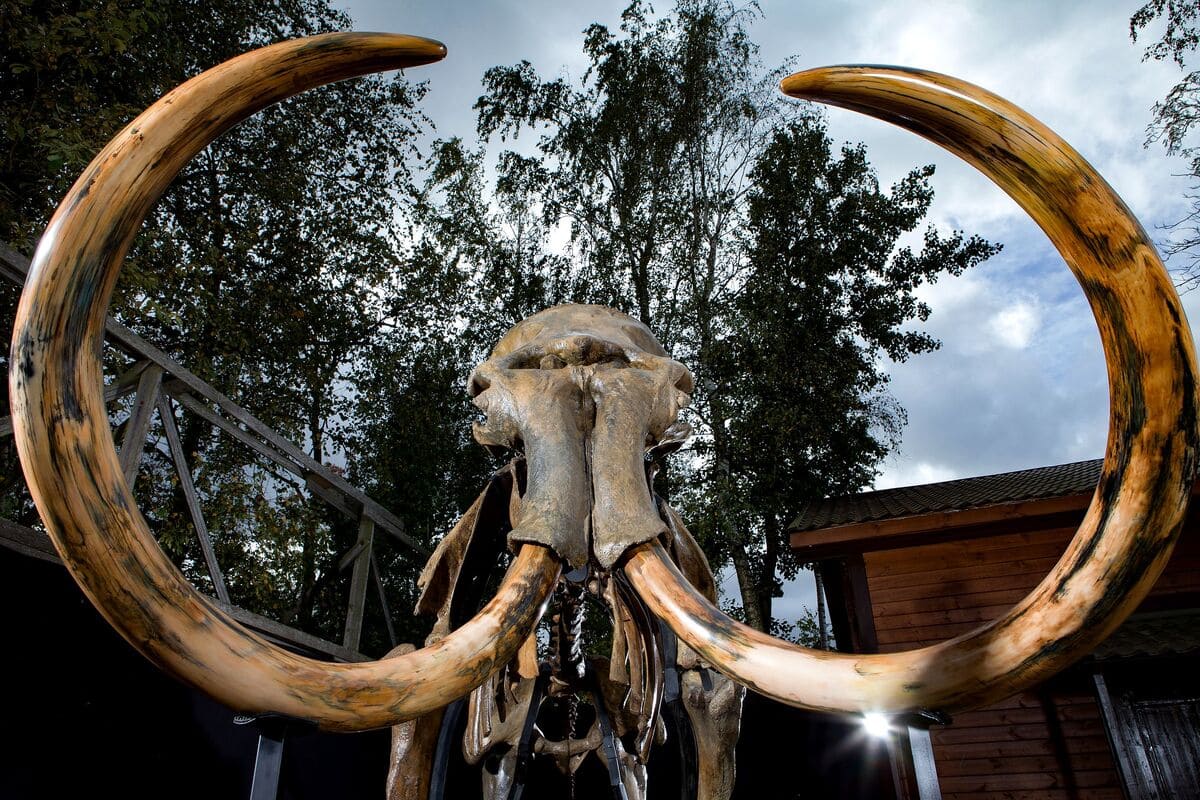
Still in the past, without which we cannot understand ourselves today, the exhibition Mammoth, the giant of the ice age, is expected to be one of the most popular. With the presence of the reproduction of a woolly mammoth specimen found in Siberia, 3.5 meters high and 6 meters long. Awareness of species in serious danger of extinction, due to human action and climate change, will be put on the table with new data and arguments to learn to take care of the planet that temporarily sustains us.
Another attractive exhibition for the general public will be Mummies of ancient Egypt, rediscovering 6 lives. Without the need to remove the bandages, technology will allow reconstructing the lives of six people who lived between 600 BC and the 1st century, and delving into their conception of the afterlife.
As a "hinge exhibition" ---in Ignasi Miró's terms--- connecting past and present, Tattoo explores the uses of previous eras and cultures, that is, its ancestral practice from an anthropological perspective. Miró recalled the origin of the name, ---fixed by Captain Cook, upon returning from Tahiti--- and also its radical topicality, pointing out that according to statistics "15% of those of us in the room have a tattoo", a percentage that obviously increases in certain age groups. Attention to the tattoo phenomenon from artistic creation, the mention of tattoo artists and their new styles, and the conception of the human body as a means of expression will take center stage, to illustrate and encourage reflection.
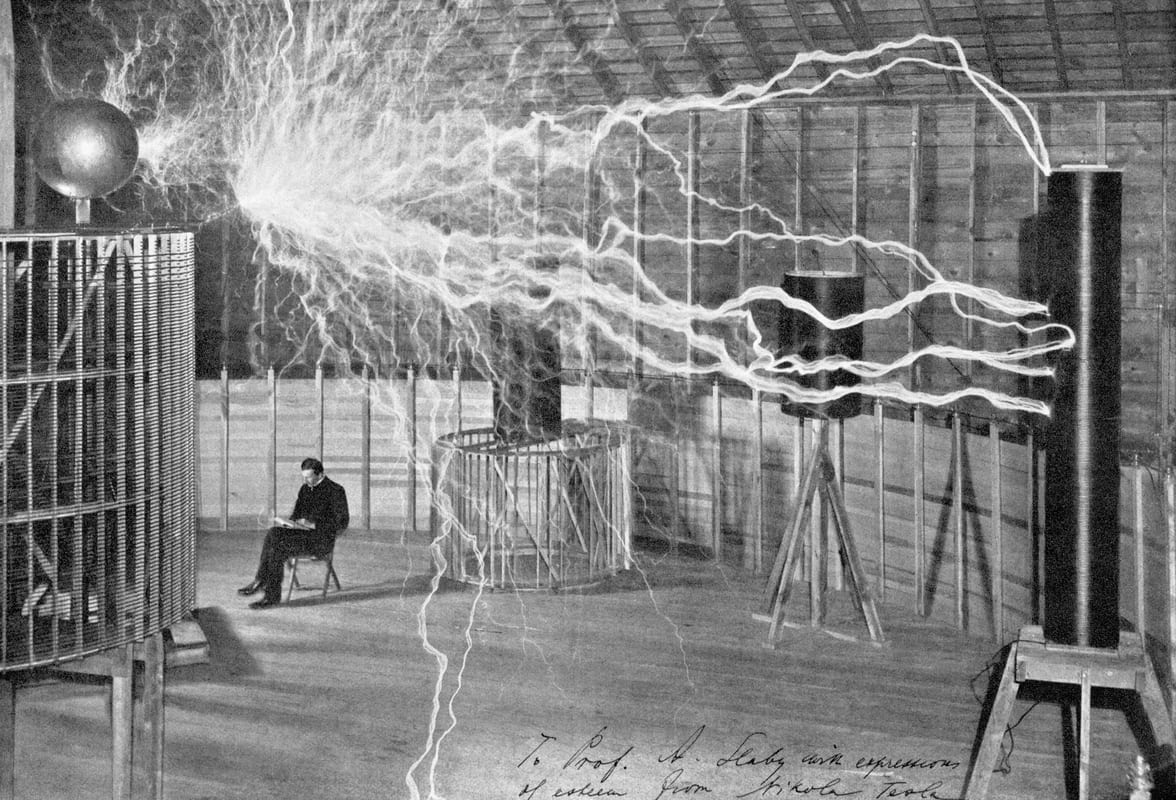
Among the 40 announced, it is worth mentioning other exhibitions ---due to their absolute novelty--- such as the one that stages the dialogue between haute couture and cinema, under the auspices of fashion's enfant terrible Jean Paul Gaultier; the one that invites to explore the most influential Comics in the collective imagination, showing in a reasoned way the social factors of their ascendancy and the importance of pop art; the great monographic exhibition focused on the work of the inspired and always enigmatic Magritte; or, finally, the one that pays homage to the inventor Nikola Tesla, whose use of electricity revolutionized the way of conceiving and managing natural resources, in the cleanest and most beneficial way for life on Earth.
Add The New Barcelona Post as your preferred Google source for free
Stay informed with the latest news.
