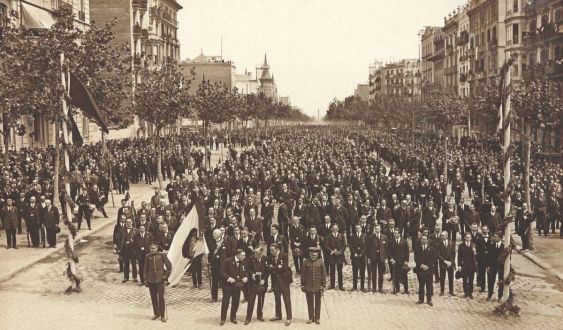
"The Roaring Twenties began in Barcelona during the years of World War I. The city was the great beneficiary of Spanish neutrality, thanks to having a port, industry, and being close to France," explains David Revelles, journalist, writer, and enthusiastic history diver, co-author, along with Jesús Martínez, of Pistolerisme a Barcelona. Laberint de sang i plom (Efadós). "In those years, this became Babylon," he adds.
That frantic Babylon, "where anyone who had a ship, and the guts to circumvent German submarines, could get rich in a few months," became the oasis of a Europe devastated by trench warfare. Metallurgical, textile, and chemical factories worked three shifts to satisfy the brutal demand for furs and uniforms, for weaponry, for food and medicine. Smugglers got rich crossing the Pyrenees or venturing into the Mediterranean. The night went wild in places like the Lion D'Or, the Excelsior, or the Edén Concert, where unrestrained dancing was fueled by cocaine and champagne. Cafes like the Maison Dorée or the Español buzzed, brothels like Madame Petit's on Lancaster Street couldn't keep up, and personalities from the art world like Francis Picabia, Olga Sacharoff or Pablo Picasso, settled in the city.
Adventurers, hustlers, prostitutes, spies, artists, deserters, poets, nobles, misfits, anarchists, chroniclers, musicians, vedettes, hitmen, workers, and thieves flocked to Barcelona, attracted by the endless opportunities that magnetic, crazy, and corrupt city offered. "Imagine ---Revelles continues---, while two hundred and fifty kilometers from here people were being massacred, La Rambla was a hive of all kinds of people, with money pouring in, transforming the face of this city which, without a doubt, would have been very different without this situation of neutrality during the conflict."
But that Great Party had a price, which, between 1917 and 1923, the city paid with much blood and violence, "in what can be defined as a dress rehearsal, a pilot test, of what would later become the Civil War years later, and it is that many of the weapons with which people took to the streets in July 1936 were still preserved from this era."
The years of pistolerismo
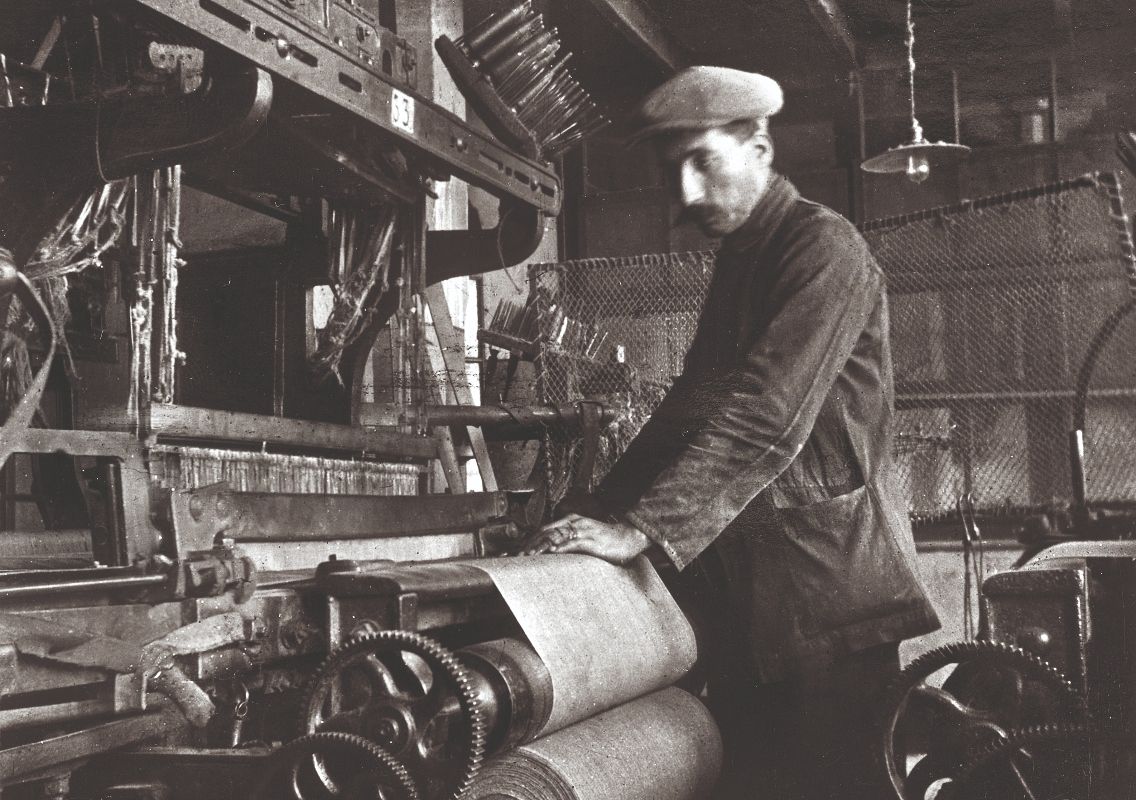
At the same time that the Catalan bourgeoisie accumulated wealth "and ordered bottles of Veuve Clicquot at 30 pesetas each, a worker's daily wage was 6 pesetas, and more than half of that was what it cost him to buy a kilo of cod to feed his family," explains the co-author ofGunmanism in Barcelona. While some became immensely rich in a short time, others saw how they became poorer and poorer."History repeats itself. A few got rich by taking advantage of the conflict, while the workforce remained exploited with wages that bought fewer and fewer things." Goods began to be scarce and inflation caused a loss of purchasing power. "Working-class families, who came here from other regions to work 12 or 13-hour shifts, found that they could barely subsist on what they earned."
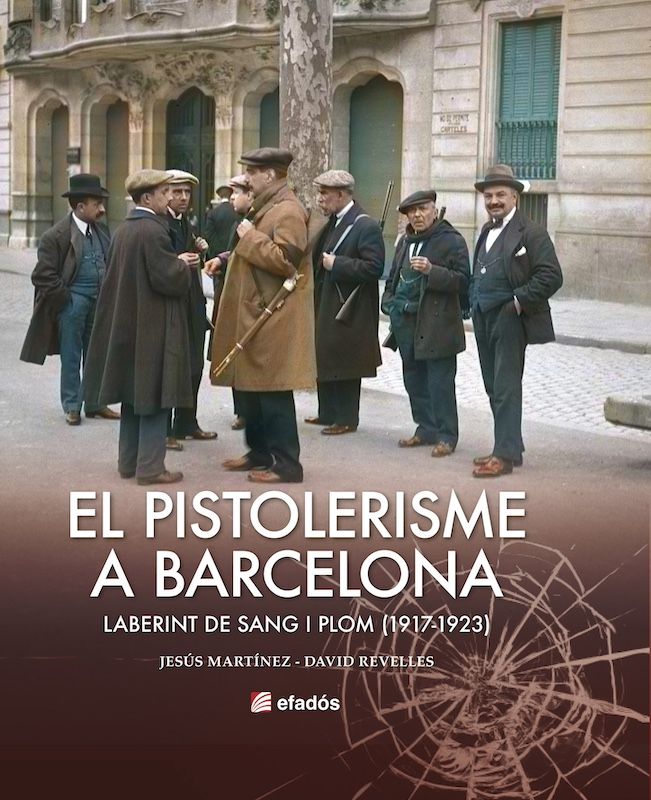
The outcome was inevitable, and even more so in a city "that, let's not forget, was the Rosa de Foc, and that had vivid memories of episodes such as the Tragic Week of 1909, which originated from the discontent of working-class families over the call to arms of their sons for the Melilla War." The CNT had been founded in 1910 and in those years gained followers exponentially, fueling resentment towards the exploiters.
This resentment simmered until, in 1917, the situation exploded. Between May and July of that year, the assassinations of the dyer Frederic Roigé, the trade unionist Josep Climent, and the industrialist Joan Tàpies turned Barcelona into an urban war zone that would last until 1923, "when Miguel Primo de Rivera staged the coup d'état."
Meanwhile, a five-year war ensued in the streets between anarchists and employer terrorists grouped in the Banda Negra, a paramilitary organization commanded by the policeman and spy Manuel Bravo Portillo ---who would end up assassinated by anarchists in Santa Tecla street in September 1919--- and by the mysterious spy, swindler, and adventurer Friedrich Rudolf Stallmann. Posing as a baron (the Baron of Köening), he would continue to organize assassinations of union leaders ---and, incidentally, blackmail industrialists--- in that Barcelona, before disappearing, hidden under many other pseudonyms and code names, "although it is known that during World War II he worked as a spy for the Allies and was the one who took the first photographs of the Enigma machine," clarifies Revelles.
The before and after
Barcelona's pistolerismo is divided into two key moments: before and after the end of World War I. "He already saw it clearly Josep PlainThe Grey Notebookwhen, on November 11, 1918, he saw La Rambla taken by masses chantingThe Marseillaiseand applauding the end of the conflict, and he said that the war of others had ended, and now ours was beginning," reasons the journalist.Suddenly, with the end of the war, the demand for goods ceased, money stopped flowing, businesses closed, prostitutes left, and the boom came to an end. Whoever had not gotten rich then, was not going to have as many opportunities. But the anger was still there, biting between the working class and the employers.
"Just three months after the end of the war, in February 1919, the La Canadiense strike, called by the CNT, paralyzed the city for forty-four days and transformed everything." That revolt not only resulted in wage improvements, the re-admission of workers dismissed from the Barcelona Traction, Light and Power Company and the release of many of those arrested during the time the strikes lasted, but also meant the first implementation of the eight-hour workday. A great historical milestone in the workers' struggle of the 20th Century.
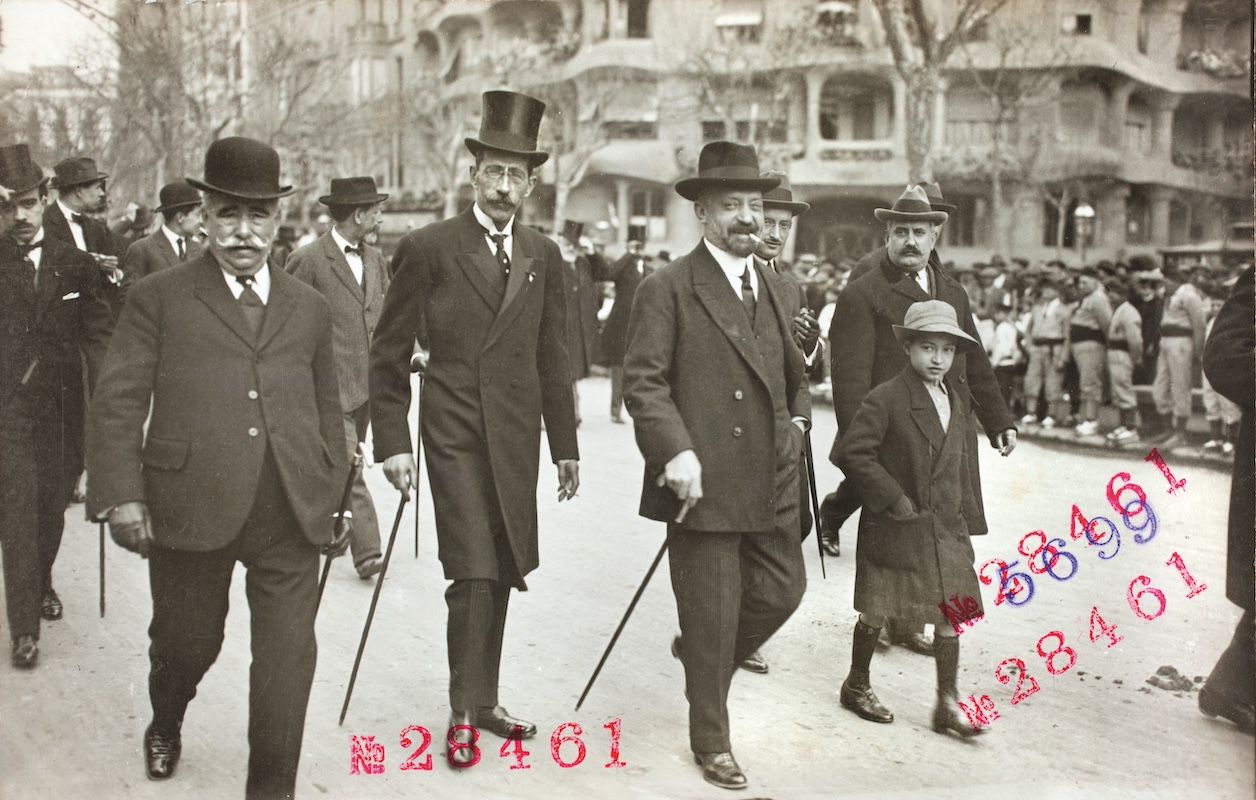
Even so, violence intensified. The somatenes, urban patrols of civilians armed by the army to defend the employers, patrolled the streets of Barcelona smoking caliqueños and getting into shootouts with whoever crossed their path. "But the straw that broke the camel's back was when, in November 1920, the civil governor of the city, Severiano Martínez Anido, imposed the Ley de Fugas (Law of Escapes), by which the police and the Civil Guard could shoot detainees under the pretext that they were trying to escape. That led to a massacre."
This situation would end in 1923 with the arrival to power of Miguel Primo de Rivera and the replacement of the Constitutional Government by the Military Directory. One of the dictator's first measures was to outlaw the CNT, as a preamble to a period of strong social and political repression in favor of the army and the bourgeoisie. In this context, marginal Barcelona would once again gather in the streets of a Fifth District that, shortly, would be re-baptized by the journalist Francisco Madrid as Barrio Chino.
Women take to the streets
Profusely illustrated and documented, the book by David Revelles and Jesús Martínez delves into not-so-well-known characters and episodes, but related to pistolerismo, such as the case of theBread Revoltthat, in the image and likeness of the Rebombori del Pa of 1789, mobilized the women of Barcelona in the cold January of 1918 to protest against the prices of basic consumer products."The masterminds were María Marín and Amàlia Alegre and it all started when the latter posted a notice on a wall of Om street, where she lived, calling all women in the neighborhood to march to the Civil Government to protest against the abusive prices of basic goods and the refusal to sell coal at the regulated price." In total, more than 500 women, arm in arm "very tightly, to prevent men from getting in," advanced down the street, took Las Ramblas and stood on the promenade of Isabel II demanding to be able to fill their pantries with something more than air.
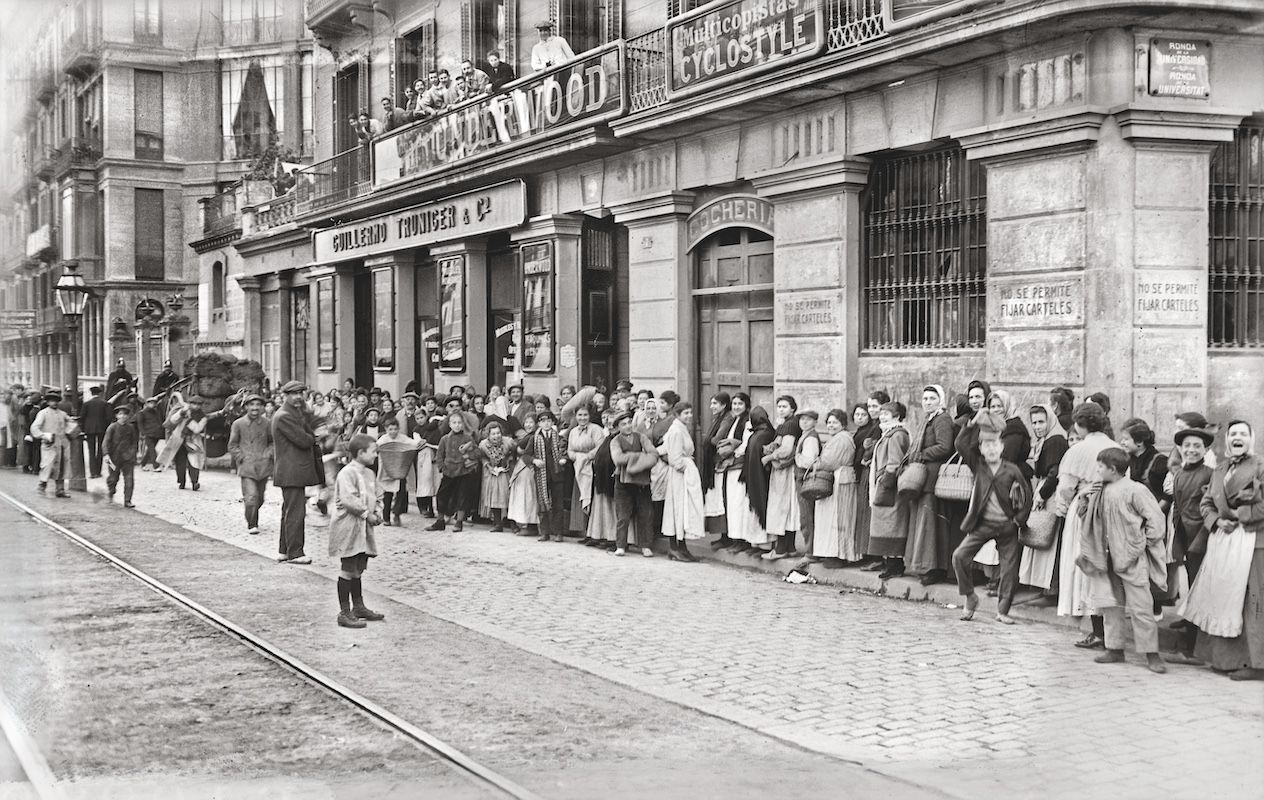
"It was the first great feminist demonstration of this century, and I cannot resist quoting a chronicle by Ángel Samblancat, which ended with the lapidary phrase: 'If we eat eggs in the coming weeks, it will not be because of ours [men's] but because of theirs [women's]". On this episode, the recent publication of the book Amàlia Alegre i la revolta de les dones (El Lokal) by Carmen Jiménez Guillamón and Inma Guillamón Chalé stands out.
Tribute to Opisso, Sagarra and Brangulí
To explain that Babylonian labyrinth of urban warfare,Gunmanism in Barcelonadraws on countless sources, especially chroniclers and press of the time. In its pages, we see reflected chronicles and illustrations.L'Esquella de la Torratxa, La Campana de Gràcia, Mundo Gráfico, Nuevo Mundo, La Esfera, La Publicidadand countless other headlines appear reflected as direct testimonies of that moment of chaos, opulence, and revolt. There are plenty of photographs by Josep Maria de Sagarra, Carles Fargas i Bonell, Josep Maria Co, Gabriel Casas, Josep Maria Brangulí, and illustrations by the brilliant Ricard Opisso, for Revelles "the great graphic chronicler of Barcelona's pistolerismo, the one who best knew how to portray it in form and substance through his drawings forL'Esquella de la Torratxa". The volume is, clearly, a tribute to many of those journalists, cartoonists, and chroniclers who witnessed what was happening in those dangerous streets.The Minotaur's Labyrinth
As its subtitle indicates,Labyrinth of Blood and Lead, the volume investigates "how the situation became increasingly complicated, turning this city into a labyrinth from which it seemed impossible to escape, a Minotaur's labyrinth that ended up devouring some of Barcelona's best sons and daughters."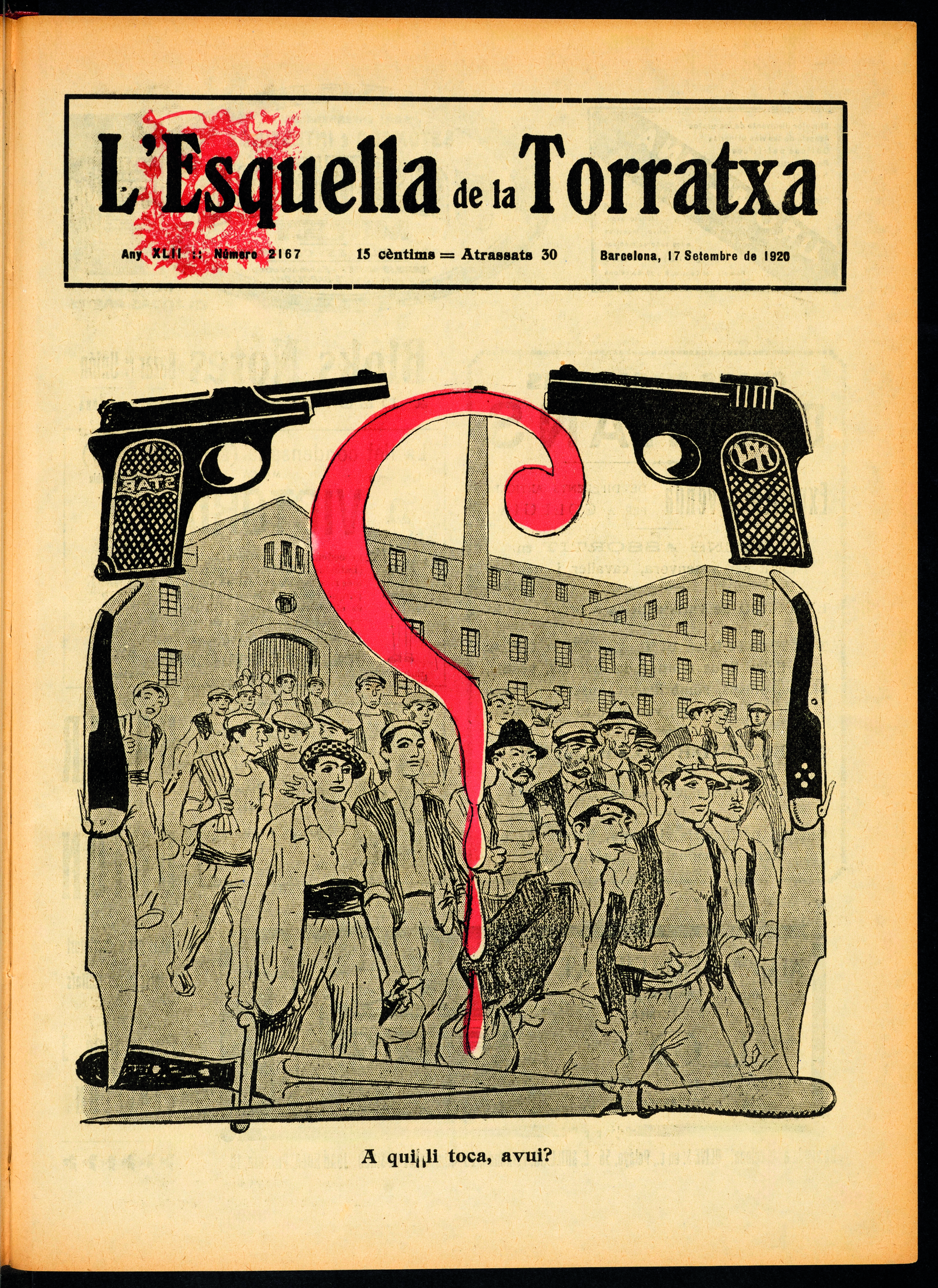
Figures such as the lawyer Francesc Layret, assassinated by gunmen from the Carlist Free Syndicate in November 1920; Salvador Seguí, alias El noi del sucre (The Sugar Boy), "who was already a living myth of his time" and who was assassinated in March 1923, or Francesc Comas, the anarchist who died as a result of the same attack that had ended Seguí's life, "represent the best this city could have offered and, with them alive, Catalan and Spanish politics in subsequent years would undoubtedly have been very different and better."
In Comas's case, alias Paronas, the authors of Pistolerisme a Barcelona have recovered the notebook he carried in his pocket at the time of the attack, which was pierced by one of the bullets fired by Inocencio Feced. A document of enormous historical value because it explains by itself, in a chillingly accurate way, everything that labyrinth of blood and lead meant in that uncontrolled Babylon where any bullet could carry your name.
Add The New Barcelona Post as your preferred Google source for free
Stay informed with the latest news.
