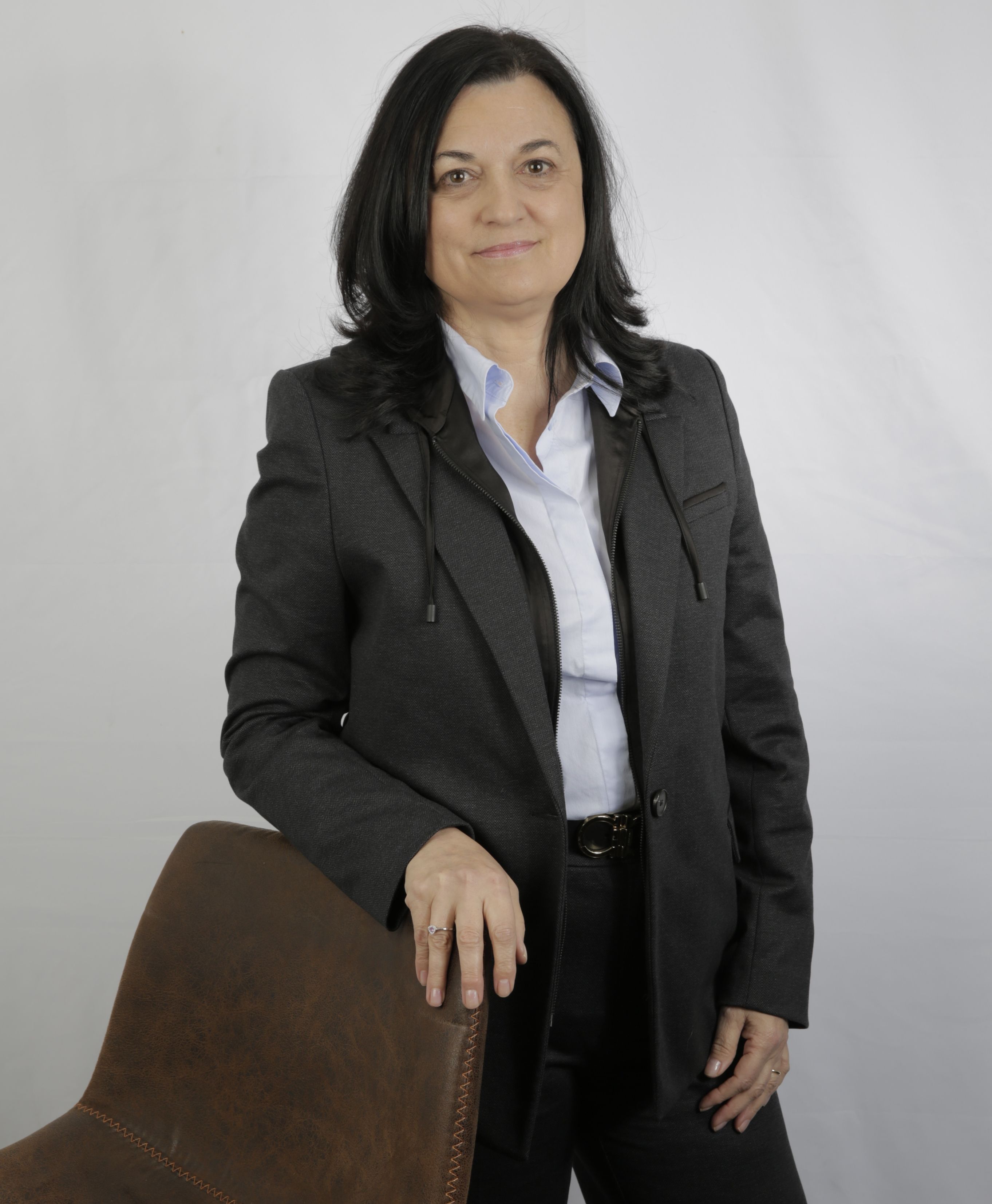
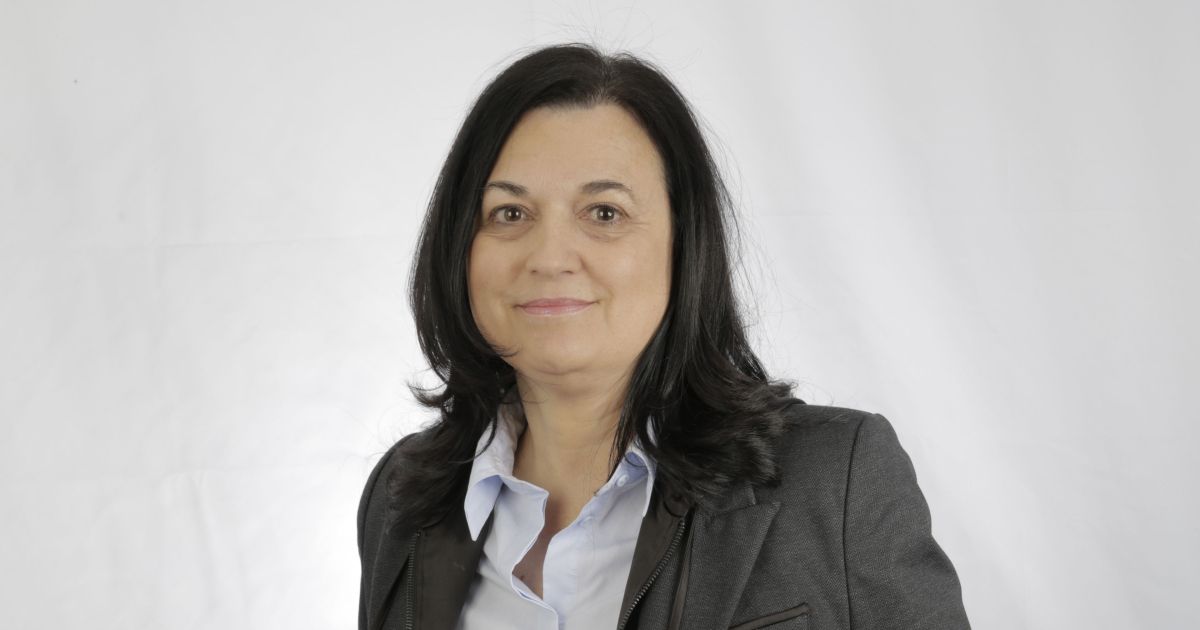
"There are two Brugués Mitjans. On one hand, the lawyer, extremely serious, disciplined, almost an auditor who faces immense amounts of work. On the other, the Brugués who writes, who tries to escape the rigidity of legal language and give free rein to the stories she imagines." It gives the impression that the one sitting right now on the terrace of the Bar, enjoying an evening glass of sparkling white wine and letting herself be captivated by the notes of Frank Sinatra's Summer Wind, is, rather, this second one.
In her childhood and adolescence, she constantly imagined stories that she would write, but then came university. Law. And then the competitive exams, after which came her children —"my greatest pride is, without a doubt, my family"— and a very demanding job. But the fantasy was still there, doing its work. For example: "When my children were little and asked me to tell them stories, I would invent them," she laughs.
It was in 2010 when the essences prevailed. "I was in a work situation with a lot of work and many uncertainties and I needed to escape from that." So she started with what would be her debut novel, El ventall finès, "set in the Gothic Quarter, where I was working at the time, and which is pure escapism."
With her next novel, Quan el destí conspira a favor teu, the writer went a little further. "I wrote it after the death of Joan Prunera, a cousin with whom I spent many hours in childhood." The result was a beautifully nostalgic story set in the —no less beautiful— Permanyer passage of the Eixample. A tribute to that childhood figure that still retained the evasive tone of the previous novel. But everything was going to change (for the better) with the next one.
Finding her literary voice
Brugués Mitjans assures that, with her third novel, the recently published Els hereus de la cobdícia (RBA), she has found her literary voice. "It's not just escapism, but there is a clear desire to make the reader reflect on their relationship with money." From now on, she warns, her subsequent works will go in that direction. The motto: transcend strictly escapist literature and start planting mirrors in which the reader can see themselves reflected.
The starting point for Els hereus must be sought in the author's childhood. "I was seven years old and, on a freezing winter afternoon, my parents took me to the house of some great-aunts and uncles who lived on a mezzanine on València street. I was stunned to see those two old people, numb with cold, in that house that was a mess."
When she left the visit, Brugués asked her father if they couldn't help those two poor old people. "My father, a hard worker, who came to have three jobs, laughed and explained to me that those two old people were very rich." And, indeed, that seemingly helpless couple owned several buildings in Barcelona. "A wealth that their children and grandchildren enjoyed, but not them!"

This story of families blinded by ambition, the thirst for money, and the consequent absence of scruples, in a Barcelona that unites (and disunites) the Zona Franca with the noble houses of the center, is built upon this anecdote. Translated into Spanish (Los herederos de la codicia), this third novel is the one that seeks to project the author into the Spanish and Latin American market.
Literary set
"I was born in Gavà and at the age of twelve we came to live in Les Corts," recalls the writer and lawyer, for whom Barcelona became a place with a dual nature: "On the one hand, stately avenues like Diagonal or Gran Vía and, on the other, neighborhoods that still had the spirit of small towns." In this sense, she assures, Les Corts allowed her to continue being "a village girl."
But it's not just a matter of neighborhoods. "Because of its richness, history, miscegenation, and cosmopolitanism, Barcelona is a great literary set, an unbeatable stage for characters and stories on par with New York or London," she declares, taking a sip of wine. The city, "which would be perfect if the temperature dropped by about four degrees all year round," is —and will continue to be— another protagonist in her novels.
— What could end up co-starring in one of your novels is our gastronomic offer. Dinner time is approaching and perhaps you fancy some tapas or looking at the menu…
A broad smile appears on Brugués Mitjans' face. The notes of Nothing but the best, by Sinatra, escape from inside the Bar and, with dusk, it has cooled down a bit.
"If there's something I really like, when I'm out, it's having tapas," announces that second Brugués, the one who writes and lets her imagination fly high, fluttering over the city's rooftops.
Add The New Barcelona Post as your preferred Google source for free
Stay informed with the latest news.