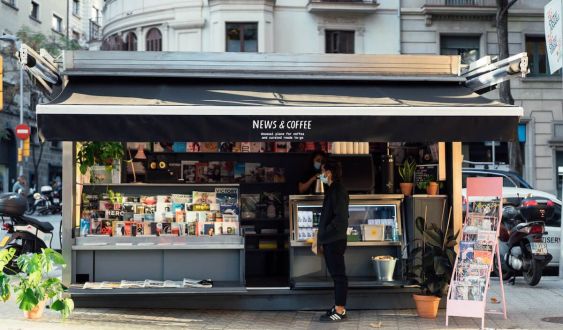
Walking through Barcelona, kiosks appear that are not like the usual ones, with different aesthetics and coffee to go. For months, new business models have been proliferating in this sector, which has not been experiencing its best period for a long time, as shown by the shutters that remain down in many of them. News&Coffee, Diverscoop, or GoodNews are some of the new brands that are appearing in the city.
The sale of coffee to go has been the big change introduced by initiatives such as News&Coffee and GoodNews. News&Coffee was the first to open one of these new kiosks, in December 2019, and the location they chose was on Paseo de Sant Joan. Its promoters, Gautier Robial and Pablo Pardo, come from the restaurant world, where they have been responsible for setting up restaurants such as Casa Bonnay or Boa-Bao. Everything they learned in their previous professional stage has allowed them to devise a new formula for kiosks, including specialty coffee. And they insist: "We are not a coffee shop or a kiosk, we are a kiosk with coffee."
They also proposed a completely different aesthetic. Maintaining "the industrial gray of before" in these booths, they cleaned up the "noise" they saw in kiosks full of souvenirs and opted to return the prominence to paper, offering the usual newspapers, but also up to 80 references of international magazines.
This innovative proposal attracts very different audiences to their kiosks, from traditional customers looking for what they have always read to new ones, who had never been to a kiosk and, while ordering a coffee, take a newspaper. Robial and Pardo are clear: paper has a future. "The model works for us and it's thanks to paper," they emphasize. And it is that more than 60% of their sales come from newspapers and magazines. In fact, they believe that with these products, the same thing will end up happening as with vinyl, which everyone thought was dead and has ended up coming back.
With a team of six people, News&Coffee has opted for the franchise model, carefully studying with whom they decide to share their idea. They prefer to go slowly, even though they receive more than ten requests to open new kiosks every week. For now, they have the original kiosk on Paseo de Sant Joan and three more with franchisees located in Francesc Macià, Plaça de la Vila de Gràcia, and in Paral·lel.
The model is being replicated
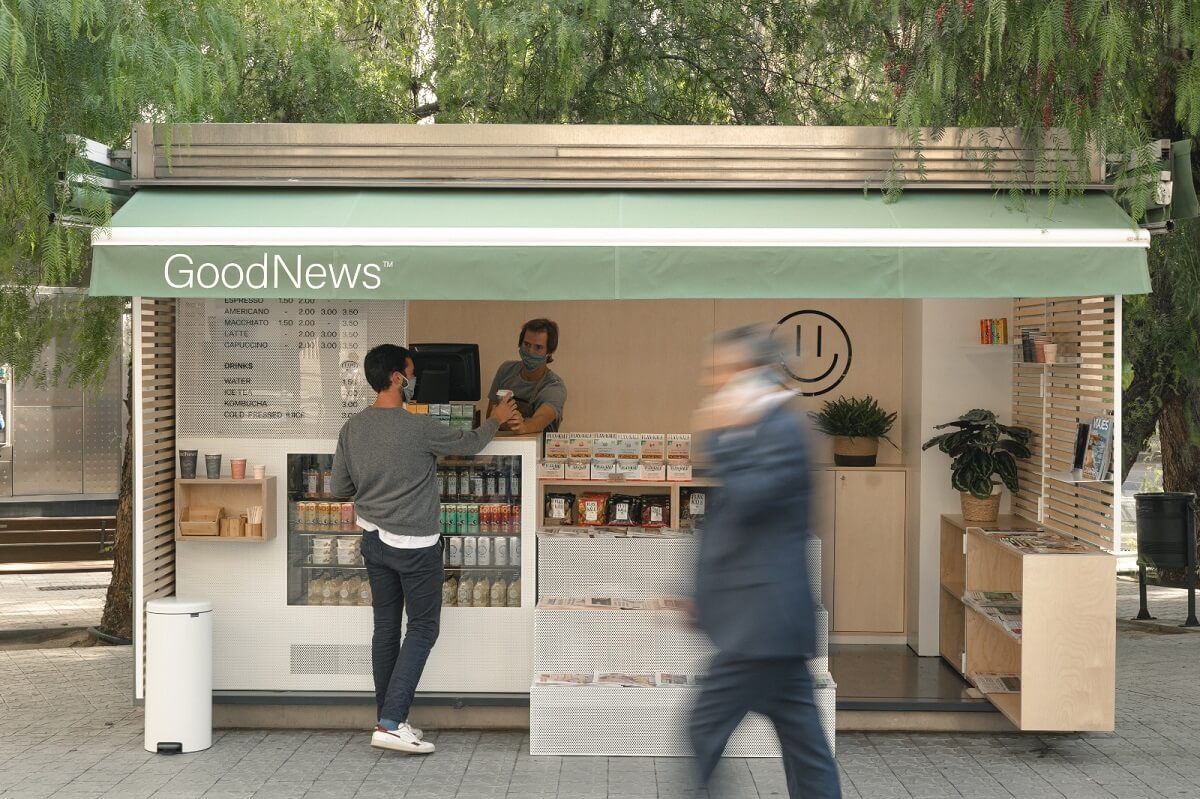
Later came GoodNews, with a kiosk on Balmes with Diagonal that opened in September 2020. Its aesthetic diverges from News&Coffee, with green and white colors as protagonists, although the proposal is similar, offering coffee to go, in addition to newspapers and magazines. This new actor in the sector is experiencing quite rapid growth in recent months and they already have six kiosks open, totaling a staff of 27 workers. The founding partner and spokesperson for GoodNews, Lucas de Gispert, emphasizes that they are not in a hurry to continue opening new kiosks, but that they have their sights set on areas where they are not yet present, such as Sants, Poblenou, and Gràcia.
Likewise, they are preparing to expand their business to Madrid, where they plan to open a couple of kiosks in mid-June, and try a new kiosk format in a 90-square-meter premises on Rambla Catalunya with Rosselló. The latter will also sell coffee to go and newspapers ---probably they can be downloaded digitally via QR---, and has involved an investment of 100,000 euros, with the hiring of six workers. De Gispert points out that they are considering opening a round of financing, which would allow them to obtain resources from a private investor. As in the case of News&Coffee, their proposal is working and, according to De Gispert, they are exceeding the sales that the former owners of the kiosks they now occupy had.
Kiosks as spaces for the community
Another initiative that is revitalizing Barcelona's kiosks is proposed by the Diverscoop cooperative, formed by 12 workers over 45 years old and with disabilities. With the support of the City Council, they opened the first kiosks in January 2020. Currently, they manage a total of five and expect to open a few more this year. The forecast is to reach a total of ten. Its president, José Franco, points out that they are working to achieve a business model that is "sustainable, social, and integrated into the community." Not only do they provide work for a group that finds it very difficult to find employment, but they also take the opportunity to give visibility to products made by organizations of people with disabilities, with the aim of helping them raise funds.
But their connection with the neighbors who visit them does not end here. They collaborate with Vincles BCN and Radars, City Council services to support the elderly. The first consists of giving five euros a week to about 40 elderly people who live near the kiosks so that they can spend them buying newspapers or magazines and, in turn, interact with their workers. The second has a similar function, with Diverscoop employees watching over the elderly people in the neighborhood and notifying social services if they see that someone is downcast or has not been to the kiosk for days. "Kiosks have to be for the community and by the community," Franco summarizes.
Strengthening the relationship of kiosks with the city's cultural offerings
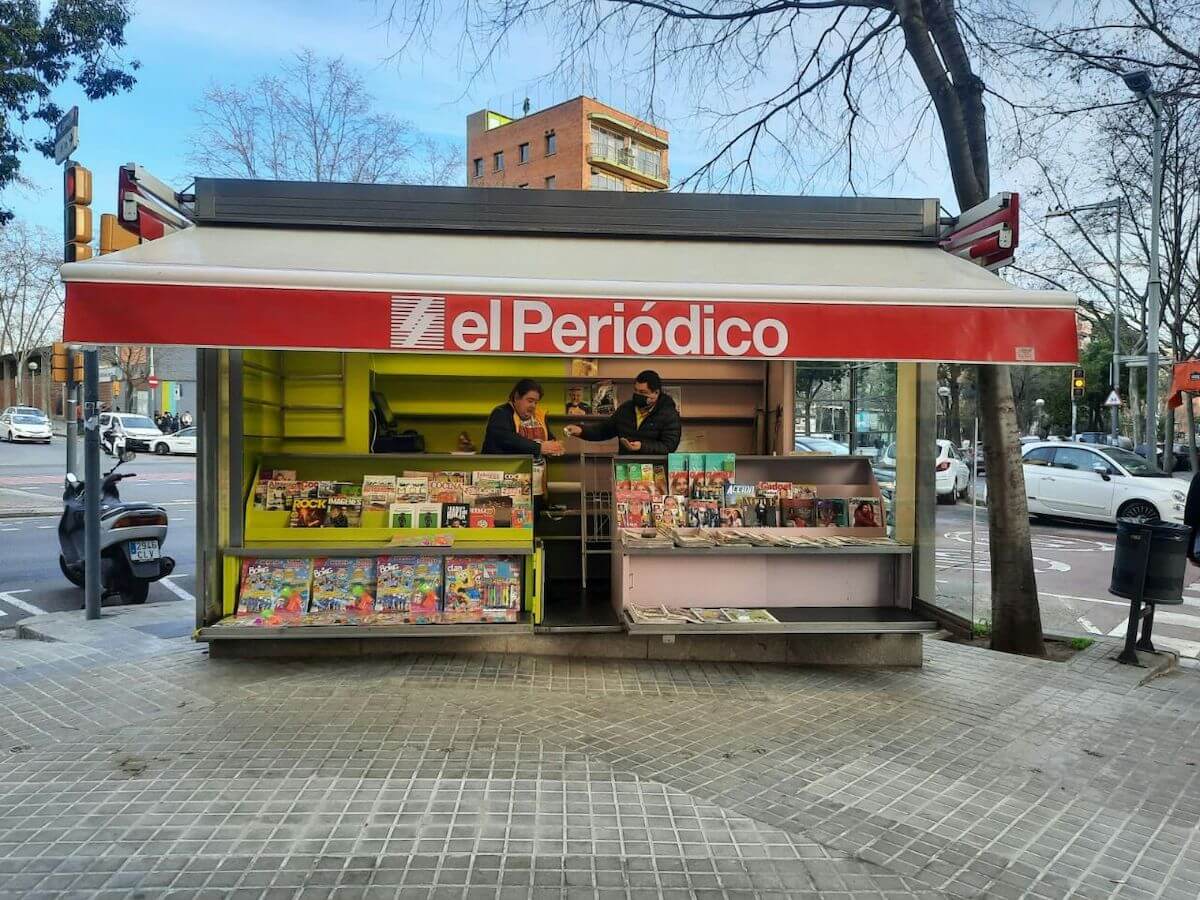
The Col·legi de Periodistes has also been analyzing new business avenues for the kiosks it manages for some time, which allow it to finance the activities and services it offers to its members. The organization manages a total of 12 kiosks, distributed along Passeig de Gràcia, La Rambla and Plaça Catalunya, areas heavily affected by a pandemic that has emptied them of tourists and office workers. According to the spokesperson for the Col·legi de Periodistes, Xavier Puig, they are evaluating several options, ruling out models not related to journalism, such as the sale of take-away coffees. Puig indicates that any new features they may introduce will be related to journalistic and cultural initiatives, thus supporting the city's great offerings. For example, they may end up opting to focus more on selling tickets for shows, tourist excursions or books. And Puig has no doubt. They will continue selling newspapers, even if fewer and fewer Barcelonans buy them. "If we have to be the last kiosk selling newspapers on the street, we will be," he concludes.
Add The New Barcelona Post as your preferred Google source for free
Stay informed with the latest news.
