The somewhat romantic image of the luthier working in his workshop among selected woods and trade secrets is still a reality. As is, and has been for decades, that of other musical instrument makers who work with printed circuits, soldering irons, chips, or software. A new breed of luthiers that we wanted to get to know, reflecting the respective individual adventures of Rafael Duyos (1958), Sergi Jordà (1961), and Lina Bautista (1985). Three stages of a fascinating journey.
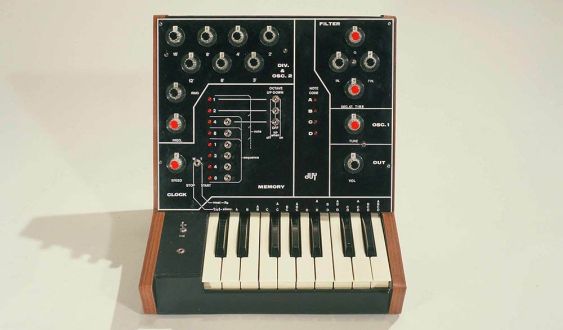
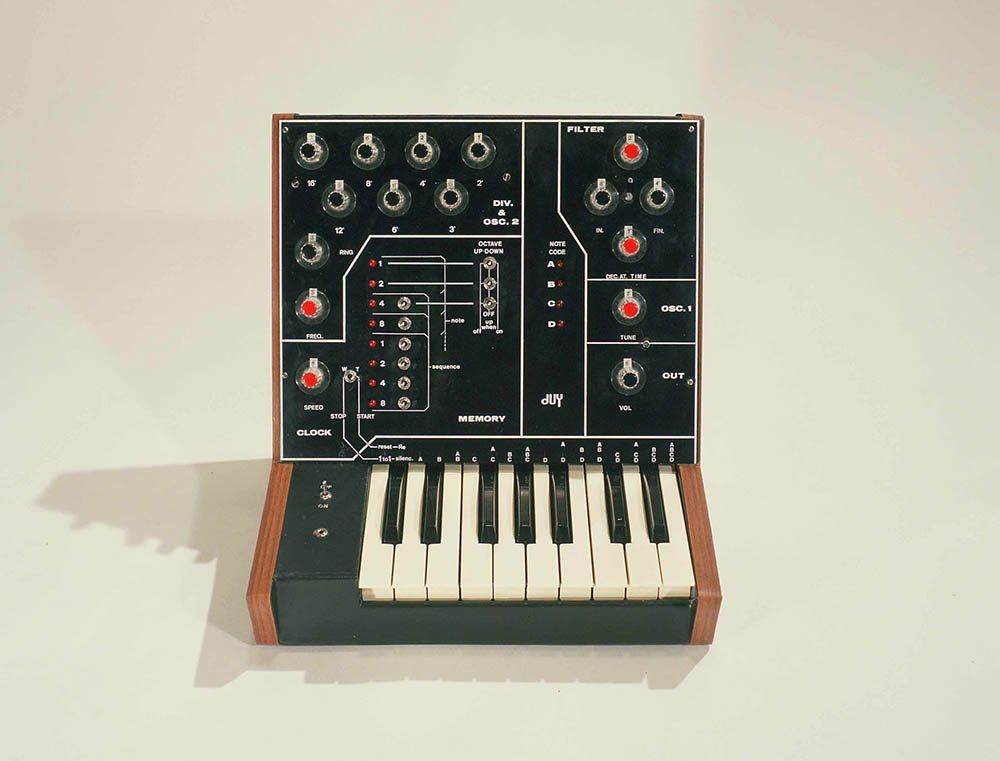
Rafael Duyos was 14 years old when he saw a film of the group Emerson, Lake & Palmer performing the songs from Pictures at an Exhibition. Duyos, who had a band with two friends his age, explains that "I was blown away. I said: I want a synthesizer." But they were very expensive, so he decided to build it himself, taking advantage of his knowledge of electronics derived from his status as a radio amateur. This is how the journey of this pioneering electronic luthier began, and indeed the beginnings were not easy: "the first models didn't work well. When I connected them to a keyboard, they wouldn't tune, they wouldn't maintain the tempered scale." But they generated sounds, and that fascinated Víctor Nubla, founder with Juan Crek of the experimental group Macromassa. "He was my first client, and he baptized those failed synths with the name audiogenerators."
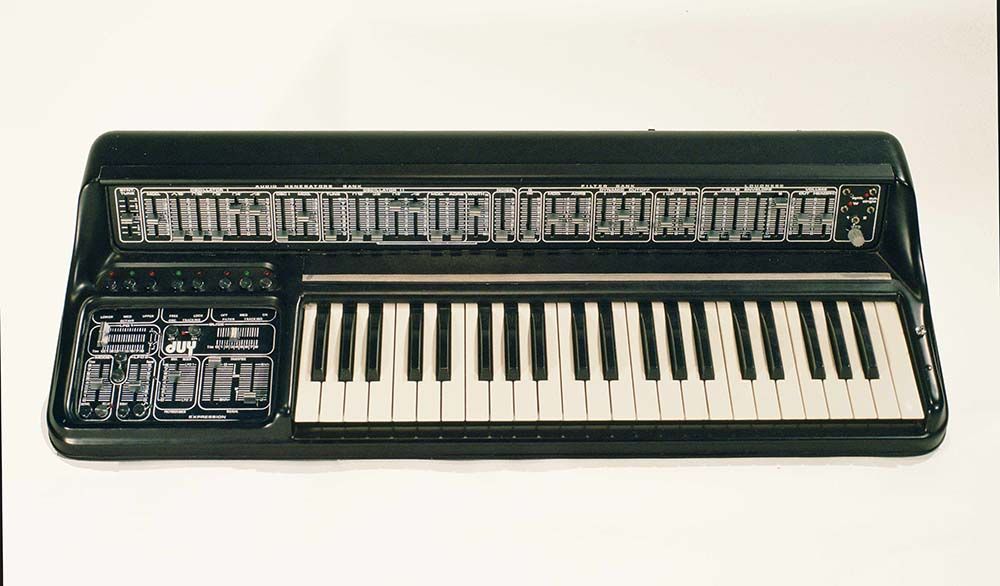
Subsequently, Duyos developed synthesizers with all the details (DUY Synthesizer, Alfa, 1024), some of which were acquired by another emblematic squad of the Barcelona underground, Neuronium. From 1980, he began to make music for advertising, and it was precisely while looking for new sonic colors for a commission that he ended up inventing the Gemini 404 digital drum kit. "I made it for myself, but many people asked me for it. I may have sold about fifty." Among his clients, Nacho Cano of Mecano, who bought two. "Strictly speaking," he explains, "the Gemini 404 was the first digital drum kit in the world. Shortly after, the Simmons came out, but it wasn't digital, it was analog. And some time later, the LinnDrum, which was digital, although you couldn't play it, it was a drum machine. On the contrary, the Gemini 404 was an instrument you could play, it had digital sounds and all the dynamics of a drum kit."
Rafael Duyos ended up not dedicating himself to lutherie a bit due to a lack of commercial vision, he admits, but also because big brands soon began to produce this type of artifact at affordable prices. However, his work making music for advertising would lead him, by the late nineties, to conceive a series of plugins for Pro Tools and other programs used by musicians, which also ended up being successfully commercialized.
Changing centuries, we find Sergi Jordà, who attends us in his office at the Music Technology Group (MTG) of Pompeu Fabra University-UPF. In 2006, and as the culmination of three years of work, the research group led by Jordà at the MTG invented the Reactable, an instrument with a hallucinogenic effect both in its sound and visual aspects. The story of the Reactable is one of success, enhanced by the fact that the Icelandic Björk fell in love with the artifact and included it in the presentation tour of her album Volta, with 75 concerts on five continents between April 2007 and August 2008. This success spurred the creators of the device –Jordà, Marcos Alonso, Martin Kaltenbrunner, and Günter Geiger– to found the company Reactable Systems in 2009. "We are dedicated to manufacturing and improving physical Reactables, and also to developing apps for iOS and Android. One of them is a tablet version of the Reactable, but we also have other apps that we try to benefit from the research done at the MTG."
Segi Jordán mentions the group Soft Machine when talking about his beginnings in these matters. "I was 14 years old, and they were a revelation. Inspired by their album Six, which had a very repetitive part, I recorded all sorts of telephone sounds on cassettes and proposed to my friends to do a jam-session improvising with our cassettes with tapes of different telephones. I also hacked telephone booths and took the mics and headphones to make talk-boxes, although I didn't know that talk-boxes existed yet, ha, ha!". When he was older, and while studying Physical Sciences at the University of Barcelona, he played the sax with improvisation bands with people like the aforementioned Víctor Nubla, Marcel·lí Antúnez or Mireia Tejero, but he had a serious problem: he didn't like to rehearse. "Then –he continues– at the Faculty they showed us a computer and taught us to program. We are talking about 1982, and that's where the epiphany occurred. I thought: computers can make music, they never get tired or bored, so I can leave them the mechanical part of music, which is what doesn't interest me. I decided I would become a digital improviser."
In the nineties, Jordán combined musical work with Marcel·lí Antúnez and La Fura dels Baus with research, first in the group founded by Xavier Serra that operated in the catacombs of the Miró Foundation, and then framed within the University Institute of the Audiovisual –with Serra and Xavier Berenguer–, until joining the UPF in 1999. To finish the conversation, we ask him if in his profession there is a line that delimits creative work from the strictly technical: "I –he says– prefer to work with broad-minded people than with specialists. I don't believe in teams where there is the designer, the artist... I understand that creation is everywhere. I like to work with people who know how to roll up their sleeves. For example, I have worked with great programmers who very often have interests beyond programming: they think things through and have aesthetic criteria. This is my ideal environment."
The last stop on our tour takes us to Lina Bautista's studio on Paral·lel Avenue. A guitarist and composer of Colombian origin, she explains that when she was a teenager "I was already tinkering. I would dismantle the devices I found. I've always had that curiosity." About four years ago, she decided to build herself a synthesizer that would allow her to create new sounds with her electric guitar. "I've always been looking for things that aren't on the market, but I've also used things that have a specific use for a different purpose," she says. Well, it seems that in her case, apart from artistic will, there's also a spirit of play. "There's a certain hacker mindset, yes," she concedes.
For her, it was very important to meet the people from Befaco, a collective that operates at the Hangar center for artistic research and production in Barcelona, and that makes modular synthesizers following the do it yourself philosophy. This way of understanding and carrying out the process fascinated her: "There are many ways to do it yourself. There are kits that you can solder and assemble and you have it, or you can start from scratch and make the schematics yourself. But the basic idea is the same: do it yourself, don't buy it ready-made. It's also interesting to understand a bit how the things you use are made." The times favor this option, as the internet is full of resources: "If I need a specific sound, I simply search online for who has made it. It's a matter of researching, thinking things over, and adapting what I find so that I or someone else can use it."
Following this philosophy, Lina Bautista has joined the Familiar DIY collective, which among other activities organizes workshops for building small electronic instruments. "We appropriate circuits that are already circulating online and make it possible for anyone to build an instrument in three or four hours." Beyond technical or artistic issues, the fundamental idea of this initiative is to share the experience of assembling the objects. "In exceptional cases, you can buy the kit or we can send it to you, but the idea is to do it in a workshop because it's always fun to meet another geek who likes that. Often people come who have no idea and say they won't know how to manage, but when they've soldered four or five pieces, they don't want to stop. And it's true that this also has an addictive vibe."
Among the objects that come out of these workshops, there is a tiny one-antenna theremin, or the so-called solarizator, a sound-generating tube that works with a solar panel: the sound changes depending on the light it receives. Bautista is also part of the 44 Perills association, which aims to disseminate sound art and experimental music in small format through concerts and workshops. With all this, he explains, he contributes to building a "good vibe chain" to which people who are not even musicians are drawn, but feel a definitive attraction for the little noises generated by these fascinating gadgets.
Add The New Barcelona Post as your preferred Google source for free
Stay informed with the latest news.