There is time until January 31 to enjoy at the Filmoteca the exceptional cycle of films by one of the best living film directors. We must thank the effort as mediator of director Manel Raga Raga and the work of the director of the Filmoteca, Esteve Rimbau, for making such a celebrated visit possible, as well as the collaboration of La Filmoteca, Filmin, La Acadèmia del Cinema Català, Zumzeig, the Barcelona Film School (ECIB) and La Foradada Films.
Béla Tarr is, as of today, a key figure in European cinema and an essential name in contemporary cinema. Time, an incorruptible judge, has provided an endless number of bastard children of the work of this director who, year after year, as has happened with the greatest geniuses of the seventh art, have drunk from the inexhaustible source of his talent to nourish themselves.
Good cinema, true cinema, transcendental cinema, in terms coined by the American director and screenwriter Paul Schrader in his monumental work analyzing the cinema of Ozu and Dreyer, is the cinema that offers the viewer something more than the obvious. The critic, censor and regular at José Luis Garci's late-night gatherings, Juan Miguel Lamet (1934-2014) expressed it in an extraordinary way in a presentation of Ordet (1955) in the late nineties: "The cinema I like is that which allows the viewer to reflect for himself on what he is seeing." To reflect on the what and the how of what is exposed before his eyes. The viewer, to achieve this, needs time; physical time and cinematographic time favorable and in accordance with what is presented on the screen.
He always wanted to be a philosopher, but he was denied entry to university after shooting a small 8mm documentary about gypsy workers in HungaryBroadly speaking, Béla Tarr is known for shooting in black and white, for the endless silences and for its interminable long takes. His work demands that the modern viewer move away from the conventionalism of commercial cinema and open their mind to a stage where clichés, television editing, and the current language of entertainment, tainted by advertising, the frantic pace of multi-platform, and immediacy, will be of no use for this journey.
Béla Tarr, director, screenwriter, and actor, was born in Pécs (in the heart of communist Hungary) in 1955. He grew up in Budapest in a working-class family. At the age of ten, he got a role in The Death of Ivan Ilyich by Tolstoy, after his mother took him to a casting call for Hungarian national television. His other acting appearance was with one of his mentors, director Miklós Jancsó, in the film Season of Monsters (1986).
He always wanted to be a philosopher, but he was denied entry to university after shooting a small 8mm documentary about Roma workers in Hungary. Thus, what had until then been merely a hobby became his driving force in life.
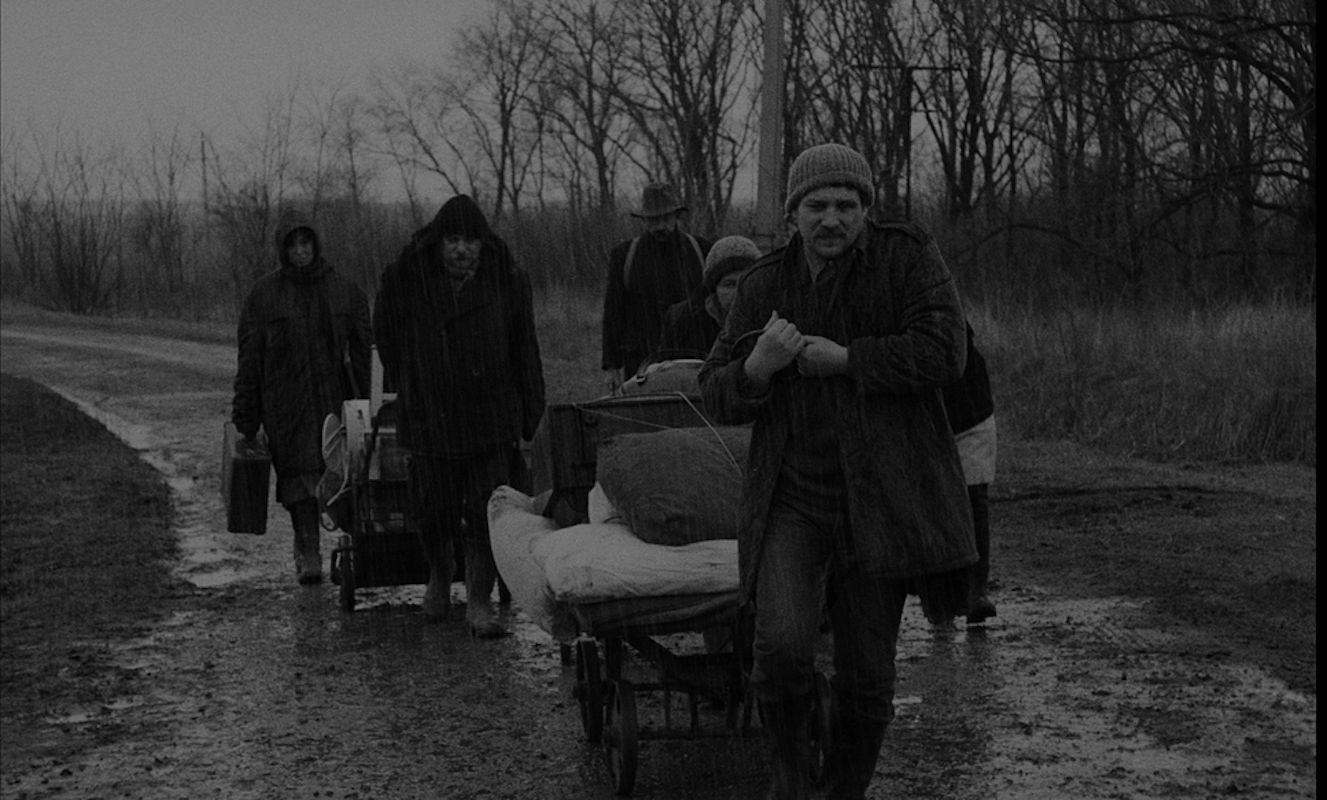
He worked in direction with his wife, also director Ágnes Hranitzky, since their wedding in 1979 and their first film together in 1981. From then on, it can be said that the direction of the films is a joint four-handed effort. His career, not prolific and extremely selective, sometimes compared to that of popular names like Kubrick, consists of 3 short films: Hotel Magnezit (1978), Journey on the Plain (1995), and Visions of Europe (2004); one documentary: City Life (1990), and ten feature films: Family Nest (1977); The Outsider (1981), Prefabricated People (1982); Macbeth (1982), a video adaptation for television and considered one of his most ambitious projects; Almanac of Fall (1985); Damnation (1988); Sátántango (1994); considered his masterpiece with more than seven hours in length; Werckmeister Harmonies (2000); The Man from London (2007), and The Turin Horse (2011), which is his final work to date.
The Turin Horse, his last film by his own decision, is the perfect synthesis of all his workHe won the French Culture award for best foreign director of the year at the Cannes Film Festival in 2005. In January 2011, he joined the human rights NGO Cine Foundation International and that same year he surprised everyone by announcing, after the premiere at the New York Festival of The Horse of Turin, that would be his last film because he had nothing more to say in the world of cinema. In 2017 he organized a 300,000 square meter exhibition at the Eye Museum in Amsterdam and set up, in Vienna, Missing People, an art installation with animated film, exhibition, and live concert in what he called a Gesamtkunstwerk: a total work of art.
Tarr's cinema is influenced by Tarkovsky in the philosophical and by Fassbinder in the emotional. He declared his clear admiration for the latter, perhaps, for his referential anarchy, his formal vindication and, surely, for the despair of his characters.
The visual sensibility he proposes is constructed through sharp close-ups, abstract wide shots, and a gaze at reality on a path to metaphysics very close to a pessimistic and almost apocalyptic point of view. The almost total absence of dialogues, the claustrophobic black and white, the slow rhythm, and the extremely contemplative shots have something initiatory about them. A transposition that culminates with the ability to shrink the viewer's heart through the brutality of an omnipotent reality that smells of damp, freshly ploughed fields, stinking rags, and animal and human feces.
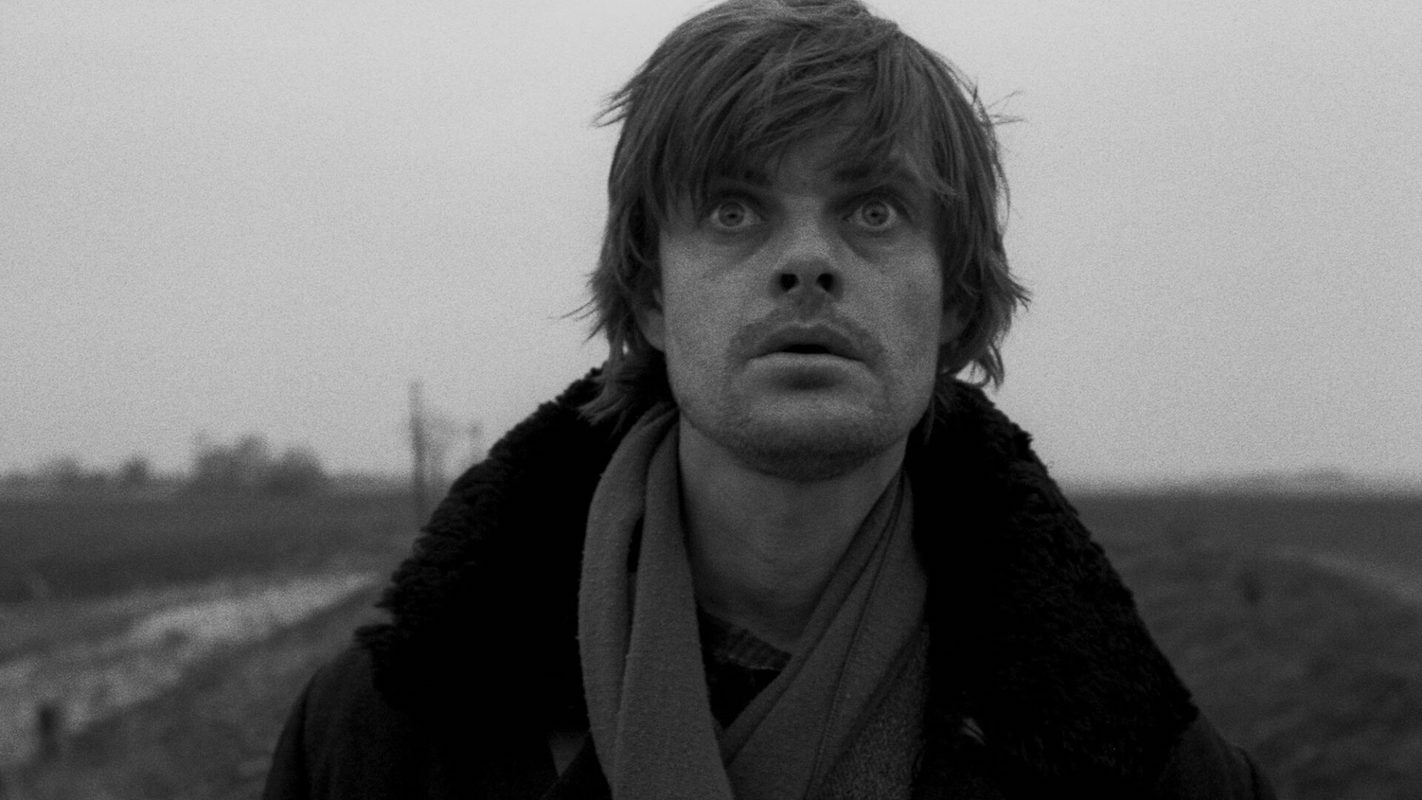
The way of filming questions you, demands from you in a way you cannot escape, we are there, immersed in the space of representation, forming part of the spectacle. The magnificence of his shots, the precision of his staging, and the serenity and composition stand out remarkably, which, together with the cinematography by Gábor Medvigy or Fred Kelemen, confer an irresistible hypnotic power.
For some critics who are fond of the snob, Sátántango, an adaptation of a novel by László Krasznahorkai, is an immersive experience just as reading Infinite Jest by Foster Wallace, Joyce's Ulysses or Cortázar's Hopscotch is in literature.
Tarr shows us another way of telling, another way of looking. He plays with the artificial expectations we have all learned from conventional American cinema, from, let's say, commercial cinema. In a display of anti-narrative, the director advocates for a slow-cinema as part of a slow-life. Perhaps it is a good opportunity to re-learn how to look and stop praising certain cinema for the wrong reasons. In what initially seem like stumbling blocks, we will discover virtues and singularities in what is reflective and profound. A true revolutionary spirit will invade us in light of the predicament we are all in.
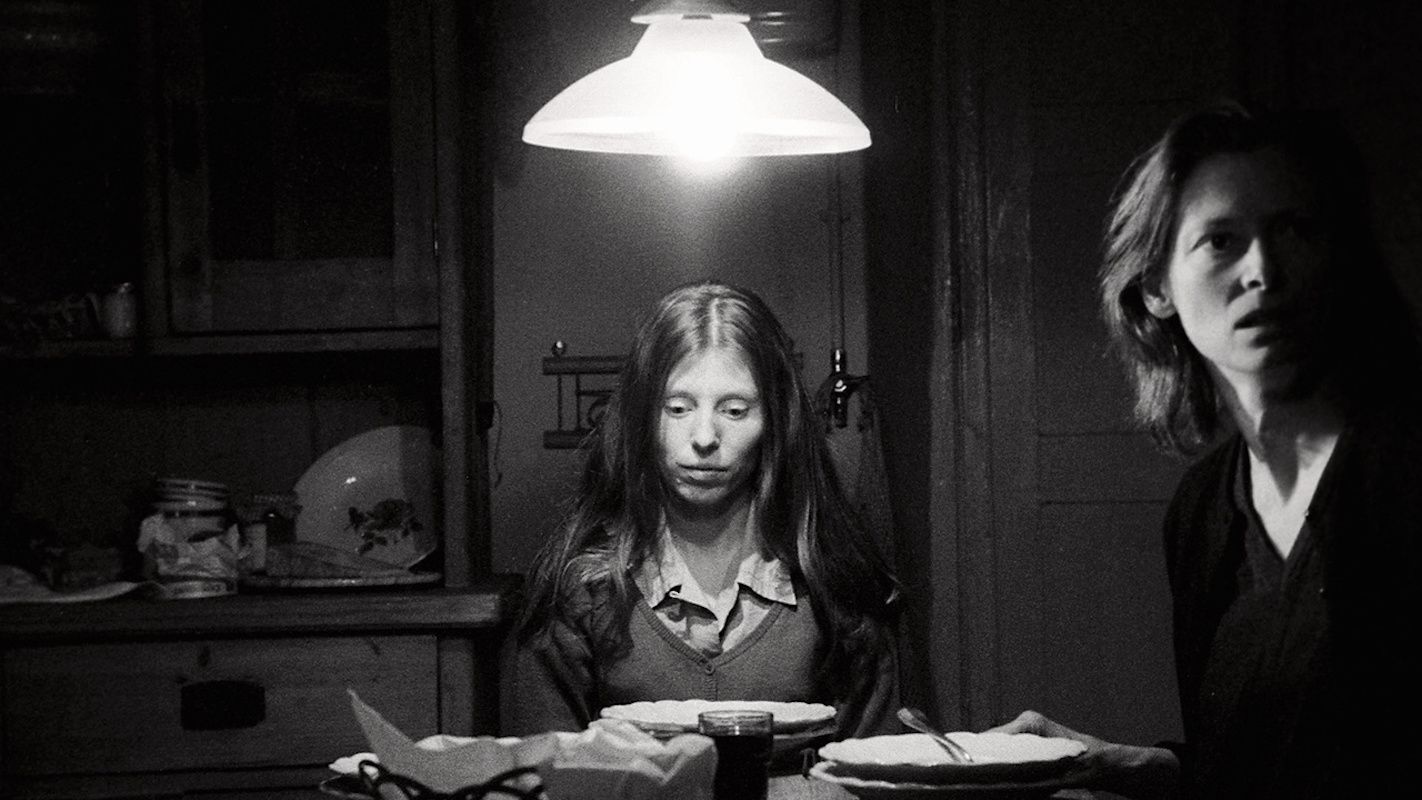
We should understand that there is a cinema to entertain and another that, using the same means, focuses on a radically opposite end: to transcend. As spectators, we have the duty to face the cinematic experience by asking ourselves how we feel at the end of watching one of its films and with what intensity we are, again, pushed back into reality.
The camera movements obsessively follow the characters from a psychological point of view. Obsessed with the inclemency of the weather, with local customs, with workers and disadvantaged classes; with ruins, the degradation of space and spirit, the decadence of places and ideas; with collapsing social structures, with decaying communities, unattainable distances, human cruelty and the strength of the idea that nothing survives. The seven hours of Sátántango are due to the constant change of perspective of the protagonists. They learn slowly until they find themselves trapped in an eternal tango: one step forward and two steps back.
In Tarr's works, the almost total absence of dialogue, the claustrophobic black and white, the slow rhythm and the extremely contemplative shots have something initiatory about themThe inert body of the gigantic whale in The Werckmeister Harmonies is the perfect allegory of that which is unmovable and irremediable. There is also time for political implications about identity and the persuasive capacity of fascist ideas. Tarr declares: "At the beginning of my career, I had a lot of social rage. I just wanted to talk about fucking society. That was just the beginning. Over time, I began to understand that the problems were not just social, they were deeper. They were cosmic." Tarr posits a universe of complete darkness under the umbrella of pessimistic existentialism and Nietzsche. Following that line of thought, God is dead and the idea of eternal recurrence resonates strongly: we are all condemned to live our lives eternally, over and over again, after our death, in exactly the same way.
The characters in his work do not question themselves, they accept fate as something inevitable, they do not doubt their faith nor do they ask about the meaning of their existence. The general atmosphere is one of despair in the face of disaster. There is no possibility of finding a truth or a true meaning to life. The paradox of the human condition captured on celluloid. Without apparent meaning, without clear answers to anything, the director obsessively worries about human dignity.

The Turin Horse, his last film by his own decision, is the perfect synthesis of all his work. With a premise from Nietzsche, we live six days on a farm with the farmer, his daughter, and the horse. Everything on the outside collapses until it contaminates the inside, thus, all colors converge into black.
Author of the longest shots remembered, one wonders how it is possible that in the age of TikTok, Netflix, and other platforms, tickets have sold out to see a film over seven hours long with a contemplative tone. The journey, ladies and gentlemen; the journey is worth it. And if we are able to skip the hipsters, who out of snobbery will endure the first 30 minutes, the acolytes of the journey, the mental travelers, the conscious dreamers, the brave of heart, the elevated spirits... will remain in the room. The experience becomes something similar to visiting a church and attending a mass. Thus, praying in the cinema must be something like watching Tarr, Ozu, Tarkovsky, Bergman, Dreyer, Bresson, or Malick.
Add The New Barcelona Post as your preferred Google source for free
Stay informed with the latest news.