
I'm starting to suspect that being right all the time is, in fact, a bad sign. Not about everything, of course. But enough for it to start making me uncomfortable. Because when almost everything I read, hear, or comment on fits with what I already thought, when conversations flow without friction and the opinions around me sound suspiciously similar to mine, something is wrong. Or, at least, something is being oversimplified.
My brain is delighted with this scenario. It likes to recognize before discovering, to confirm before questioning. Not for lack of ambition, but for efficiency: moving on familiar ground saves energy and reduces uncertainty.
The familiar is not only comfortable, it is also reassuring
In that familiar territory, others appear. People who think similarly, who share codes, who react in predictable ways. It's not necessary to agree on everything, but enough for the conversation to flow smoothly. The problem is that today everything is designed for that to happen, almost always.
We choose what we see, whom we listen to, what we avoid. Platforms fine-tune so much that they end up returning versions of the world that fit our mold. Our relationships are filtered by affinity: we share values, references, ways of understanding things. Everything fits. Everything flows.
In that constant fitting, something subtle happens. Ideas stop being just ideas. They become more ours, more tangible. They integrate into the way we explain ourselves. When that happens, disagreeing stops being a simple exchange to become, little by little, something more painful. Not because we don't understand the other, but because we feel, even if slightly, that it questions our own identity. The nature of the conversation changes: we explore less and defend ourselves more.
If we are always right, it may not be because we are particularly accurate, but because we move in environments too designed to confirm us.
In this way, we further refine the environment. We select who does deserve to be around us. We return to what confirms, to what does not require effort. Without realizing it too much, we end up living in a friendly tunnel where friction barely appears. When it does, it usually comes exaggerated, polarized, not very useful for thinking with nuances and appreciating the grays.
The result? We get unaccustomed
We have become unaccustomed to holding conversations in which we disagree without it becoming personal. It is harder for us to navigate nuance, tolerate ambiguity, and be nourished by what is different. Because, deep down, when ideas become rigid, disagreeing begins to feel like a threat to our very existence. But, curiously, there is one place that has remained outside this hyper-affinity: work.
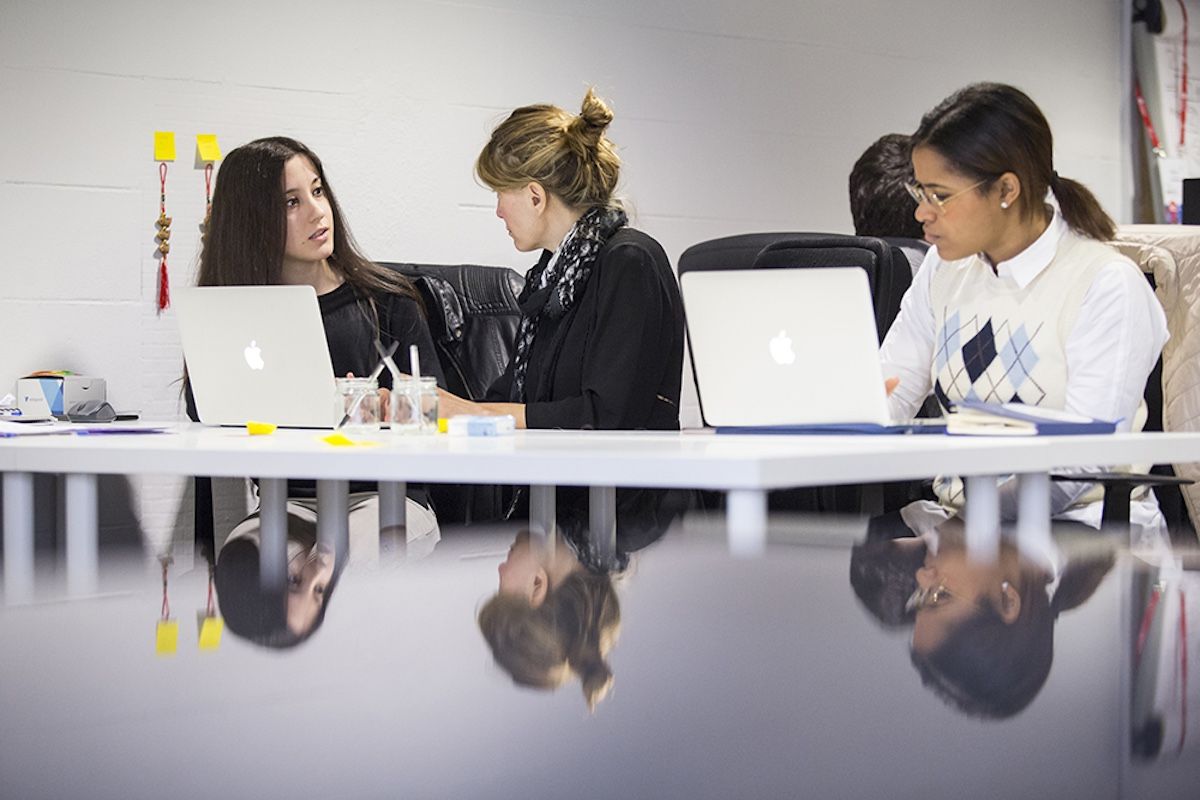
I am not talking about the abstract concept of working. Nor, of course, am I referring to comfortable and aseptic remote work. I am talking about the physical space. That trench of difference where we coincide with people we have not chosen. Where not everything is custom-configured. Where, despite attempts at homogenization, there is still a real mix of ways of thinking, prioritizing, and understanding the world. Colleagues who do not react as we expect. Who do not share our mental shortcuts. Who introduce variables we had not considered in situations that are not under our absolute control.
Perhaps that is why, when what surrounds us ceases to be that showcase, aesthetic, and domesticated diversity, and becomes real, our reaction is not always constructive: 42% state that they would work worse with someone with different ideas, and 34% would even change jobs due to differences in values (Edelman Trust Barometer 2026).
So, do we seek diversity or do we just want to appear diverse?
This is where, from companies, we have a more relevant and complex role than we sometimes want to assume. Because that uncomfortable and dissenting trench can actually be one of the few opportunities we have left to break out of this confirmation circuit that, little by little, diminishes us.
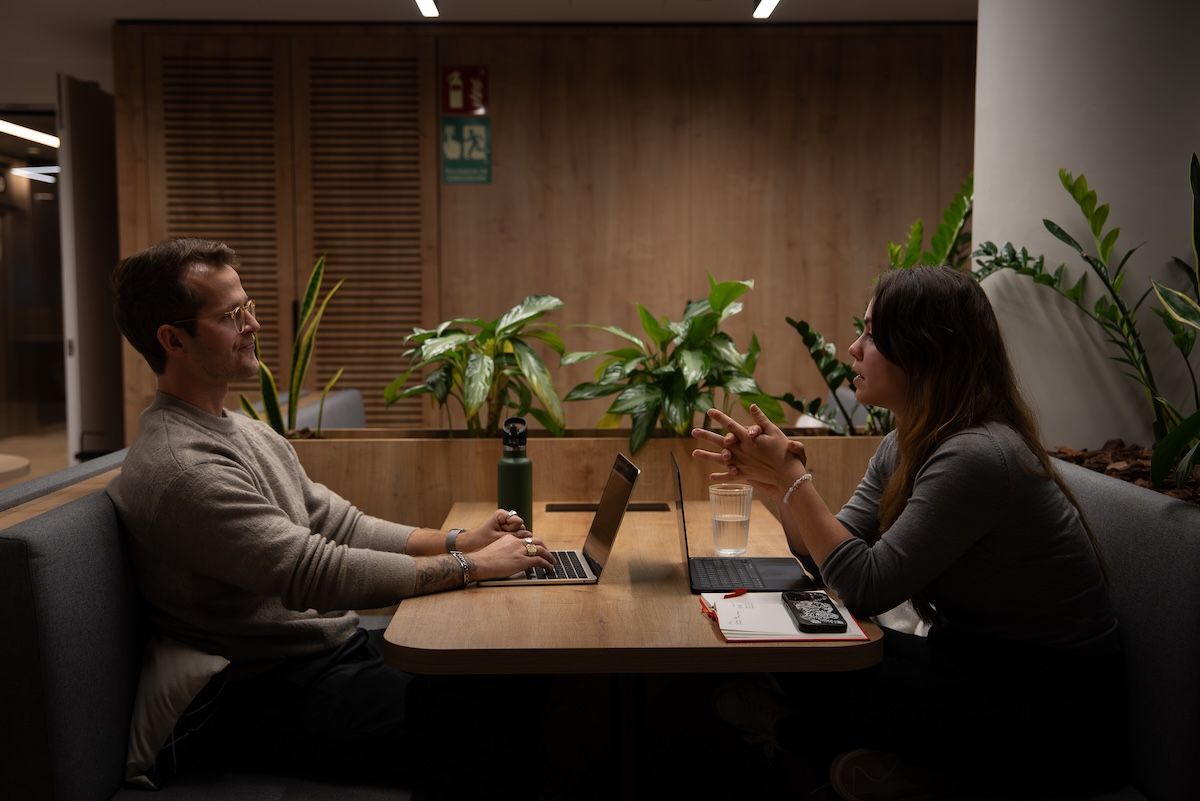
The challenge is to create environments where disagreement can exist without breaking the conversation, and this requires intention. It implies legitimizing that thinking differently is not only valid, but necessary. It demands skills that we do not always train: listening without preparing a rebuttal, sustaining discomfort, separating ideas from people, or changing our minds without feeling that we lose something of our own along the way. It also implies accepting something uncomfortable: that, if we are always right, it may not be because we are especially accurate, but because we move in environments too designed to confirm us. And that is a silent way of impoverishing oneself.
In that sense, work, with all its imperfection, can be one of the last spaces where it is still possible to think with others, not just alongside others, and aspire to be something more than our own ideas.
Not bad, if you think about it, for a place we've been trying to escape for years.
Add The New Barcelona Post as your preferred Google source for free
Stay informed with the latest news.