
Two major events, the America's Cup 2024, already confirmed, and the possible celebration of the Barcelona-Pyrenees 2030 Winter Olympics ---if the six Pyrenean regions subject to consultation next July decide so---, recover Barcelona as one of the most important city brands in Europe and as a great opportunity for the entire Pyrenees and Catalonia to show all its cultural and tourist appeal and its proven commitment to organizing major sporting events. Without much noise, with a will for agreement between public and private institutions, respecting the environment and committed to the environment, broad consensuses have been obtained for the achievement of the America's Cup 2024, which a few months ago seemed unfeasible.
One of the most important infrastructures for the success of these events will be the Barcelona Airport, as well as the Andorra-La Seu d'Urgell and Lleida-Alguaire airports, which will have the opportunity to consolidate themselves as strategic infrastructures in the mobility and access of the entire Pyrenees.
Sooner or later we must take the initiative to specify and decide what kind of Barcelona Airport we want and the positioning of the rest of the airports in the Catalan airport system. It seems appropriate, at this time when the debate seems calm and hibernated, to provide some reflections that help in making decisions that must be adopted in a more or less near future. Complex decisions, given the environment in which we move with important environmental challenges and political uncertainties, but we have already shown in the past that by rigorously contrasting opinions, consensuses can be reached, as happened in the last major airport expansion in the first decade of 2000. Our future is at stake; the challenges and competition are enormous.
Where are we? We have very profound changes in the economic model, a search for rebalancing between global and local, and a significant commitment to fighting climate change that affects all sectors. This last point, given the great sensitivity of the territory and a clear will to act quickly in reducing emissions and impact in protected areas, has led to the aviation and airport sector being almost exclusively associated with climate change, giving rise to a framework of confrontation between economy and environment.
Given this, how is the air transport sector positioned? What is its impact on environmental, social, and economic sustainability? Are balanced solutions possible? From the almost 120 years of history since the first flight, aviation has been an example of overcoming technological challenges and, therefore, is prepared to face new scenarios, the fight against climate change, competition, and complementarity with other modes of transport.
When defining the future of Barcelona Airport, we are playing for the future; the challenges and competition are enormousThe negative externalities inherent to the sector and common to large airport facilities are much smaller than the driving aspect of economic activity in the territory they serve, which decisively contributes to improving our lives thanks to job creation and the speed of transport and distribution that foster competitiveness, territorial cohesion, and the connectivity of our societies. Numerous studies exist on the important positive global impact of airports on the territory, correlated with economic development and, especially, with value-added activities.
Given the different points of view, it is convenient to focus on data-driven realities, which are what will allow for adequate decision-making. There are no all-or-nothing solutions towards the reduction of atmospheric emissions. The challenge is to collaborate on a sustainable model of responsible growth that improves people's well-being. Action must be taken with rigor and realism; by running faster, we will NOT get further, nor does it ever rain to everyone's liking. To have a broader and more balanced vision, in each of the cities in the airport environment, it is key to disaggregate the economic and social impact from the cost they bear in the form of environmental impact, noise, air pollution, landscape impact, and to separate global effects, such as emissions and their contribution to climate change.
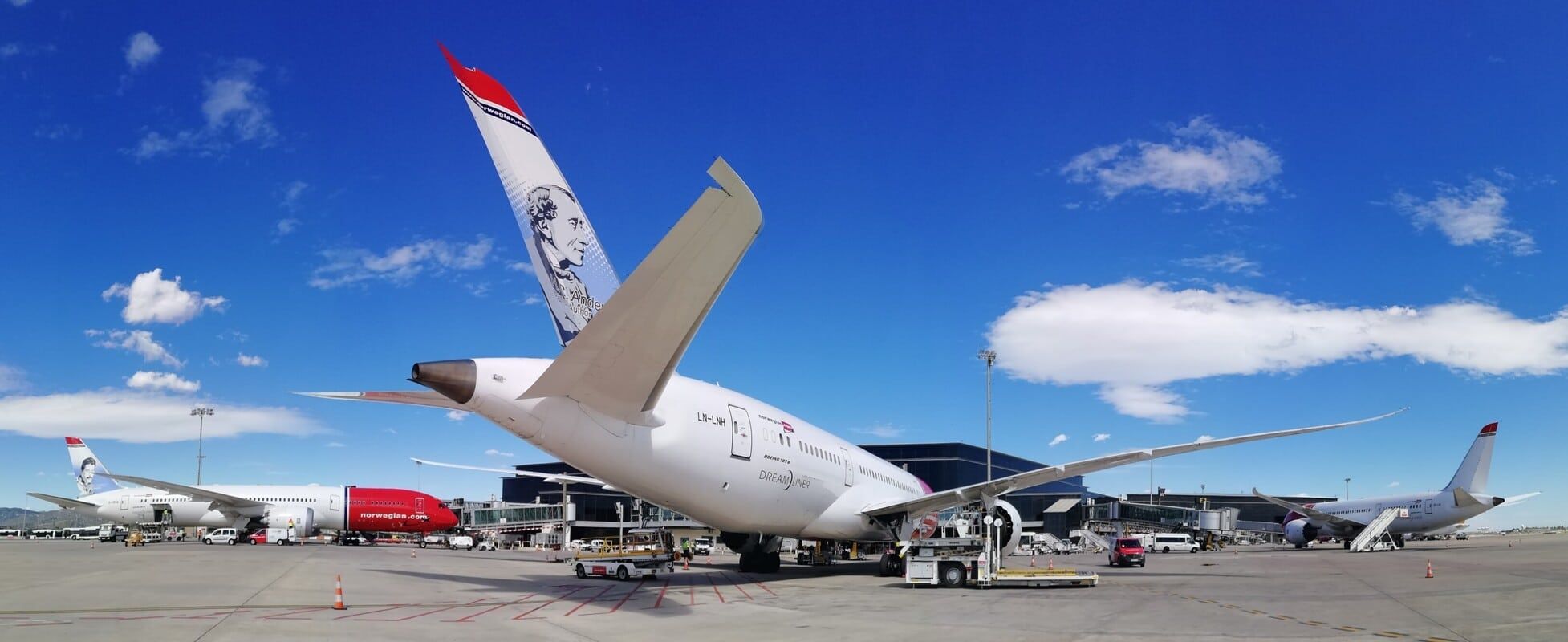
The aviation and airport sector is highly committed to the fight against climate change. In the 10 to 20-year horizon, it will be feasible to achieve civil aviation in which electric and hybrid propulsion predominates for regional and short-haul transport with hydrogen combustion engines for intermediate and high-capacity routes and based on sustainable fuels for long-distance flights. Aircraft manufacturing companies face significant technological challenges: Airbus is betting on liquid hydrogen, which produces water vapor as a combustion byproduct and therefore zero emissions, while Boeing is betting on SAF fuels with an 80% reduction in emissions, basically for medium and long distances, due to the difficulty posed by current batteries that cannot generate or store enough energy for long journeys.
From almost 120 years of history since the first flight, aviation has been an example of overcoming technological challengesAll airports in the Aena network are committed to being a neutral operator in emissions by 2026 and will achieve zero emissions by 2040, at the forefront of the sector's climate commitment. Therefore, the aviation sector is on the right track with significant challenges and commitments in the fight against climate change.
In Barcelona, the key to the airport expansion is the impact on the land. We must focus on the assessment of the impact on the Llobregat Delta Protected Natural Area, which includes Special Protection Zones (ZEC) and Special Protection Areas for Birds (ZEPAS) surrounding the airport. Furthermore, it is necessary to analyze other basic aspects such as the water system which will surely require an integral plan by the competent administrations in order to advance in the search for balanced solutions that receive the consensus of the territory and the overcoming and guarantee of the obligatory and demanding European filter.
The challenge is to optimize the capacity of Barcelona Airport in a balanced wayIt will not be easy, but it is time to evaluate possible airport developments with rigor and realism, with an open mind. If we decide that connectivity is strategic for our future, we are obliged to consider new developments that allow for consensus on new scenarios that guarantee environmental sustainability and economic competitiveness.
We must determine current and future bottlenecks. Measures that the entire sector considers necessary, such as the Single European Sky, due to the reduction of CO2 emissions (11%), will transfer pressure to airport capacity, so we must prepare for when this occurs, as well as for the increase in distances to or from Asia due to political conflicts in what is a strategic market for the future.
The challenge is to optimize the capacity of Barcelona Airport in a balanced way, in what will be its last major expansion. We have to decide what role we want to play in the future and, on this basis, dare to transform the airport.
Add The New Barcelona Post as your preferred Google source for free
Stay informed with the latest news.