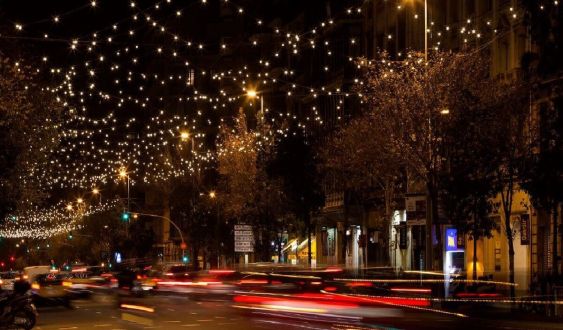
We all know that this Christmas will be different. Many will not be there, and masks and hand sanitizer will become the new guests at meals and dinners, which this year will make us choose between friends and family so as not to exceed the limit of attendees ---whatever it may be---. We have also gotten used to the curfew and getting home before ten, but this will not prevent us from enjoying the Christmas lights, which this year will arrive for the first time in Plaça Catalunya and Balmes street and will turn off when the curfew begins.
[subscribe_newsletter_esp]
Christmas lighting will return once again to the center and the main streets and commercial areas of Barcelona, with the aim of encouraging Barcelonians to walk through the city again and find Christmas gifts in its stores. "We want people to feel as welcome as possible in the city and in their home," explains the Councilor for Commerce and Markets, Montserrat Ballarín. "This Christmas we cannot do many things we did in other years, but we want to send a message of hope: we have to do it this way so that next year and those to come can be more joyful again," she points out.
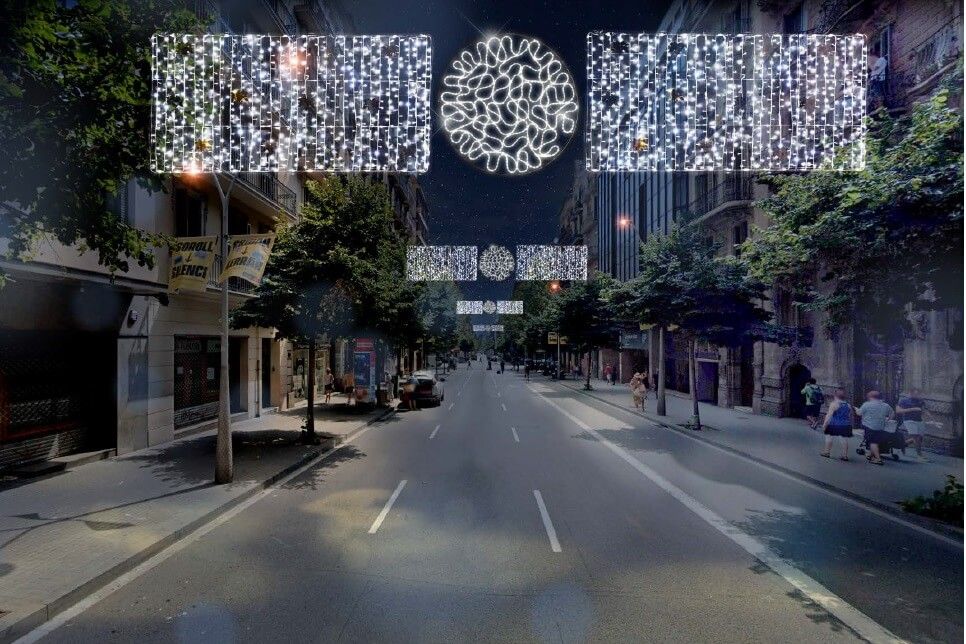
Apart from the debut of Plaça Catalunya and Balmes street, the lights will shine again in Urquinaona, Universitat, Via Laietana, Gran Via, Pelai, Aragó, Paral·lel, Diagonal, Creu Coberta, Passeig de la Verneda, Binèfar and Via Trajana. Another novelty this year will be that the 39 municipal markets will also be decorated with lights on their facades. All to give the caliu (warmth) that the city needs during these holidays and to help businesses, which see the Christmas campaign as an opportunity to save a very bad year, says Ballarín.
Support for the commercial fabric
The council has worked with merchant associations such as Barcelona Oberta and Barcelona Comerç to satisfy one of their historical demands to have more and better lights, which serve to reinforce the Christmas campaign. After years with a somewhat dark and repetitive decoration, the City Council has opted to renew the designs; increase the power of the installations, reaching 1,000 kilowatts (kW) with LED technology; add more locations, with more than 100 kilometers of lighting on public roads, and implement a new, more coordinated contracting system. All of this should serve to advance towards the future model of Christmas lighting in Barcelona, with a common design framework for the entire city, which is expected to be fully defined in the coming years.
Likewise, the pandemic has added new difficulties for merchant associations, which were concerned that there would be no lights in commercial areas this Christmas, considering that they are paid with the fees of their associates, who are having many difficulties. Given this, the City Council has decided to increase its contribution to pay for the installations in commercial areas and will cover 75% of the cost of the lighting ---in general it covers 50%---. In total, the council will allocate 1.7 million euros for Christmas lighting in the city, including public roads and subsidies to commercial areas, a 65% increase compared to last Christmas.
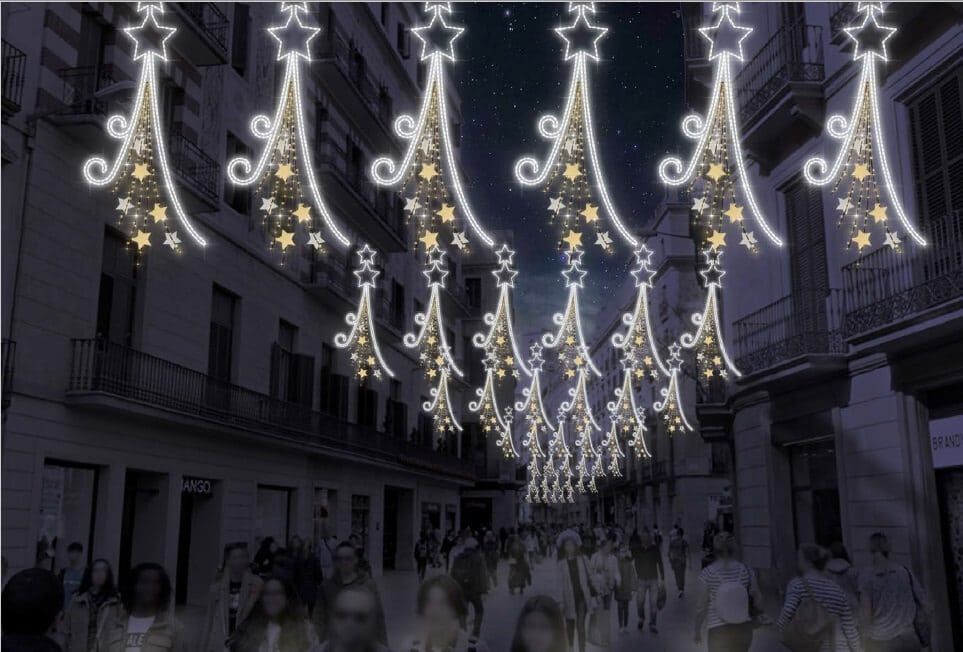
For the president of Barcelona Oberta, Gabriel Jené, this year a step forward has been taken compared to previous years, when Christmas was "sad and poor", with fewer illuminated streets and without promoting the city center. In this sense, the director of the Gremi de Restauració de Barcelona, Roger Pallarols, also positively values that the council has decided to reinforce the Christmas campaign: "It has been up to the moment". Both Jené and Pallarols agree in defending that Barcelona must continue to position itself as a destination for the holidays. In the case of restaurants, Pallarols emphasizes that restrictions must be further reduced so that they can have a good campaign and close this "failed year" a little better.
Lighting of lights in Born with a show by Sol Picó
The kick-off for the festivities was given by a show by dancer Sol Picó, focused on family Christmas gatherings and which will explore the different emotions we have felt during the pandemic, with hope as the character in charge of finally lighting up the city. It will start at six in the afternoon in the Plaça Comercial del Born and a total of 400 people will be able to attend, with prior reservation.
The week will continue with the start of the traditional Christmas fairs, adapted to the new limitations due to covid-19. The Fira de Santa Llúcia, in front of the Cathedral, will take place from November 27 to December 23. It will have 121 stalls selling nativity scenes, crafts and trees, half that of previous editions, and will be located in a single enclosed area, with only two access and exit points. On the other hand, the Fira de Nadal de la Sagrada Família will be held between November 28 and December 23. The fifty stalls will be distributed in groups according to their products and in each of them visitors will have to follow a one-way route, delimited by stanchions. As for the Fira de Reis de la Gran Via, which usually starts later, it is not yet known if it will be able to be held.
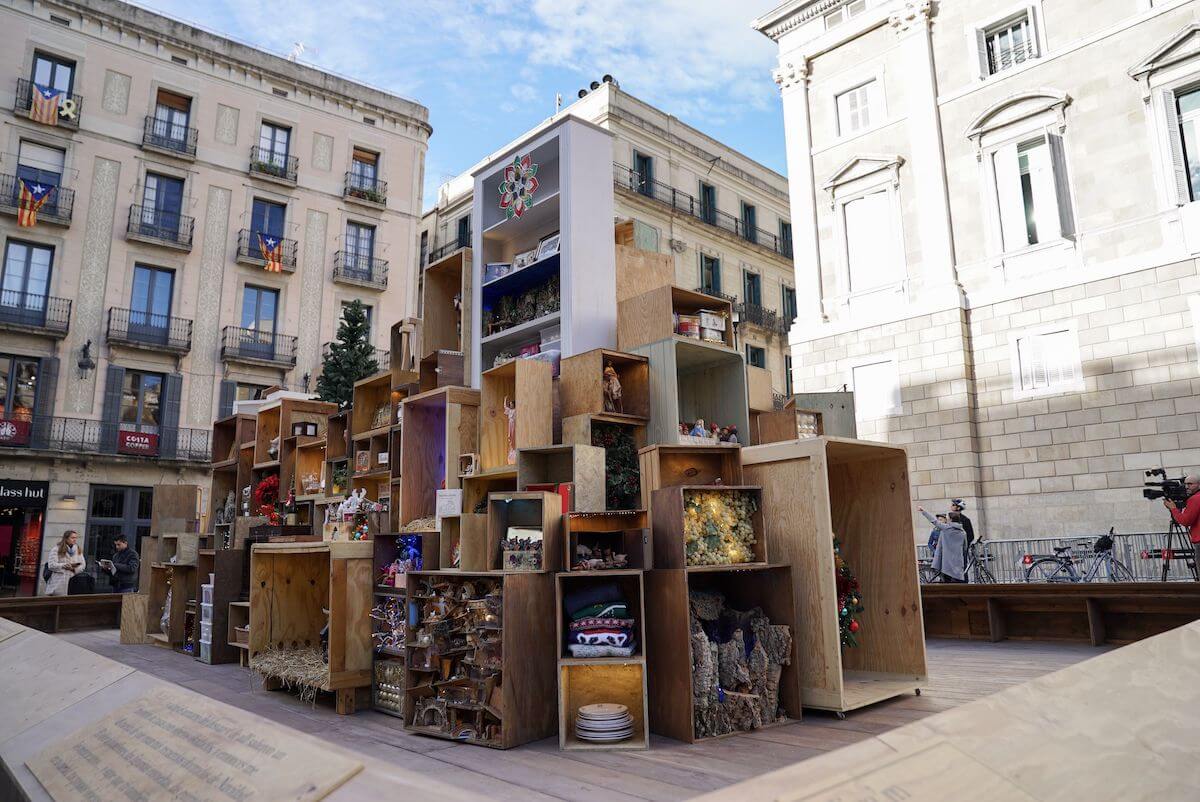
After the lights and the fairs, come New Year's Eve and Epiphany, which this time will have to be followed from home. The chimes will be transformed into fireworks, visible from all over the city, in line with those made for the Mercè pyromusical. On the other hand, the little ones will be able to take their letters to the Fòrum, where the pages of the Three Wise Men will collect them and send them to the East. Unfortunately, the parade will be replaced by a television show in which the three Kings and their entourage will receive the keys to the city and prepare for the night. The candies, this time, will have to be looked for at home.
Add The New Barcelona Post as your preferred Google source for free
Stay informed with the latest news.
