
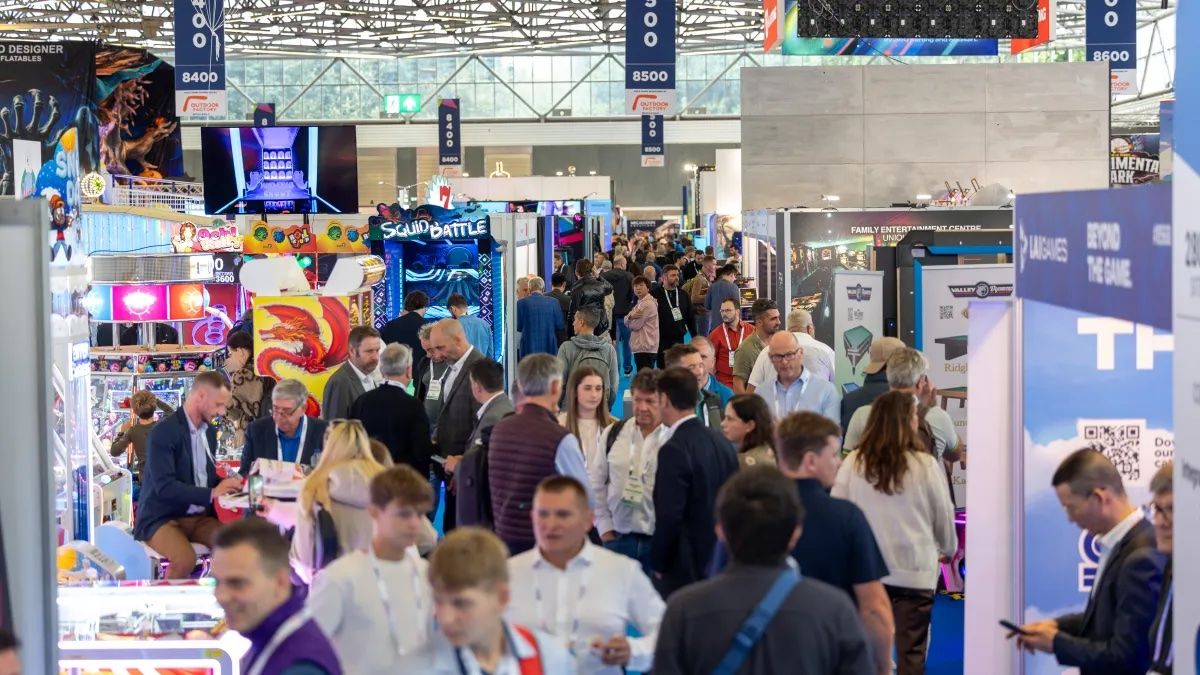
Roller coasters, free falls, slides, or Ferris wheels will travel from their usual locations in theme parks to fill the Gran Vía venue of Fira de Barcelona. They will do so during the IAAPA Expo Europe congress, which will turn the exhibition center into the global epicenter of entertainment and attractions with more than 700 exhibitors from all over the world.
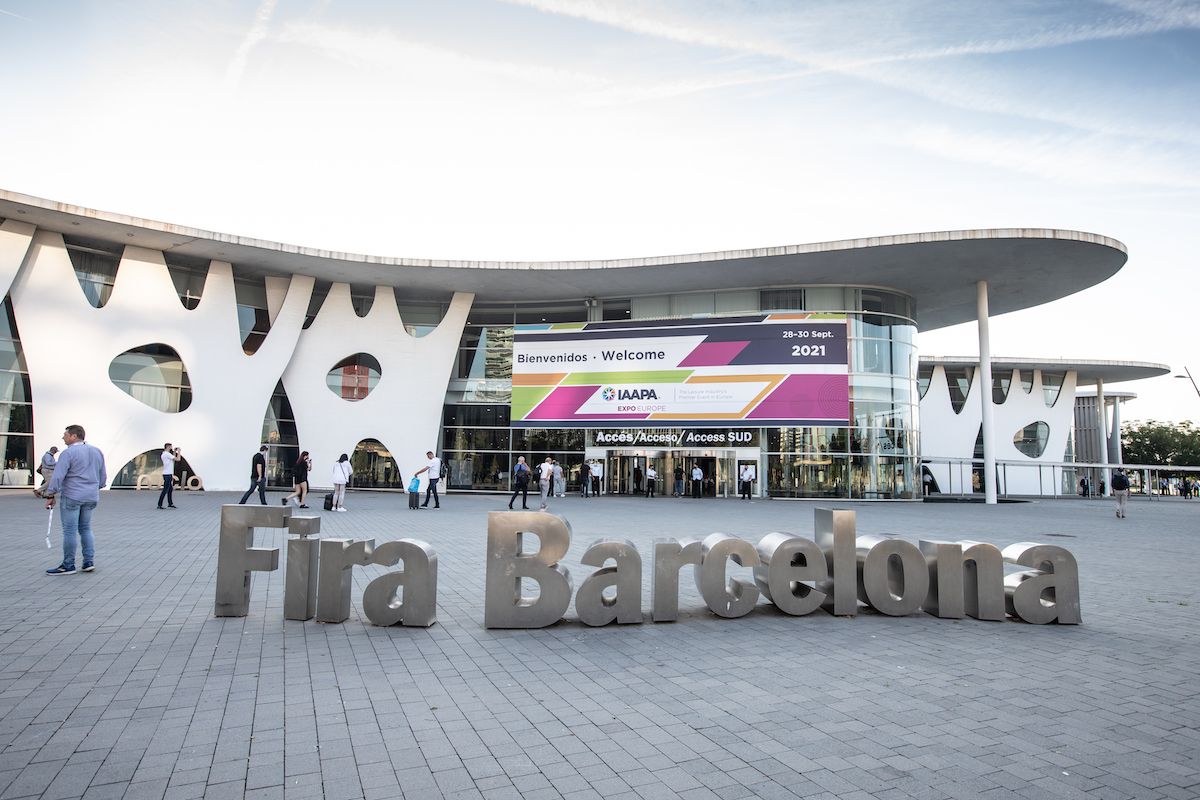
Organized by the International Association of Amusement Parks and Attractions (IAAPA), the fair meets annually in three locations. In the United States, the congress has its fixed headquarters in Orlando (Florida), while in both Europe and Asia it changes cities every year. In its European edition, the congress will take place this year in Barcelona from September 23 to 25, occupying almost 21,000 square meters of the exhibition center.
After a successful edition in Amsterdam in 2024, the fair grows in both the number of exhibitors and activities, with a record number of more than 700 exhibitors from some 200 international companies. However, this will not be the first time the congress lands in the Catalan capital, a city where they first disembarked in 2016. In addition, Fira de Barcelona was also the city chosen to celebrate a very special edition, that of 2021, which marked the return to in-person events after the pandemic, which deeply affected this sector.
A close relationship with the city of Barcelona in particular and Catalonia in general that its president and CEO Jakob Wahl wishes to continue, betting on the Catalan capital to host future editions. Not only because of its proximity to large amusement parks such as PortAventura World —considered one of the largest parks in Europe and the world— or Tibidabo, but also because the city brings together attractions that go beyond, such as its hotel capacity or its cultural offer.
"Barcelona and Spain play a fundamental role in the attractions industry, with major operators like Parques Reunidos and some of the largest parks in all of Europe," emphasizes Wahl. However, and despite the fact that theme parks occupy the bulk of the congress, the event wants to go further and become a showcase of the great variety that is concentrated under the entertainment sector. Thus, it will address attractions, understood in the broad sense of the word, and will also incorporate water parks, zoos, resorts, museums, and even cruises, with the MSC World Europe docked in the port of Barcelona.
"The future of entertainment is not only played out in amusement parks, but increasingly cultural facilities such as museums or historic buildings, and even the Sagrada Familia, are evolving and incorporating immersive rooms to offer a more experiential and unforgettable experience," says Wahl. Thus, alongside large amusement parks or water parks like Water World Costa Brava, the event will also bring together other facilities in the Catalan capital such as Casa Batlló.
The modernist building designed by Gaudí opened its doors to the public for the first time in 2002. Lo did so on the occasion of the International Gaudí Year, commemorating 150 years since the artist's birth, and with the intention that the general visit would be temporary. However, due to the expectation and interest that this building generated among Barcelonians and tourists, Casa Batlló decided to remain open to the public. In recent years, under the direction of Gary Gautier, the exhibition tour has evolved and incorporated a greater number of technological devices.
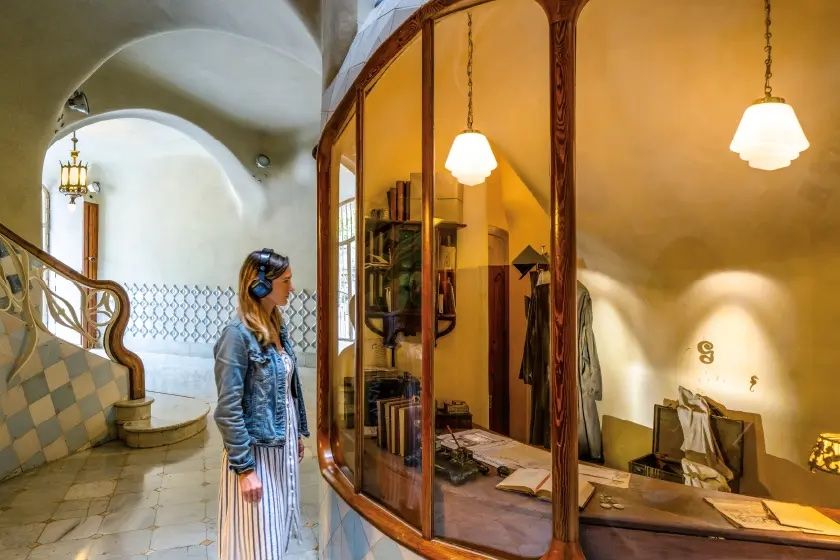
Already in 2012, for example, Casa Batlló incorporated augmented reality, a type of technology that, although now commonplace, was totally revolutionary at the time. The current tour was conceived after the pandemic, in 2021, the year in which 2,000 new square meters were added to the tour and a new immersive room. However, Casa Batlló continues to experiment with new technologies and incorporate elements to improve it.
Since 2021, five million visitors have been able to get closer to this building conceived by Gaudí. "Through technology and creating unforgettable experiential experiences, we managed to democratize and facilitate the understanding of this modernist building and its legacy," remarks Amilcar Vargas, head of World Heritage at Casa Batlló, emphasizing that the building also does not neglect its essential and tireless restoration work, a team that has just discovered the original rear facade.
As a future challenge, the building wishes to be able to "improve its relationship with its surroundings and the local public, since they still represent less than 10% of visitors," laments Ana Maria Acosta, head of cultural visits to the building. A challenge they are already working on through initiatives such as the decoration of the facade for Sant Jordi or the video-mapping in collaboration with Integrated Systems Europe (ISE) and which, in addition, they will also be able to discuss within the framework of IAAPA.
Thus, beyond the trade fair, the congress will also deploy a broad program of activities to address the current and future challenges of the industry with 200 speakers. Present and future challenges such as the safety of attractions or sustainability. Likewise, more business-related topics such as investments will also be addressed, since IAAPA estimates that companies must reinvest between 12 and 15% of their annual profits to continue growing, or intellectual property.
Challenges for an increasingly technological industry in which popular artificial intelligence is already beginning to gain ground. All in all, Wahl predicts a good future for the entertainment sector, with experiences that "will tend to be increasingly technological and immersive, incorporating augmented reality and the metaverse, but at the same time, more personalized and user-centric."
For Wahl, technology will in no case replace the in-person experience, but it can serve as a tool or complement to improve it. "In an increasingly technological world, we have the need to feel emotions in person. We offer experiences that cannot be lived from home: the sensations experienced on a roller coaster, on a water park slide, or in a museum cannot be replicated through technology," emphasizes Wahl.
In addition to an increasingly technological future, the president of IAAPA also predicts a promising future for the entertainment sector, a sector that he believes will grow exponentially in the coming years, as will, according to Wahl, the IAAPA Expo fair. For this edition, the organization expects to exceed 17,000 attendees from Europe, the Middle East, and even Latin America, a region where the entertainment sector is experiencing exponential growth. "In the coming years, the entertainment industry will experience a great technological revolution, but, at the same time, it will continue to pursue the same objective as decades ago: to generate joy and unforgettable memories for both children and adults," concludes Wahl.
Add The New Barcelona Post as your preferred Google source for free
Stay informed with the latest news.