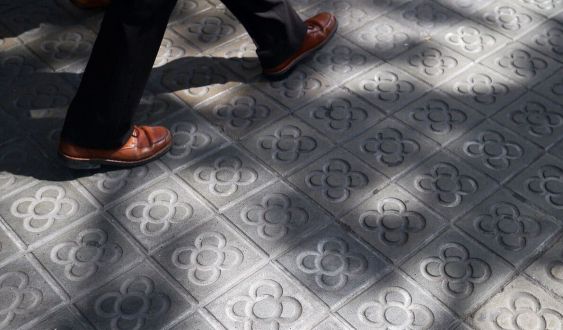
"The panot de flor represents Barcelona all over the world, and now it's about updating this icon for a green and sustainable future." This is the basic condition that will appear in the competition that the Barcelona City Council, through the municipal foundation for urban innovation BIT Habitat, has launched to have a new panot that incorporates innovative solutions and technologies that make it more sustainable for the future. And that, at the same time, continues to be a symbol and the image of Barcelona throughout the world.
This call aims to encourage companies and professionals to create a panot adapted to current needs, within the framework of a climate emergency context, which will be the basis for the reurbanization of the first four green axes of the Eixample ---on Consell de Cent, Rocafort, Comte Borrell and Girona streets---, which will begin to be executed in June, and which is part of the Superilla Barcelona project.
The call is aimed at the city's innovative ecosystem to find the best solution proposals for the 21st century panot, with characteristics such as that the environmental impact must be less than the current one, so it will be necessary to reduce CO2 emissions in manufacturing and transport, use of recycled material, reduction of resources used, reduction of waste generated in the construction phase, etc.
Also, improvements in physical and mechanical characteristics and functional durability will be valued, that they are replicable and scalable, that they have section variants that incorporate their permeability and improve the city's water cycle, and that they are created with a multidisciplinary approach.
The City Council has determined that the proposals ---which can be submitted until April 21--- will have to include the search and manufacturing activities of the necessary prototype panots to cover an area of 1,000 square meters and the certification of the manufactured pieces.
To finance the initiative, the consistory has established a fund of 240,000 euros for the projects that are selected and that will be tested in public space as a pilot project, with a maximum of 80,000 euros per project.
Add The New Barcelona Post as your preferred Google source for free
Stay informed with the latest news.