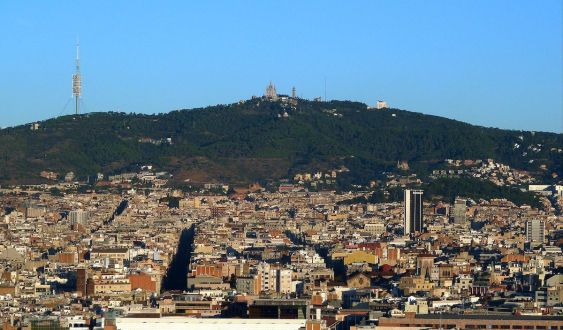
All the expectation now generated by the reports of the European Medicines Agency (EMA) on vaccines could originate in Barcelona if the city had not lost the competition to host its headquarters at the end of 2017. Amsterdam ended up being chosen to move the EMA from London after Brexit. The City Council and the Generalitat want to try to heal that wound by having the Catalan capital host another European agency, this time a newly created one.
The future European Health Emergency Preparedness and Response Authority (HERA) is intended to strengthen the coordination of the European Union (EU) in the face of major cross-border health emergencies, a clear response to the complications caused by the coronavirus crisis. For the European Commission, the pandemic has highlighted vulnerabilities in preparedness and response to these types of situations, which is why it is committed to a structural solution that allows for preparedness and coordinated action.
The mayor of Barcelona, Ada Colau, and the Minister of Health, Alba Vergés, have agreed to boost Barcelona's candidacy and launch the process to present it to the European Commission. To do so, a working group will be created to develop the proposal and gather support from other administrations, research entities in the field of biomedicine, and social agents.
As part of the preliminary work, Vergés and the Minister of Foreign Affairs, Bernat Solé, have contacted the Ministry of Health and Foreign Affairs to communicate the city's intention to host this new agency. In the coming days, it is planned to continue maintaining contacts with the Government.
A health ecosystem with more than 1,200 companies and 90 research entities
The City Council and the Government highlight, to secure the new headquarters, that Catalonia has one of the most dynamic life sciences and health ecosystems in Spain and the rest of Europe. Comprising more than 1,200 companies and 90 research and innovation entities, it represents 7.3% of the GDP and 6.6% of employment in the community, with a particularly prominent weight in Barcelona and its metropolitan area.
If Barcelona's bid goes ahead, this will be the second time in a short period that Barcelona tries to attract a community institution in the health sector, after the EMA. Recently, it also failed to secure the headquarters of the European Centre for Medium-Range Weather Forecasts.
Now, if HERA is located in the city, it will not be the first European agency in the Catalan capital, which already has Fusion for Energy (F4E). This is an organization that manages the EU's contribution to the ITER project, designed to demonstrate the scientific and technological viability of nuclear fusion energy. This fact may harm the city's options to host HERA, since Europe is working to ensure territorial balance in the distribution of institutional headquarters.
Why Europe wants HERA
After verifying the tensions faced by member states to find personal protective equipment (PPE), ventilators, and medicines used in intensive care units (ICU) at the beginning of the pandemic, or the weakness of the research system to develop vaccines, the Commission wants to prevent a similar situation from happening again, imitating the structure of the Biomedical Advanced Research and Development Authority (BARDA) in the United States. According to the community institution, BARDA has shown that investing in health preparedness can be essential to enable and accelerate new measures, and enable more manufacturing capacity when needed.
"The pandemic has taught us three things. We have to act sooner. We have to invest on a large scale. We have to partner," said Commission President Ursula von der Leyen, about the creation of HERA. The institution decided to promote this new agency in November last year and it is expected to be operational in 2023. Currently, it is in a public consultation process, which will last until early May. It is expected to coordinate with other European agencies such as the European Centre for Disease Prevention and Control (ECDC) and the EMA.
Add The New Barcelona Post as your preferred Google source for free
Stay informed with the latest news.
