To train citizens to provide them with the new technological skills they require in their daily lives, but also to develop and generate the necessary talent to respond to the vacancies in the technological sector, the only one that creates quality jobs in Barcelona. Web programmers, big data analysts, video game designers, virtual reality and encryption experts are some of the profiles that more and more companies are demanding and not finding among Barcelona residents. Specifically, the demand for digital professionals has increased by 40% in one year, while available workers have only increased by 7.6%.
The commitment to talent is one of the municipal government's priorities, included in the Barcelona Green Deal roadmap, with the aim of consolidating the Catalan capital's position as a digital epicenter of Europe and reactivating the economy once the pandemic passes. For the director of Training and Innovation at Barcelona Activa, Sara Díaz, the city has "an optimal ecosystem" to become an international benchmark in the digital revolution. "We have an important technological hub, an excellent research system with universities, R&D&I centers and very high-level technological centers, and a powerful network of startups in the information and communication technologies sector, and tremendously rich talent," she explains.
For the director of Training and Innovation at Barcelona Activa, Sara Díaz, the city has "an optimal ecosystem" to become an international benchmark in the digital revolution"In this digital world, Barcelona has to be a scenario of good practice and a spearhead of what makes technology a common good and fosters the economic prosperity of a city: in this sense, it is key to advance in the digital training of citizens, to promote new spaces to foster the digital economy," she adds.
To develop this talent, one of the avenues promoted by the Barcelona City Council is based on the creation of universal, inclusive, free, and qualitative training resources. In this regard, last September, it announced an investment of 5.3 million euros to continue fostering talent in the city.
Training in advanced technologies
This investment will serve to triple technological training through the IT Academy, Barcelona Activa's free web programming school, which will train more than 3,000 people in the next five years. This initiative aims to respond to the vacancies in the technological sector: in the last two years, more than 150 people who have gone through this school have found work, with an insertion rate of 76% and an average salary higher than in other sectors.
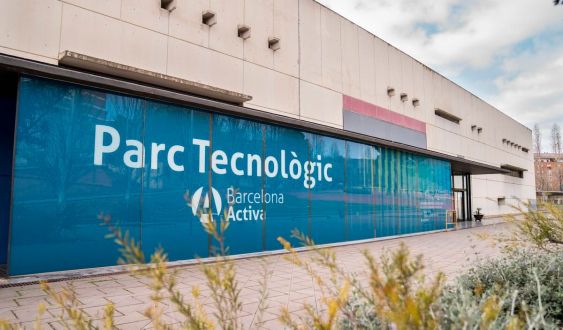
Another initiative in this line is 42 Barcelona, a programming campus of the Telefónica Foundation, where the City Council and the Generalitat collaborate. This school has an innovative method backed by its success in job placement in more than 20 campuses worldwide. It will open its doors in the Parc Tecnològic de Barcelona Activa in the second half of 2021, in a 1,622 square meter space with capacity for 600 students.

Educating citizens in technological skills
On the other hand, Cibernàrium, Barcelona Activa's technology dissemination and recruitment service, trains more than 15,000 people annually in digital skills. "It's technological training for everyone," explains Díaz, detailing that there are courses both to learn how to use a mouse or open an email account and to understand programming, blockchain or big data. This 2021, Cibernàrium will move its base of operations to the Nou Barris district, where it was born 20 years ago, to increase its spaces and the reach of its services.
Reducing the digital divide
All these initiatives are examples of the policies promoted by the City Council to reduce the digital divide. This divide means that many people do not have access to current job offers, in an increasingly changing environment, but also that they cannot interact in digital environments, which have proven key in recent months.
"Technology has saved us from the pandemic," defends Díaz, covering needs as basic as shopping and talking to family and friends. That is why Díaz emphasizes the importance of acquiring digital skills, not only to function in work environments, but also to cope with the most everyday aspects.
"Technology has saved us from the pandemic," defends the Director of Training and Innovation at Barcelona Activa, Sara Díaz, covering needs as basic as grocery shopping and talking to family and friends.Precisely,in the context of confinement, citizens have become more aware and have wanted to acquire more technological skills. Thus, the demand for basic training programs related to information and communication technologies (ICT) has grown by almost 50%, reaching 1,500 people and the realization of 30 virtual classrooms per week, according to data collected by Barcelona Activa during the coronavirus crisis.
The ultimate goal of the city council is to close this gap and guarantee the opportunities derived from the digital transformation to all citizens, adapting at all times to whoever needs it most. Currently, people most in need of basic technological training are no longer the oldest and least educated. The most recent demand corresponds to a profile between 41 and 54 years old, mostly women with a university degree who work for others.
Who can train in new technologies
The courses developed by the city council and the resources it provides are aimed at all citizens, but they can be of great use, especially, for all those workers affected by the COVID-19 crisis, who are now unemployed or affected by temporary employment regulation files (ERTE). They are also designed for all those employees who want to change sectors or refresh their knowledge in this area, as well as for companies and entrepreneurs in the city.
The courses are also designed for all those employees who want to change sectors or refresh their knowledge in this areaFor the groups most affected by the pandemic, the Barcelona City Council has also approved different plans for advice and economic support, beyond the training that can be offered to them to redirect their professional career. For example, it has done so through the plansRethinking, which help entrepreneurs rethink their businesses, guidance that has reached 795 companies. It has also supported them with theB·Crèdits, which consist of microcredits of 12,500 euros for micro-SMEs and self-employed workers affected by the crisis, and the program Create Work, Barcelona!, which encourages the hiring of people with aid of 5,000 euros. In total, Barcelona allocated 53.4 million euros in aid, services and projects and assisted more than 55,000 people during 2020.
Growth of ICT despite the crisis
ICTs are one of the sectors that register the highest employment growth and one of the least affected by the crisis caused by the pandemic. In the last six years, it has grown by more than 20,000 people, an increase of almost 55%. This represents a much faster evolution than that of the economy as a whole, which stands at around 16%.
This growth trend also occurs in the business fabric, where ICT companies have increased by almost 49%, while the total number of companies with salaried employees has done so by 8.6%. Globally, the economy linked to ICT represents 8% of the city.
Add The New Barcelona Post as your preferred Google source for free
Stay informed with the latest news.
