
It all started with an ensaimada. Miró took it to Picasso in Paris at the request of the Malaga-born painter's mother, taking advantage of his trip to the French capital to organize his first individual exhibition. This is how the two artists met in 1920, beginning a friendship that would last until Picasso's death. The young Miró found in that errand a way to approach a figure who had fascinated him a few years earlier when a ballet with his scenography premiered at the Liceu, marking a transgressive and free path for him to follow in his incipient artistic development.
This is the starting point of Miró-Picasso, the great exhibition organized by the Picasso Museum and the Fundació Joan Miró to honor them, coinciding with the celebration of the 50th anniversary of Picasso's death. The exhibition is not divided into parts between the two museums, but rather merges to answer the question posed by the four curators, Margarida Cortadella, Elena Llorens, Teresa Montaner, and Sònia Villegas, when five years ago they were commissioned with the "grand challenge" of confronting two artists who marked the history of art in the 20th century and had such opposite personalities and markedly different languages.
"Much has been written about them, but we wanted to know what their friendship meant. This is the thread that has served us to underpin the structure of the exhibition," explains Llorens. The exhibition, which can be seen until February 25, does not seek a formal approach to their works nor does it follow a chronological order, but rather "raids the history of this friendship," defines Cortadella. It begins with their first meeting in Paris and reaches Picasso's death, detecting the chapters that marked their relationship over more than 50 years, such as surrealism and wars, but also other disciplines they approached, including writing and ceramics.
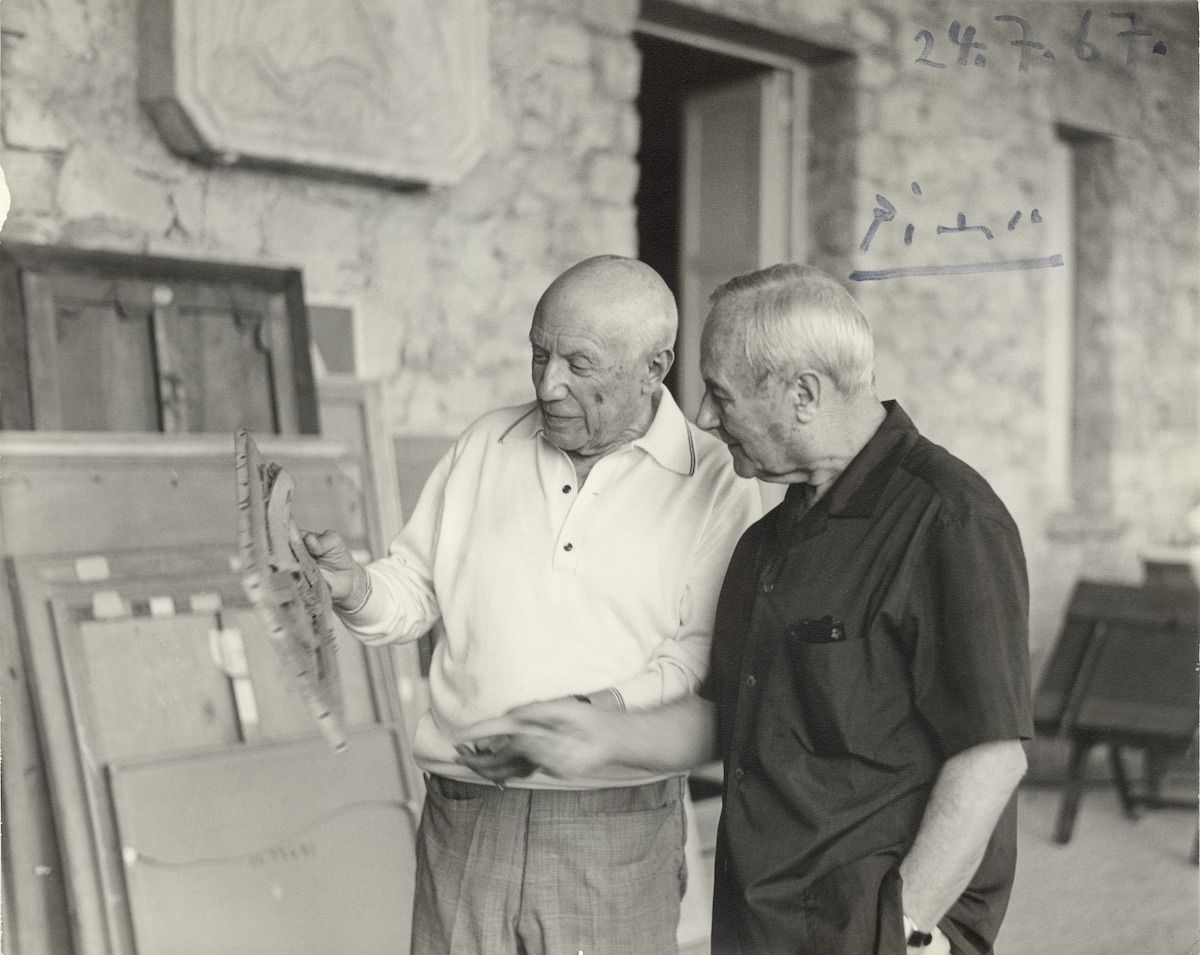
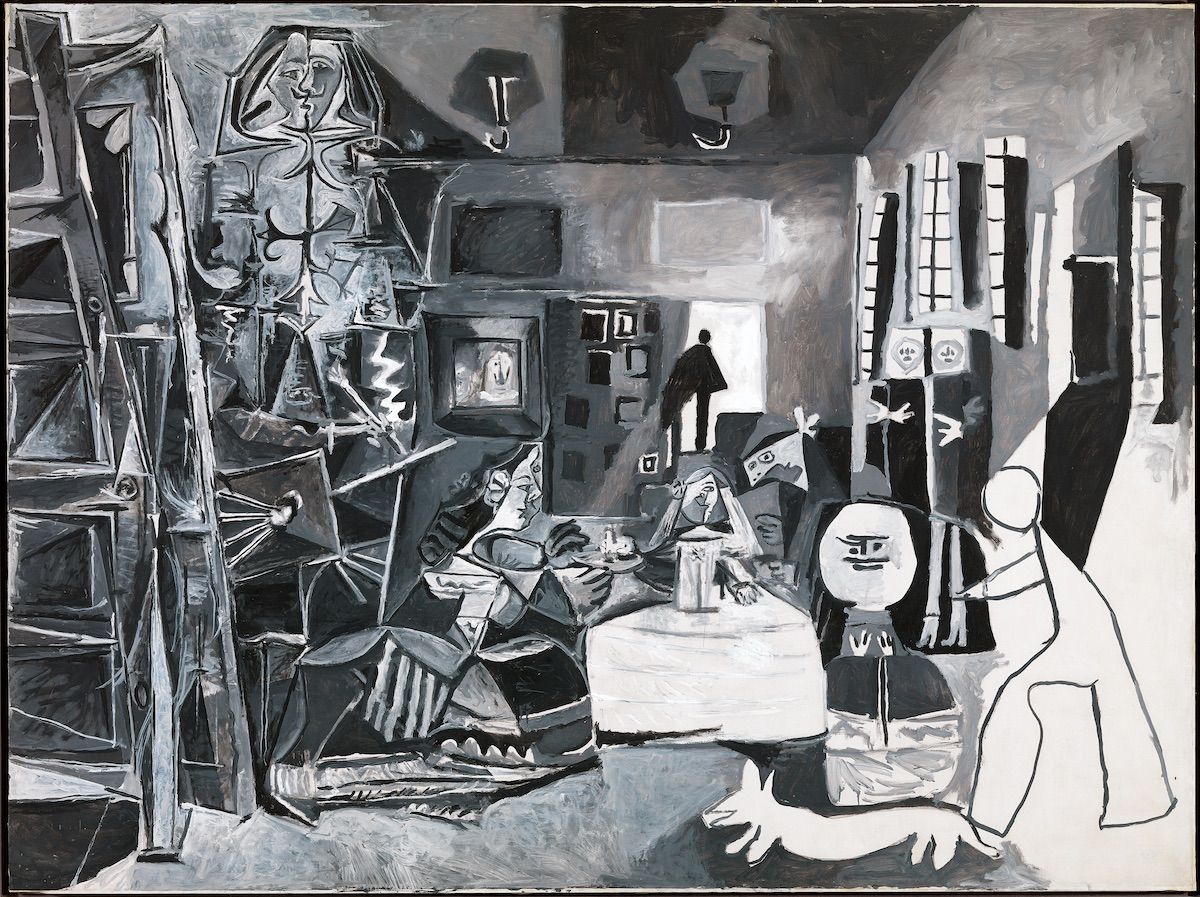
It is not only an indispensable exhibition due to its magnitude, bringing together more than 300 works by the two artists, many of them never seen in Barcelona, but also because it is the first time that the two Barcelona museums have exchanged pieces. This revives the complicity that both artists had, causing the treasures of each collection to change location for a few months, with Las Meninas (1957) moving from the Picasso Museum to the Fundació Joan Miró and The Morning Star (1940) making the inverse journey, from Montjuïc to Montcada street.
"It's a dream come true. It would be a success if we had only exchanged works with the Picasso Museum, but we have brought pieces from more than 35 institutions and public and private collections," summarizes the director of the Fundació Joan Miró, Marko Daniel. "The idea is not new, Picasso and Miró have crossed paths in many exhibitions," says the director of the Picasso Museum, Emmanuel Guigon. "The merit lies in the enormous effort behind it," Daniel continues, "this exhibition is only possible in Barcelona, other great cultural capitals would have a harder time because there is no other city that brings together so many works by both". That is why the director of the Joan Miró Foundation insists that it is a unique opportunity to get closer to Miró and Picasso and that it will not be easily repeated: "At least, not in my lifetime."
Daniel's warning is not in vain. At the Joan Miró Foundation, The Three Dancers (1925), on loan from the Tate Gallery, can be seen for the first time, a work with which Picasso ends his classicism and opens a new stage portraying a violent story through the distortion of forms and chromatism, finding in the dancers, as well as in the bathers, a field in which to experiment and question the established. It was also for Miró, although his approach was more synthetic but equally charged with eroticism.
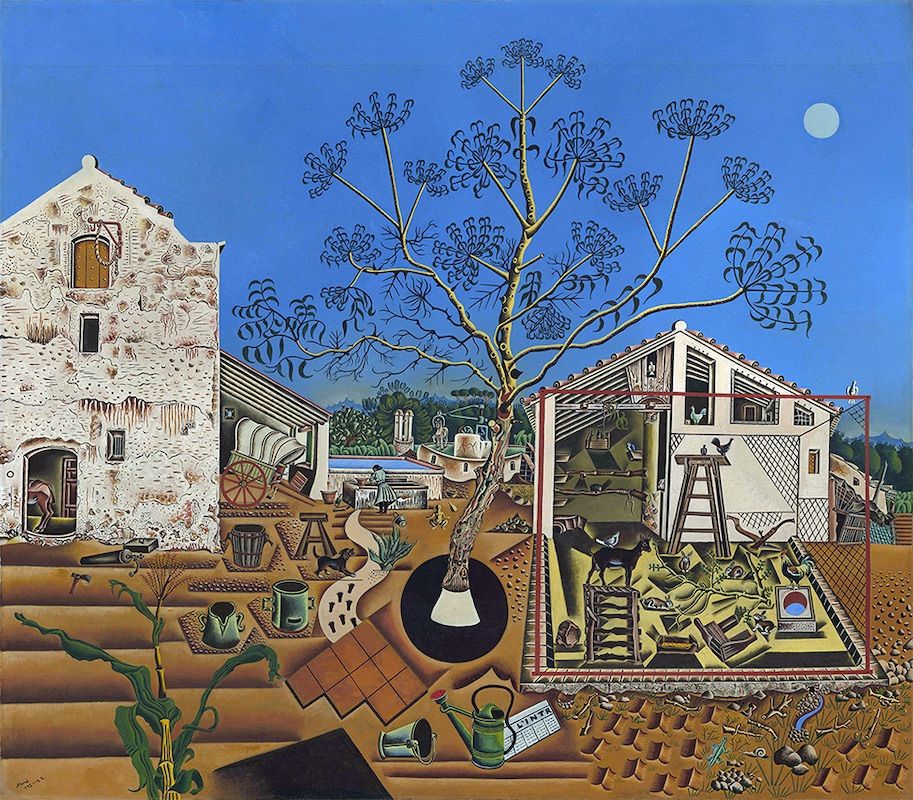
Also unprecedented is Miró's Self-Portrait (1919) that welcomes visitors to the Picasso Museum, very close to another jewel that has traveled to Barcelona, The Farm (1921-1922), a work where all the elements that the Barcelona painter would exploit over the years are already found. In addition, it has the honor of having fascinated Ernest Hemingway, which is why it comes from the National Gallery of Washington DC, where it was donated by the writer's widow.
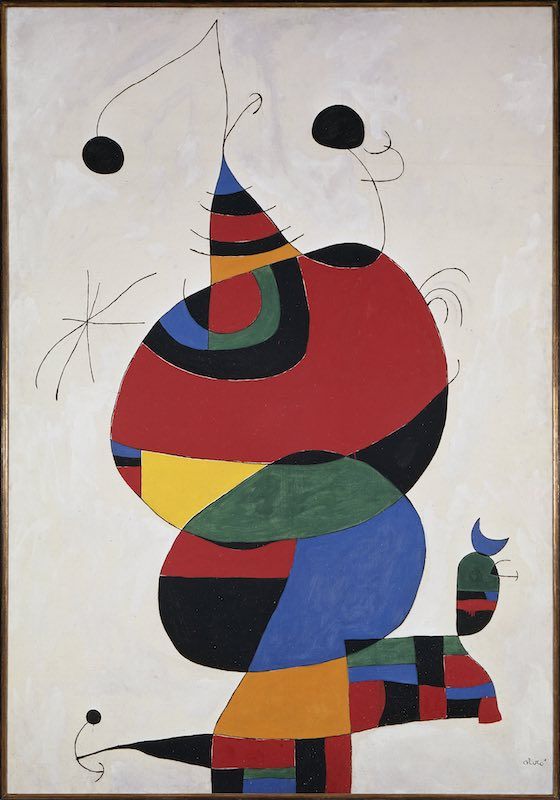
Miró left evidence of the great friendship that inspects the exhibition on multiple occasions, even being critical of Picasso, for issues such as his excessive production. One of these samples, not always negative, is seen in The Horse, the Pipe and the Red Flower (1920), where an open book appears reproducing a drawing by Picasso. Also in later ones, such as Woman, Bird, Star. Homage to Pablo Picasso (1966-1973) or the Malaga-born artist's centenary logo (1980).
Walking through the Picasso Museum and the Joan Miró Foundation, one often thinks they are looking at a Picasso painting or recognizes some of his forms, and the cheat sheet next to it reveals that it is a Miró. Their personal relationship was also artistic, even symbiotic, as seen when looking face to face at paintings like Large Nude in a Red Armchair (1929) by Picasso and Flame in Space and Nude Woman (1932) by Miró. As if that weren't enough, the Catalan painter had a photo of Picasso in all his studios, proof that he deeply influenced him even though they were very different. And it is that both were guided by the same spirit of freedom and transgression to explore the limits of painting.
Picasso was more reserved in showing the admiration he felt for Miró. However, the proof that reveals his esteem for the Catalan painter is full of force. The Malaga-born artist kept two of his works in his personal collection throughout his life. One is the Self-portrait, acquired shortly after meeting him thanks to an ensaimada. In fact, in Miró's first exhibition in Paris, a year after meeting Picasso, it was already stated that it was his property. The second work he acquired was Portrait of a Spanish Dancer (1921), an oil painting that takes as its starting point a photograph of the singer Conchita Pérez, remaining faithful to her image but with a clear style of its own.
There is a third work by Miró that Picasso ended up keeping. It would be another tribute he paid him and, in this case, it was published in La Vanguardia on the occasion of his 90th birthday in 1971. Miró gave it to him and he placed it in his living room, "among all the things he appreciated," as the Barcelona native later said. After the death of the man from Malaga, it was lost track of for many years and its whereabouts were unknown. After much searching, it was found in a private collection outside of Spain and can now be seen at the Joan Miró Foundation. This is the end of this endless exhibition that vindicates the cultural power of Barcelona with two of its most universal figures.
Add The New Barcelona Post as your preferred Google source for free
Stay informed with the latest news.
