
One of the first decisions taken by the new chief architect of the Barcelona City Council, Maria Buhigas, has been to change the map that hung in the offices of the area she leads, Urban Planning. In the previous one, only the city of Barcelona was visible, confined within administrative limits that are constantly surpassed in daily life. "Not even the entire Besòs was visible because Sant Adrià de Besòs is cut off. This is a mental framework for work," she recalled, while confessing that she now feels she has "the most beautiful job in the world" and "a dream come true" for someone who has been working for the city for 25 years.
The urban architect has replaced the map with a new one that goes from river to river, from the Besòs to the Llobregat, thus including other neighboring municipalities that cannot be ignored when making decisions in the Catalan capital. "Most of Barcelona's problems will not be solved within the city," Buhigas remarked in a new session of the cycle The New Barcelona – Moments Estel·lars, organized by The New Barcelona Post and with the collaboration of CASA SEAT, Barcelona Global, Must Media Group and Giny Barcelona.
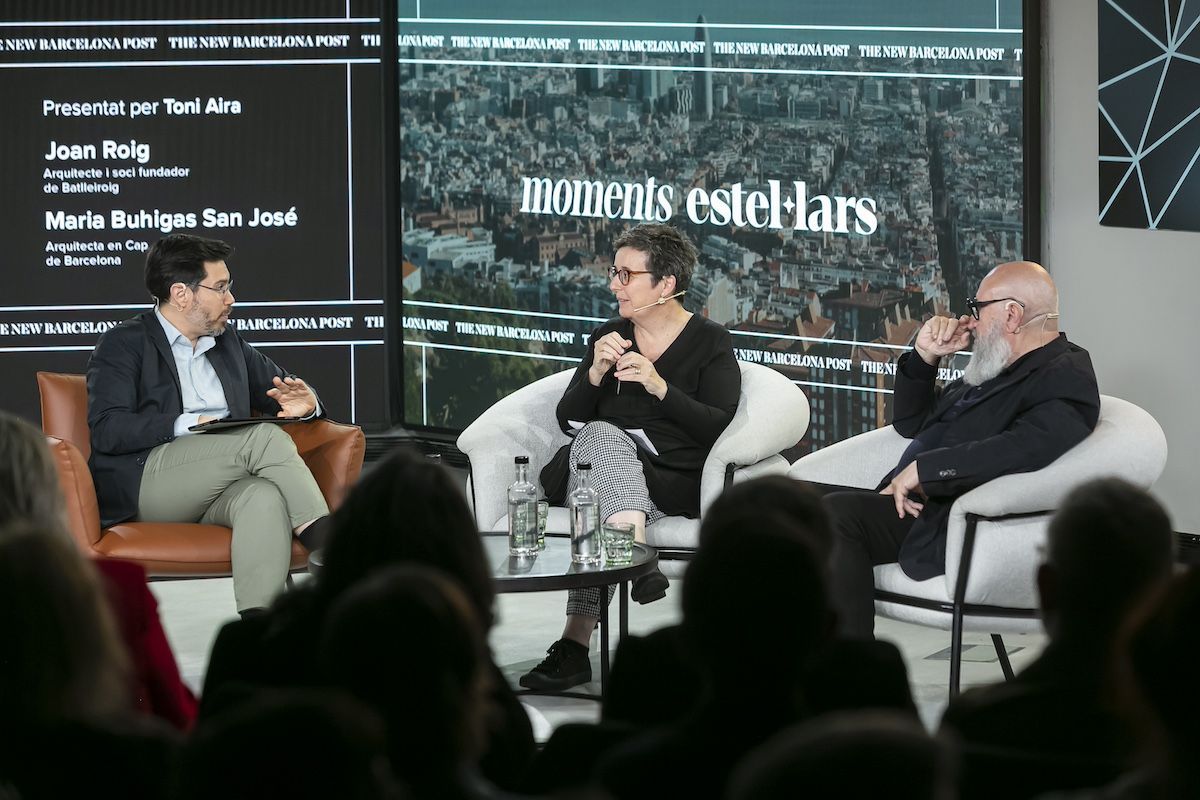
This is the key that Buhigas sees for the Barcelona of the future, responding to current challenges such as overtourism, housing shortages, and urban pollution. "The biggest leap we will see will be that in the mental framework of all citizens, Barcelona will cease to be these ten districts and that, when we start walking, it will be difficult for us to identify whether we are in Barcelona or in another municipality," she defended, accompanied by the founding partner of the Batlleiroig architecture firm, Joan Roig. Differences that are already more easily blurred in metropolitan cities, not afflicted by the capital's moral superiority, easily transitioning, almost by inertia, between L'Hospitalet, Cornellà, or Esplugues, only noticing the borders if one pays attention to small details such as changes in street signs or waste containers.
However, to achieve this, one must leave behind the prejudices that have hovered around the misnamed periphery, cataloging it as a dormitory city where nothing happened. "In Barcelona, now, few interesting things happen spontaneously. More happen in L'Hospitalet because there are more young people, more nonconformity, more mixture," Roig maintained, in a debate moderated by journalist and UPF-BSM professor Toni Aira.
To advance towards that horizon, the architect clearly sees the need to establish a single government, but not only for the 3.3 million citizens of the 36 metropolitan municipalities, now under the umbrella of the Barcelona Metropolitan Area (AMB), but to go further and encompass the so-called great metropolitan region, with 5.1 million inhabitants in 160 municipalities. "It would allow us many things, we would gain a lot in mobility," stressed the co-founder of Batlleiroig, a firm based in Esplugues with extensive experience in the metropolitan environment.
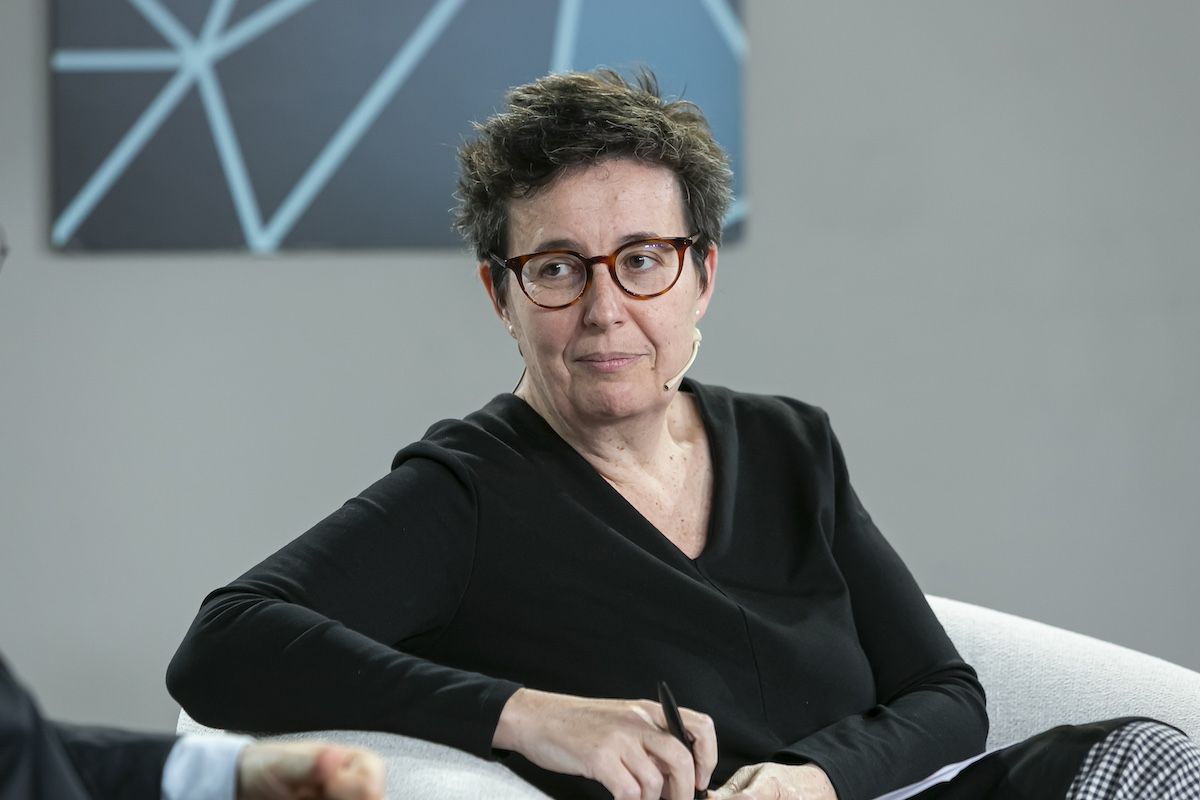
Greater integration of the metropolis will allow the city to de-stress, always confined between its four walls: the Collserola mountain, the Mediterranean Sea, and the Llobregat and Besòs rivers. "In Barcelona, if we want to grow in surface area, we clash with the surrounding neighbors. That's why we have internalized that the city never ends because it is constantly being rebuilt. We have been doing it for a long time," Buhigas explained.
"Architects have made Barcelona," Roig added, even though their creations have not always been valued. This has happened especially after the golden age of architecture experienced with mayors Narcís Serra and Pascual Maragall ended, when everything was yet to be done after decades of paralysis under the Franco dictatorship and mayor José María de Porcioles. According to Roig, the socialist city councils promoted emblematic projects such as the opening of the sea and the Olympic Village, later tarnished by millionaire contracts for buildings that were difficult to understand, like the Agbar Tower, now Torre Glòries, topped off with the devastating effect of the real estate bubble. "This gave the impression that architects were damaging the city," Roig lamented.
In this redirection of the relationship between the Catalan capital and its architects, always with heated debates about any work, rehabilitation as a local survival trick now sees many of the urban concepts that define it having expired. "The city is a board and we have rules of a game that we no longer want to play," indicated the chief architect. "We need to reframe the questions about what the city should be like to place ourselves where other cities already are," Roig agreed.
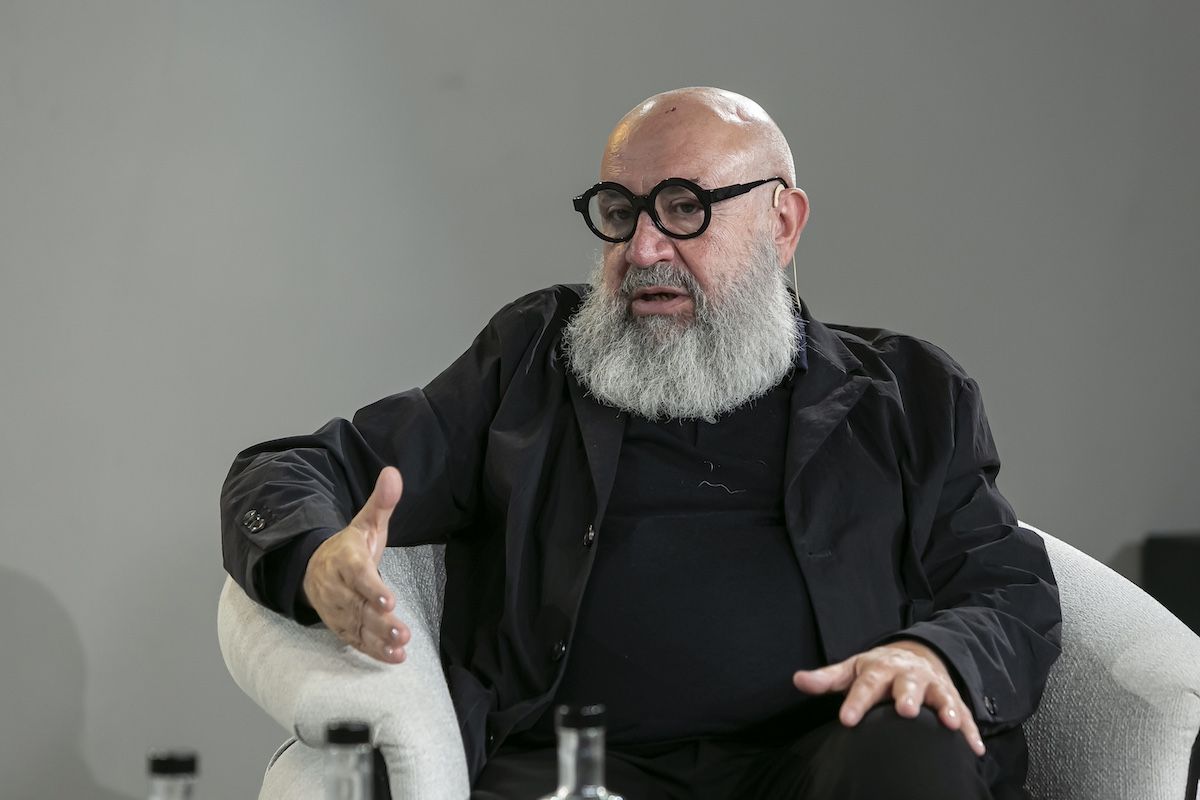
That's where climate change fully comes in, questioning Barcelona consensuses like the city's opening to the sea. "Now we don't want to close it, but the sea is no longer just a bucolic space where we have to turn. We have to rethink our border with it because conditions have changed and it has to be reviewed," Buhigas defended with the storms eating away at the beaches in mind, also looking towards Collserola and the dangers of increasingly aggressive forest fires. "We have to continue enjoying natural spaces, but protecting ourselves from their unwanted effects," she emphasized. "The city is already built. The city of the future already exists because it's the one we have here, but the question is how we have to adapt it and in what direction," Buhigas added in the session The Feared and Admired Barcelona of Architects.
Maria Buhigas: "When someone talks about the 15-minute city, I think we've had it all our lives and we haven't put any label on it because this city is walkable"For Roig, the model is in Paris and the Nordic countries, with their commitments to recovering rainwater and moving towards a more friendly and sustainable urbanism. "Things have changed not radically, but with small actions they have marked paths," said the founding partner of Batlleiroig. However, Buhigas, with a decade of experience at the United Nations studying urbanism in different cities around the world, each with more or fewer resources, disagrees. "We have to do a back to basics, that is, to be well in our environments and to de-dramatize designs and simplify.I am not very fond of reflecting ourselves in Nordic examples because for certain issues we are much more sustainable in our Mediterranean compactness and we don't boast much,and we fall very easily in love with models loaded with an imaginary of happiness that are not transferable and we have nothing to envy. When someone talks about the 15-minute city, I think we have had it all our lives and we have not put any label on it because this city is walkable," Buhigas stressed.
Add The New Barcelona Post as your preferred Google source for free
Stay informed with the latest news.
