
Barcelona never had a problem with longevity. And yet, now it seems obsessed with it. Europeans already live longer and, in many cases, are also happier than Americans. And yet, in cities like Barcelona, the Silicon Valley-style longevity culture is everywhere. Seeing it here is a bit disorienting. Because if there's one city that has never had a "longevity problem," it's this one. Sun, street, social life, good food, walking everywhere, terraceo until late... the system was already working. And precisely for that reason, it attracts so much attention.
Suddenly, what was simply living begins to turn into a project. People swapping aperitifs for protein goals. Conversations about sleep, analytics, or biological age creeping into dinners that used to be about politics, art, or simply deciding where to go for a drink with a good atmosphere.
The everyday starts to sound like optimization; what more and more people here are starting to call biohacking, although deep down it's still the same old thing with different language. And I confess that, in part, I find it fascinating: experiences like the Holo app or Progevita's longevity retreats have made me look at this world with new eyes.
The curious thing is that Europe already has many of the things that the United States is trying to build with technology: walkable cities, a diet based on fresh food and fish, more street life, squares and spaces designed for community. So the question comes back again and again: if the Mediterranean lifestyle already did so many things well, what exactly are we trying to improve?
I believe that right now two ways of living this trend coexist, and I move a bit between the two. The first are the "long-livers": people who used to live from ambition, nightlife, fashion, or very intense careers, and who have now transferred that same energy to well-being and self-measurement. Many millennial friends lead quite structured lives —WHOOP on the wrist, recovery control, protein, strength, everything revolving around sleep and with the intention of improving their biomarkers.
And, to be fair, they look amazing. But so do my European friends, between inaugurations, after-dinner conversations, and getaways to the coast, having a Negroni on a Thursday as if it were nothing, with a sense of well-being that doesn't seem constructed, but rather natural. Both are, deep down, looking for the same thing: energy, vitality, and feeling good.
No one is exempt from the passage of time.
My discomfort with all of this is not so much against well-being itself. I understand it. I am also competitive, and that drive to improve everything is very present in the entrepreneurial world —and it is not exclusive to the female world—. In men, the obsession with maximization and self-optimization is also increasingly evident.
But I also find it hard to ignore the economic part behind all of this. The race to improve the body is also a race for our attention. Sleep, movement, recovery, hormones, mood... everything becomes data, is analyzed, monetized, and returns to us in the form of products, subscriptions, supplements, or treatments. What starts as self-improvement ends up being a constant loop of measurement and consumption.
And yet, I wonder if this obsession with biological age is not also, in part, a distraction. A way of looking inward just when the world outside seems increasingly unstable, more uncertain, harder to read. Turning off the news and opening a health app makes sense. Focusing on what you can control also.
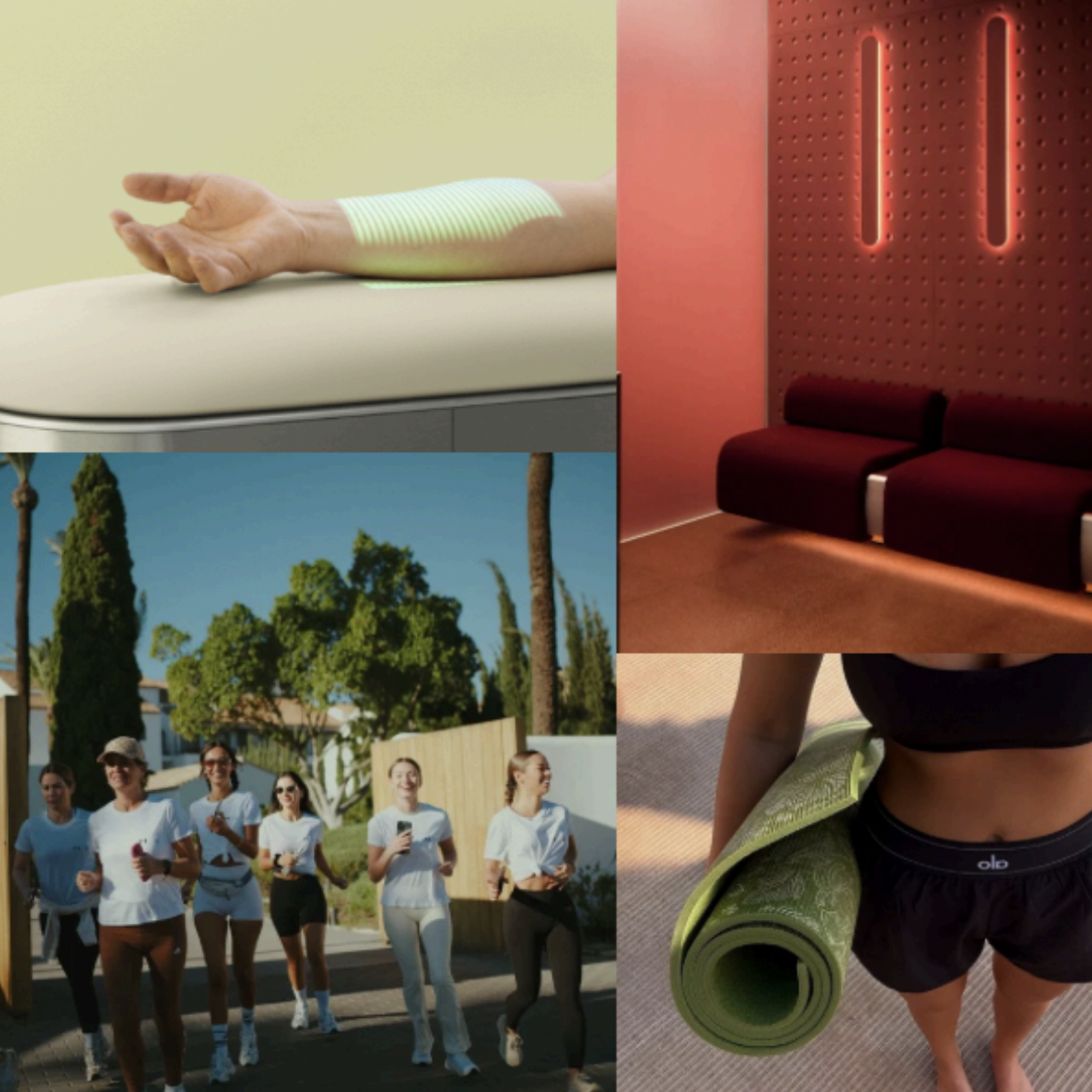
But although I believe this phenomenon deserves to be questioned, I also don't see the panorama as completely negative. At the same time, small counter-trends are emerging, especially in Gen Z, that bring well-being back to the social. Run clubs instead of running alone. Matcha nights and supper clubs. More shared ways of feeling good.
And perhaps there lies the balance: not in rejecting the entire longevity culture, but in questioning that it has to be an individual project. Because what the Mediterranean lifestyle has always understood, and what cities like Barcelona still manage to maintain at times, is that health is not just something measured in the body, but something built collectively, in the way we live together.
Add The New Barcelona Post as your preferred Google source for free
Stay informed with the latest news.